

If you’re unfamiliar with the concept, it’s a master-planned community where residents can live, work, shop, and play within a fifteen-minute walk, bike ride, or drive.
As someone who once commuted two hours each way by car, train, and finally on foot, I can tell you personally and eloquently that it sucked a whole lot. Commuting is expensive, time-consuming, and, far too frequently, an olfactory assault perpetrated by complete strangers. Especially in the summer.
So yes, on paper, a 15-minute city sounds pretty terrific. I mean, that’s essentially how European cities evolved, right? There’s a city center full of shops and businesses, and then homes ripple outward until you eventually hit the fields where the food is grown and the animals are raised.
What I love about European cities is that they evolved out of necessity. They feel organic. They’ve earned their quirks. Oh, and their mass transit is outstanding.
All three of those things seem likely to be absent from America’s master-planned versions.
Instead, I have this vision of a Walt Disney World interpretation of Europe, complete with golf carts and chain restaurants.
I could be wrong.
But I could also be right.
Take Frisco’s development, The Fields. It’s a $10 billion project spanning 2,600 acres. When it’s complete, residents will live in their 15-minute bubble while still being less than half an hour from Dallas or the airport.
The Fields will include 14,000 homes spread across nine different neighborhoods.
Why nine neighborhoods?
Because some will be schwanky and others will be janky.
(Fine. None of them are actually janky. But if you hand me a rhyme, I have to go for it.)
The neighborhoods represent different price points. Some people will buy $2 million homesites. Others will rent apartments. Schools are built into the plan. Parks are built into the plan. Recreation is built into the plan. The roads are already wide enough that they won’t need to be torn up and expanded twenty years from now.
The PGA golf courses are already green.
On paper, it’s incredibly well thought out.
So why does it make me uneasy?
The harder I try to explain it, the more I realize it isn’t the walkability that bothers me.
It’s what sometimes sneaks in disguised as convenience.
Uniformity.
I know there are different architectural styles. It isn’t some Stepford-looking development where every house is identical. But there’s something about communities like this that feels more like a Hollywood set than a real town.
They’re designed to feel authentic instead of becoming authentic.
Maybe that’s an unfair criticism.
Or maybe authenticity is one of those things that’s impossible to manufacture.
Then there’s the HOA. You knew we were getting here.
Whenever I hear “master planned community,” I immediately picture a homeowner’s association run by people who discovered an enthusiasm for authority they never knew they possessed. The kind of people who become emotionally invested in whether your mulch meets community standards or your front door is the approved shade of beige.
I’m not speaking hypothetically.
My inlaws live in a 55+ community where a resident literally rides his bicycle around looking for violations, including unauthorized lawn ornaments.
I wish I were making that up.
I also love cars.
Not because I enjoy traffic, but because I enjoy possibility.
There’s something comforting about knowing I can point the car in any direction and disappear for the afternoon if I feel like it. I don’t want to commute two hours to work ever again, but I also don’t love the feeling of living inside a carefully constructed bubble.
It gives me just enough District 12 energy to make me uncomfortable.
Supporters love these communities because they’re walkable, social, and—there’s that word again—convenient.
Critics, meanwhile, have no shortage of concerns. Some worry they’re another step toward discouraging car ownership. Others imagine more dystopian possibilities involving movement restrictions or fees tied to entering and leaving designated areas.
To be fair, congestion pricing, resident parking permits, and nonresident parking fees already exist in plenty of cities. Whether that’s evidence of a slippery slope or simply urban policy probably depends on whom you ask.
The inevitable conversation eventually turns to control.
Could governments one day restrict movement within districts during another pandemic?
I don’t know.
But I also understand why people ask the question after living through a period when grocery stores had us walking one direction down each aisle as though Cheerios became more dangerous if you approached them from the east.
More than anything, though, I keep coming back to the same thought:
Will these communities actually feel like neighborhoods, or will they feel like cruise ships on land?
Community calendars.
Mandatory food truck Fridays.
Outdoor movie nights.
A copious number of pickleball courts.
All thoughtfully organized so everyone can maximize the value of their HOA dues.
Personally, I like urban centers. I love wandering around cities, eating at great restaurants, ducking into bookstores, and people-watching for an afternoon.
Then I like retreating to suburbia. I like winding roads with open space between houses. I like streets with sidewalks...and streets without them. I like free parking. I like quiet.
And I’d like the freedom to paint my front door blue without convening a neighborhood tribunal.
I can’t promise I won’t eventually end up in one of these communities. My husband and I are both nearing the point where lawn maintenance feels like punishment.
Maybe a place like The Fields will make perfect sense someday.
But I still can’t shake the feeling that there’s a difference between designing a town and manufacturing one. Or the fear that I may feel more like Truman and less like me.
Human places become interesting because they evolve.
Master-planned places become efficient because they’re designed.
Those aren’t always the same thing.
Maybe I need to get a crossbow.
xo


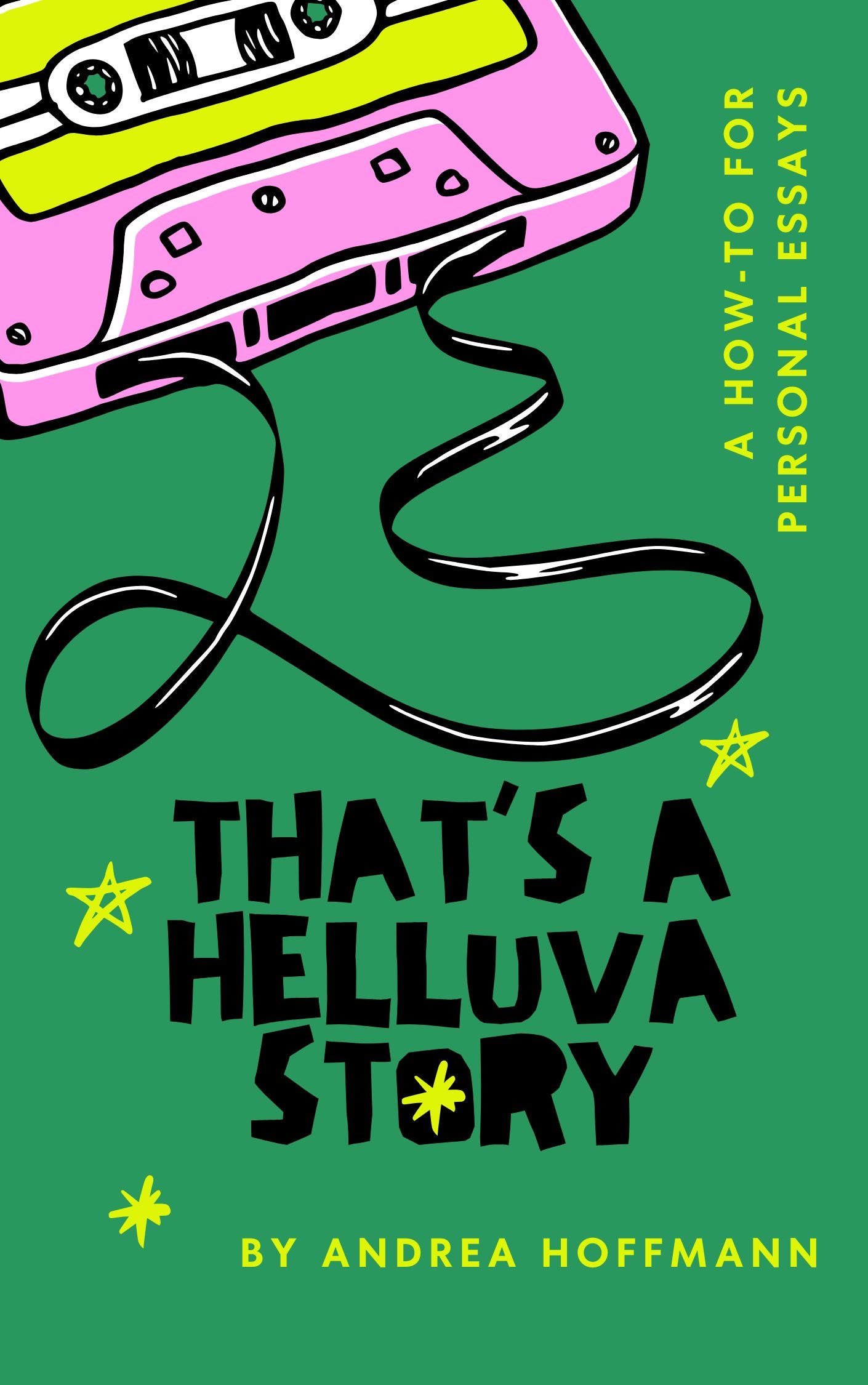
Grab That’s a Helluva Story– A How-To For Personal Essays
Real lessons, real talk, really useful.
One of the best ways for independent writers to reach a broader audience here is through readers like you! Please comment, save, and share my pieces with people who might like them.
And if you’re feeling extra lovey, go ahead and recommend my whole publication on your own. It’s easy, I promise. These directions show you exactly how to do it (and it only takes a minute). Thank you so much.
Comments
Nothing yet. Say the first thing.
Sign in to join the conversation.