
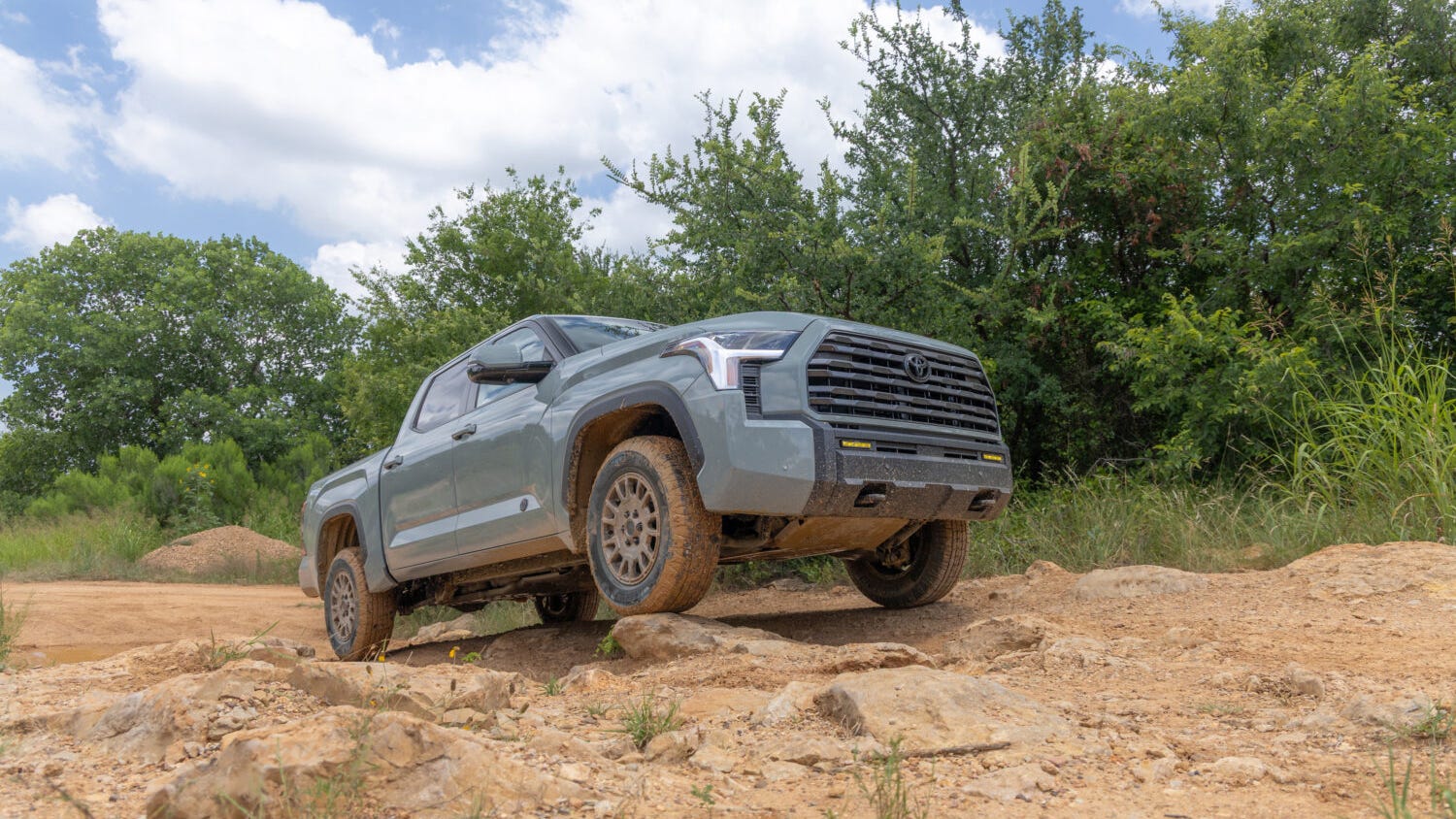
The 3rd gen Toyota Tundra (first released for the 2022 model year) is the slowest, least efficient, least reliable, most expensive half-ton pickup. But the biggest issue is that, in stock form, no version of the new Tundra has been able to be used off-road, in winter conditions, or in remote areas. Until now.
What you’re looking at here is the facelifted 2027 Tundra, which Toyota unveiled today in its new Trailhunter trim. Beginning with the base four-wheel drive version of the Tundra—SR5—Trailhunter adds Old Man Emu shocks, skid plates, and Michelin LTX Trail tires. More importantly it adds something no 3rd gen Tundra has had before: front recovery points.
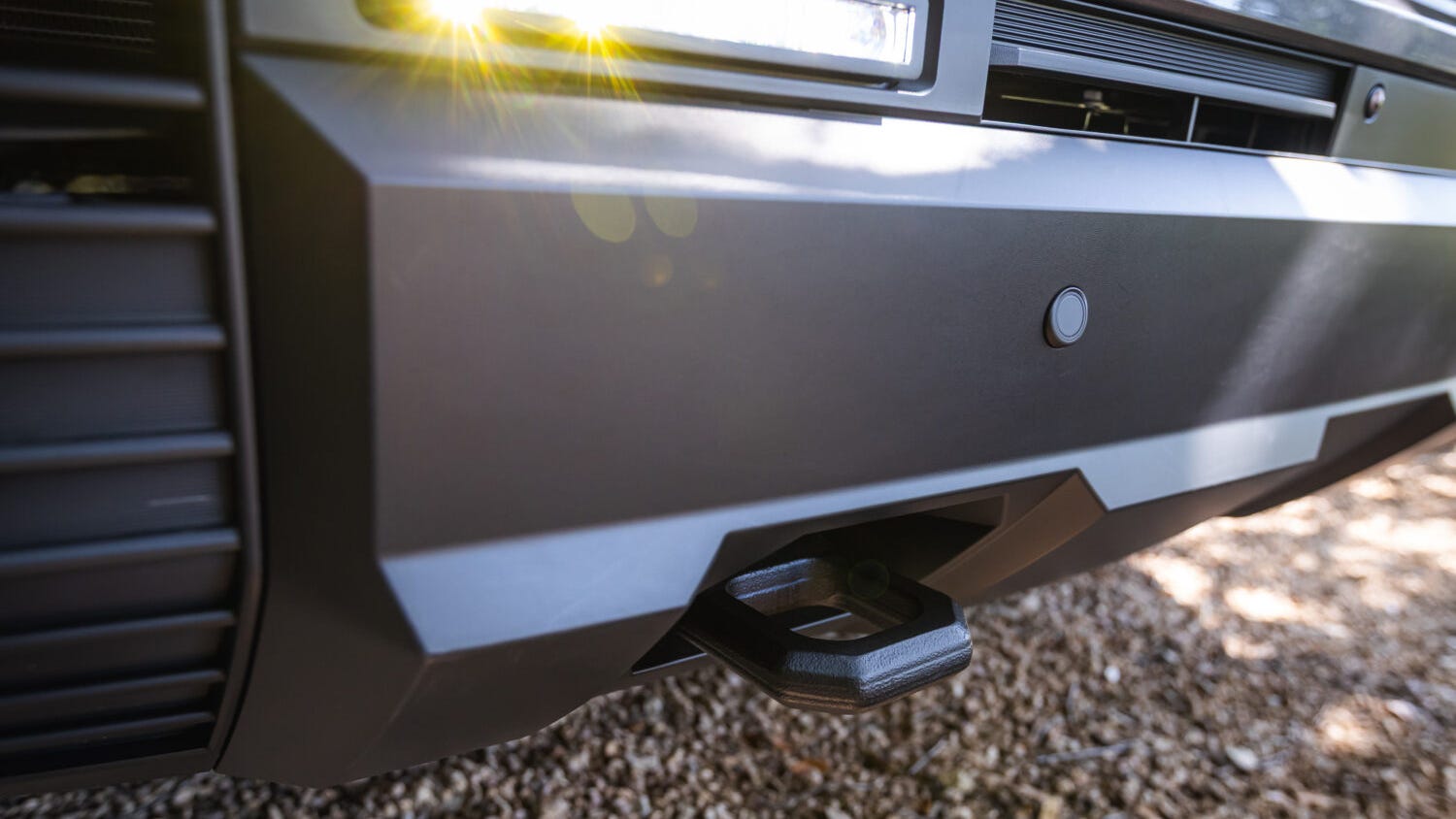
The subject of this article. No 4WD vehicle should ever come without recovery points like these simple metal loops.
All of this looks like it’ll actually represent pretty solid value. Unlike the smaller Tacoma Trailhunter, this version of the Tundra skips all the meaningless farkle and instead delivers some solid, if basic upgrades for people who plan to use their pickups on unpaved surfaces. While there’s no word on pricing or other specs yet, the SR5 base vehicle suggests the Tundra Trailhunter should remain reasonably affordable, at least compared to less capable trims like TRD Pro.
That possibility for reasonable pricing is backed up by the shocks, which appear to be Nitrochargers—OME’s least expensive option. As such, don’t expect improved ride quality, but those shocks will better resist fading while carrying heavy loads in bumpy conditions.
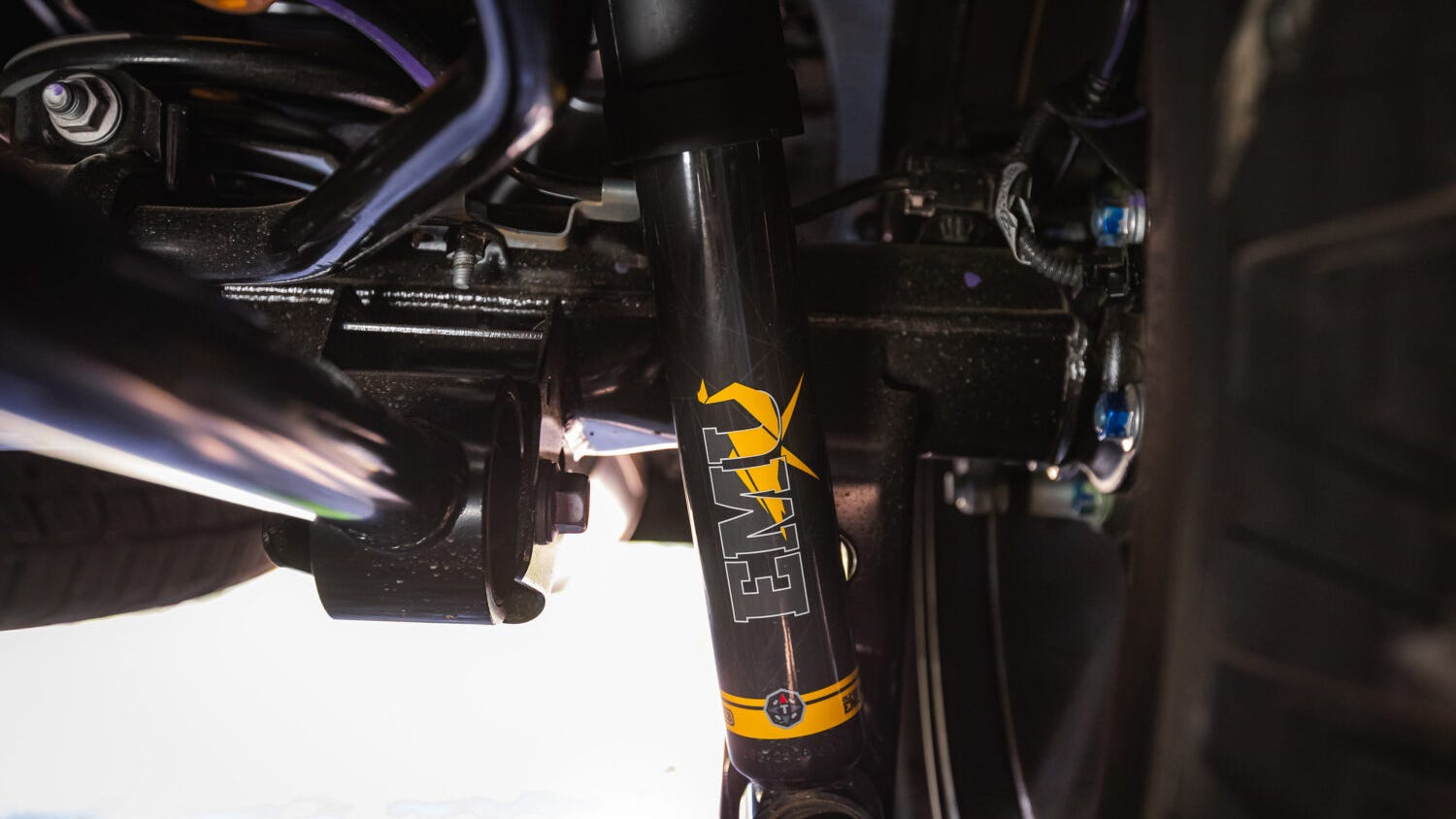
That’s an OME Nitrocharger shock body if I’ve ever seen one.
The 31.6-inch Michelins are less encouraging. Assume those are good for rolling the Tundra Trailhunter off its San Antonio production line and into your dealer, but that you’ll need to replace them before the truck encounters anything as challenging as even dusty pavement. SR5-spec 3rd gen Tundras can run up to a 290/70-18 (approximately 34 inches) without rubbing.
For the mid-cycle design refresh we’re seeing here for the first time, this 3.5 gen ditches the Hulk Hogan goatee for a simplified front-end that’s much less offensive to look at. It’s all very similar to the new Tacoma, just larger. Members of the various Toyotastan forums seem very excited about the prospect of leaving the vehicle running even after a door is opened, so dogs can be safely left unattended with the air conditioning running.
But the big deal is the front recovery points, which you’ll remember me also making a big deal of when I talked about the faux points on Subarus, and how those were dangerously misleading the inexperienced drivers that brand courts.
Versus less experienced voices in the automotive space, I make a big deal out of recovery points because I drive off-road not just on press launches, but virtually every day in my own vehicles. And as someone who has both the knowledge and tools to help other people when they get stuck, I end up helping other drivers on an annoyingly regular basis. This becomes an even more common chore in winter. I’ve had to winch people out of snow drifts on the street in front of my house here in downtown Bozeman.
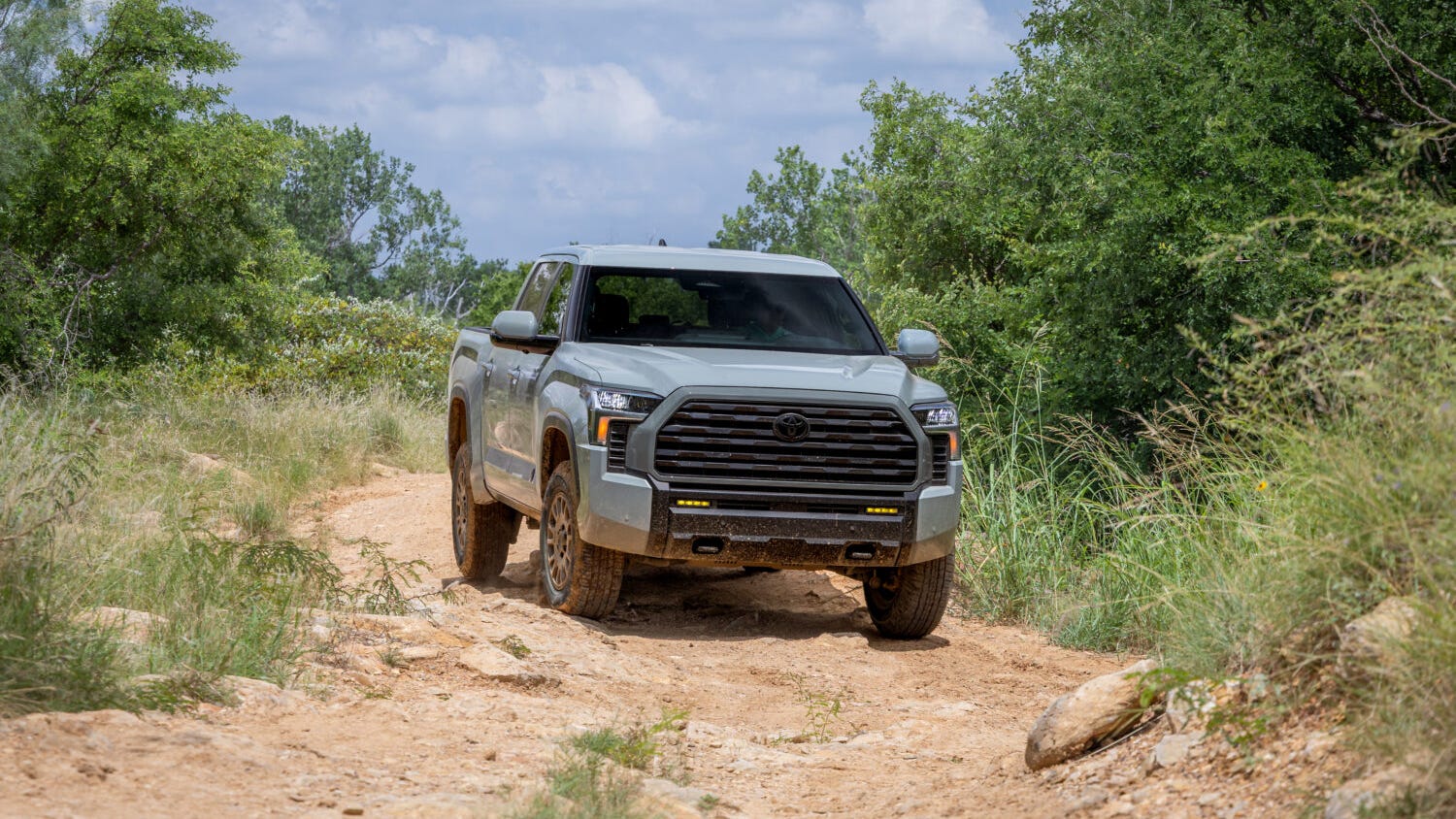
Ditching the Hulk Hogan goatee is a huge improvement.
And while many vehicles can easily be recovered from the rear so long as they’re fitted with a totally normal two-inch tow receiver—you just insert a receiver shackle mount, which I carry two of just for this purpose—many are unable to be safely pulled forward at all. And that creates the kind of pickle that makes an already annoying, sometimes dangerous situation even worse for both me, the good samaritan, and for the hapless driver of the point-less vehicle.
Because traveling off-road, through winter conditions, or in remote places inherently involves risk of getting stuck, people planning to drive in those must prepare to get unstuck. But, in a totally stock 3rd gen Tundra, that’s been impossible, since they didn’t include front recovery points from the factory.
Beginning in 2027, at least the Trailhunter trim will be able to be driven off-road, in winter conditions, and in remote areas in totally stock form. Whether or not that capability will be brought to more expensive, less-capable versions of the Tundra, like the TRD Pro, is not yet clear.
That may not fix the issue inherent in the design of the 3.4-liter twin-turbo V6, in which the crankshaft can be pulled out of tolerance by the timing chain under heavy load, destroying its bearings, but when that happens, you’ll now at least be able to ask a better equipped driver for help.
All photos: Toyota
A journalist with more than two decades of experience working around the world, Wes Siler is here to cut through the outrage and disinformation to bring you the factual, insightful, actionable reporting you need to understand what’s going on. Upgrading to a paid subscription supports this reporting, and buys personal access to Wes, who will help you save money on gear, plan outdoor adventures, and prepare for real life, and who promises he’s less salty in real life than he sometimes comes across as on the Internet.
Comments
Nothing yet. Say the first thing.
Sign in to join the conversation.