
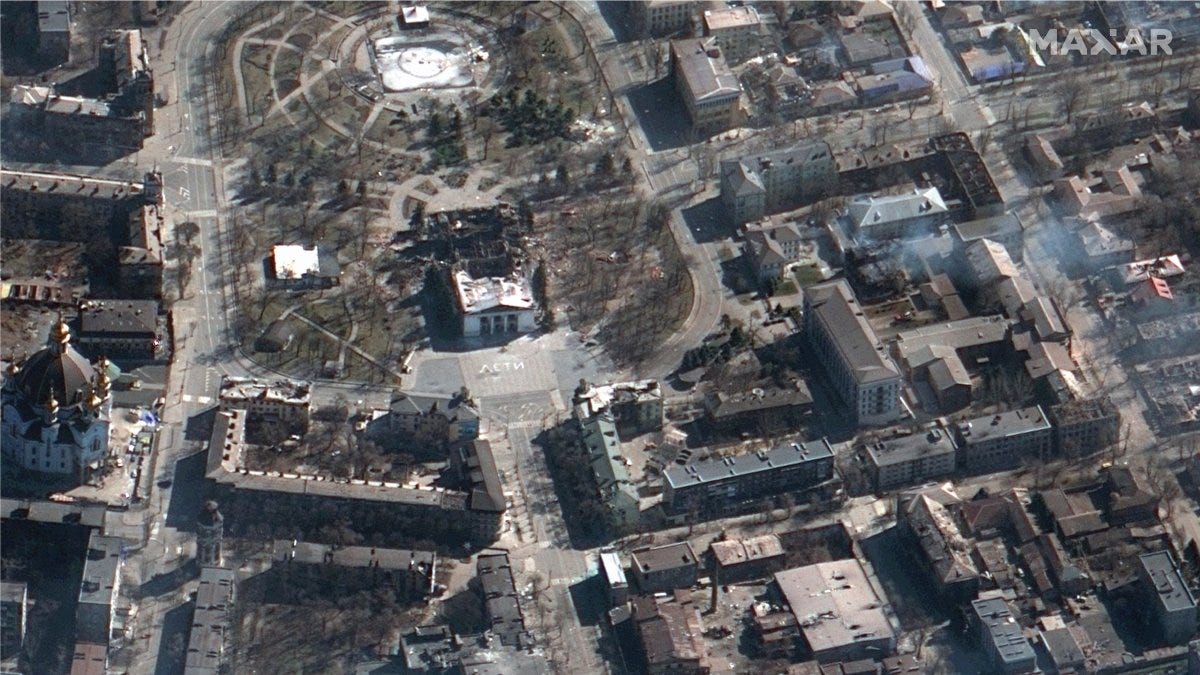
The barbaric (there is no other word for it) Russian siege and bombardment of the Ukrainian port city of Mariupol was one of the defining moments of the outbreak of the war in Ukraine. It occurred four years ago, but deserves remembrance, not least because it was an early turning point in the war, demonstrating an astonishing Ukrainian will to resist and, equally, the lengths to which the Russian military would go, including committing war crimes, to achieve the objectives set for them by Vladimir Putin. Russian ferocity mounted as what was meant to be a quick Russian advance across the southern Ukrainian coast, with Catherine the Great’s city of Odessa the ultimate prize, was frustrated and stymied as defenders hung on in Mariupol. In the course of an 86-day siege, a city of nearly a half a million souls was turned into a charnel house, a modern-day Stalingrad.
Now an American journalist, James Verini, has helped bring the story of Mariupol back to life. Verini was on the ground in Ukraine when the war broke out; his later research was funded by the Pulitzer Centre. His account is not about the fighting in Mariupol, but, uniquely, about surviving the fighting. His story captures the events that took place at the Mariupol theatre, the cultural centre-piece of the city, turned into a war refuge for civilians. The theatre was bombed and destroyed by the Russian air force on the morning of March 16, 2022. [1] He has tracked down survivors and weaved together a remarkable story that is less about death and destruction, though these are unavoidable themes, but more the tale of a community who gave life to the theatre as a refuge until that life was taken away with the crash of twin bombs from a Russian aircraft.
The Donetsk Regional Academic Drama Theatre, known simply as ”Drama” to the city, opened in 1960. It’s main, and somewhat grand, auditorium, complete with a giant crystal chandelier, seated 800. On the day before the Russian invasion of Ukraine, the theatre was preparing for a production of a Moliere comedy, Scapi the Schemer. In the years since the initial Russian seizure of Crimea and parts of the Donbas, in 2014 the theatre had turned its back on its tradition of mounting only Russian plays.
One day after the Russian invasion, while Maripulisti, like much of the rest of the country remained in shock and disbelief, the theatre was placed on a list of refuges for the city’s population, just in case. But it was never prepared or equipped as a bomb shelter. The likeliest spot in the building, the basement, was in the process of being turned into a café. Otherwise, it was a storage space for old documents, props and costumes.
As Russian forces advanced on Mariupol and bombardment from artillery and planes began to hit the city hard, residents who had lost their living spaces, or sought somewhere believed safer, or wanted a place to stay while they awaited a promised evacuation, started to flood into the theatre “refuge.” The numbers rose from 600 to nearly 1500 as the Russian siege began in earnest. The basement filled up; refugees found spaces in the auditorium, where the seats were dismantled, and the cushions used for bedding. There was no plan to meet a human tide of this scale. Garbage piled up, toilets were blocked, disputes arose, looting began, food was scarce and hoarded.
Chaos and violence threatened. And then, miraculously, a semblance of order was created. With dysentery feared, an infirmary was created and medical supplies found by a team of scavengers, called the “Searchers,” who roamed the city. There was one doctor for the entire building and its population; volunteers nurses were found to assist. Other teams were created, one to clean the toilets, one to prepare food, one to man the doors. A playroom for kids was created. A grand piano was resuscitated. Queen’s “The Show must go on,” became a popular anthem, according to Verini.
One of the theatre’s administrator’s kept a meticulous record of everyone who came to the refuge. The records went up in flames when the Russian air force attacked the building.
As critical infrastructure was destroyed across the city and power, water, fuel and communications lost, more improvising followed. One battery powered radio was located and tuned to distant and fading Ukrainian stations for any news. Fire pits were created on the theatre grounds, with bricks taken from a destroyed bus stop, to prepare food. A meal routine was created. Scavenged generators provided some power. A burly metalworker took over hauling buckets of water all day from a cistern in front of the theatre.
There were rules of behaviour. The most important—no talking politics. Why not? Mariupol had long been Russified and lived next door to break-aways parts of the Donbas. The theatre’s refugee population included determined Ukrainian nationalists and patriots, but also those known as zombis and separatysty. The theatre was so crowded that nothing was out of earshot and politics were talked or whispered regardless of the rule. The zombis and separatystys had their own alternate facts. Verini tells an alarming tale of the ways that the Kremlin’s lies infiltrated the building, otherwise choked of news. Some parroted Putin propaganda. Ukraine was to blame for the war; NATO was to blame: Zelensky was an American puppet, so the US was to blame; neo-Nazis were to blame. Those who were prepared to believe that it actually was the Russians bombarding the city (not all were convinced) blamed the Ukrainian army for putting up a fight. Stories circulated in the information blackout that the Russians had captured Kyiv and the rest of the country, only Mariupol was stupid enough to hold out. The buzz of Putin propaganda was loud enough that some worried that the theatre had been infiltrated by Russian agent-provocateurs.
Verini is careful to point out that, as remarkable as was the order created within the Theatre refuge, war twists human behaviour in different ways. It made some people braver, and some people worse. He quotes two elderly women who came to the refuge and spent much time together—witnessing the crowd and its pulsing talk, in their view, was “like watching TV.” [2]
One of these elderly women, almost my favourite character in Verini’s account, was a truly remarkable survivor. She went by the nickname “from eight to six” owing to the fact that she came to the theatre after she had been bombed out of her apartment building, falling two floors down and being rescued by firemen from a closet where she had ended up.
By March 10, Russian troops were pushing into the city’s centre and getting ever closer to the theatre. Two days later, someone had the inspiration to take cans of white paint from the scenery shop and paint the Russian word for children in four metre-long letters in the plaza in front of the theatre main façade and in the parking area by its rear entrance. This was to warn off any Russian aircraft.
By then all hope had been lost that any organized evacuation of the city would be allowed by the Russians to take place. Ukrainian military resistance was starting to collapse as units withdrew into make-shift fortresses in the city’s two metalworking factories. But news of a possible escape route along a coastal road came to the attention of the theatre denizens and on March 14 people began to leave and face the desperate circumstances of a journey through a war zone and across multiple Russian checkpoints. By the end of the 15th of March, Verini records that about half of the roughly 1500 refugees who had camped out in the theatre had left.
It was good that they did.
On the morning of March 16, the theatre was bombed by a Russian aircraft, despite the warning letters placed on the theatre grounds. The theatre’s roof suffered a direct hit and was destroyed, as was the rear half of the building. The blast effects were so great that walls collapsed and rubble filled every space; the giant crystal chandelier in the auditorium came crashing down. Glass shards were everywhere. The world turned white and full of dust. For those who survived and could look up, they struggled to understand what they saw--light and blue sky.
Verini tells the stories he could gather of what the moment of the bombing and its aftermath felt like. He calls the chapter, simply, “the day.” It’s powerful and resists any summary, though this stayed with me. One survivor recalled how the entire theatre after the bombing was a vast soundstage of moaning. A dirge.
The Russian attack on the Mariupol theatre was a war crime. Verini calls it the defining atrocity of the Ukraine war. No one knows how many people exactly were killed, or how many children. The death toll may have been as high as 200. [3] Bodies were left buried in the rubble. Some of the dead ended up in mass graves on the city’s outskirts.
The Mariupol theatre was rebuilt by Russian occupiers and reopened in December 2025. The city’s former council called the opening of the theatre “singing and dancing on bones.” [4]
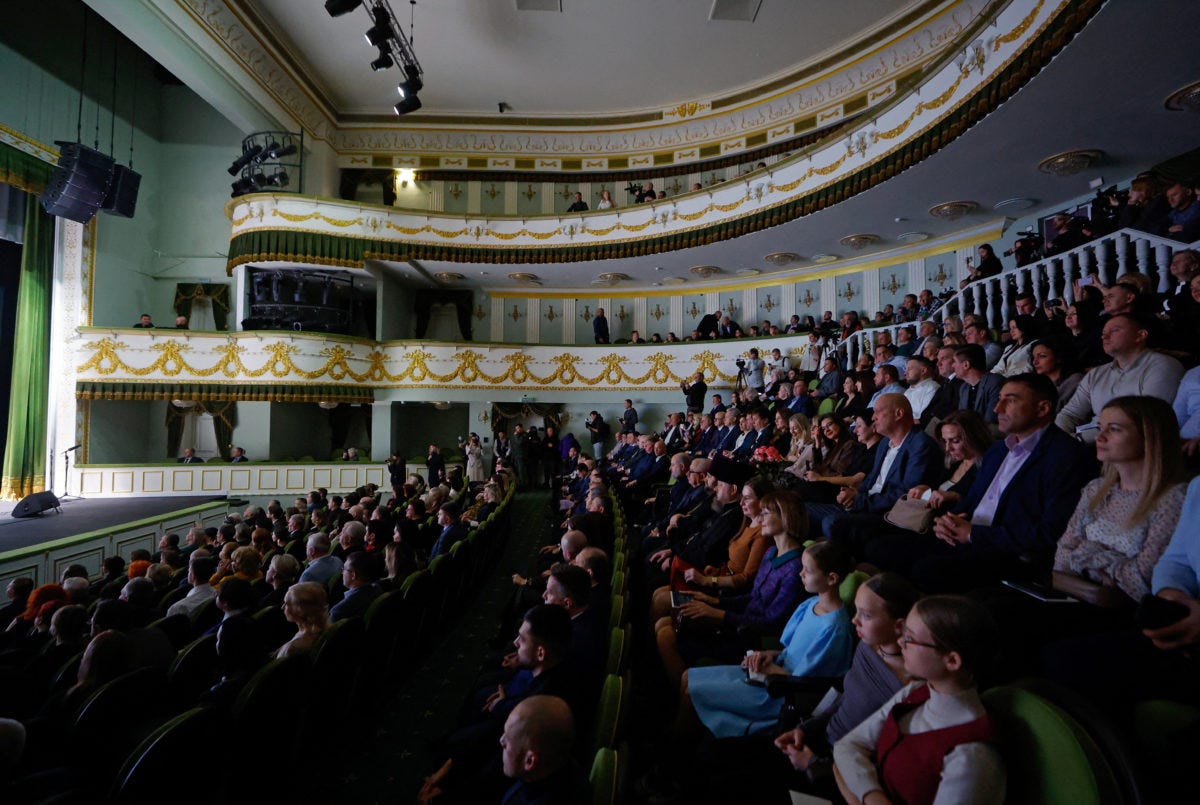
Few of those Maripulisti that Verini interviewed had any desire to go back.
This is Part One of a longer account, something I have long wanted to write. Part Two will delve into the wider story of the war crimes committed by the Russian regime in Mariupol.
[1] James Verini, The Theater: Courage and Survival in the Defining Atrocity of the Ukraine War (New York: Simon and Schuster, 2026)
[2] Ibid, p. 122
[3] Ibid, p. 170
[4] PBS, “Russia reopens Mariupol theater more than 3 years after its airstrike killed hundreds there,” December 29, 2025, https://www.pbs.org/newshour/world/russia-reopens-mariupol-theater-more-than-3-years-after-its-airstrike-killed-hundreds-there
Comments
Nothing yet. Say the first thing.
Sign in to join the conversation.