
Last weekend when I was in Washington, DC for The Understory festival (wonderful), I was able to visit the Museum of the Bible for the first time (also good but puzzling). On the museum’s third floor, there are two main exhibits: one is a dramatic and immersive retelling of the main narrative of the Old Testament, complete with a walk-through of the parted waters of the Red Sea. The other is an effort to take visitors into the heart of the New Testament. I found the latter exhibit especially provocative, and I’d like to try to explain why.
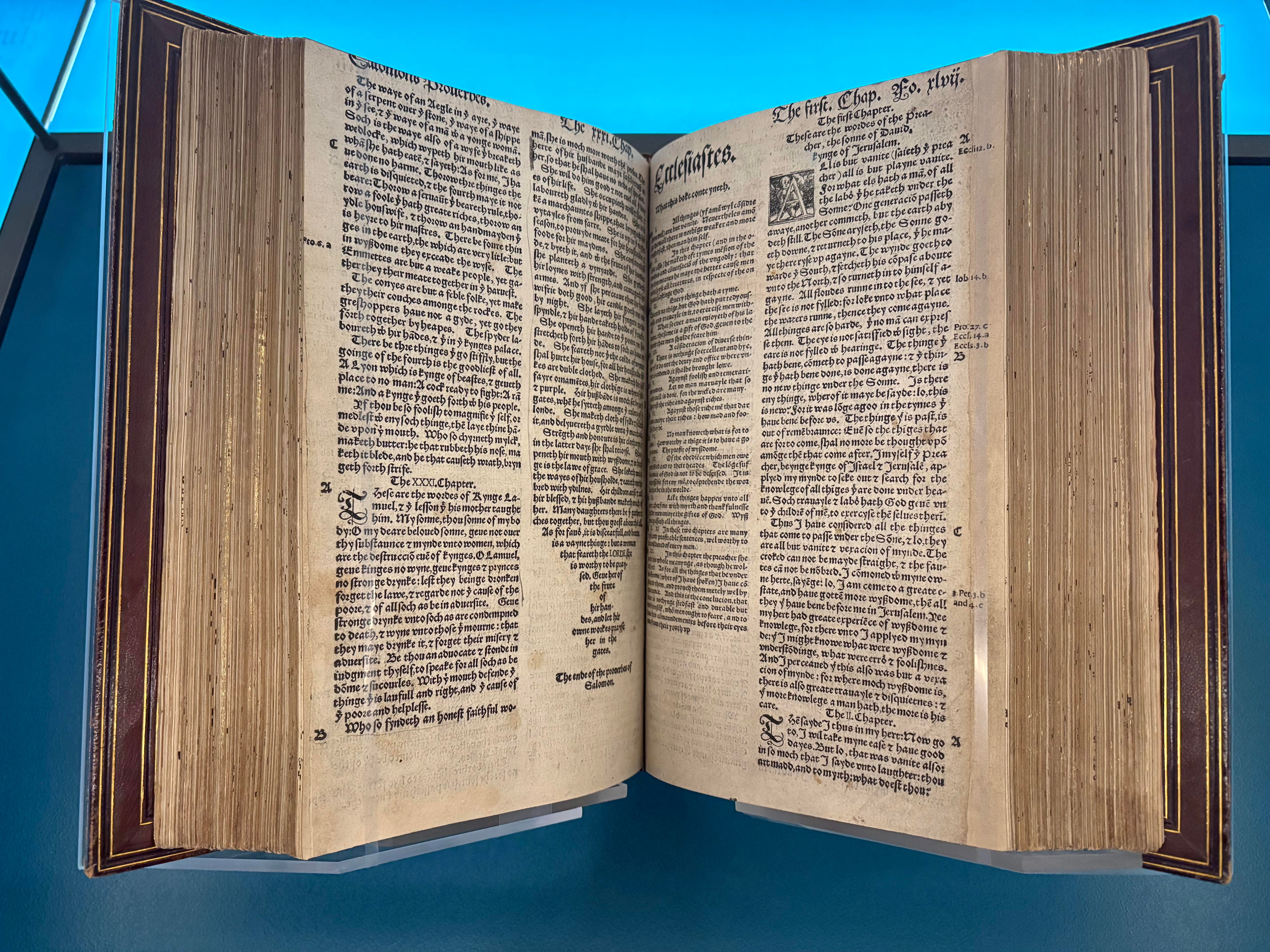
The centerpiece of the New Testament exhibit is a thirty-minute film called Road to Emmaus, based on Luke 24:13-35. The protagonist Cleopas (named in Luke 24:18), we quickly learn, has had an affair, and his wife has taken their children and left their home in Emmaus. As the film opens, Cleopas, along with a friend named Daniel, is now leaving Jerusalem in the aftermath of Jesus’ crucifixion to go back to his empty house and mourn what he’s forfeited.
Before they set off, Cleopas and his friend are at a well near Jerusalem when a stranger they don’t recognize asks them for a drink (a deliberate echo of Jesus’ encounter with the Samaritan woman in John 4?). From there, the stranger joins Cleopas and Daniel on their trek, asking them questions and (in one harrowing encounter with a Roman officer) saving them from disaster.
As I tell my students when we discuss the Emmaus narrative in detail every year, it’s at this juncture that we come to the first major movement (of two) of the story. In the face of the travelers’ incomprehension and skepticism about the report they’ve heard concerning Jesus’ empty tomb, Jesus hosts a Bible study:
“Oh, how foolish you are and how slow of heart to believe all that the prophets have declared! Was it not necessary that the Messiah should suffer these things and then [or perhaps thus, as Walter Moberly has speculated] enter into his glory?” Then beginning with Moses and all the prophets, he interpreted to them the things about himself in all the scriptures.
Jesus apparently takes these two travelers on a hermeneutical pilgrimage through the Law and the Prophets, opening their eyes to see how the previously incomprehensible occurrence of the Messiah’s execution and resurrection was in fact prefigured in the Scriptures of Israel and is now visible in the wake of Easter’s earthquake.
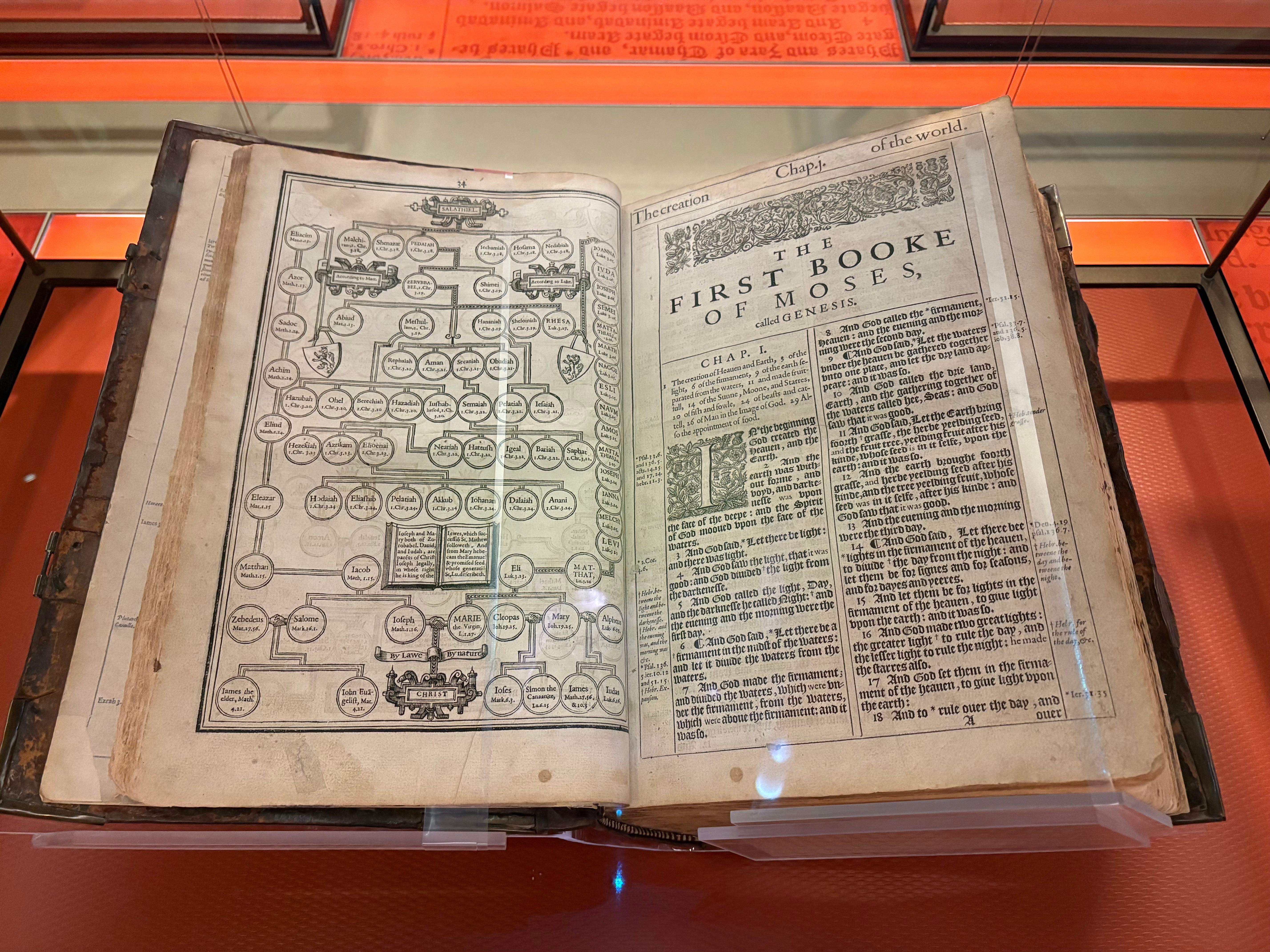
At least that’s what I tell my students. But that’s not what happens in the film.
In the film, Jesus does interpret the Scriptures. But his interpretations are all about Cleopas, the devastated traveler whose life is in shambles because of his adultery and his (he presumes bitterly disappointed) hope that Jesus could have been the Messiah. Jesus’ Scriptural interpretations are each and all an effort to convince Cleopas that, in the words of Francis Spufford, far more can be mended than he knows.
(It occurred to me to wonder whether the filmmakers might have taken the reflexive pronoun in verse 27 — “he interpreted to them the things about himself in all the scriptures” — to be referring to Cleopas, not Jesus. If so, that’s an ingeniously creative — but mistaken — reading of the Greek.)
Jesus retells the story of David’s sin with Bathsheba, noting that God didn’t require David’s perfection but rather his sincere penitence. That’s what God wants from you, too, Cleopas, Jesus implies.
Jesus retells the story of Abraham’s binding of Isaac, concluding that God didn’t want Abraham’s son; he wanted Abraham’s heart. And the same goes for you, Cleopas.
Eventually, Jesus does get around to what John Stott calls his “self-centeredness”: “I am the tree on fire,” he says at one point, identifying himself with the burning bush of Exodus 3. But even there, the focus is on how Jesus’ identity makes possible a transformed self-understanding for Cleopas, not so much on Jesus’ person itself. The Messiah came to shoulder burdens, Jesus explains as the camera cuts to a flashback of the Via Dolorosa. Burdens like yours, Cleopas.
Those who know the history of New Testament scholarship may think here of Rudolf Bultmann’s “existential” interpretation of the New Testament. Writing about Paul, Bultmann famously says in his Theology of the New Testament,
Pauline theology is not a speculative system. It deals with God not as He is in Himself but only with God as He is significant for man, for man’s responsibility and man’s salvation… [E]very assertion about Christ is also an assertion about man and vice versa; and Paul’s christology is simultaneously soteriology.
What this means is that when the New Testament exhibits “the proclamation of the event of Christ’s coming,” then “an understanding of the event requires not speculation but self-examination, radical consideration of the nature of one’s own new existence.” Hearing that Jesus is Lord means, in the words of one critic, that our fundamental questions are now these: “What do I encounter in the existential depth of my own lived experience? At the bottom of my own frustration and despair, what do I find? And, whatever I do find, how do I choose to live before it?”
But are those questions able to be so neatly separated from “speculation” about Christ’s natures? Can questions about Christ’s redemptive “work” be so cleanly tweezed apart from ontological questions about his “person”?
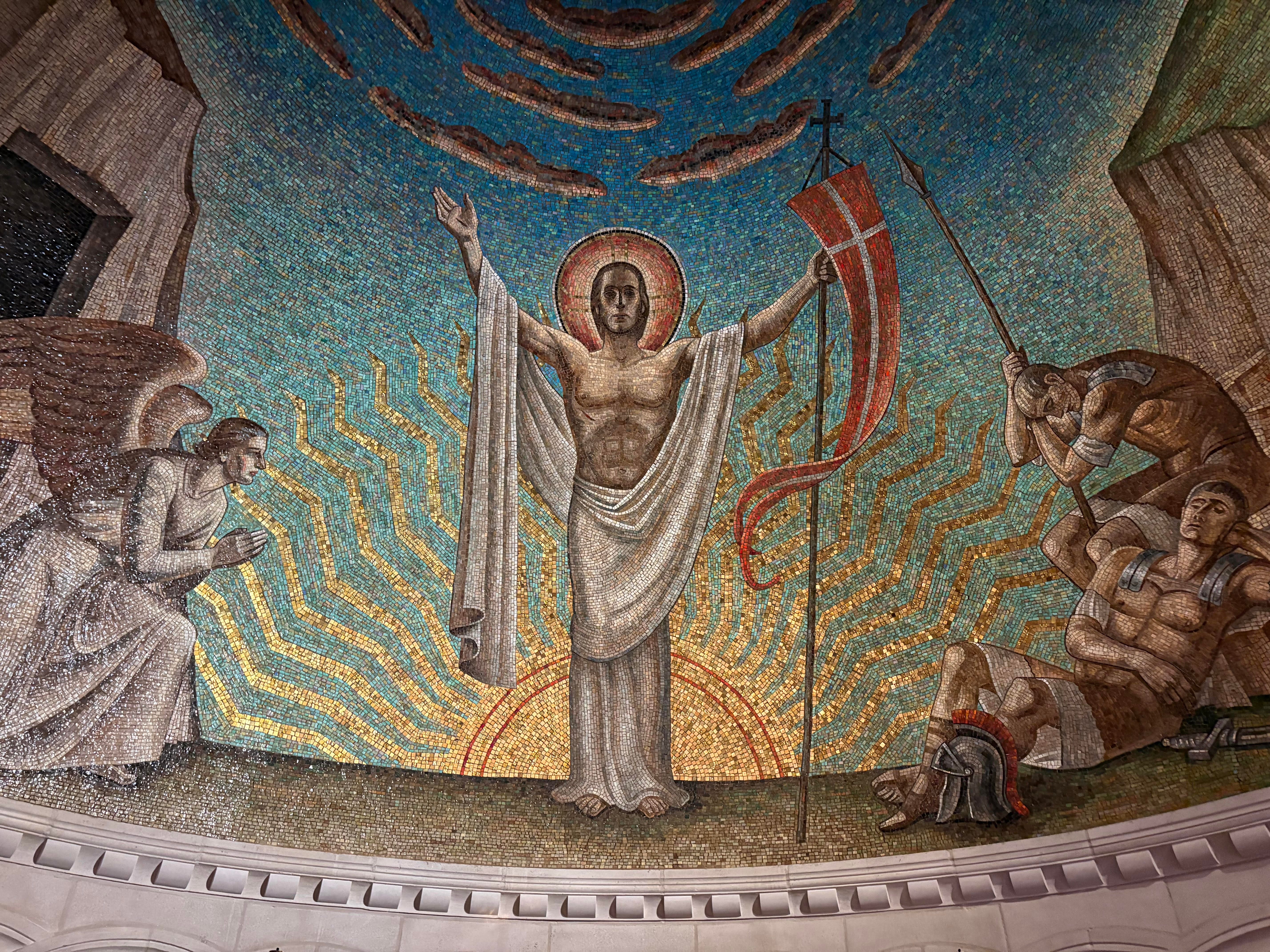
I doubt the Museum of the Bible filmmakers gave any thought to Rudolf Bultmann when producing the Road to Emmaus, nor do I imagine they’d welcome the comparison if they knew Bultmann’s place in the world of theology. But in choosing to reimagine the Emmaus story the way they have, they pose Bultmann’s challenge vividly: Is Jesus misunderstood if his vocation and achievement isn’t related at every point with a personal redemptive encounter with him? Or — asking it the other way around — is a redemptive encounter with Jesus necessarily bound up with questions about who he is in himself? (Can a human being eternally save another human being?)
As I texted some friends on leaving the museum last weekend: The exhibit was far more overtly evangelistic than what you’d expect if you’re looking for a cool, detached presentation of the historical figure of Jesus.
The film climaxes with a tantalizingly brief, shadowed glimpse of huge nail scars on Jesus’ wrists as he breaks bread with Cleopas and Daniel. Then he steps outside the house into a churning crowd, turns for one last backward smile at Cleopas and Daniel, and disappears into the throng.
Thanks for reading Writing in the Dust! This post is public so feel free to share it.
A couple of other things:
This past Sunday was Trinity Sunday. Here is the best Trinity Sunday sermon I have ever read, by Mike Higton of Durham University, my alma mater.
My colleague and friend Suzanne McDonald has a new book out on George Herbert, and it is wonderful. Here’s what I wrote for the back cover: “For those who already cherish the words of George Herbert, this collection of meditations on his poems will be a welcome, cheering companion. And for those yet to discover this master of devotional frankness and spiritual adulthood, Suzanne McDonald’s book is the perfect introduction. It will have a cherished place on my shelf, next to Herbert’s poems themselves and the Bible and Prayer Book he knew and loved so well.” Here’s an excerpt from the book. Also, subscribe to Suzanne’s Substack!
No posts
Comments
Nothing yet. Say the first thing.
Sign in to join the conversation.