
This past Sunday I preached my last sermon as a priest associate of the parish church where I’ve been worshiping and serving in West Michigan for the past few years. The parish, St. John’s in Grand Haven, has a proud tradition of social activism and justice ministries, which may be useful background information to know if you read what I preached.
This was one of those Sundays for which I wrote my sermon before glancing at the Collect of the day which begins, “O Lord, make us have perpetual love and reverence for your holy Name…” (BCP ‘79, p. 230). This was, providentially, the theme of my homily.
My texts were two of the RCL appointed passages, Jeremiah 20:7-13 and Matthew 10:24-39.
+In the Name of the Father, the Son, and the Holy Spirit, Amen.
A few years ago, on a long layover in Amsterdam, I visited the Rijksmuseum, knowing very little about their collection other than that they had several Rembrandts I was looking forward to sitting with.
I remember rounding a corner and coming face to face with a piece I hadn’t known existed, a work Rembrandt painted when he was around twenty years old: Jeremiah Lamenting the Destruction of Jerusalem. The painting is not large — about 22 by 18 inches — but it was completely absorbing to me. Jeremiah is in the foreground, robed in rich priestly garments and resting his white-bearded head in his hand — in shock and grief, as I read his expression. In the background lies the city of Jerusalem, engulfed in flames. You can barely make out Judah’s king Zedekiah, holding his fists to his newly blinded eyes (2 Kings 25:7; Jeremiah 39:7). The doom that Jeremiah had long foretold has finally come to fruition in the moment the painting depicts. The Lord has allowed the Babylonian armies to conquer the holy city and set its temple ablaze. It looks as if it pains Jeremiah to his core — but does not surprise him. He had seen this vision in his mind and had warned of its arrival.
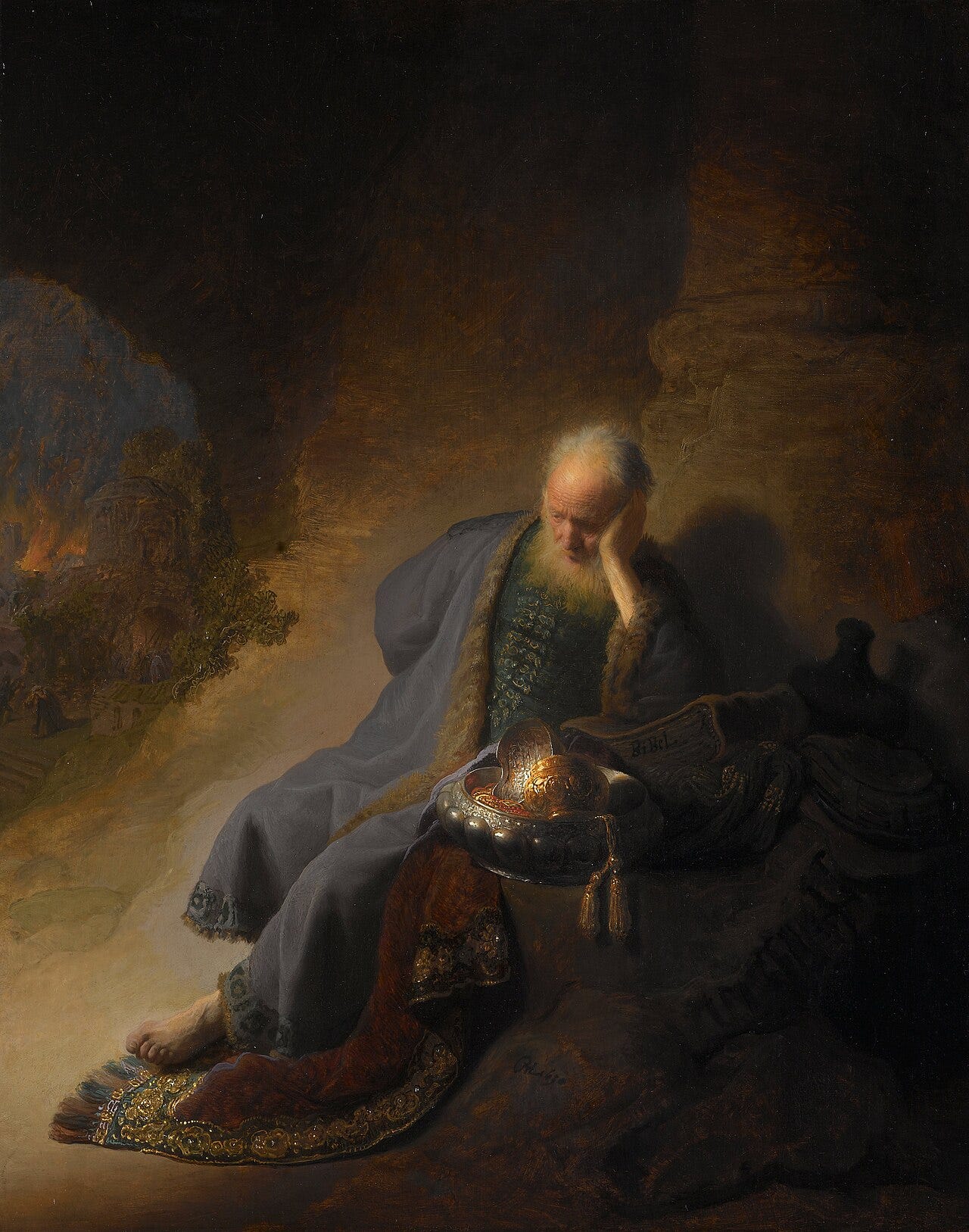
Jeremiah is sometimes called “the weeping prophet,” and that is what Rembrandt’s painting captures so exquisitely. Jeremiah wept because the bitter words the Lord gave him to prophesy were thoroughly rejected. So much so that, right before our reading from Jeremiah this morning, even the chief officer in the house of the Lord beats him and has him put in stocks at one of the temple gates, humiliating him and giving proof, if any more were needed, that no one is paying attention to his warnings.
So Jeremiah laments, “I have become a laughingstock all day long; everyone mocks me.” And yet, he says, he cannot but prophesy: “If I say, ‘I will not mention [the Lord] or speak any more in his name,’ then within me there is something like a burning fire shut up in my bones; I am weary with holding it in, and I cannot.” If Jeremiah were to refrain from proclaiming the word of the Lord, it would be like trying to contain a conflagration: you can shut your windows and bar the door, but eventually the glass will shatter, and the flames will blaze through whatever barrier you use to quell them. That’s what God’s word is like deep in his bones, Jeremiah says: it is like a burning that will combust. It must be let out. Jeremiah has to preach.
And that is exactly what Jesus is talking about in our Gospel this morning. He is continuing his instruction to his twelve disciples that we discussed last Sunday as he sends them out, Jeremiah-like, to be his prophetic witnesses in a world hostile to truth. He predicts that they will be criticized and threatened, as he has been. But no matter, he says. “Have no fear of them.” The word that he has given his disciples must be heralded: “What I say to you in the dark, tell in the light; and what you hear whispered, proclaim from the housetops.”
Jesus does not hide the fact that being prophetic will demand everything. Some of his disciples will find that their families will turn against them, refusing to listen to their witness. “Do not think that I have come to bring peace to the earth,” Jesus says. Sometimes the truth, when it is preached, will be bitterly divisive.
But then Jesus goes further. He specifies what exactly the content of his disciples’ prophetic word is to be. Unlike Jeremiah, his disciples are not to proclaim Jerusalem’s destruction. In last week’s Gospel, he said, “Proclaim the good news, ‘The kingdom of heaven has come near.’” But in today’s Gospel, he narrows the focus: “Everyone… who acknowledges me before others, I also will acknowledge before my Father in heaven; but whoever denies me before others, I also will deny before my Father in heaven.” Last week, we heard Jesus telling his disciples to do what he did — to cure the sick, raise the dead, cleanse the diseased, cast out demons, to work for the health and wholeness of human beings. This week, we hear Jesus saying that while they do these things, they are also to say that they do them in Jesus’ name, for his sake and cause, because of their trust in him as their master and teacher.
This is where we Episcopalians start to squirm. We generally like to stand up for justice, to march for social causes in solidarity with the marginalized. We usually dislike being in solidarity with Christians who talk too much about Jee-zus. We are suspicious, sometimes rightly, of proselytizing. We’d rather get on with doing good instead of talking about our hope in Christ.
But our Gospel says that our calling is to do both — to work for peace and justice and to be willing to acknowledge the One in whose name we do these things, to not be ashamed of saying, “I am a Christian, and I care about the poor because Jesus is my Lord and Savior.”
I think here of some of the greatest heroes of the Civil Rights Movement. Fannie Lou Hamer — the Mississippi sharecropper who organized voter registration drives and was savagely beaten by police and permanently disabled by it — alluded to our Gospel when she said: “I believe in Christianity because the Scriptures said: ‘The things that have been done in the dark will be known on the house tops’” She helped Black folks register to vote because of her Christian faith.
I think of St. Oscar Romero, the archbishop of San Salvador who publicly denounced the human rights abuses of the military government of El Salvador, was assassinated while he was at the altar preparing to say Mass. Romero said: “Each time we look upon the poor, on the farmworkers who harvest the coffee, the sugarcane, or the cotton... remember, there is the face of Christ.”
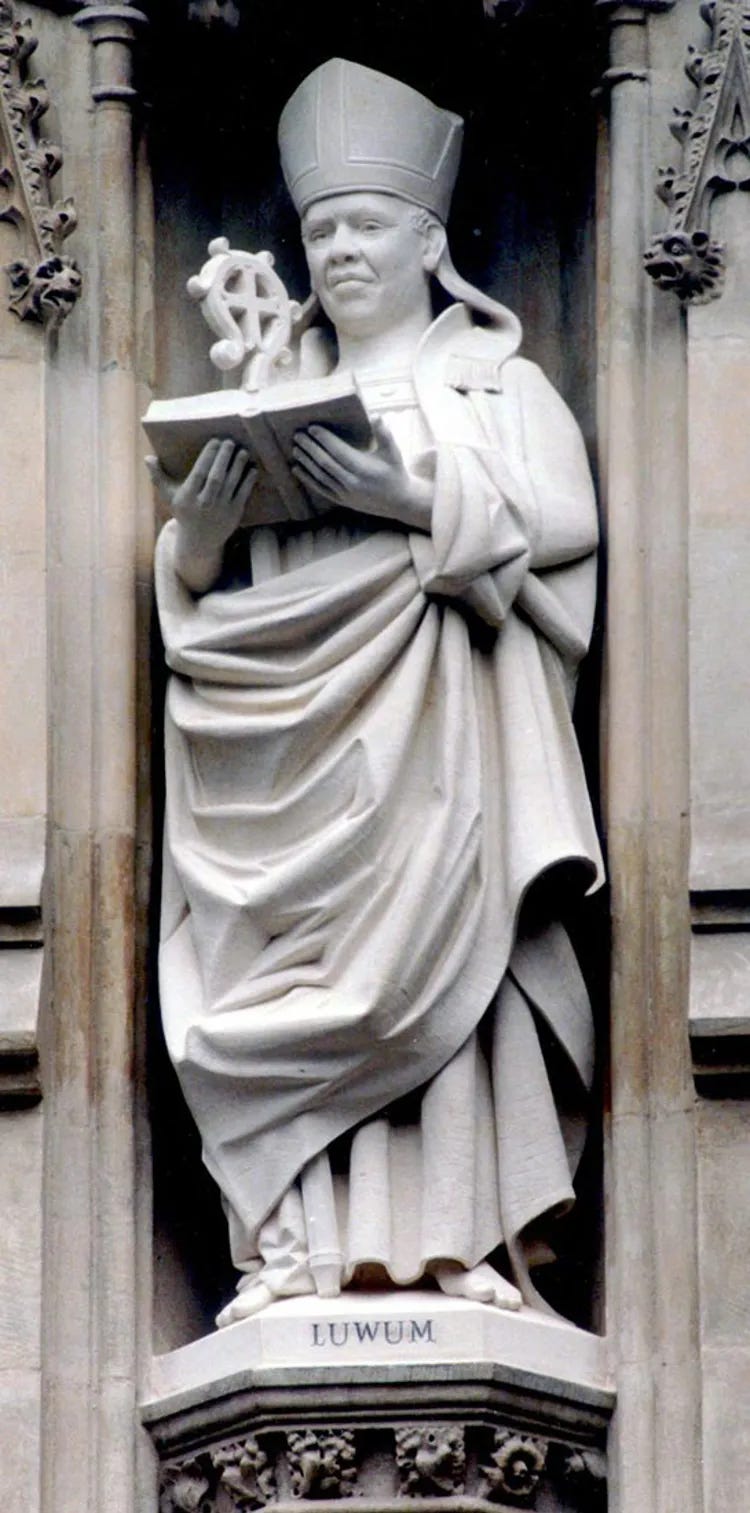
I think of the Ugandan Anglican archbishop Janani Luwum, whose statue is featured above the entry of Westminster Abbey, who was murdered by Idi Amin in 1977 when he dared to speak out against the atrocities of Amin’s regime. Luwum said, knowing his death was likely: “While the opportunity is there, I preach the gospel with all my might.”
These are prophets who took Jesus’ words to heart: “Do not fear those who kill the body but cannot kill the soul.” They were not ashamed to be counted among those who call on the name of Jesus in their work for peace and justice.
Friends, this is my last sermon to preach here at St. John’s before my move to Toronto next month. As I have thought about what message I’d like to leave you with, I want to say what I most deeply believe: Jesus is Lord. He lived for you all the way to death, and death could not destroy him, and so he lives for you still, the Risen Lord, and he will not disappoint you. Trust him. Continue your good work for the world, continue standing up for those in our society who have no voice — and do these things because you know that Jesus is your Savior and Redeemer.
I have a friend who grew up in a conservative Reformed context. Like many of you, he is now embarrassed by some of what his fellow Christians did in the name of their Christian faith. He doesn’t want to be associated with fundamentalism. But a few years ago when he was at an interfaith gathering at the Chautauqua Institution in New York, he said this:
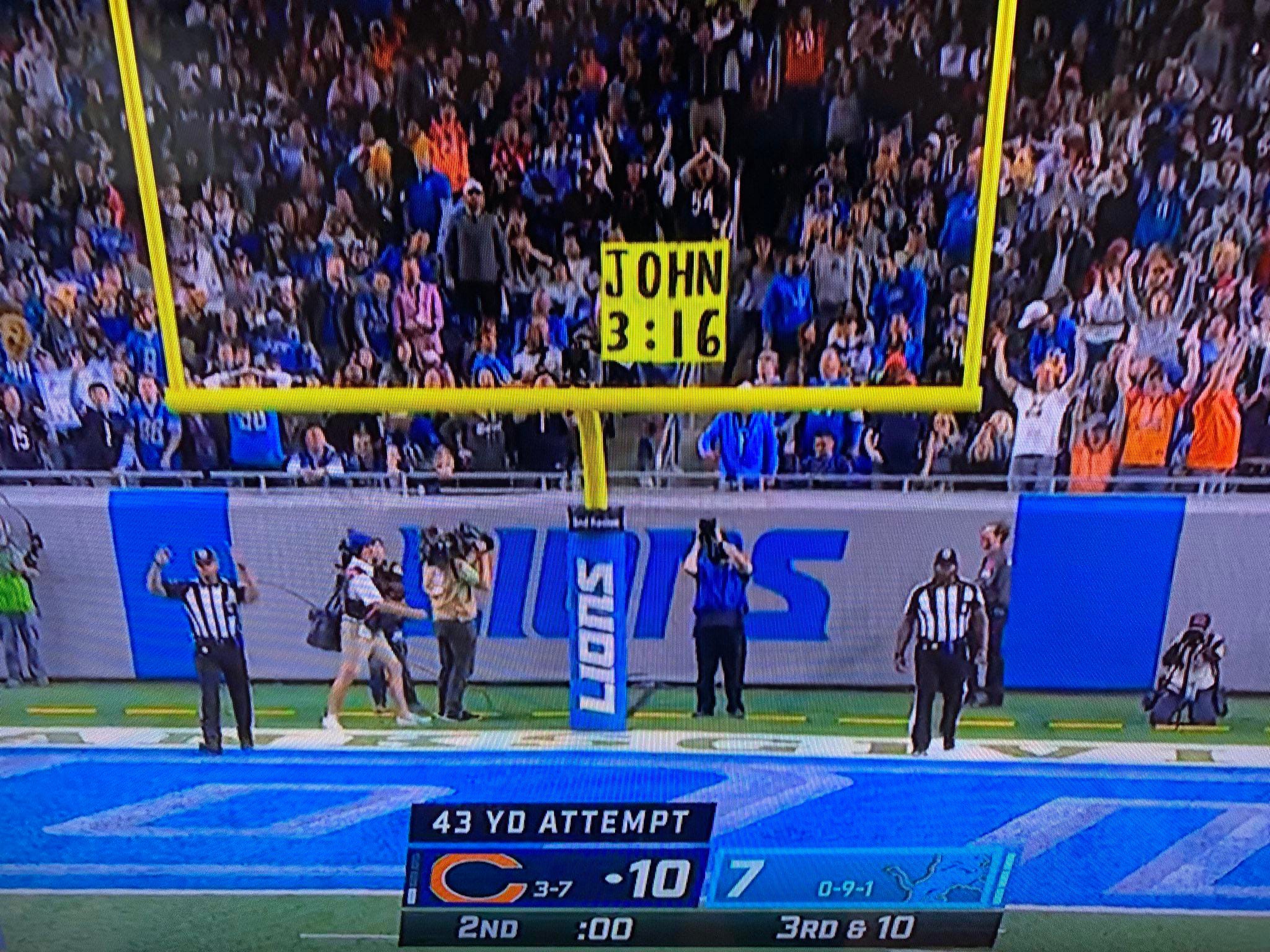
Those of you who watch professional football games know that there is often somebody in the crowd right behind the goalposts who holds up a “John 3:16” sign. I need to tell you this: “That’s me!” I find I need to live with some mystery about what God is doing in the Abrahamic religions [outside of Christianity]. At the same time, I cannot fail to proclaim the John 3:16 message that God has sent a Savior, and that those who believe on him will not perish but have everlasting life.
So, friends, do not be ashamed of him. Trust in the Lord Jesus. Trust his love for you. Trust him as a friend whom you know and can pray to. Let his word dwell in you like a burning in your bones, and go out and proclaim it and do good in his name and for his sake.
Amen.
A couple of footnotes to this sermon:
Among my favorite hymns, which I chose for congregational singing at my ordination, is Caroline Maria Noel’s “At the Name of Jesus,” which includes this stanza:
Name him, Christians, name him,
with love strong as death,
name with awe and wonder
and with bated breath;
he is God the Savior,
he is Christ the Lord,
ever to be worshiped,
trusted, and adored.The whole hymn is as rich as can be.George Hunsinger’s book Disruptive Grace, which I encountered early on in graduate school, convinced me that robust Trinitarian, Christological orthodoxy, far from being a distraction from social justice concerns, is actually the most robust engine for them. “[T]he forced option between progressive politics and traditional faith is wrong,” Hunsinger wrote, and started me off on an exploration of Christian witnesses I hadn’t known before, like Hamer and Romero. As Hunsinger would say elsewhere, writing about activists like Dorothy Day and André Trocmé, “These Christians saw no reason to choose between their love of Jesus Christ as confessed by faith and their love for the poor and oppressed.” May we all continue to refuse that false choice today.
And one more thing:
I’ll be speaking at a conference in September in Oklahoma, “Radiant Pages: Rediscovering the Bible,” that you are officially and warmly invited to. Information here. Episcopalians love the Bible, too, it turns out — as we’d like to try to convince you.
No posts
Comments
Nothing yet. Say the first thing.
Sign in to join the conversation.