
As I write these words, snowflakes are gently drifting down through muted gray light outside my cabin windows. Today, March 20, is the Spring Equinox. Winter officially ended four hours ago, at 10:46 AM Eastern Daylight Time. Day and night are now roughly equal in length; we’ve gained about three and a half hours of light since the Winter Solstice on December 21.
As the end of winter approaches, the longer daylight beckons me to venture farther afield. During each of the three winters I’ve spent here, I’ve picked a couple of sunny days, sometime from late February into mid-March, to explore the mountain that rises southeast of my cabin. I head out on snowshoes or microspikes, covering 8 to 9 miles altogether. I take my time, pausing to contemplate wonders large and small, whatever may catch my fancy. I climb a thousand to fourteen hundred feet above my cabin, which grants me views of surrounding lakes and mountains, allowing me to see how my home fits into the vast landscape of the Maine Woods.
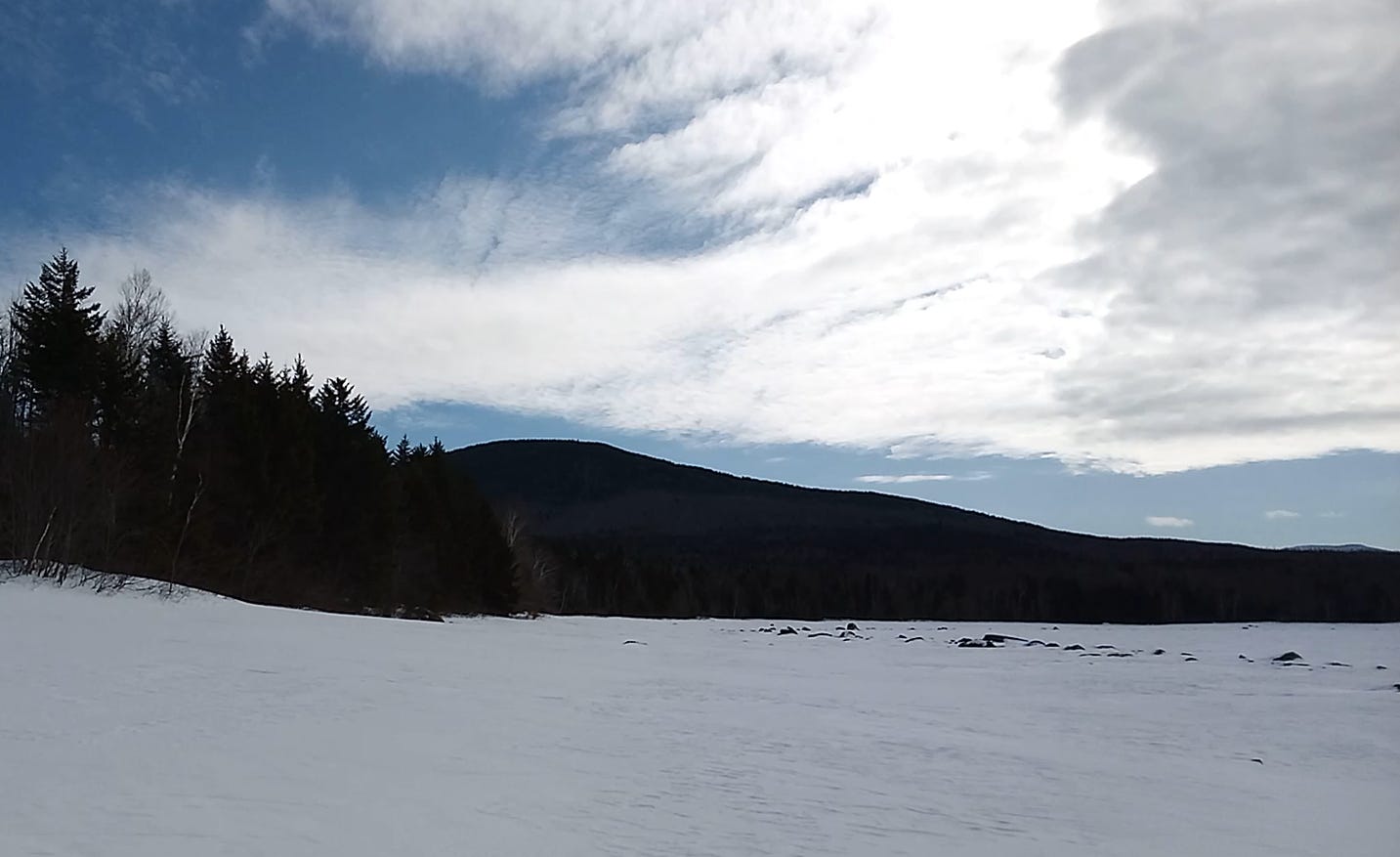
This winter, my first foray up the mountain was on February 22, a day with vibrantly blue skies above sparkling white snow.
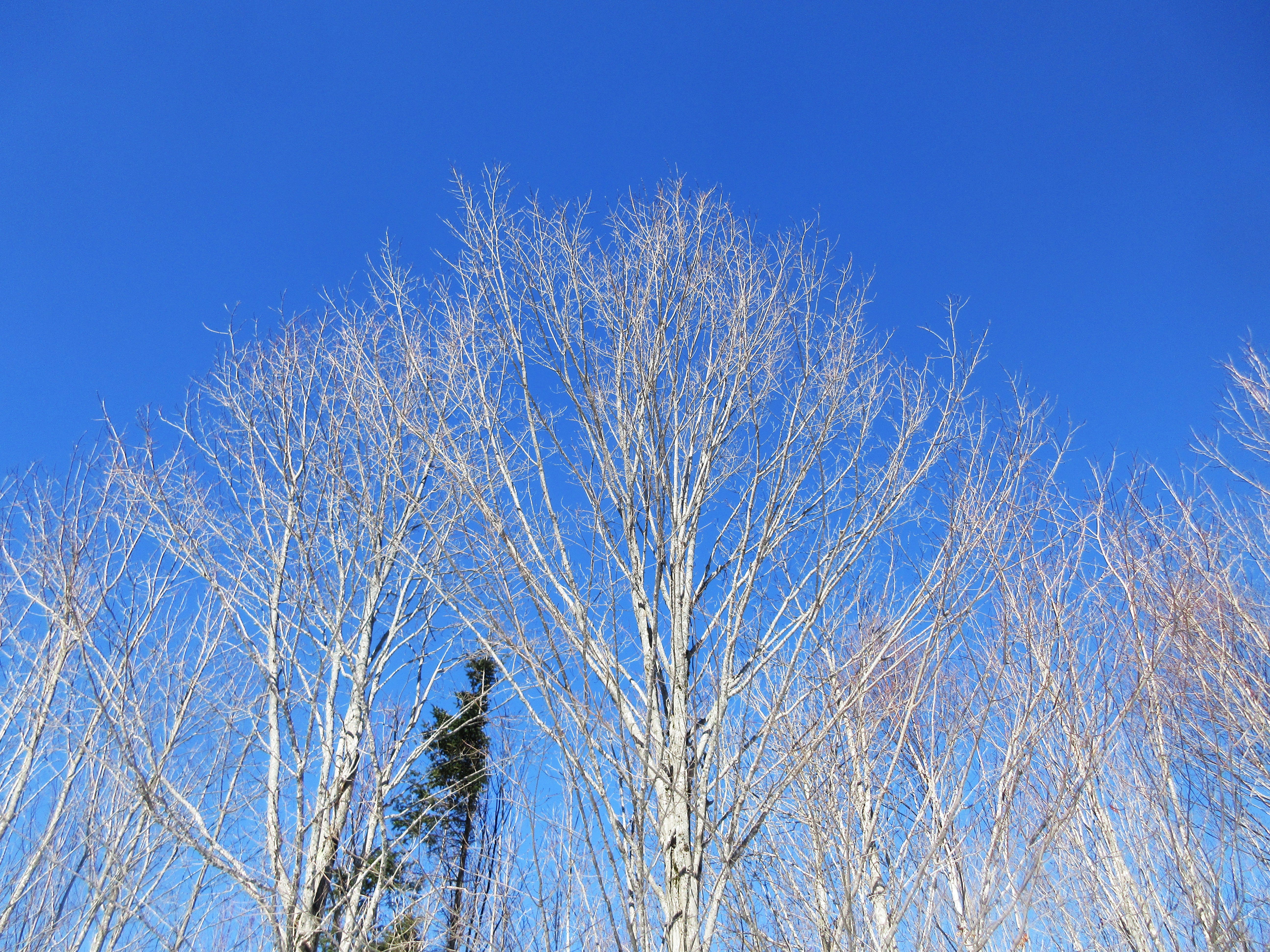
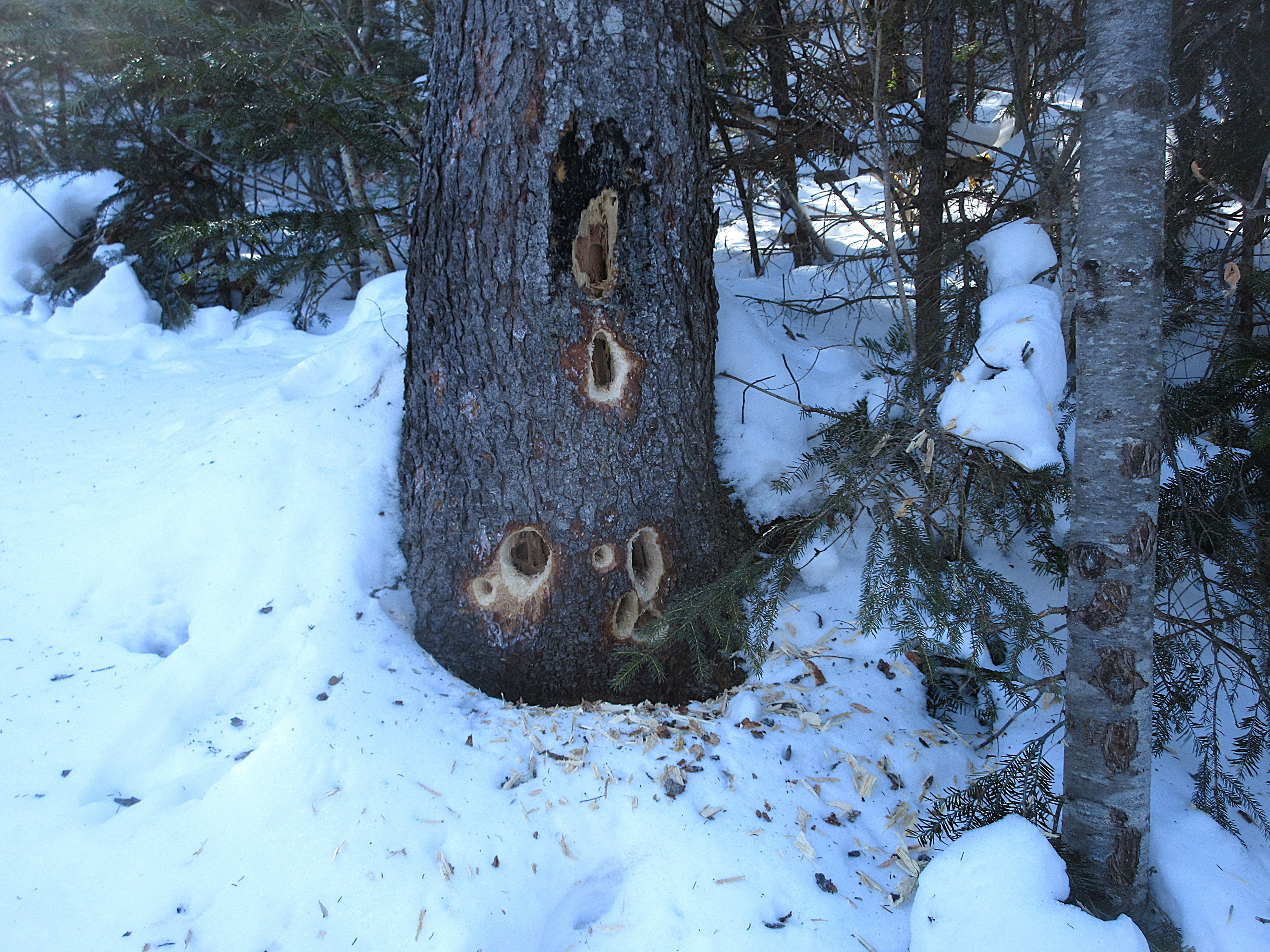
Birds were out and about, enjoying the sunshine and relative warmth, with temperatures in the twenties, even reaching into the low thirties Fahrenheit. I heard the slow, erratic tapping of a woodpecker foraging for insects in a tree trunk, followed by the rhythmic drumming of a small woodpecker – either hairy or downy; I wasn’t sure which – proclaiming territory or expressing interest in mating. As I climbed higher, I was delighted to hear the sweet, whistled “fee-bee” song of the black-capped chickadee, for the very first time this year. I had been listening for this song, which signals the approach of breeding season, for a couple of weeks. Farther along, I spotted cavities in a tree trunk where a large pileated woodpecker had recently dined on carpenter ants.
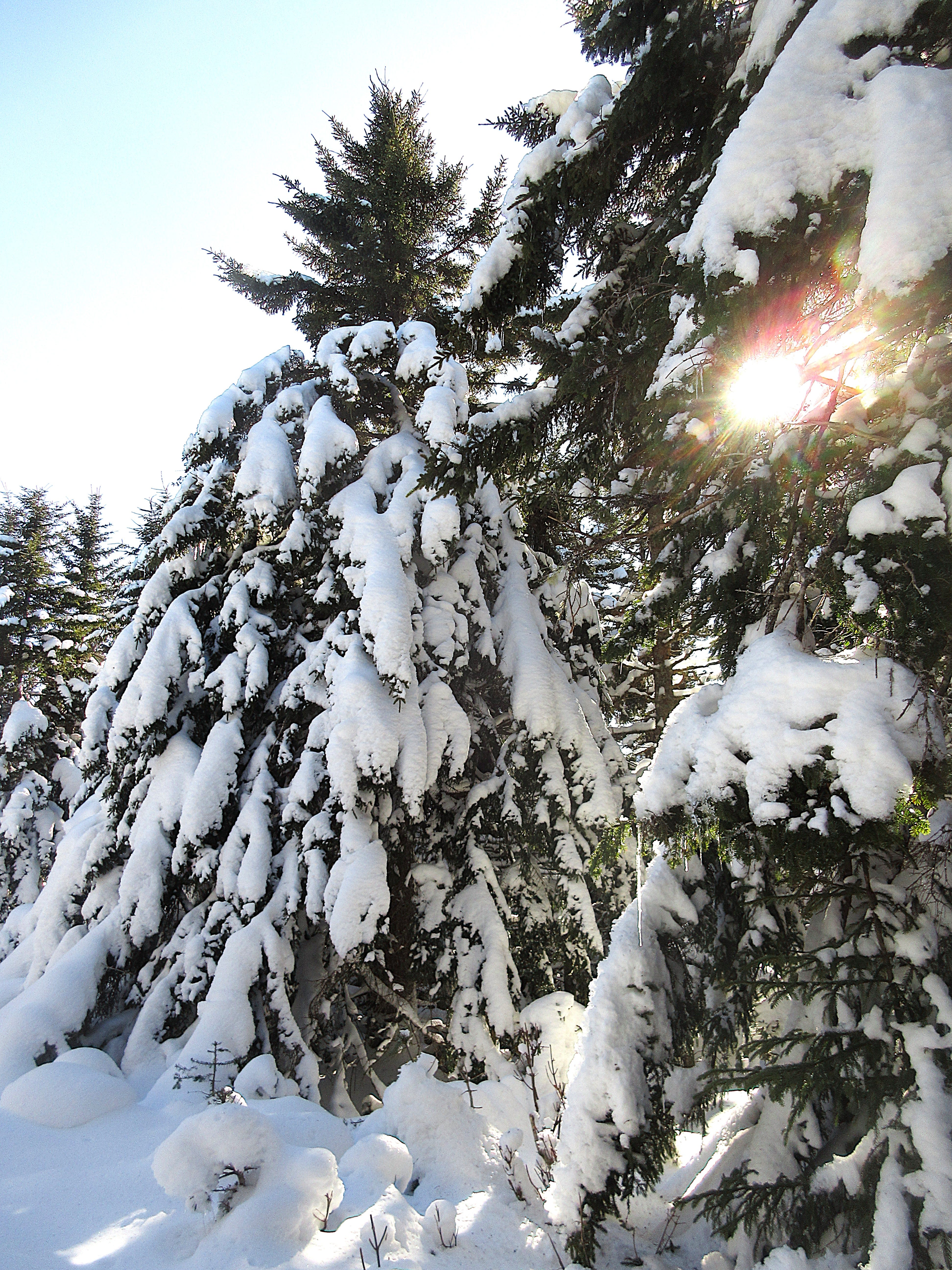
I eventually reached the summit, where snow weighed down branches of fir and spruce.
Just below the summit is a clearing with a view to the northeast. From there, I could see Katahdin, capped in pristine white. Katahdin – “greatest mountain” in the Penobscot language – is the northern terminus of the Appalachian Trail. My cabin is about ten miles from the midpoint of the Hundred Mile Wilderness, the most remote section of the A.T. As the raven flies, it’s about twenty-five miles from Katahdin.
Whenever I’m atop a mountain, I look for other peaks I’ve climbed before, as well as lakes where I’ve hiked or paddled. This practice helps me develop a mental map of the landscape. I want to know the terrain well enough that, if all maps and all roads suddenly vanished, I could confidently navigate the woods on my own. This growing understanding – it will always be a work in progress – connects me more deeply with this land that I love.
While I stood at the overlook, I was surprised to hear a soft sound of movement in the snow behind me. I turned to see a snowshoe hare, its winter coat of white fur already flecked with the beginnings of the brown it would wear for camouflage in summer. I caught only a brief glimpse before it dove under the low, sheltering branches of an evergreen.
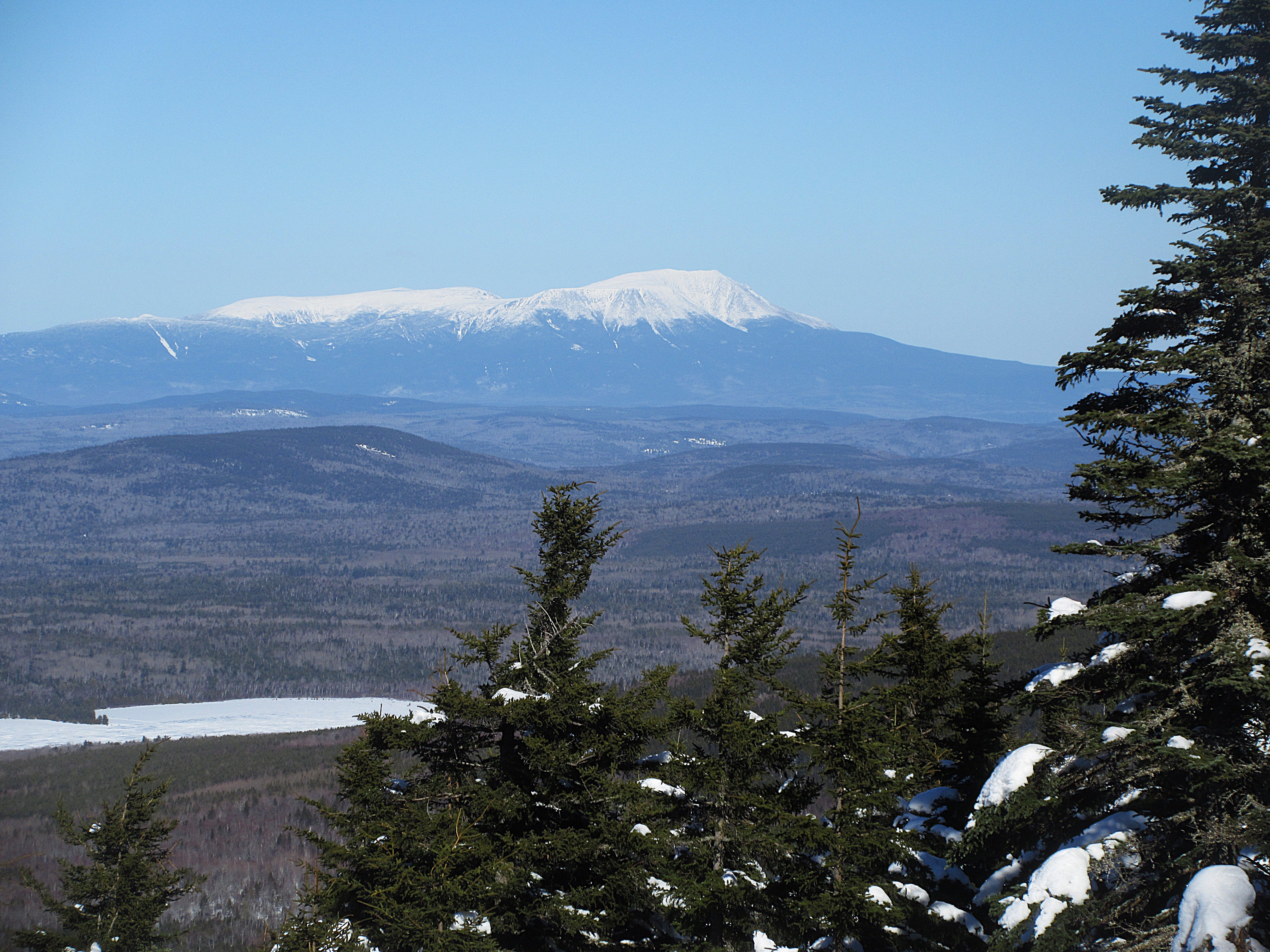
I returned to my cabin via the same route. I didn’t mind retracing my steps. The views that were behind me during the upward climb now stretched before me. The slanting late-afternoon light lent distant mountains an almost mystical appearance. As the trail wound down the mountain, I saw Big and Little Spencer; then Kineo, rising above Moosehead Lake, and Boundary Bald, along the Canadian border.
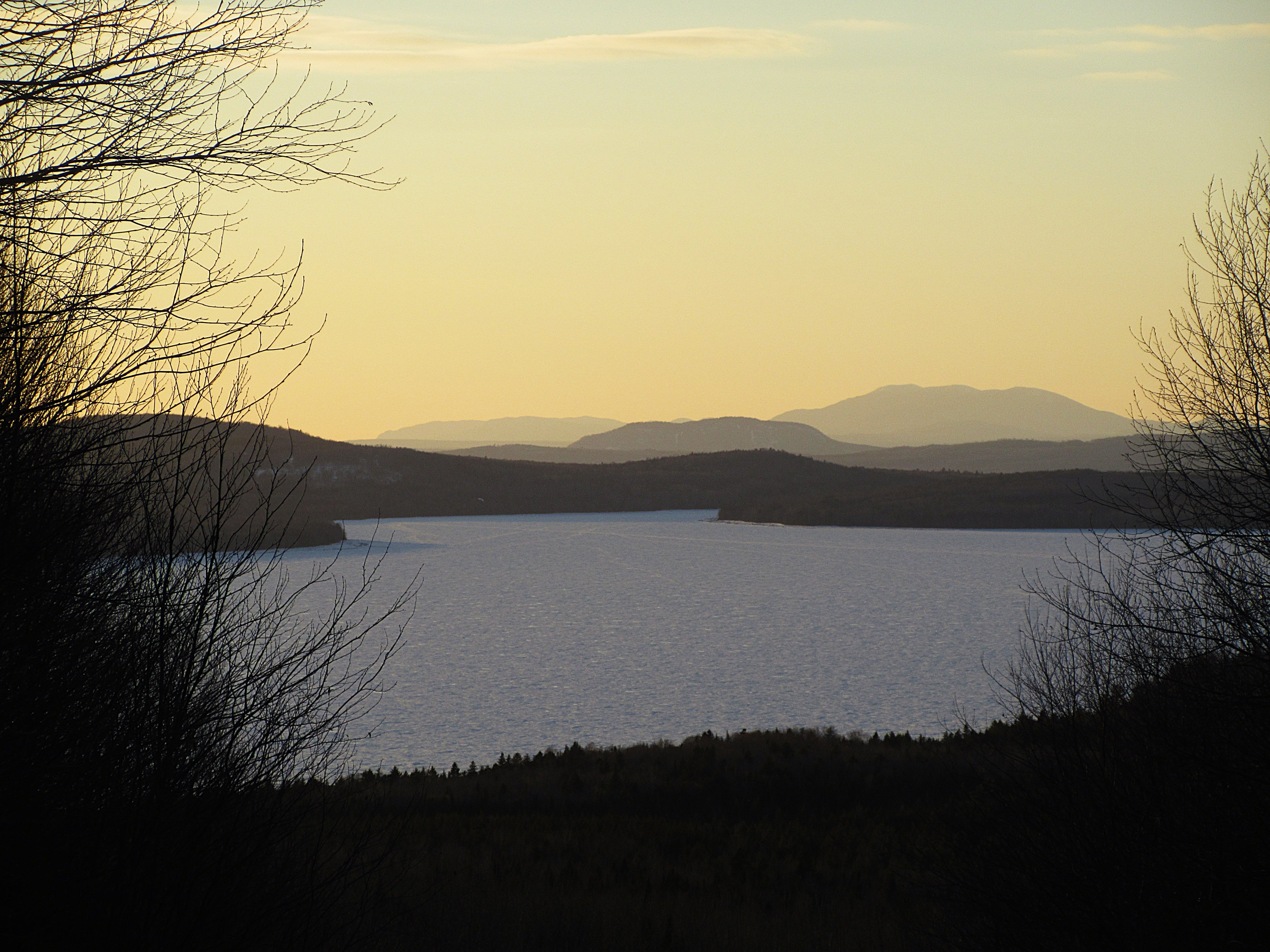
As I continued my descent, the sun set. Clouds turned pink, then faded. Jupiter and Sirius appeared as points of white light in the darkening sky. As the last vestiges of daylight waned, more and more stars emerged. In the woods near my cabin, a great horned owl intoned its deep, resonant ““hoo -h’HOO-hoo-hoo.” These birds breed in the depths of winter so their chicks have enough time to learn the hunting skills they’ll need to survive next winter on their own.
A few days ago, I ventured up the mountain again. This time, rather than going to the summit, I followed a loop that offers views of the southern end of the Hundred Mile Wilderness. I saw Gulf Hagas Mountain, at the tail end of the White Cap range. In this case, my lower-elevation view is better: I see all four mountains of this range from my shore. But from the higher elevation, I can look past Gulf Hagas to Barren, the southernmost peak in the Hundred Mile Wilderness.
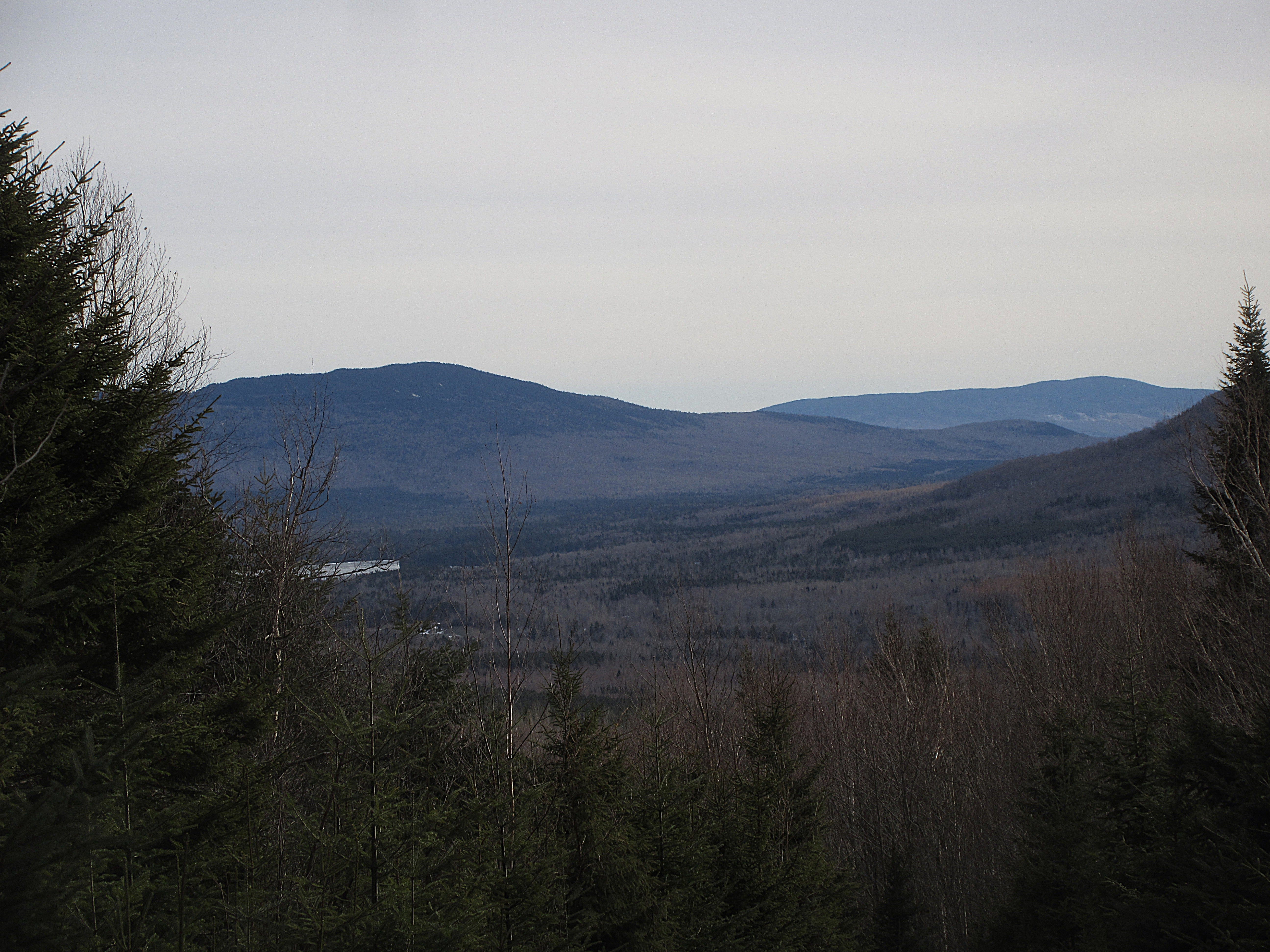
The Appalachian Trail runs north from the small town of Monson, over Barren and four more peaks that comprise the Barren-Chairback range, onward over the White Cap range, then it winds through forest punctuated with wild-feeling lakes, on its way toward the final big push up Katahdin. I’ve hauled a backpack over all these miles, and I’ve returned to my favorite spots for many a day hike. Views of the A.T. recall memories of joy and toil: steep, rocky ascents rewarded with summit panoramas; fords of streams, cautiously feeling my way, step by step; refreshing swims beneath tumbling waterfalls; nights sleeping in simple trailside shelters; climbs in the dark to watch the sunrise from a mountaintop.
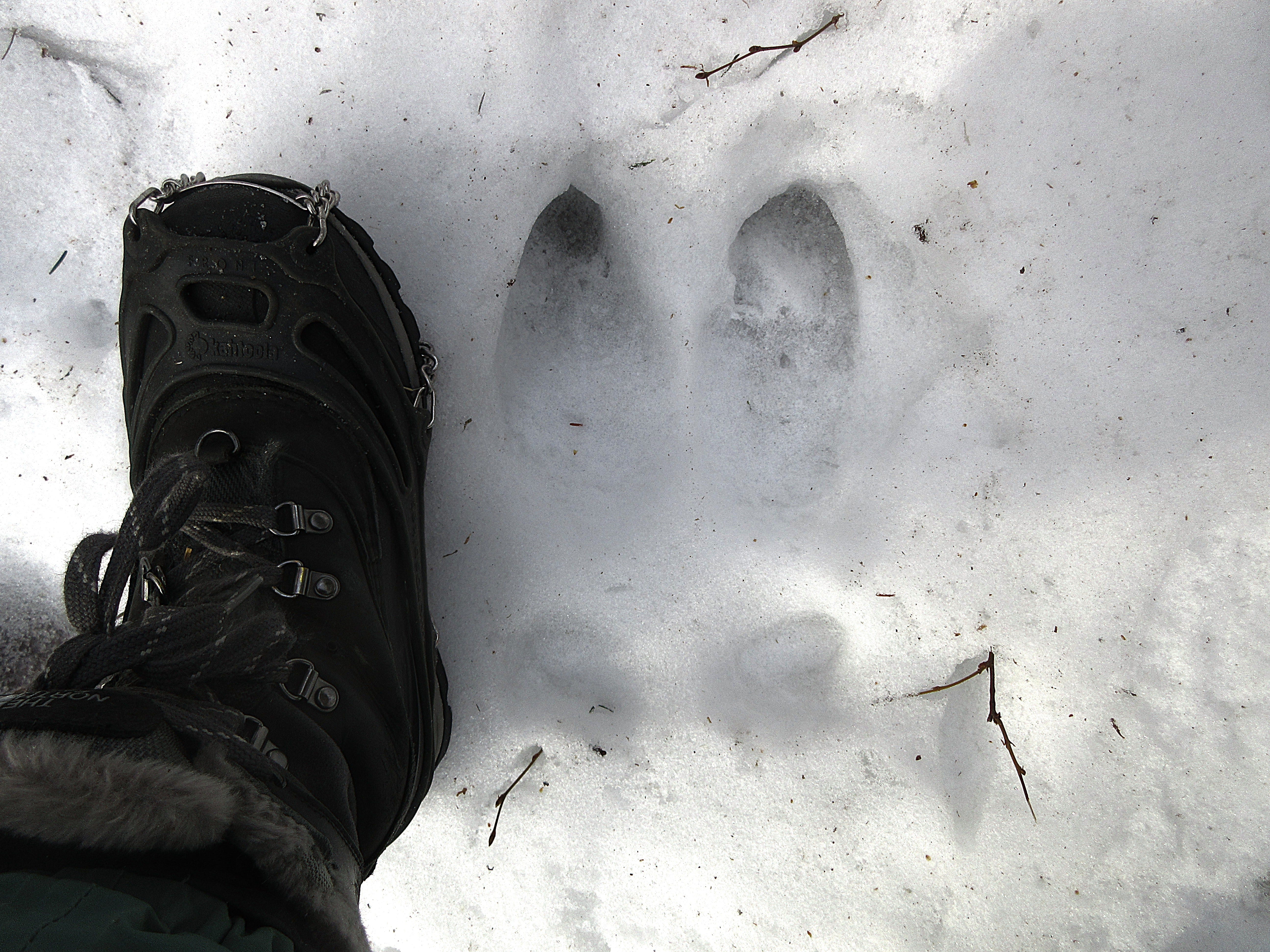
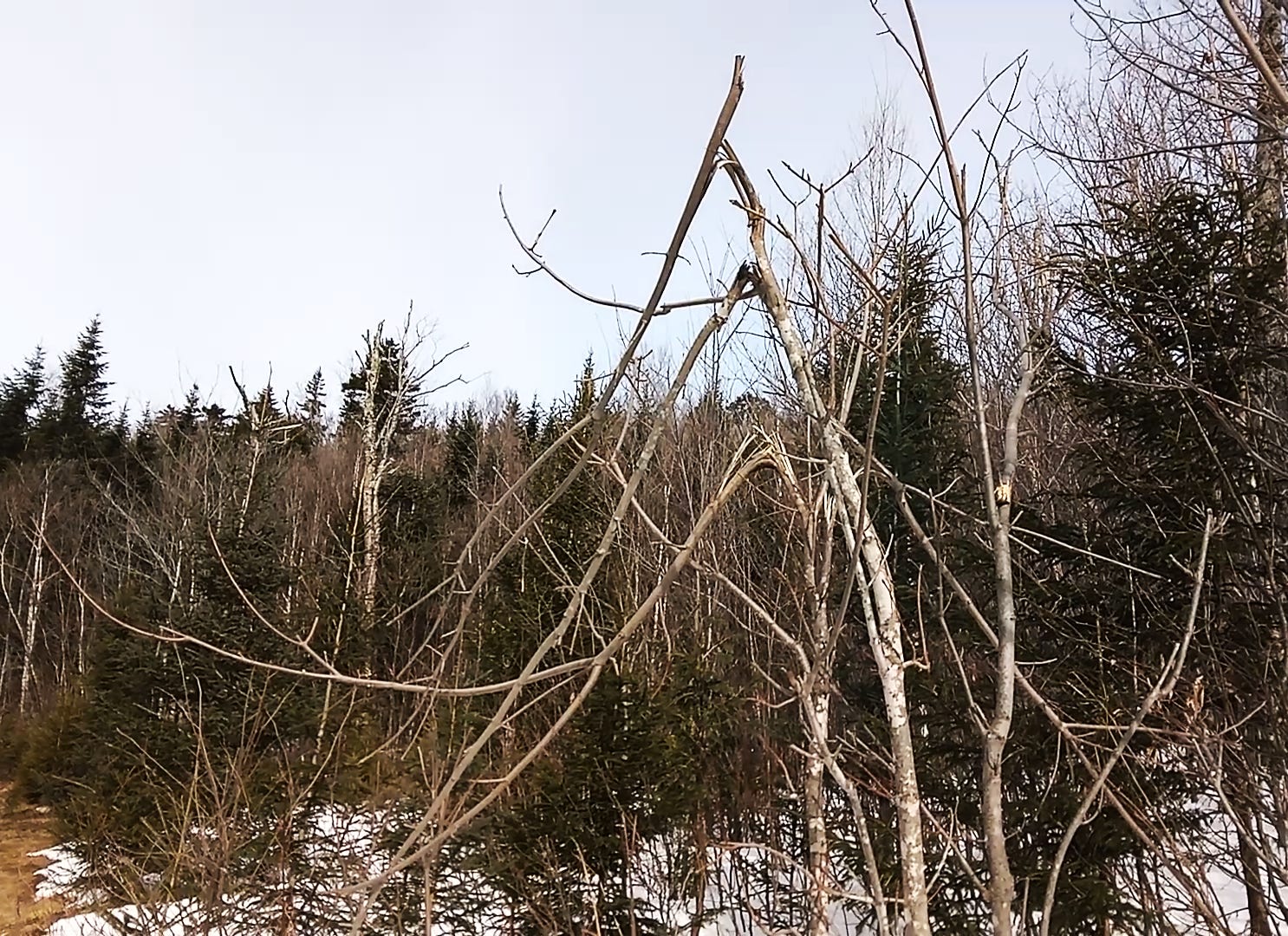
On both my recent forays up my home mountain, as well as on previous hikes, I found abundant signs of moose. This year, I saw tracks in multiple locations, including some impressively large hoofprints that must have belonged to a big bull. In the same area, I found saplings broken at their tops, likely the result of a bull thrashing his antlers during the fall breeding season. The sound of antlers striking wood intimidates rival males and attracts females.
I also found moose droppings. In winter, when moose feed on woody browse – twigs and bark – their scat comes out as a collection of oval pellets. In summer, when aquatic greens and deciduous leaves are on the menu, moose tend to produce large, wet blobs.
Why all the moosey interest in this small mountain? They’re certainly not heading up for the views. Moose have poor eyesight, but even if they were able to appreciate the vistas I enjoy, they couldn’t afford unnecessary energy expenditure. In winter, they need to remain focused on one goal: finding enough food to stay alive. Their woody winter diet doesn’t offer high nutritional value.
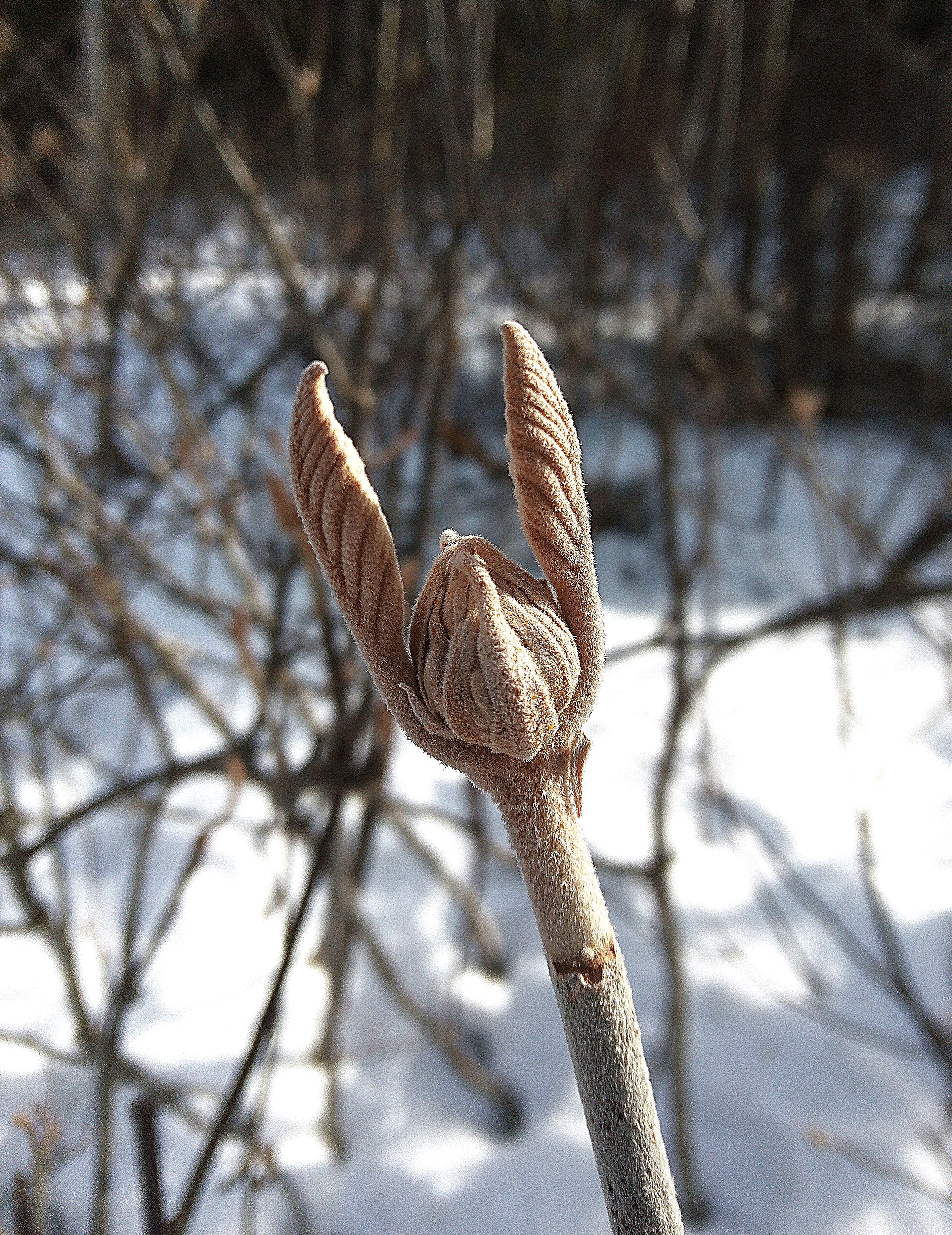
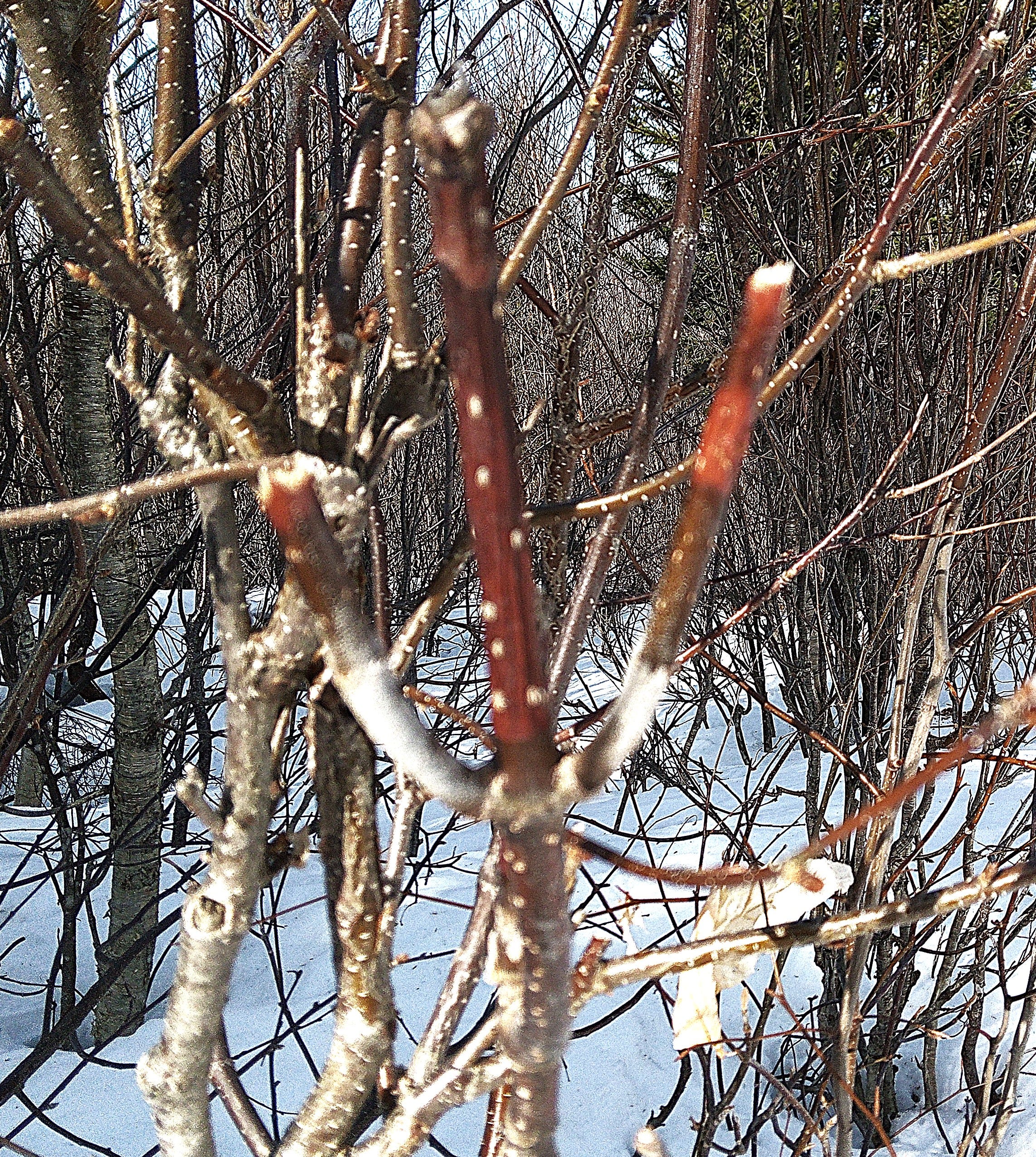
So does the mountain offer higher-quality winter food? On my hikes, I’ve seen a lot of hobblebush (Viburnum lantanoides), and the branches have shown signs of heavy browsing. Hobblebush produce large leaf and flower buds that remain “naked” through the winter, when buds of other plants are small and covered by protective scales. I’m guessing that moose, longing for the fresh greens of summer, would consider hobblebush buds a winter delicacy.
I feel very blessed by the wild abundance in my backyard. As I’ve mentioned before, I seldom get bored during the months I spend alone at my cabin. If a day ever starts to seem dull, I need only step outside my cabin door, open my eyes and ears and breathe deeply. The life of the forest flows in through all my senses, filling my mind and heart to overflowing.
If you’d like to join me on a two-minute version of my February hike, here’s a short, meditative video:
No posts
Comments
Nothing yet. Say the first thing.
Sign in to join the conversation.