
Blurry paintings are in vogue. But they are certainly not new– Monet painted the misty sunrise and lily pads back in the 19th century. In contemporary art, we see big names such as Gerhard Richter and Luc Tuymans, as well as market star Issy Wood. While the Impressionists and the Pointillists primarily use blurry techniques to capture the ever-changing outdoor light conditions, the blurry paintings we see nowadays often reference photography and image-making.
I want to limit my discussion to paintings that are uniformly blurred. Every corner is roughly the same degree of focus. I dub the artists who create these uniformly blurred paintings “the blurrists.” I am not talking about paintings that have certain parts blurred out while certain parts remain in focus; for instance, the foggy condensation paintings we often see on Instagram where the condensation is clear but the rest is blurry.
The market loves blurry paintings. They coyly depict the object, which avoids being too didactic. Collectors love them because they often feel softer and less violent, so they don’t overpower the room, but are aestheticized enough to be purely decorative.
Many people love blurry paintings. There are so many airbrush artists on Instagram with thousands of followers. The rise of contemporary blurry paintings is a product of an era of art post scarcity, where there is nothing truly new or experimental left. Blurry paintings reject clarity in favor of the tension of wanting more information and never getting there, of visibility and obscurity. It’s like the world you wake up to every morning without putting on your glasses. Blurry paintings tease you. You get a taste of them. You want to sharpen them. But they refuse to resolve. And this is why I exclude the half-blurred, half-focused paintings from this discussion, as they already provide viewers with an anchor point. A 50-megapixel photo compels you to get closer to digest all the deliciously gorgeous details– whereas blurry paintings not only feel more distant but physically demand a greater viewing distance to register the content.
Types of Blurry Paintings
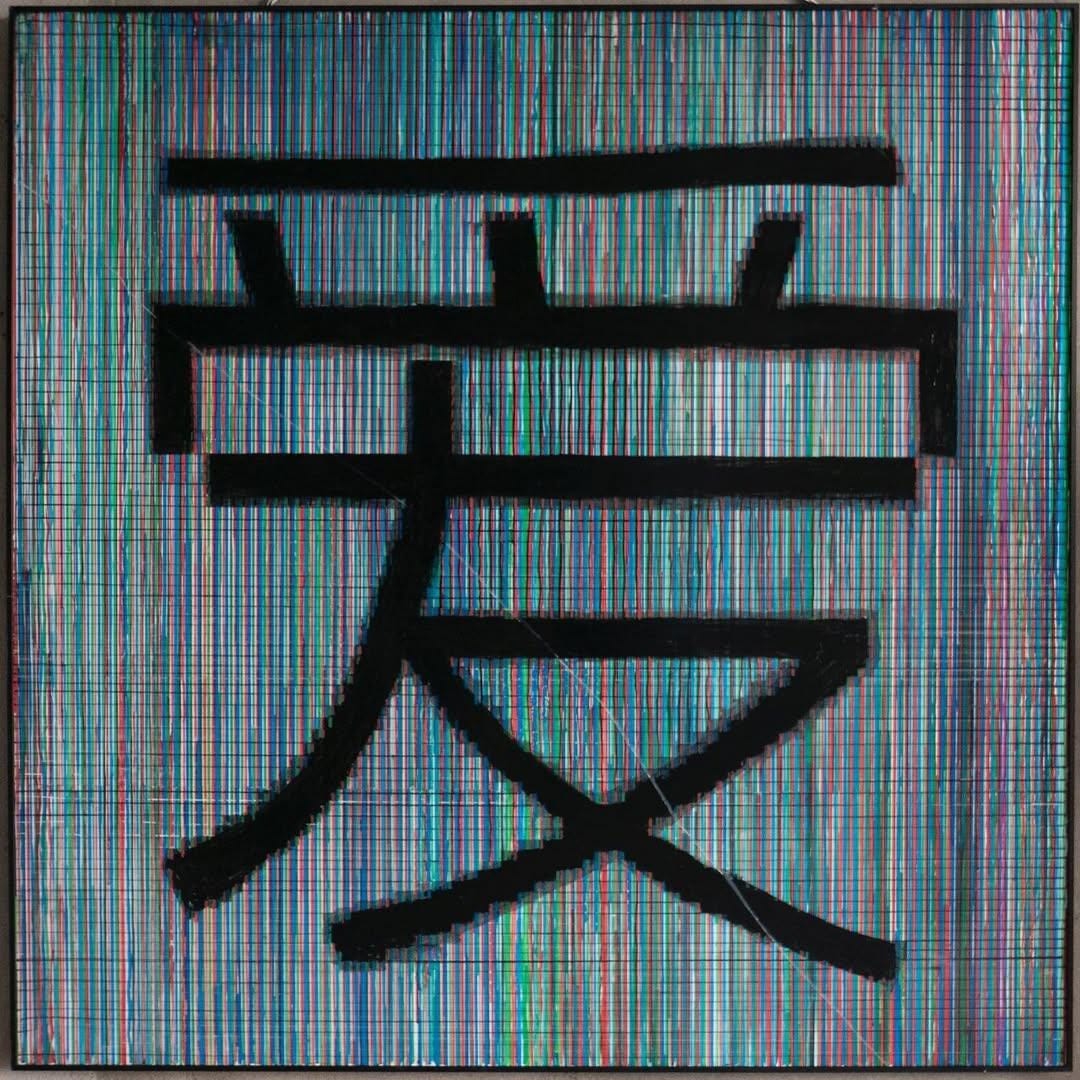
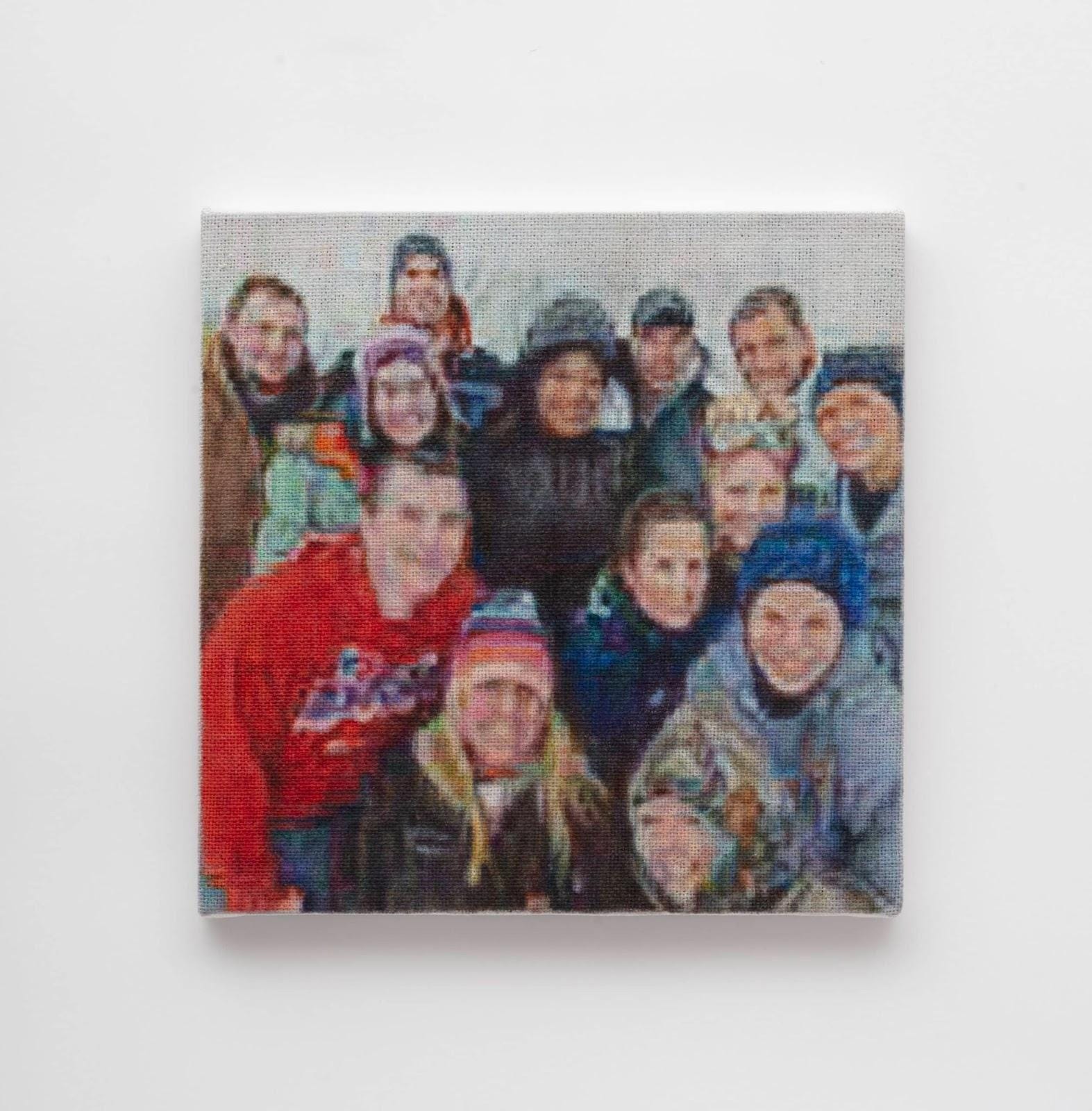
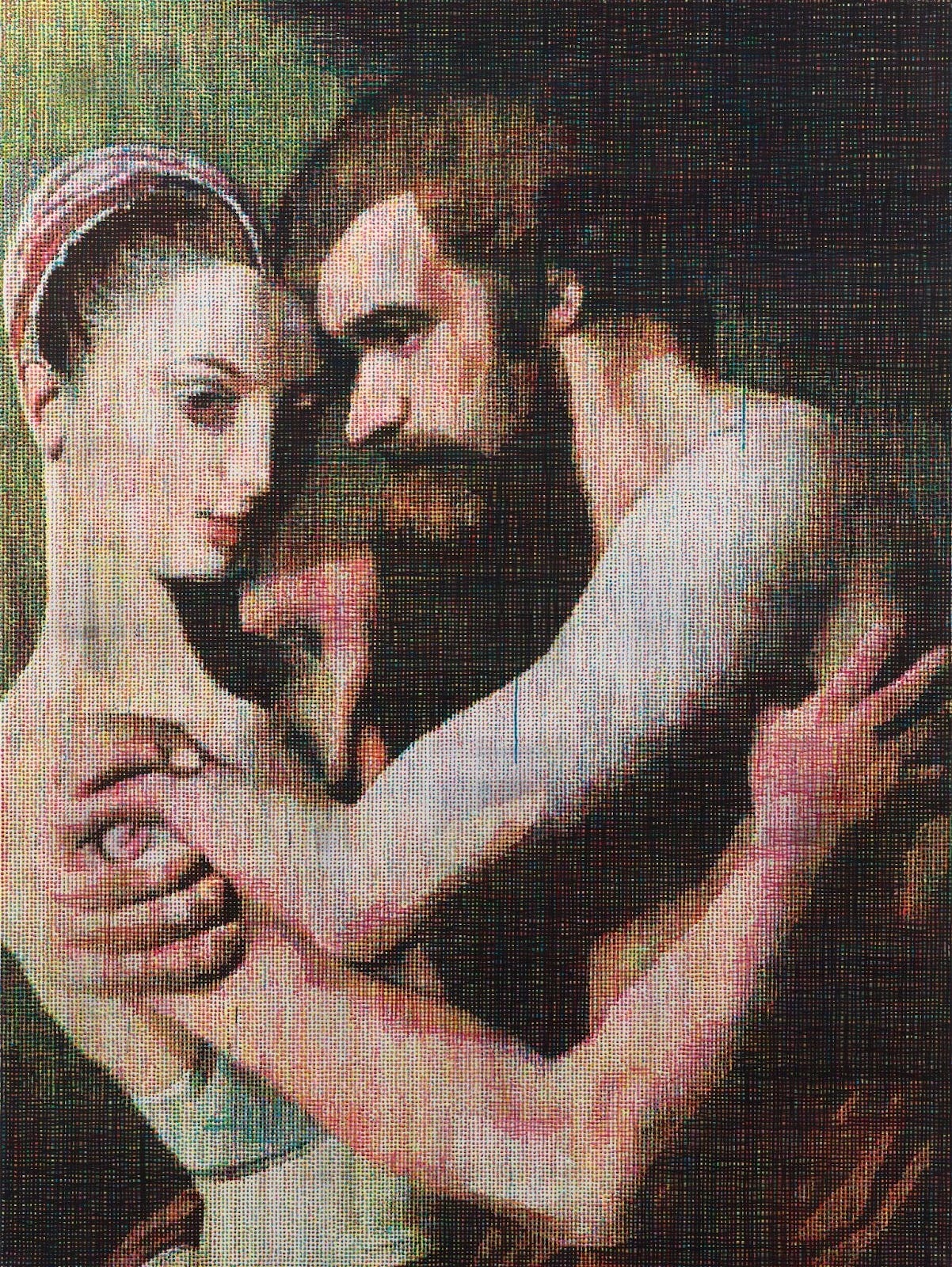
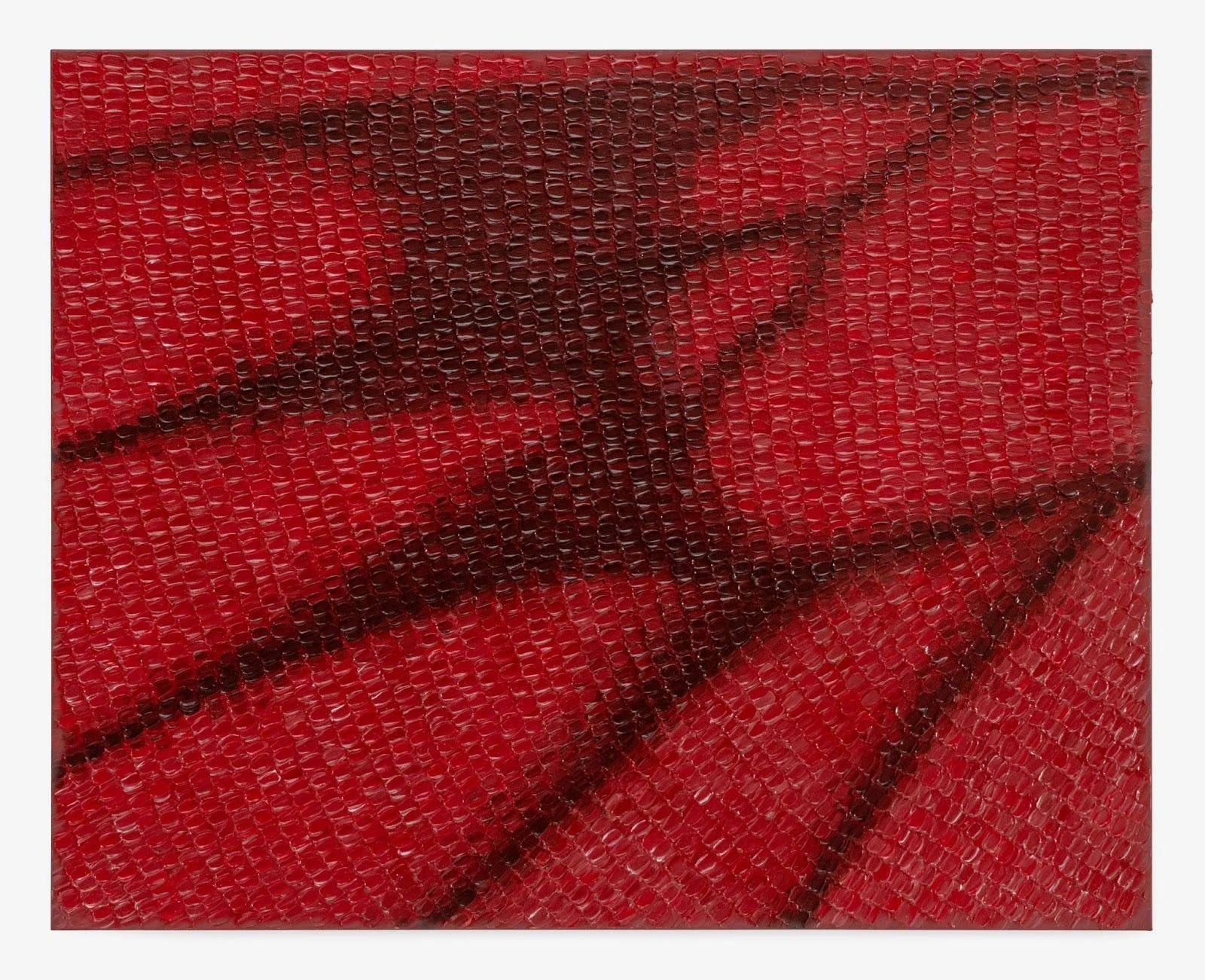
I put blurry paintings into three categories based on how they are created. The first type of blurry paintings achieves its blurriness through the rough surface to which the paint is applied. For instance, Jennifer J. Lee portrays found photographs on thick jute fabric to create a pixelated visual. Issy Wood often paints on velvet. The second type of blurry painting manually or mechanically creates the blurriness either by blending with a brush, applying blocks of paint, or using an airbrush. For instance, Erin Morris’s intimate-sized paintings capture the tenderness of everyday life. Morris blends the paint to create a blurry edge, like a “half-remembered” moment. Chinese American painter Leon Xu also belongs to this category. He often paints the hazy, rainy streets of Chinese neighborhoods. His paintings are primarily in airbrush, allowing an even more diffused effect than the traditional brush. The third category of blurry painting results from the meticulous rendering of its constituent parts, like pixels or fibers. Chinese painter Li Penquan, for instance, depicts the zoomed-in Chinese character “love” (爱) on a computer screen by painting every RGB subpixel. It creates a dizzying effect, like someone smacking your head and forcing you to stare closely at a screen. The violent forced proximity of this beautiful concept, “love,” feels propagandistic. Ava McDonough applies thick globs of paint to mimic the texture of the tiny scales on a butterfly’s wing. Other examples of this category are paintings by Asher Liftin and Natan Lawson, where they both paint the texture of the fabric to create blurry imagery.
Blurriness as Memory
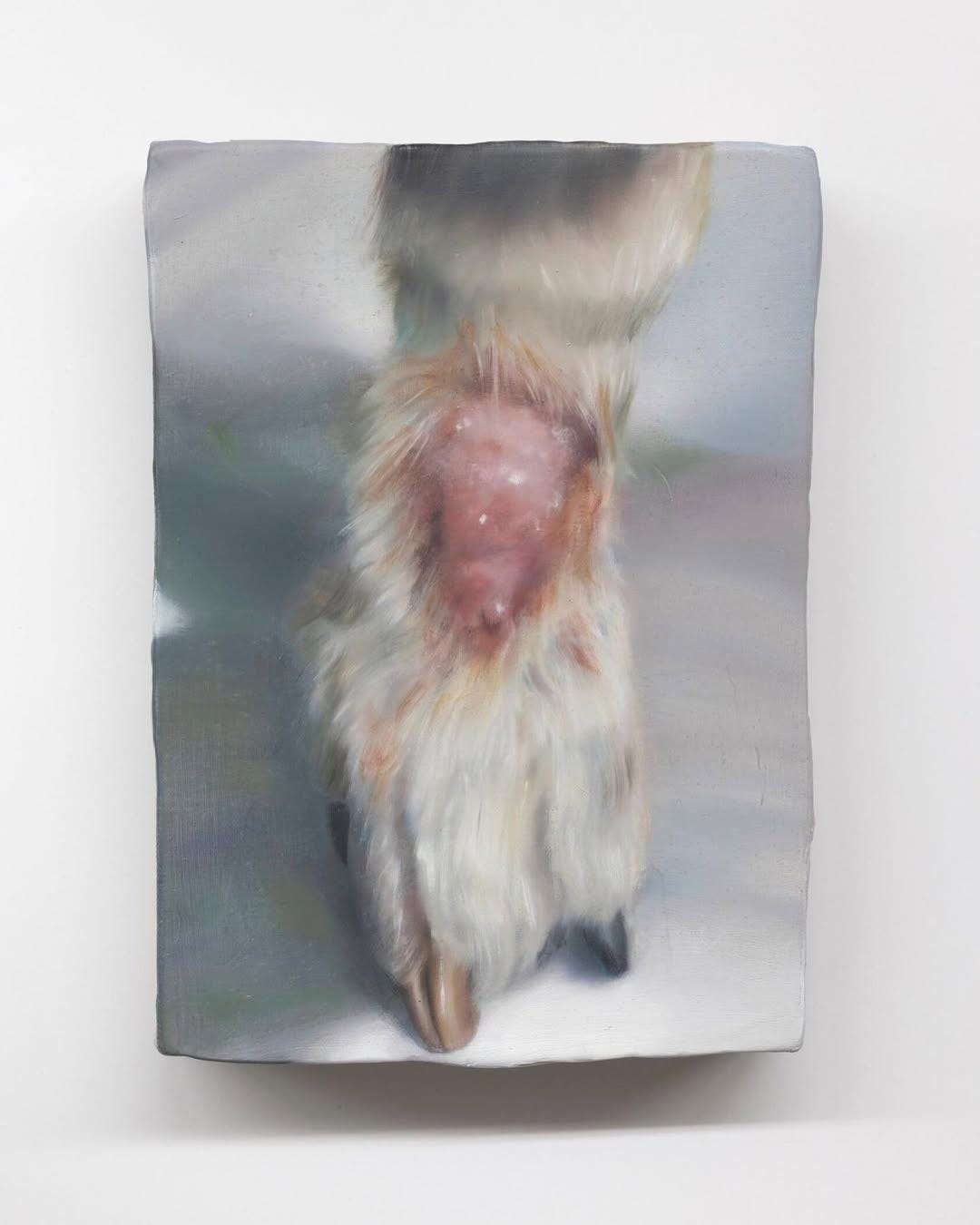
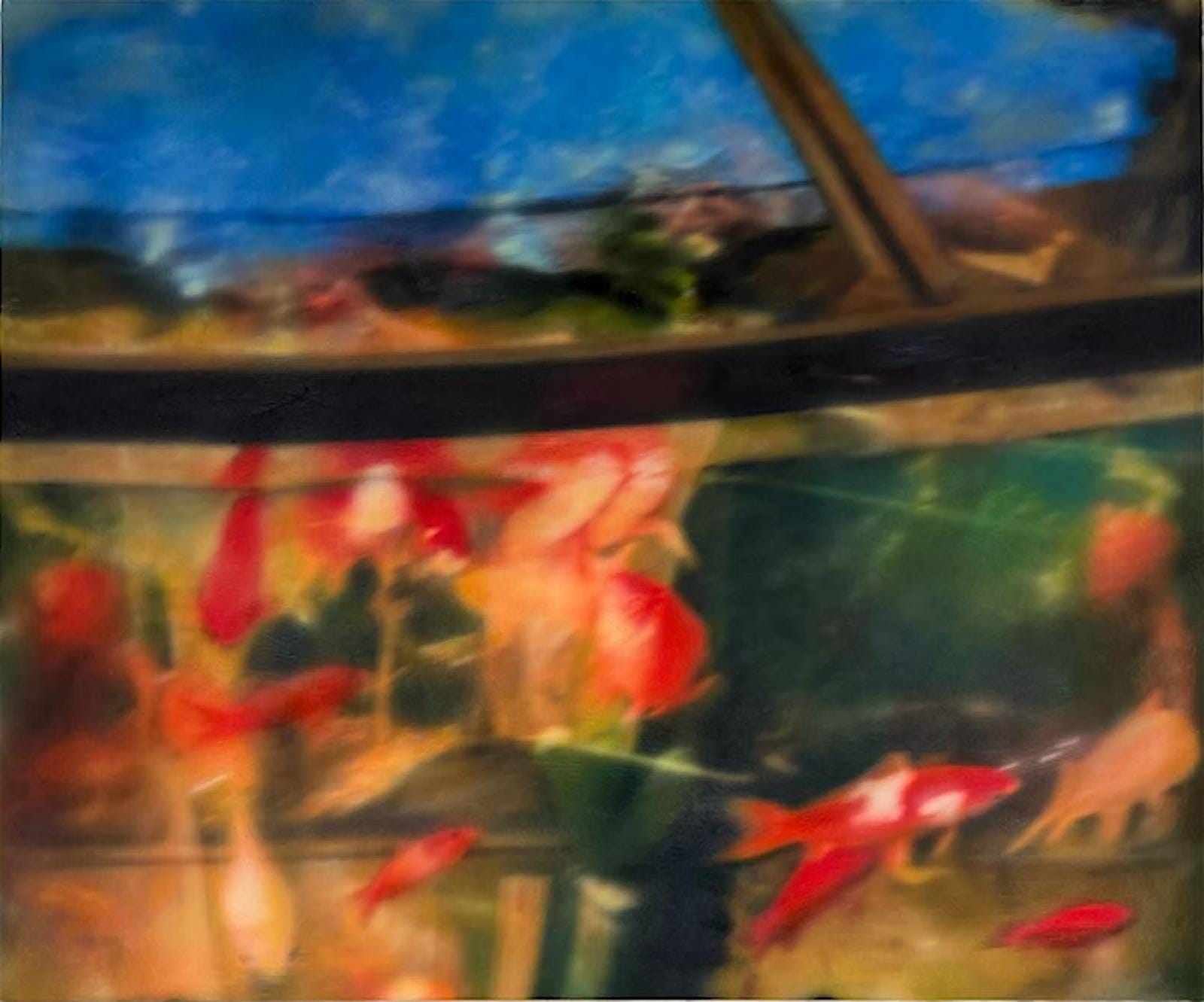
Memories are blurry. They often get distorted, with details lost in time. It is very common to see artists paint blurry objects to evoke a sense of nostalgia, loss, or melancholia. Ella Rose Flood’s paintings often feature things in situ or in transitional phases like suitcases, pills, medication vials, fresh flowers cut from stems, or wounded animals. Often rendered in a hazy backlit lighting and pale palettes, her paintings feel like an emaciated person gradually fading away. Many of her figures feel unguarded and psychically exposed in a vulnerable state. The viewer is only allowed to witness this transitional process of watching something beautiful become a memory.
Blurriness as Inundation
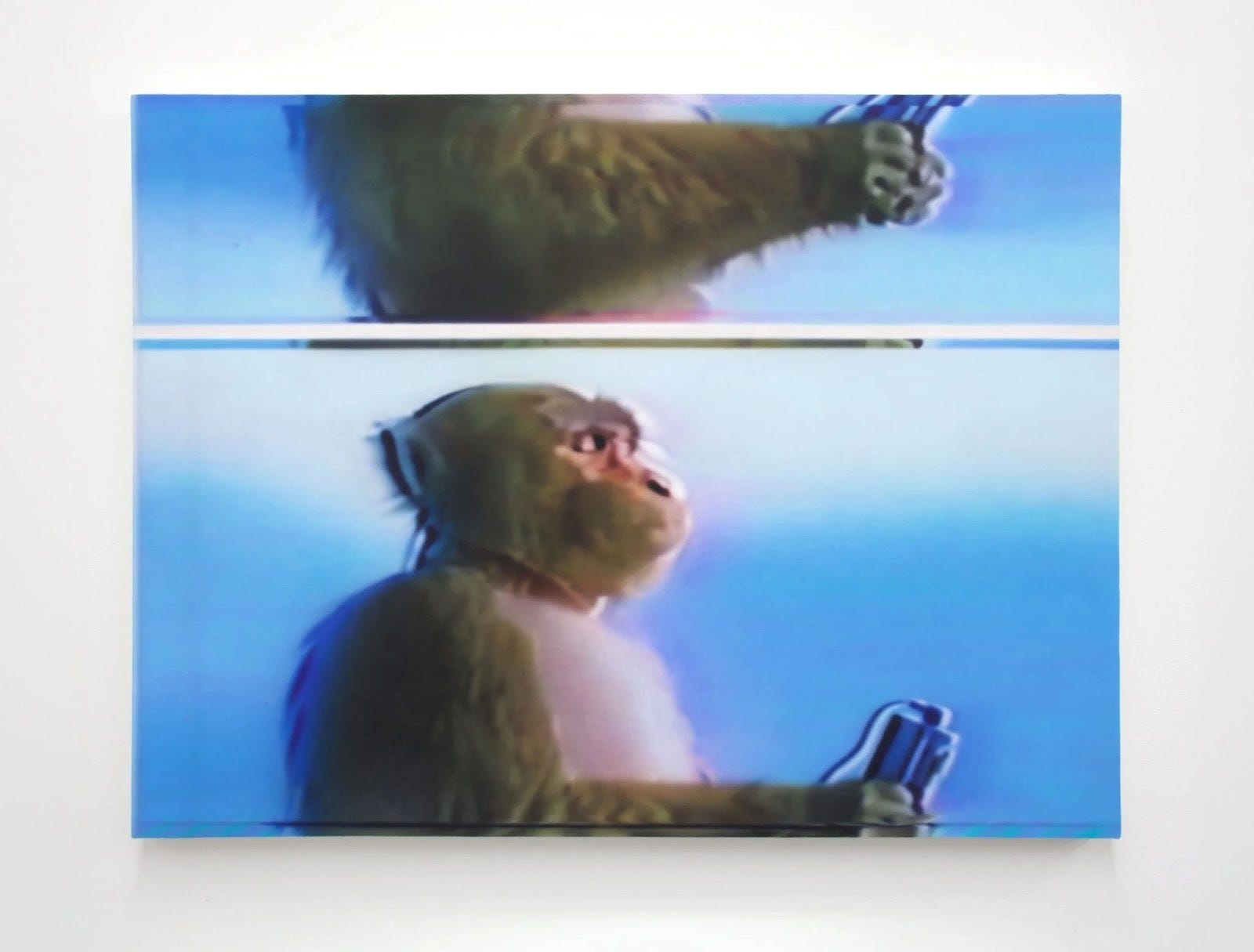
Chinese netizens say that a meme that is not pixelated has no charm. They call the pixelation the “patina” of the meme. If a meme has high resolution, it feels like it has just been made, and not been testified by the mass. Through repeated compressing, screenshotting, and circulating, a meme loses its resolution and appears visually degraded. This exact process is like a natural selection– what still remains recognizable will be enthroned as a visual and cultural icon. Blurry memes are grassroots and decentralized. They function as a subtle mockery of dominant visual norms of polished imagery. They are anti-commercial aesthetic, counter-aesthetic, anti-high art. In this online era where people consume hundreds or even thousands of images per day, the blurry memes give them an outlet for something readily digestible. Their formation is simultaneously a product of the inundation of online image circulation and a response to the saturation of 4K imagery. We see a group of painters like Andrew J. Park who use airbrush to paint meme-like imagery to allude to the overstimulation of the internet. Park often emulates the effects of color distortion, shakiness, and pixelation of photographs. He slows down ephemeral internet humor and translates that back into painting.
Blurriness as Abstraction
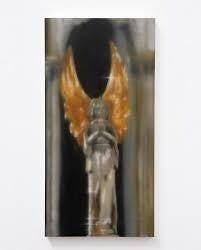
Blurriness can also be used to convey abstract concepts. It becomes a way of picturing concepts that resist clear representation—such as divinity and spirituality. Albie Romero’s blurry oil paintings often contain religious subject matter. His paintings are drawn from his Catholic upbringing. The soft diffusion of paint creates halos or atmospheric light. The blur also slows the act of looking. The viewer must linger and search for the forms, much like contemplation in a religious setting. Joseph Yaeger, one of my favorite artists, sources ordinary imagery from the internet and then translates it into softened, slightly out-of-focus paintings. Yaeger applies layers of washy, almost transparent watercolor on gessoed board. This process imbues otherwise banal imagery with a strange aura, transforming regular subjects into something meditative and quasi-sacred.
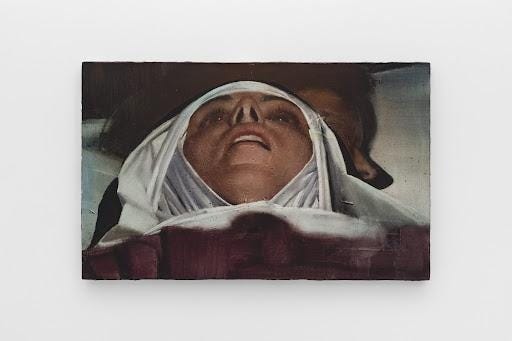
I love blurry paintings. I admit I can never have enough of them. I used to follow a lot of airbrush artists on Instagram but dreaded buying my own airbrush. I was caught up in my own painting orthodoxy in which the paintbrush reigned supreme. Indeed, airbrush risks diminishing the individuality of paint handling. But after looking at so many blurry paintings, I realized that many great artists are able to develop their own languages and imbue their own aura, even with the limitations of airbrush. I used to criticize some blurry paintings as too meme-y or aesthetically pleasing, and that they were just eye candy. But of course, pretty paintings can be serious. And a painting doesn’t need to be serious to be good– it just needs to be truthful. I see the same warmth and candor and humanity in certain cat-meme airbrush painters on Instagram as in Luc Tuymans. I think the foundational “blurrist” Gerhard Richter’s quote summed it up well when he claimed that, “‘beauty’ has become a downgraded word, but that shouldn’t be the case, because we would all like to be healthy, perfect, fulfilled, everything—the opposites of war, crime, and sickness. I see beauty in all the works of art we cherish.”
The other day, an Australian airbrush artist that I follow on Instagram was moving apartments, so he was selling his paintings on Instagram Stories. I think he just propped the paintings on his cabinet to take pictures of them. The paintings are all modestly priced, around 100-500 AUD for small to mid-sized paintings. He paints cat memes, bats snuggling and screaming together, and other absurd and cute animals. His paintings offer a glimpse into his life and who he is as a person. I guess he must be a funny guy. He paints cute stuff. And after seeing his cute meme paintings, I felt like my day had become a little brighter and cuter, too.
No posts
Comments
Nothing yet. Say the first thing.
Sign in to join the conversation.