
I stare out my bedroom window at the cycle my dog rose grows through. In winter, bare branches hold the remains of decayed rose hips that serve the birds long after they bloom. It remains this way until about May, when the sun rises higher, the days linger, and finally, its foliage swiftly fills the space cleared in autumn. In a blink, the buds start to show and swell for weeks on end; an incubation of beauty that my neighbours, the local wildlife, and I are yet to see. It wasn’t till late in May that my dog rose put on a display so magnetic that even on my dark days, I rose and remembered that life is beautiful and ugly all at the same time. The rose bush: perpetually thorny, momentarily seductive.
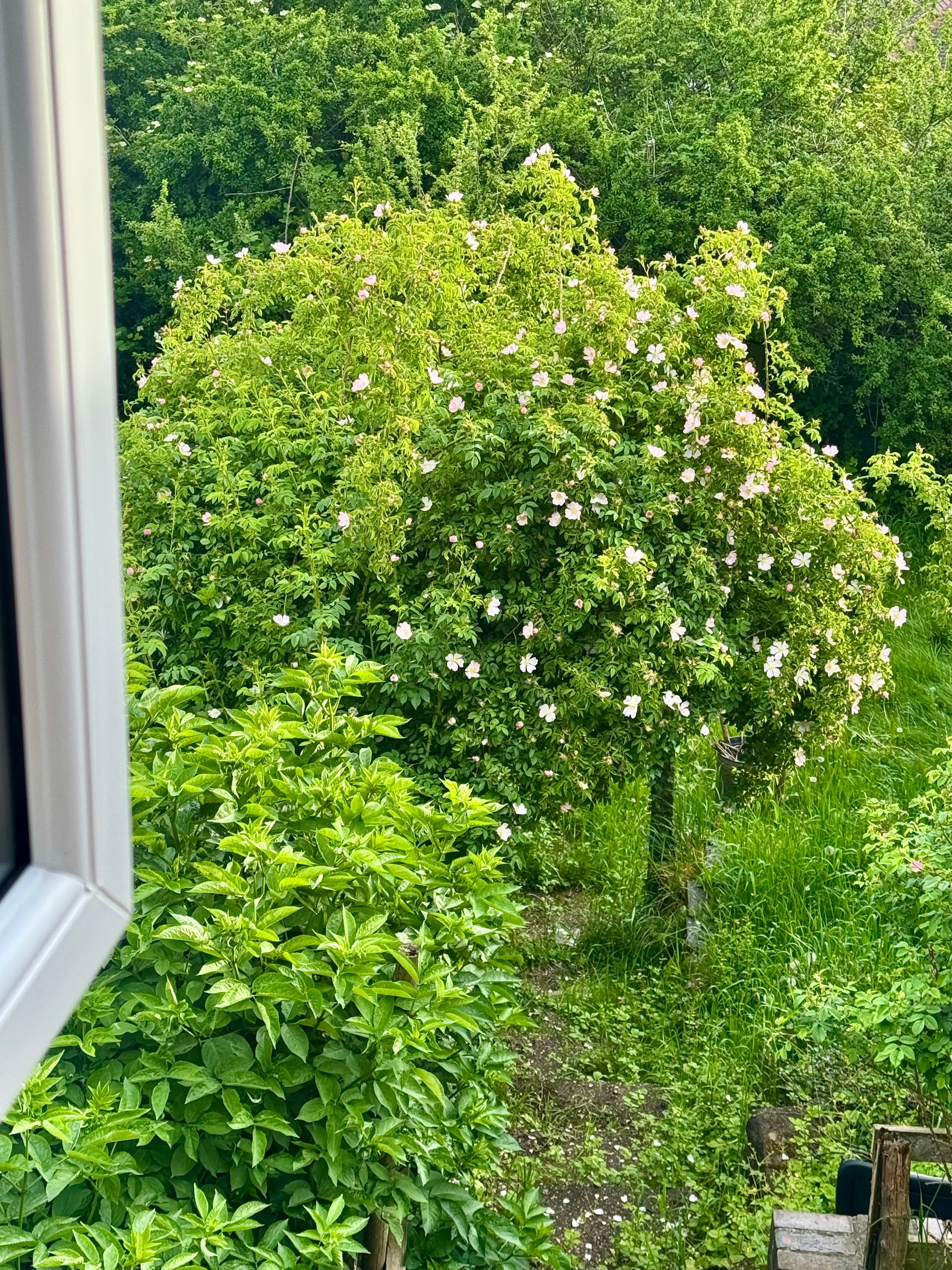
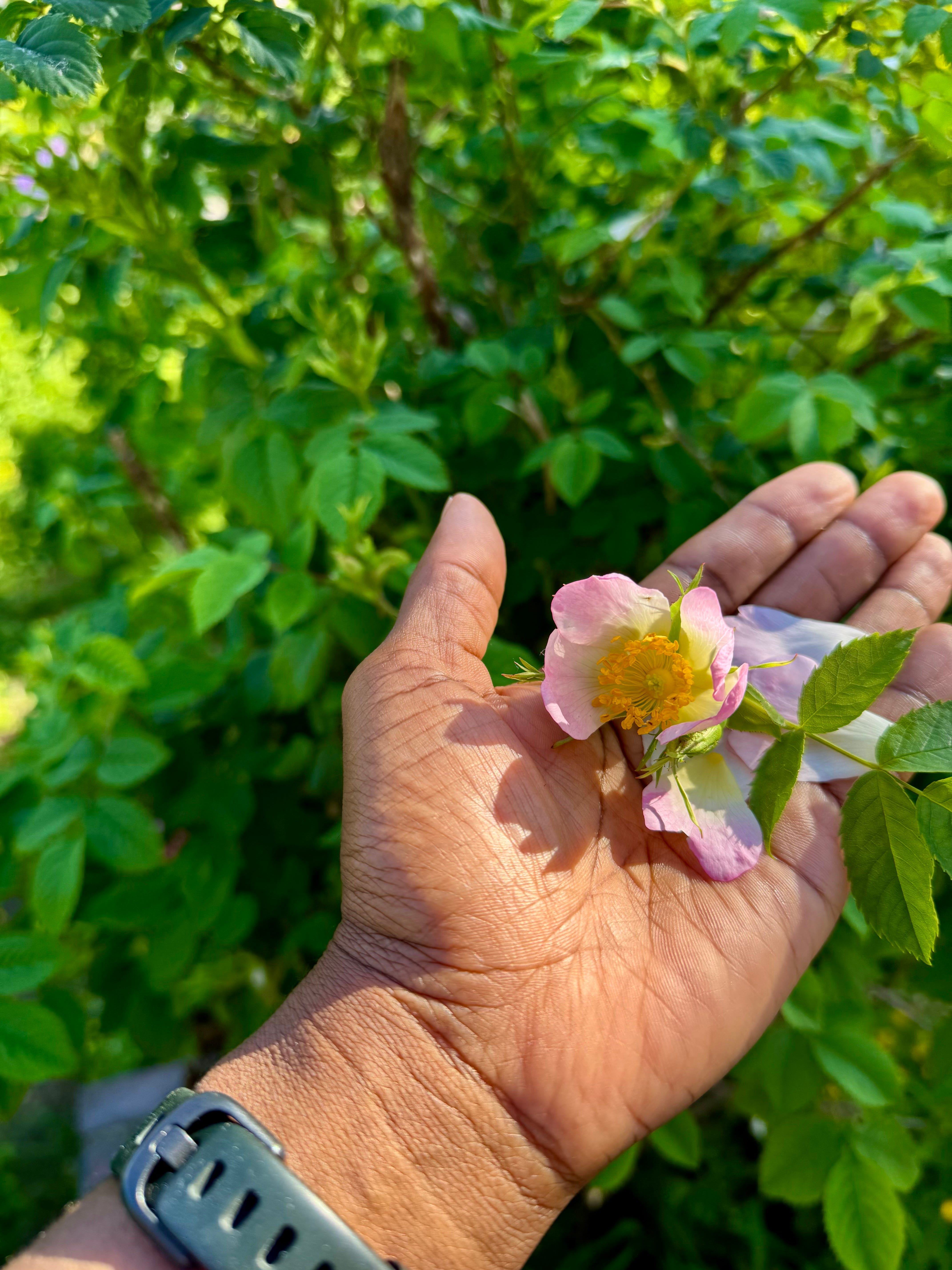
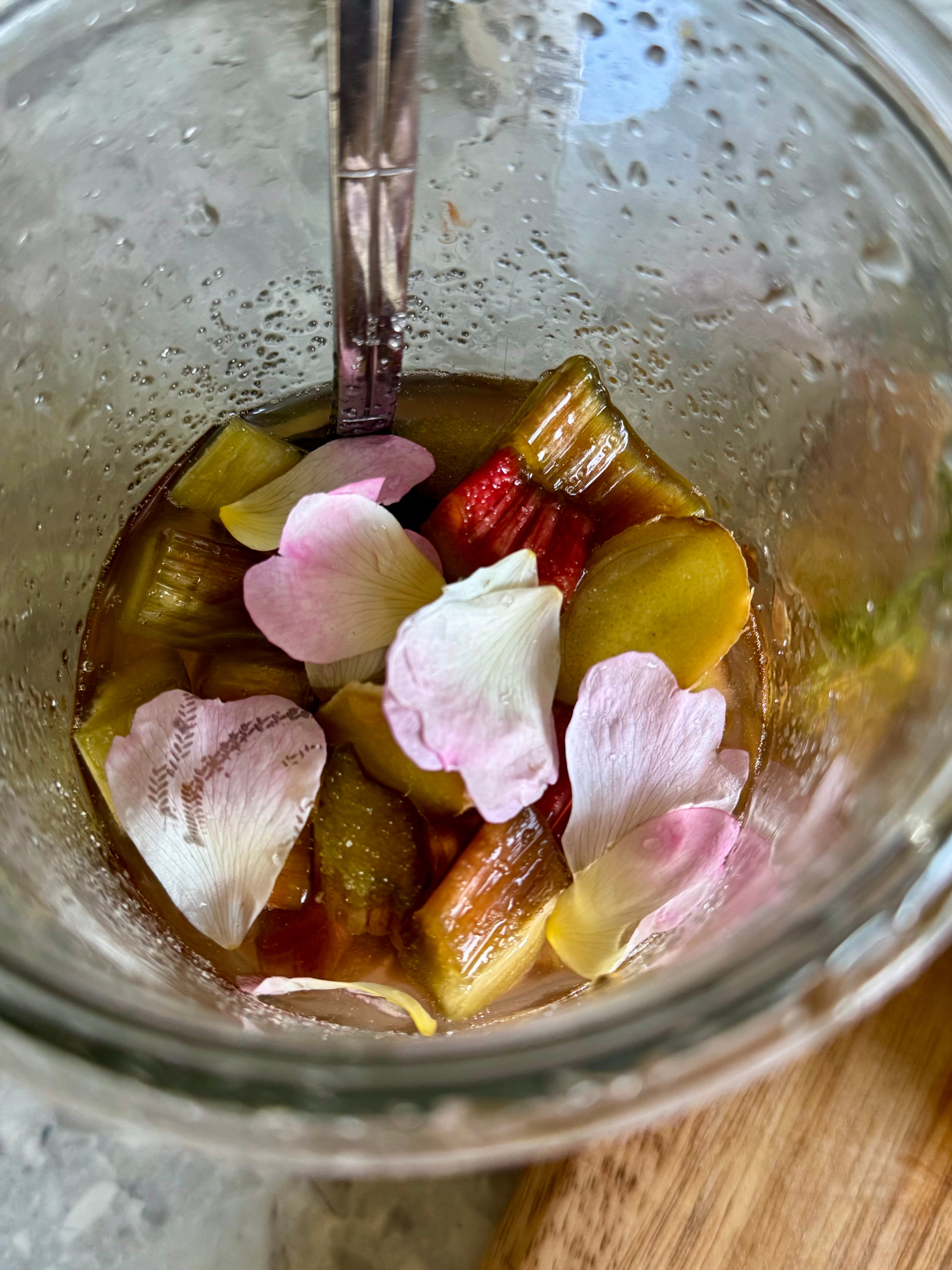
My dog rose’s modest pink petals bloom with a centre filled with bright yellow pollen that punctuates this luscious green bush arching east, hovering over the walkway down to the bottom of my garden. A day or so after the bloom, I picked some petals to throw into my rhubarb syrup, in hopes of ingesting a fraction of its beauty to live inside of me.
I should have gone back for more petals and crafted more potions: fragrances, teas, facial tonics, to name a few. But when the time came around, I looked outside my bedroom and saw the petals had fallen to the ground. I could have sworn it was no more than a week since it fully bloomed. Maybe only now have I noticed their window of beauty on display is short and sweet. Yet still, I just needed a week to rise and watch the roses dance in the garden as the spring breeze claimed the air.
Each time I stare, I’m reminded their petals will fall just as the sun does — and this particular summer, faster than most.
Come to think of it, its bloom did coincide with a notable climate event: the spring heat wave. On inspection, the heat scorched the petals, and the bush retaliated, redirecting its efforts towards foliage preservation and root survival instead of the bloom. A typical bloom lasts for 4-8 weeks, and sadly, all my big, bountiful bush got was a week—at a push, two. As for the smaller dog rose bush not far from that grand bush, it’s been weeks, and it’s still in bloom. Thankfully, the shade my house provides at the height of the day ensured its bloom will last a while.

Like many trees and bushes I pass every day, I saw how they persist without petals to attract pollinators and admirers alike. Beauty is hidden, but not forever gone. Something I can’t help but see mirrored in my cycle through life.
I have risen to see nearly fourteen and a half thousand suns, and each time I rise I am sure that I’m endlessly becoming. I try and try again to make something feel real. Then in a brief moment my efforts take shape — it dazzles, surprises and allures. This moment punctuates days fleeting by and pulls the eye like a blush pink rose at the tail end of spring. It shakes and wakes me up out of the trance of modern life, where rhythm feels so rushed that it’s hard to notice the beauty that is alive. Beauty that pleases more than sight, restores my will in life. Like the rose that brightens my garden, my words spill from within on to a page — a moment of beauty finding its way out into the world. And when words fail me, it’s okay. Even when my mind is bare, beauty is still somewhere only I get to see.
I tread through time while thorns graze and impale, still I persist. I want to rise again to see the roses in bloom.

Dog Rose | Rosa canina
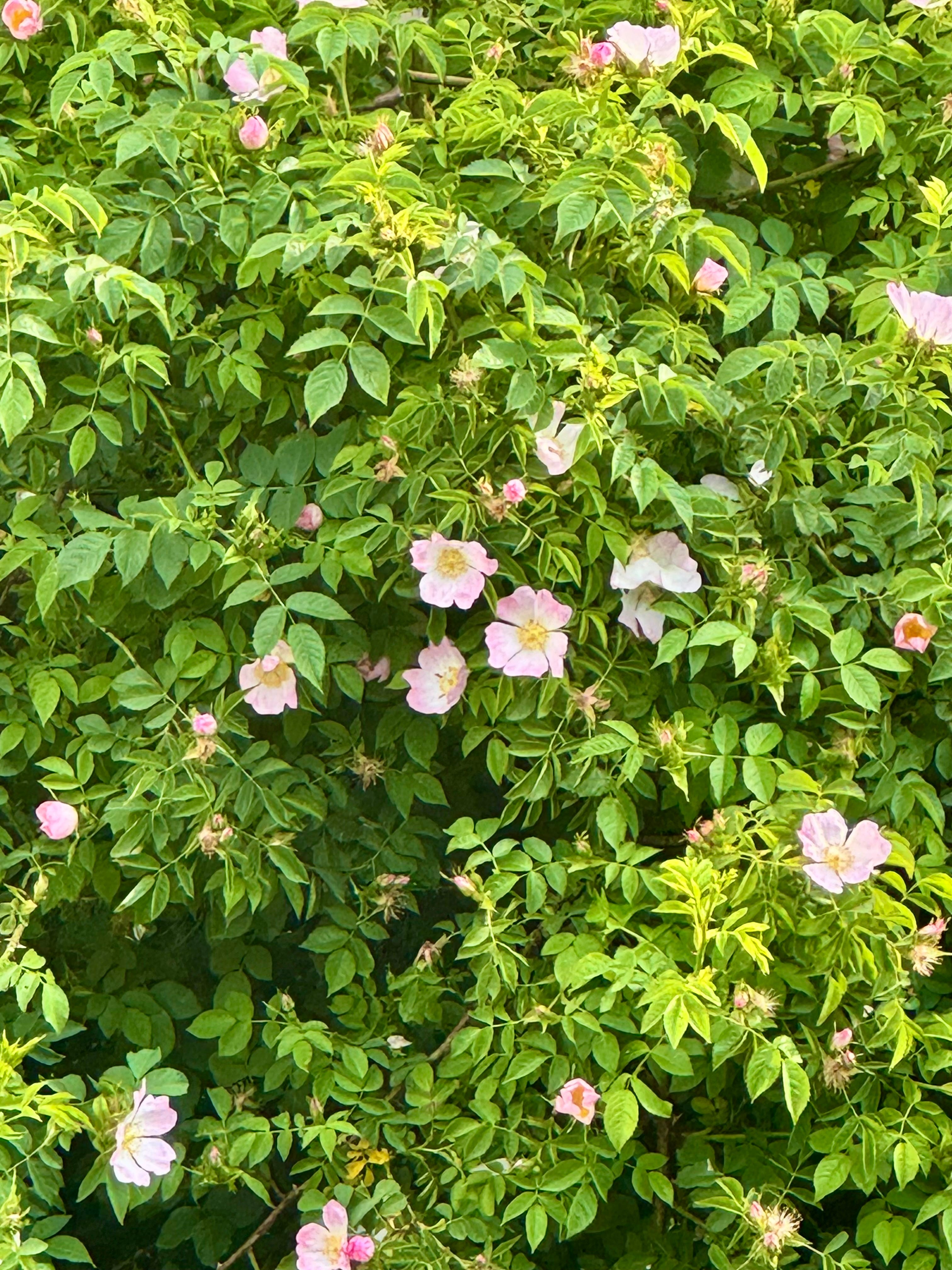
Native. Common in hedgerows and woodland edges throughout England and Wales. Blooms May–August.
The name is a slight. In Latin, canina was used to mean worthless, or of no value — the same way “dog Latin” meant bad Latin, or a “dog violet” was the inferior, scentless version of the sweet violet. But the name predates the contempt. Both Hippocrates and Pliny believed the roots could cure the bite of a rabid dog, which is where canina first came from. Named for a cure, then reduced to a slight.
And then consider this: King Henry VII chose it as the emblem of the English monarchy. The Tudor rose — symbol of royal England — is a dog rose.
Its five open petals welcome pollinators that cultivated roses, crowded with extra petals, rarely can. After the bloom, red hips ripen through autumn and persist into winter, long after the beauty has gone — relied upon by the birds that always knew their worth.

Cradling Sweeter Plums Home
·
May 24

Today, to know on demand is how most of us come to possess. If you know where to find plums you go there, and not to all the other places where plums may be. A notification pops up from Tesco; Clubcard Price: Punnet of plums 99p. So the offer is saved and within a day it’s in a trolley. Did you even want plums to begin with? Probably not. But one less d…
Comments
Nothing yet. Say the first thing.
Sign in to join the conversation.