
Hello, Friends & Neighbors!
Before digging into today’s screed against optimization and productivity essay about the joys of walking along the Willamette River throughout the year, I wanted to bring three items to your attention.
Yesterday, I had a lovely chat with Rosemary DeSena and you can watch it here!
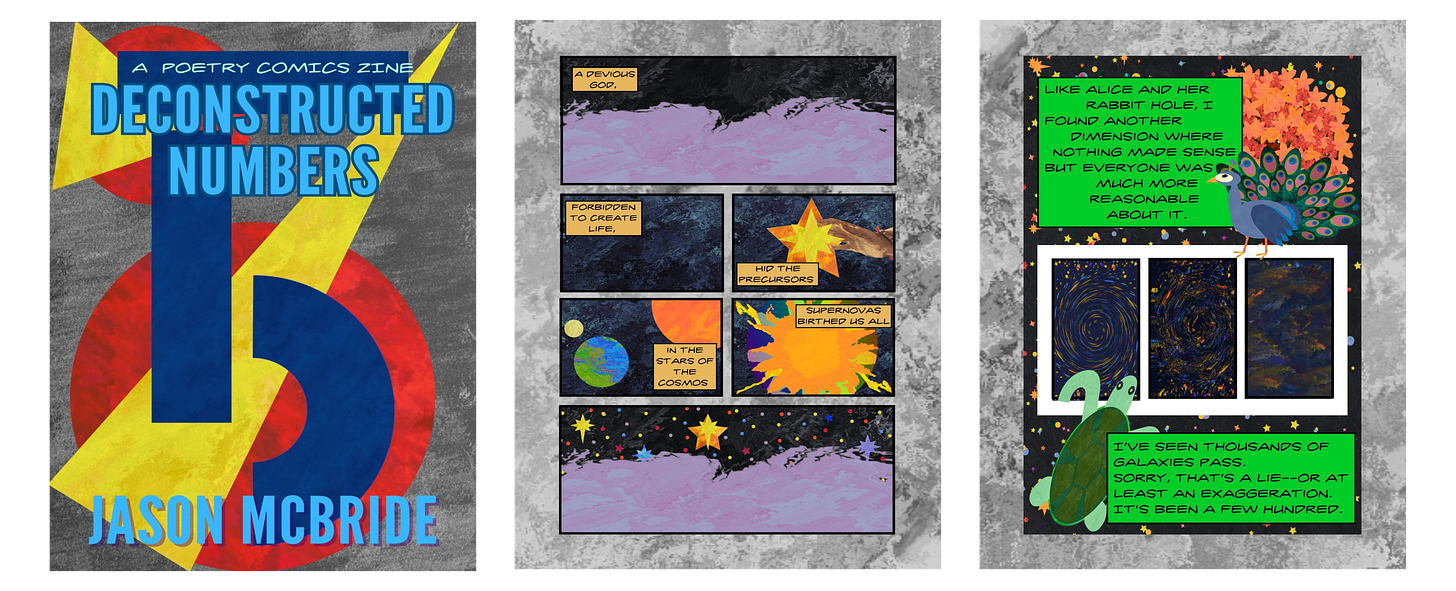
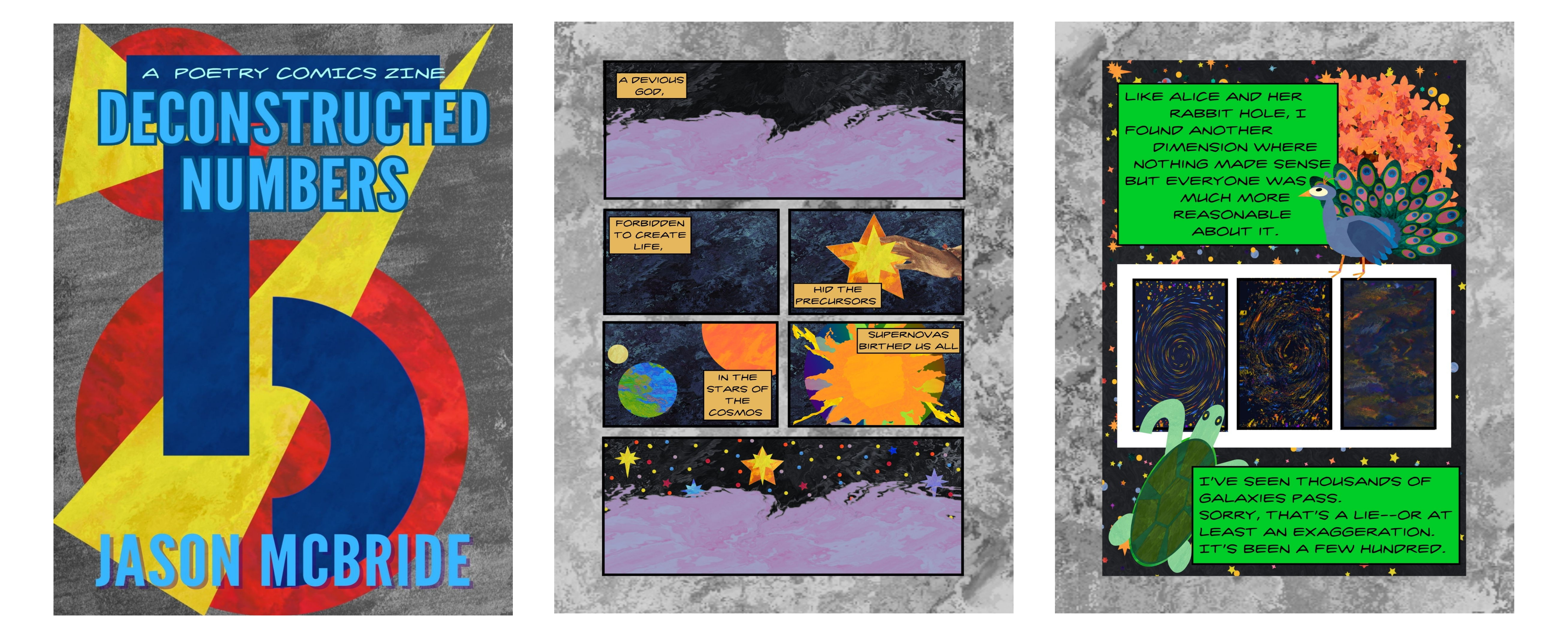
My Zine Club members should be getting their copies of Deconstructed Numbers: A Poetry Comics Zine any day now. I have put the retail version of the zine up for pre-sale in my Weirdo Poetry Shop. It launches August 3rd!
Click to learn more about Weirdo Poetry Zine Club and Snail Mail Club.
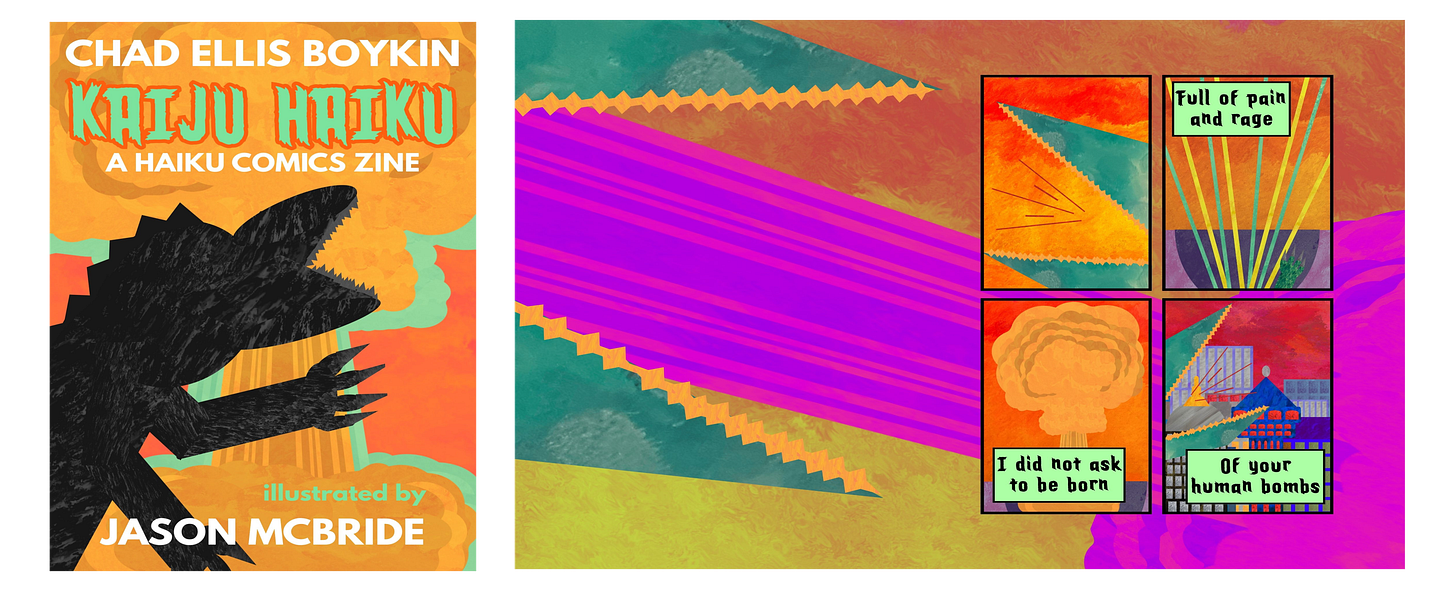
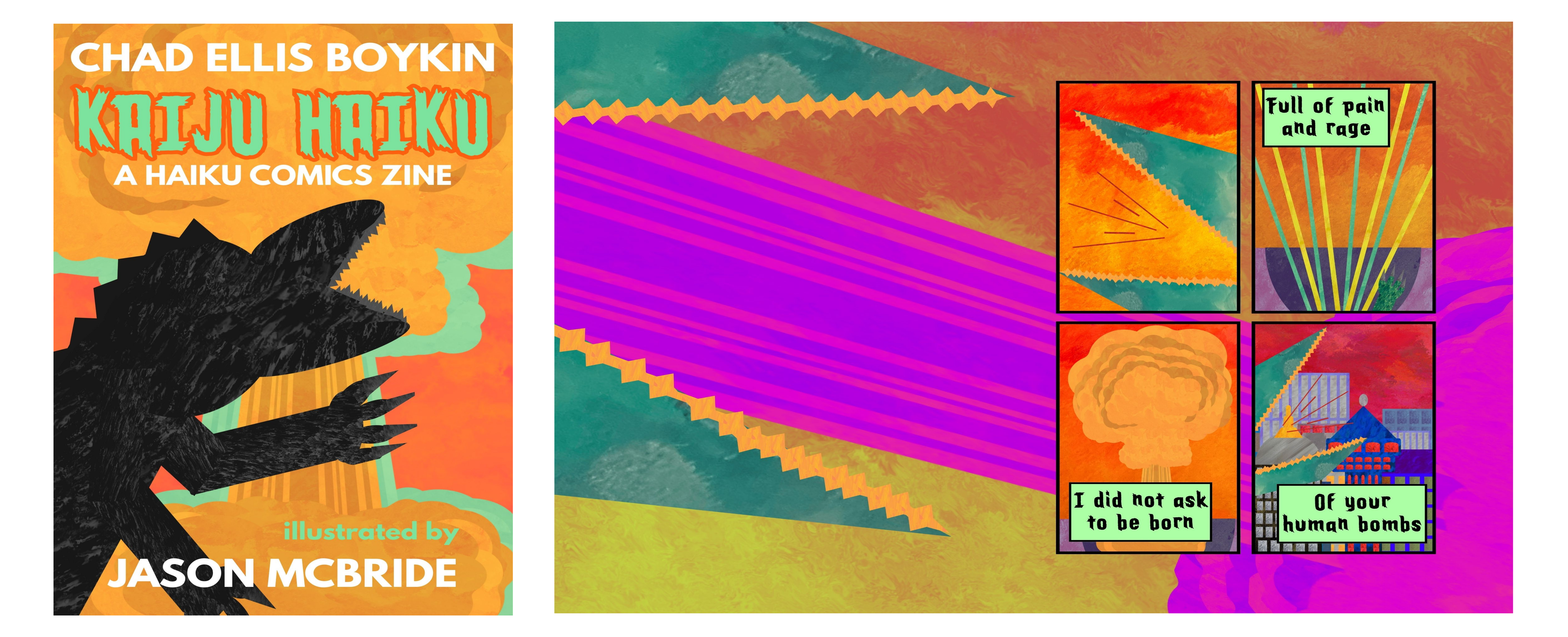
Lastly, Chad Ellis Boykins’s Kaiju Haiku will be out sometime next month. I did the illustrations, cover design, and book design for this zine and am excited for it to be out in the world! If you want to know the second Kaiju Haiku goes on sale, you can join my email alert list by clicking here.
And now on with the show!
The greatest lie in modern society is that we should all strive to optimize our lives; that we should become more efficient in our personal and professional lives.
Miserable billionaires and life-hack gurus tell us the only way to combat the universal truth that our time is limited is to make the most of each second by discarding wasted movement and idle dreams. Their obsession with efficiency and optimization spills into their politics and personal lives, which is probably why so many of the wealthiest people in the history of the world are so angry all of the time.
Efficiency is a lie for every human being. With our vestigial organs and internal redundancies, we have an appendix and two kidneys; we are inefficient creatures from birth.
Optimization is another fraud. Optimize our lives for what? You already know. Optimize for productivity, another unreal concept. A human life cannot be measured using cold calculations of the units produced over time.
A human life, any human life, is invaluable. A good life, one worth living, is not spent hoarding treasure like some cursed dragon or toiling away in a mine to help some dragon gain more loot.
A good life should be measured in smiles, laughs, and sunsets.
But what about the problem of time? We all have an uncertain amount of time; our lifespans are limited. But this is an argument for not wasting that life by optimizing for productivity. The problem of time is an argument for skipping out on working for other people any chance you get to pursue the true work of humanity: experiencing the world and other humans.
Instead of trying to count the seconds of my life as if time were gold coins and I were a miserly Ebenezer Scrooge, I work to stop time from flowing altogether.
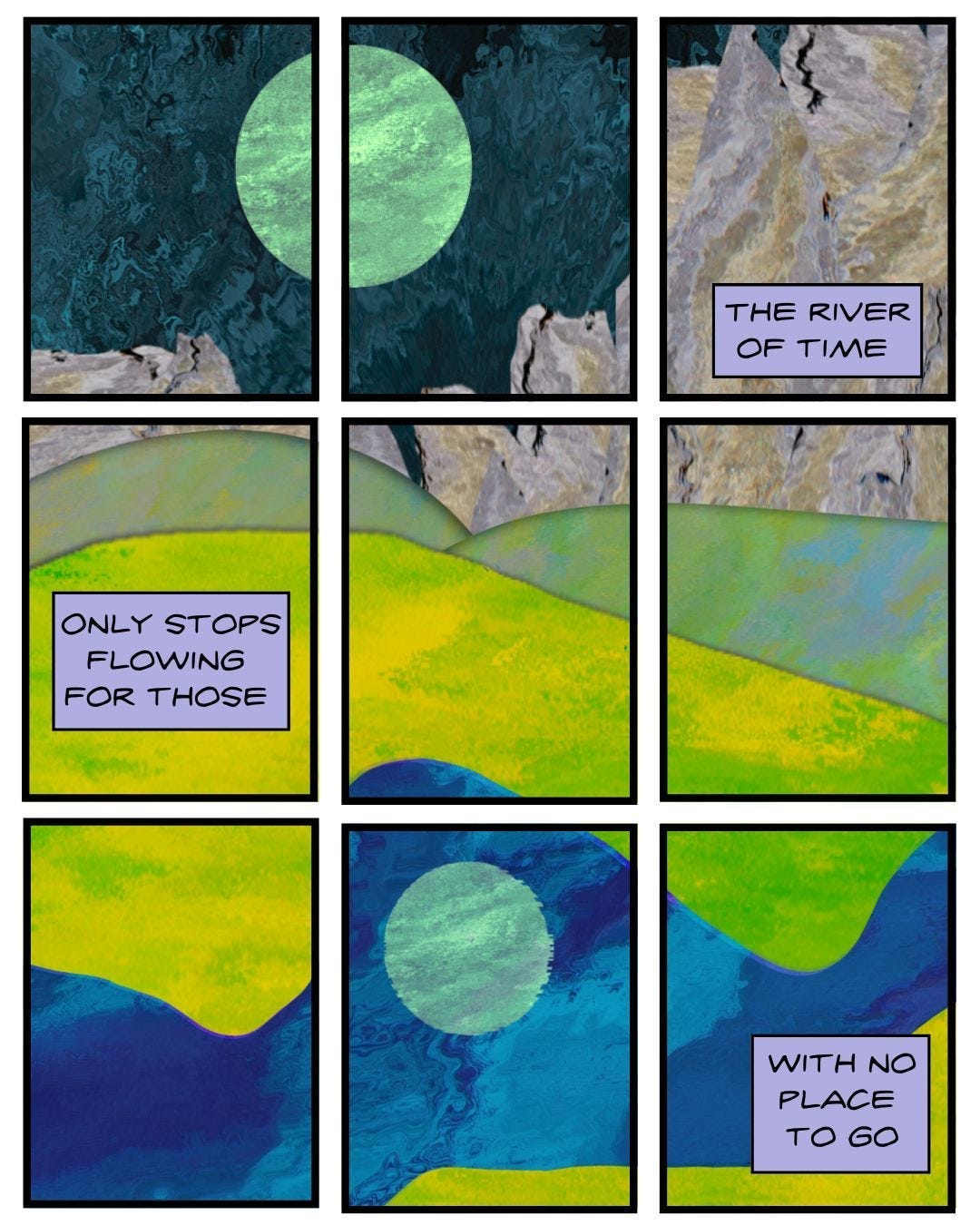
The secret to stopping time is to stop counting it. Do not look to the past with regret or the future with anxiety. Look to the moment you are right now, and it will stretch on for eternity.
I was not born with the ability to stop time. I spent much of my youth waiting for milestones to pass, looking for chances to escape my family, and stressing out about everything.
However, there were moments when I stumbled across the secret of time. In the twilight hours of a Northern California summer, we would scale the walls that blocked access to the culvert and the train tracks and wait for our ride. Freight trains would slow down as they came through our suburban town, and we would grab onto the ladders that hung from some of the cars, letting the train carry us for miles and miles, jumping off before the train picked up too much speed and then finding ourselves someplace new where new adventures awaited.
These illicit train rides would often take no time at all. We would make our way back home, and it was like coming out of the wardrobe, returning to the real world from Narnia. We had experienced endless adventures, but for the rest of the world, it was as if almost no time had passed at all.
We were so consumed with living in the moment that we had stopped time.
I am too old to jump trains. But I still have a love for getting trapped inside of moments, for stopping time.
These days I practice stopping time by walking along the Willamette (pronounced like it rhymes with “damn it”) River and watching the seasons change. This is not efficient. I spend more time walking than I do writing or illustrating. My life is not optimized for work.
Instead, most days, I venture out to the river and let life flow around me. I have seen some of the world’s great rivers. I have cruised on the Yangtze and Yellow Rivers of China. I have seen the mighty Mississippi from the sky. I have rafted, fished, and waterskied on many of the minor rivers of the Western United States. But no river has ever captured my heart like my local Willamette River has.
I’ve been walking its shores for twenty years and cannot remember what year I saw what wonder unless I recorded it with a poem, in which case I know the exact date.
Each time I walk along the Willamette, I lose myself. Time stops being a concern. Instead, I observe the river and life flow around me, letting myself become part of that flow.
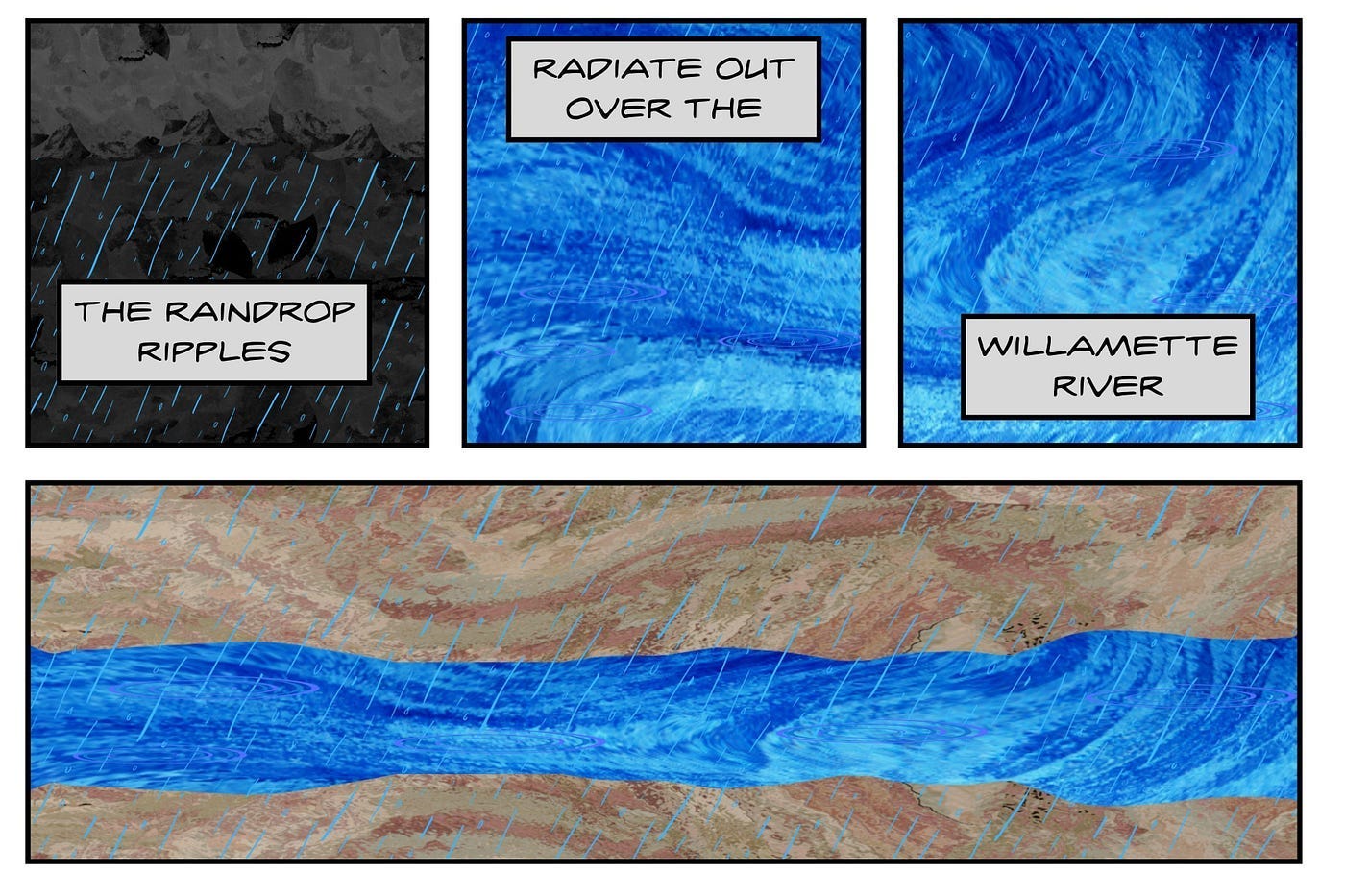
Spring is my favorite time to walk along the Willamette because all of the rain keeps most of the people away. It’s not that I don’t like people. It’s just that I’m selfish and enjoy having the river to myself.
When I don my all-weather jacket and mud boots, I feel invincible. If you don’t care about getting wet and dirty, there is nothing better than a hike in a torrential downpour.
Many days, I’ve returned to my car dripping wet and had to peel my jacket off and throw it in the backseat while rushing to get into the front seat where my notebook is to furiously write down ideas from my rain walk.
Some of my best poems have been written in the car, with the heater blowing my notebook pages, my jacket dripping on the backseat floor, and rain pounding on the windshield.
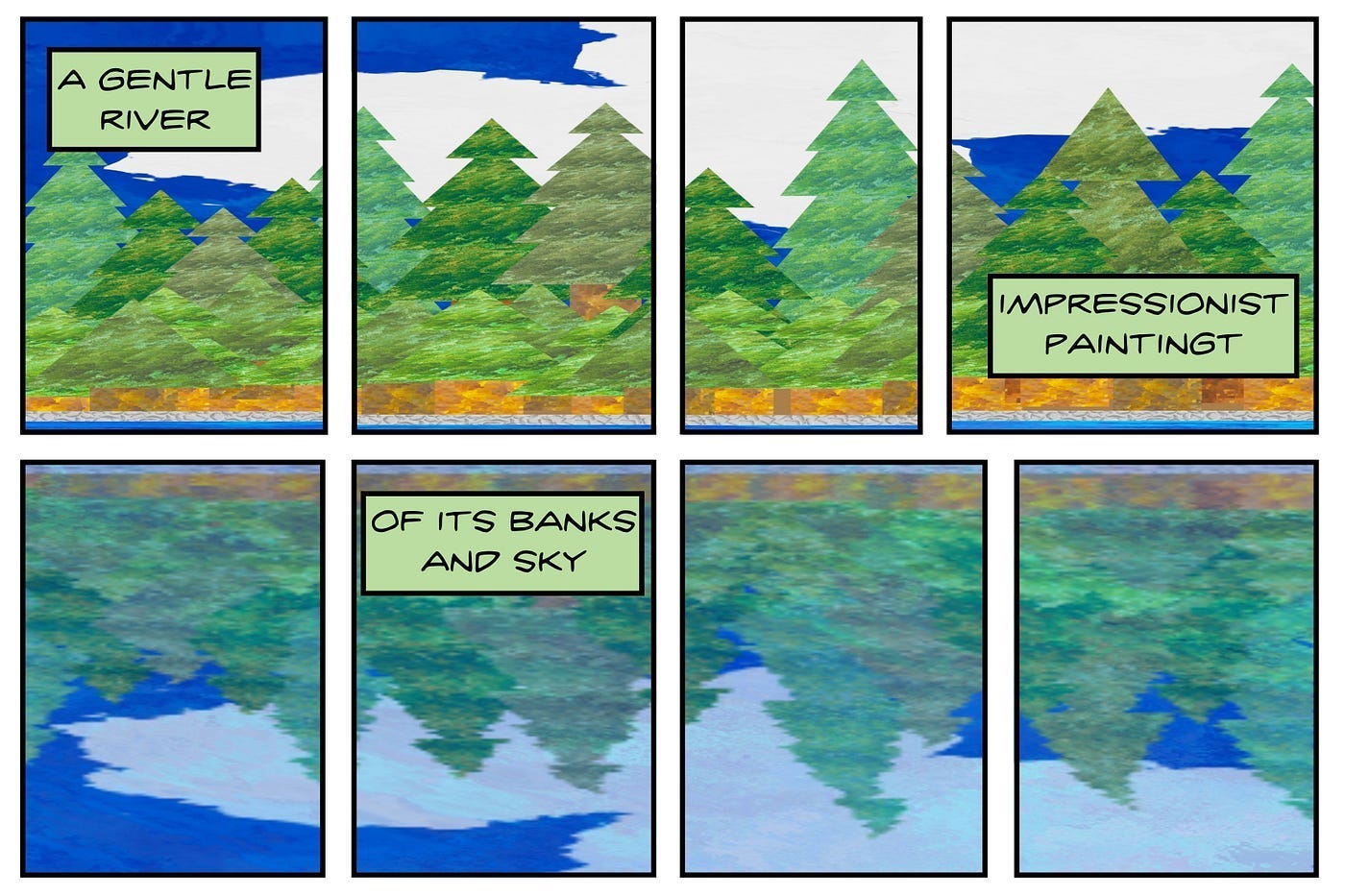
Summer here is gloriously languid. With the kids out of school and the rain banished for a brief season, I have more chances to explore the river. Some places just aren’t accessible when it rains every day.
In the summer, I encounter fellow walkers and hikers, and more importantly, their dogs. There is as much character and color to the canines along the river as there is in their human companions.
More than once, I have rescheduled a client meeting so that I could stay longer watching the river. And every time, I have been richly rewarded for my laziness with beautiful sights and fleeting moments of kismet-fueled epiphanies.
It’s a good thing I work for myself because any sensible boss would’ve fired me long ago. I’m not built for employment.
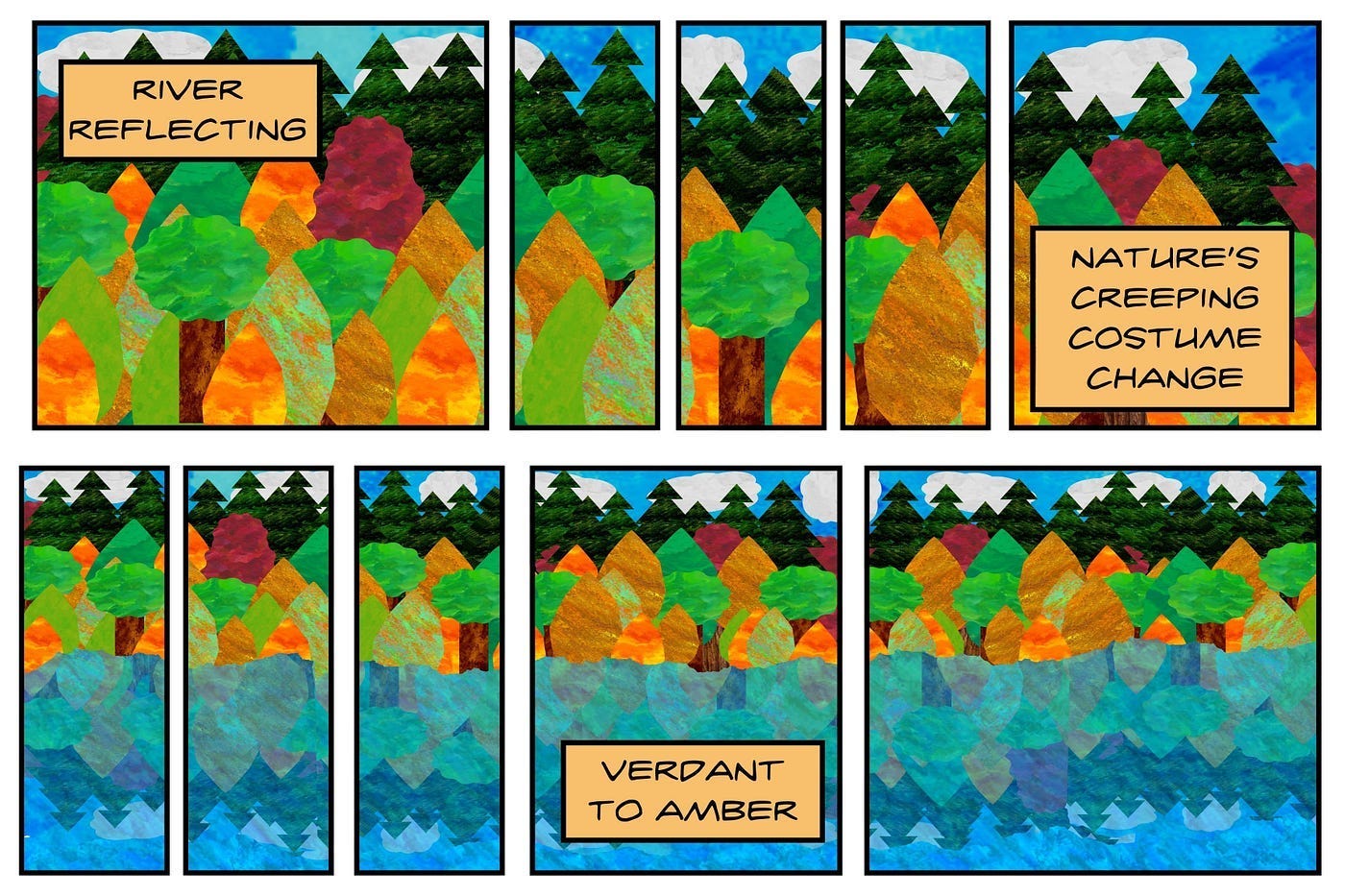
The fall is when the Willamette River Valley shows off. The explosion of glorious colors happens almost imperceptibly and then all at once.
The best hiking weather here is from mid-September through mid-October. The temperatures are mild, there is little rain, and most years, the wildfires have been extinguished.
The migrating Canada geese are a common fall sight, as are several species of ducks, herons, and other waterfowl.
Often, watching other people watching the birds is more interesting than the birds themselves. I hear snippets of intriguing stories full of betrayals avenged and tragedies overcome. The people you meet along the river in the fall are always in a good mood and eager to chat.
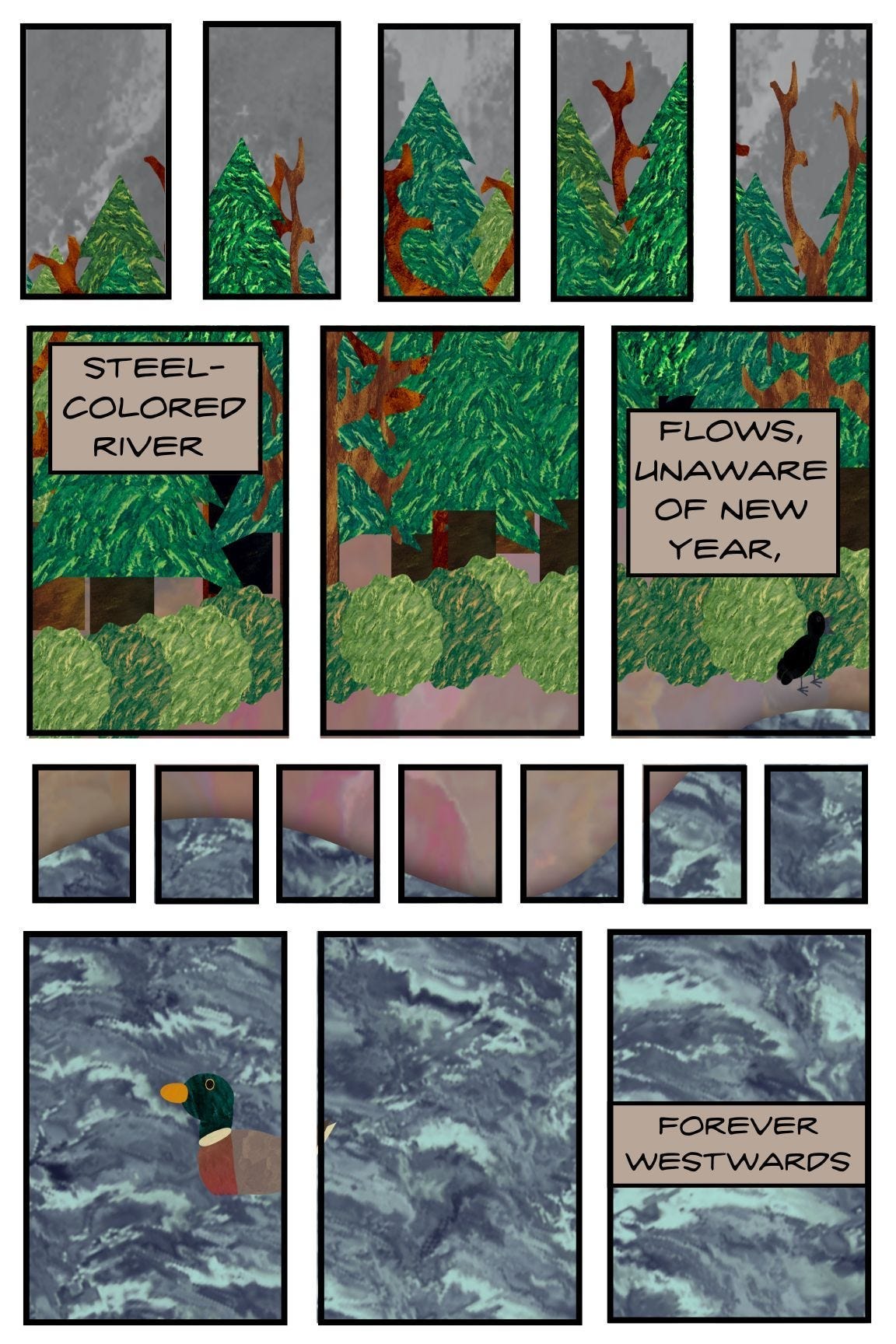
The rains return in winter. After the first big storm, many of my favorite trails are impassable for the season.
The River changes, too. It often breaks its banks and fills all of its sloughs. Its color transforms from blue to gray, reflecting the change in the sky and the amount of soil it carries downstream to the Columbia.
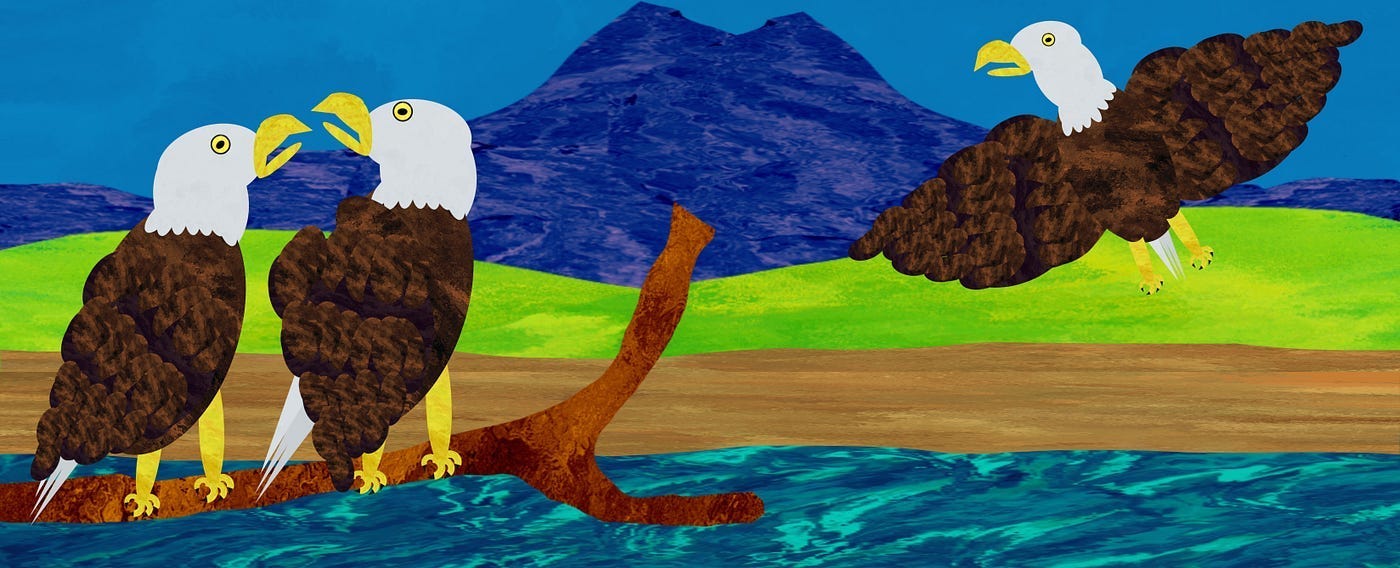
However, in winter, the mallard ducks are more active, and the bald eagles soar overhead looking for fish.
Every winter season is the same. Every winter season is different.
Walking the river day after day, season after season, year after year, is not efficient.
If I wanted to optimize my exercise, I would get a treadmill. But on a treadmill, you cannot hear the bald eagles trilling to each other during nesting season. You cannot see a trout jump up and grab a morsel of grub from the river’s surface. You cannot feel the rain pour down on your face. And you cannot see the subtle changes in color as fall descends again on the valley.
Walking the river has allowed me to live a thousand lives. Why would I want to be more efficient and squeeze in more work?
The reason our society worries so much about time, the reason billionaires hoard wealth, and the reason bosses everywhere try to manipulate people into being more productive is a raging fear of death.
Walking the river has taught me that you only need to fear death if you have failed to live life.
You can worry about efficiency and optimization all you like. I will be walking the river, learning to stop time instead.
Thanks for reading! Be the weird you want to see in the world!
Cheers,

No posts
Comments
Nothing yet. Say the first thing.
Sign in to join the conversation.