
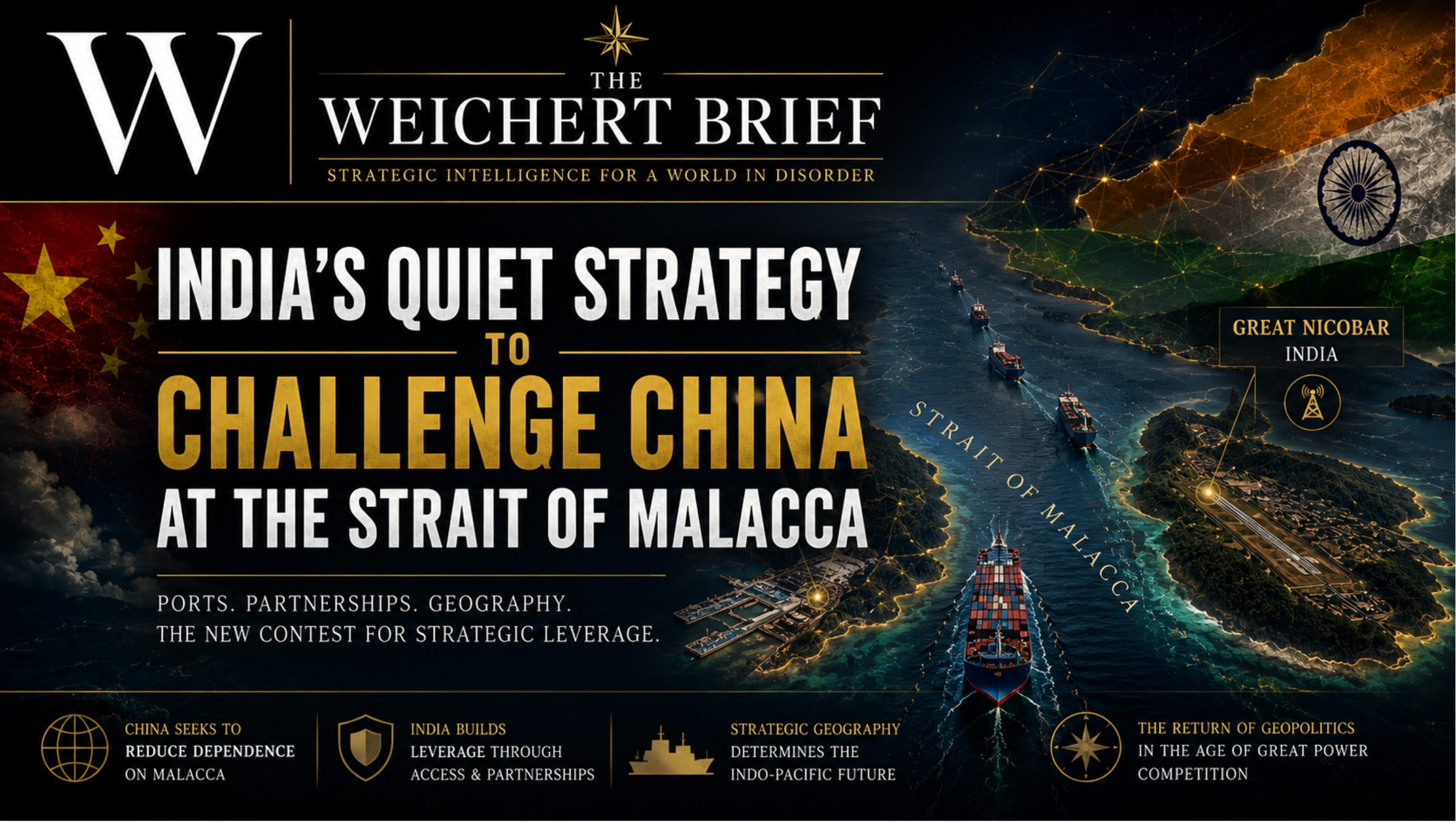
BLUF: India is quietly building strategic leverage around the Strait of Malacca through Great Nicobar, Sabang Port, and a wider network of maritime partnerships. While China seeks to reduce its dependence on the chokepoint, New Delhi is strengthening its ability to influence access to it during a future Indo-Pacific crisis.
China’s “String of Pearls” strategy for linking its dominant position in the South China Sea (SCS) to the Indian Ocean via a network of ports, logistics hubs, and infrastructure faces a major silent challenger. India.
Rather than building overseas bases in the traditional sense, New Delhi is developing a network of strategic access points to secure one of the most important waterways: the Strait of Malacca.
This development is a deliberate effort by strategists in New Delhi to ensure that India plays a central role in shaping the security of the maritime crossroads linking the Indian Ocean and the Pacific, fostering confidence in regional stability.
No maritime chokepoint may prove more consequential in the twenty-first century than the Strait of Malacca.
Stretching between the Malay Peninsula and Indonesia’s Sumatra, the narrow passage serves as one of the world’s busiest shipping lanes. Roughly one-quarter of global maritime trade transits the Strait each year, including enormous volumes of oil, liquefied natural gas, manufactured goods, and critical raw minerals.
The Strait of Malacca is likely the most important strategic chokepoint in the world for China. Given that China’s economy depends on global trade and must import many of its key industrial inputs through the Strait of Malacca, Chinese strategists have highlighted the critical need to maintain secure access to the Strait. Indeed, those strategists have coined this dependency as the “Malacca Dilemma.”
India’s growing presence around the Strait also gives New Delhi a means to capitalize on China’s strategic vulnerability in any future crisis.
Rather than attempting to dominate the waterway outright, New Delhi appears intent on ensuring that it possesses the infrastructure, partnerships, and military presence needed to influence events there during a crisis.
Comments
Nothing yet. Say the first thing.
Sign in to join the conversation.