
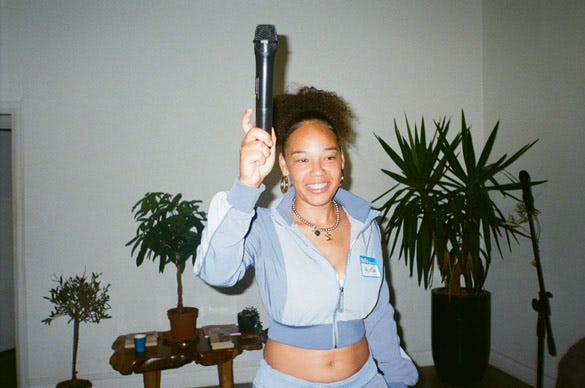
Written by Alfiah Jade Brown
Most people in my family are heavily dyslexic or neurodivergent, so we’ve always had to find our own ways to teach and support each other. My parents, grandparents and I still sometimes carry the shame of feeling “stupid” for not fitting into academic standards.
Growing up, I dreaded classrooms unless it was art, music, or literacy. The weight of those tears was heavy – feeling “stupid” in a world not built for people like me. I failed nearly every exam until university.
I still remember my dyslexia report: reading and spelling age of a ten-year-old – at 21. It was humbling, but it forced me to ask: what are my strengths?
Music was my first love and the first thing I truly understood. Growing up around my dad’s sound system became a study of learning how rhythm and words could move a crowd. Watching him turn everyday phrases into songs showed me that I didn’t need perfect spelling – music and I understood each other.
But the industry was male-dominated and suffocating, and after too many bad experiences, I turned fully to poetry in my twenties, around the same time I was at university.
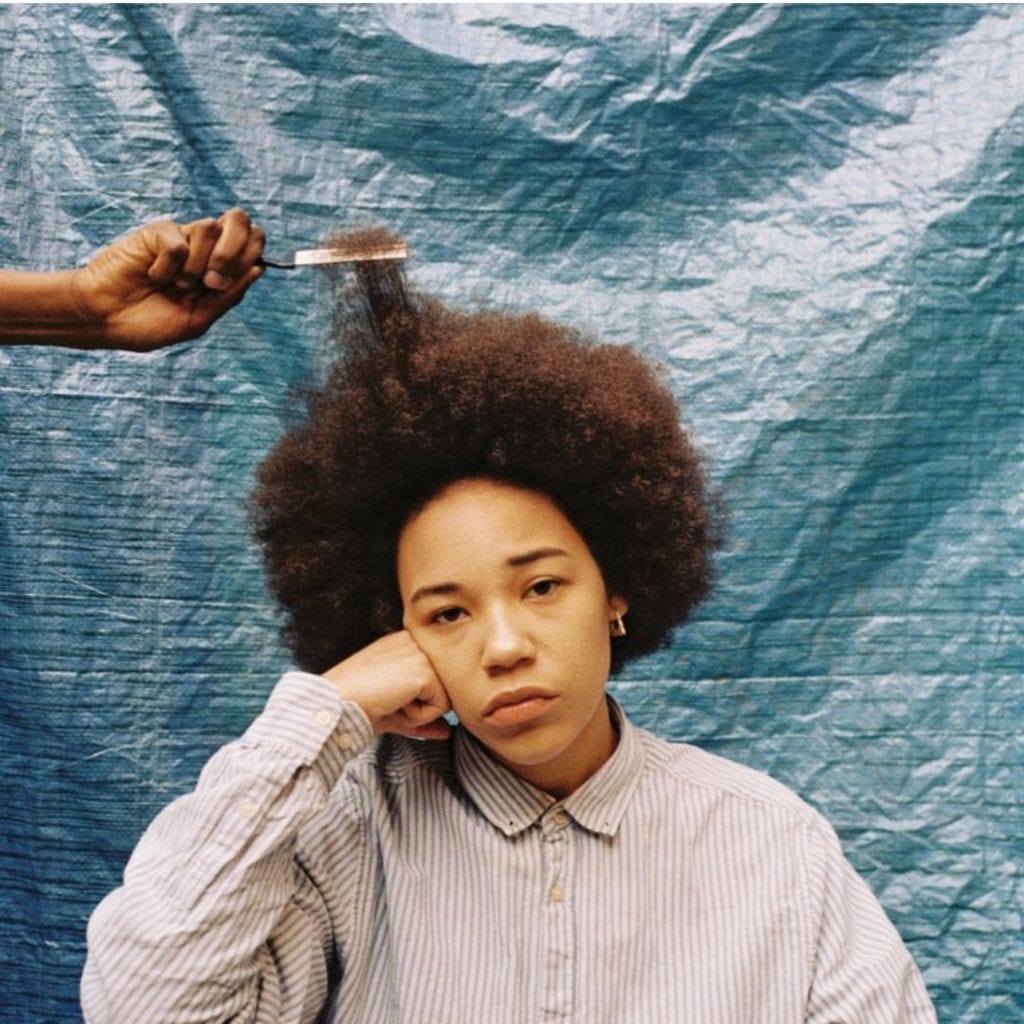
Teachers had always called me a great storyteller, but my grammar, punctuation and spelling were “horrific,” and honestly, they still are today. My love for poetry didn’t come from praise – I wasn’t even into it at first. Most of what I read was Shakespeare (and I’ve got serious beef with that man).
Meanwhile, the worlds in my head were vivid, loud and colourful, but I couldn’t get them onto paper the way I felt them.
It wasn’t until university, in a racist environment, that I ironically discovered Black literature for the first time – Bell Hooks, Caleb Femi, Frantz Fanon, Debbie Tucker Green, Linton Kwesi Johnson. Their work taught me that writing could be rebellion, not academic approval.
I thought, “F*ck it – I’ll write my own way.” I was surviving a system that wasn’t made for me but still needed to be heard to graduate.
UK rap had always been humming in my ears – Sneakbo, K Koke’s Fire in the Booth, Boy Better Know, Giggs. I was always fascinated, studying the power of rap and the playfulness of language, and it made me question why people would rather listen to a rapper than read a poem.
This became internalised in my writing process as a poet. Rap taught me authenticity, how to write in my own words and to use my voice as I already know it. They actually taught me most of what I know about poetry; I still couldn’t tell you what a stanza is.
It was somewhere in between writing words as a weapon and bulletproof vest that I realised my talent – fuelled by the zeal and never-wondering imagination of a child who wanted to create all their crazy, restricted ideas.
Being forced to listen and visualise the world made me a better reader, a better writer and a stronger advocate for untold stories. That’s when I realised my dyslexia was a strength; a gift that shaped my storytelling.
This deeply shaped my unique process. I stopped focusing on poetry as it appears on the page and started transforming it into the visual worlds I imagine. My poetry explores identity and culture, amplifying overlooked stories and weaving them together with recorded voice notes, music and directed visuals blended with phrases from everyday life.
Dyslexia has taught me that words and reading alone can’t always hold the life of a poem – film, photography, and sound allow it to breathe, move and come alive.
I still carry the perspective of a ten-year-old reader, speller, and writer with me. Unlike school, no one can “correct” my poems; they are my voice, my world, my story.
Even if I don’t hear the clicks, I have found my way and will still be heard.
I carry so many hopes for the future of poetry, dreams I work towards every single day. Teaching poetry, especially to young people from marginalised communities, is one of my greatest joys. I want my way of teaching to breathe faith into the child who feels exhausted by society’s standards, to remind them their voice already matters.
As a community arts advocate, I’ve taught more than 400 children in alternative poetry workshops. I pray the seeds I’ve planted in them grow into poems and stories that shape their truths and maybe even change the world. Many of them heal a part of me, and their stories are often woven into mine. I hope they feel a voice – mine or anyone’s – pushing them forward when school/world defines success too narrowly.
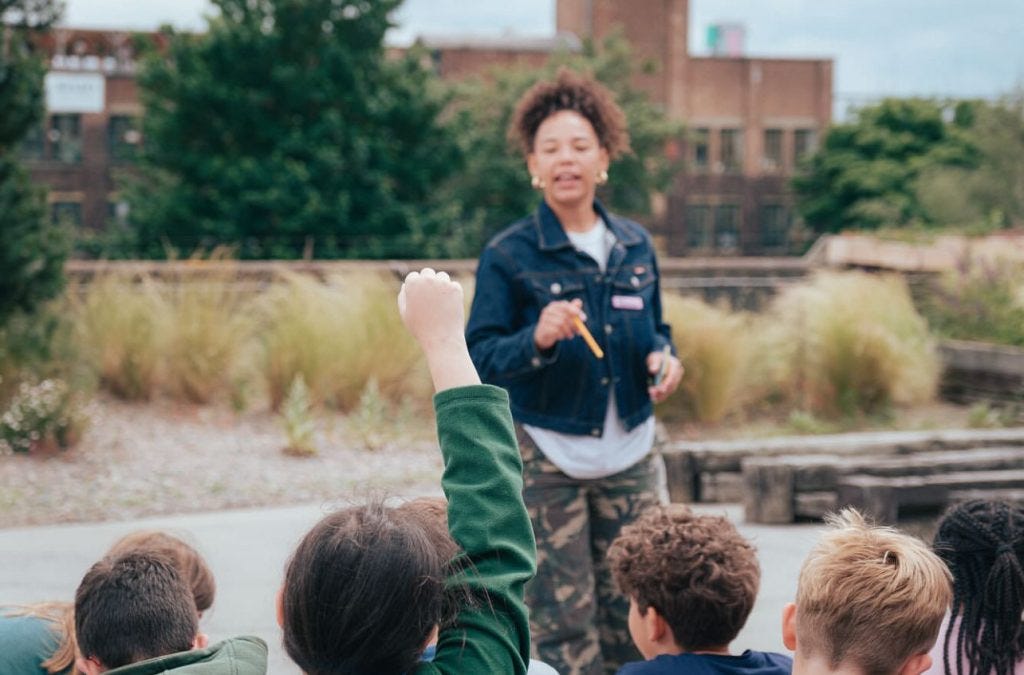
As a poet, I want to shift who feels invited into poetry. I dream of widening the class and cultural landscape of the art form -creating work that’s immersive, disruptive and deeply personal through film, exhibitions, sound and whatever else breaks the text. I’m ready to push boundaries and will do it. I’m passionate about keeping that space accessible, welcoming and alive.
Collectively, the poetry world needs to expand. We need more room for marginalised communities, ethnic minorities, women, working-class writers and neurodivergent poets – voices that wouldn’t typically be seen shining in Waterstones. I’m telling you, we’ve got exciting shit to say.
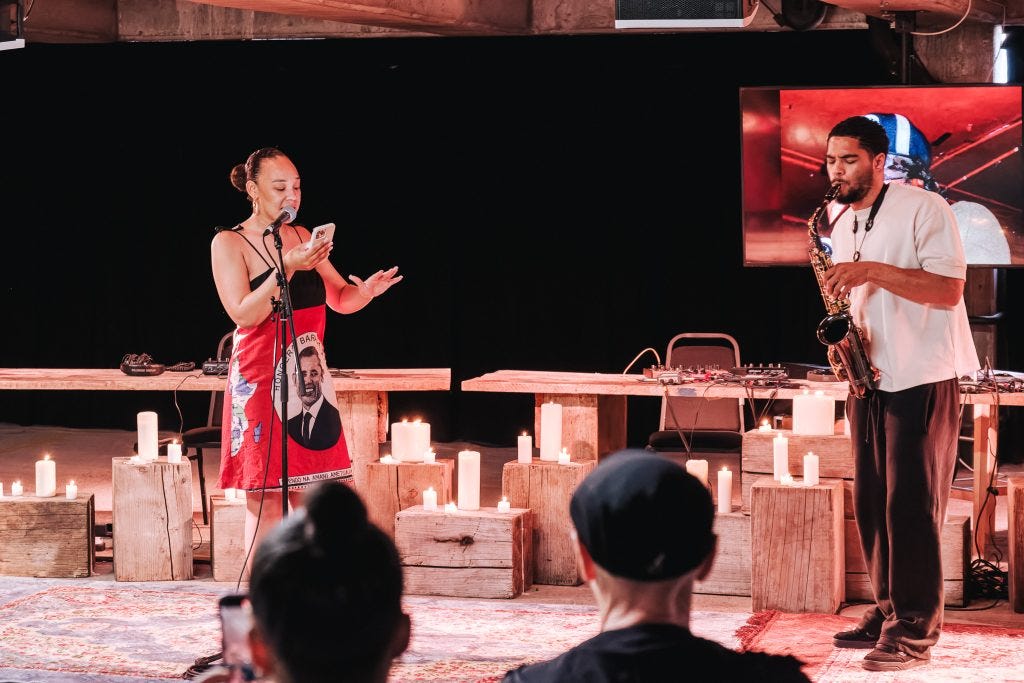
I hope to see more paid opportunities and sustainable paths for poets. We pour so much into our craft performing at open mics, running workshops, building community, yet the chances to break through remain too few. Poets can do far more than simply be published; there is an entire world of poetry waiting to be created. And I want to help make that world bigger, louder, softer where it needs to be – and far more exciting and inclusive.
Follow Alfiah Jade Brown on Instagram: @alfiahjade
No posts
Comments
Nothing yet. Say the first thing.
Sign in to join the conversation.