
When you live in a place like Sedona, it’s easy to describe what you’re seeing.
Nature.
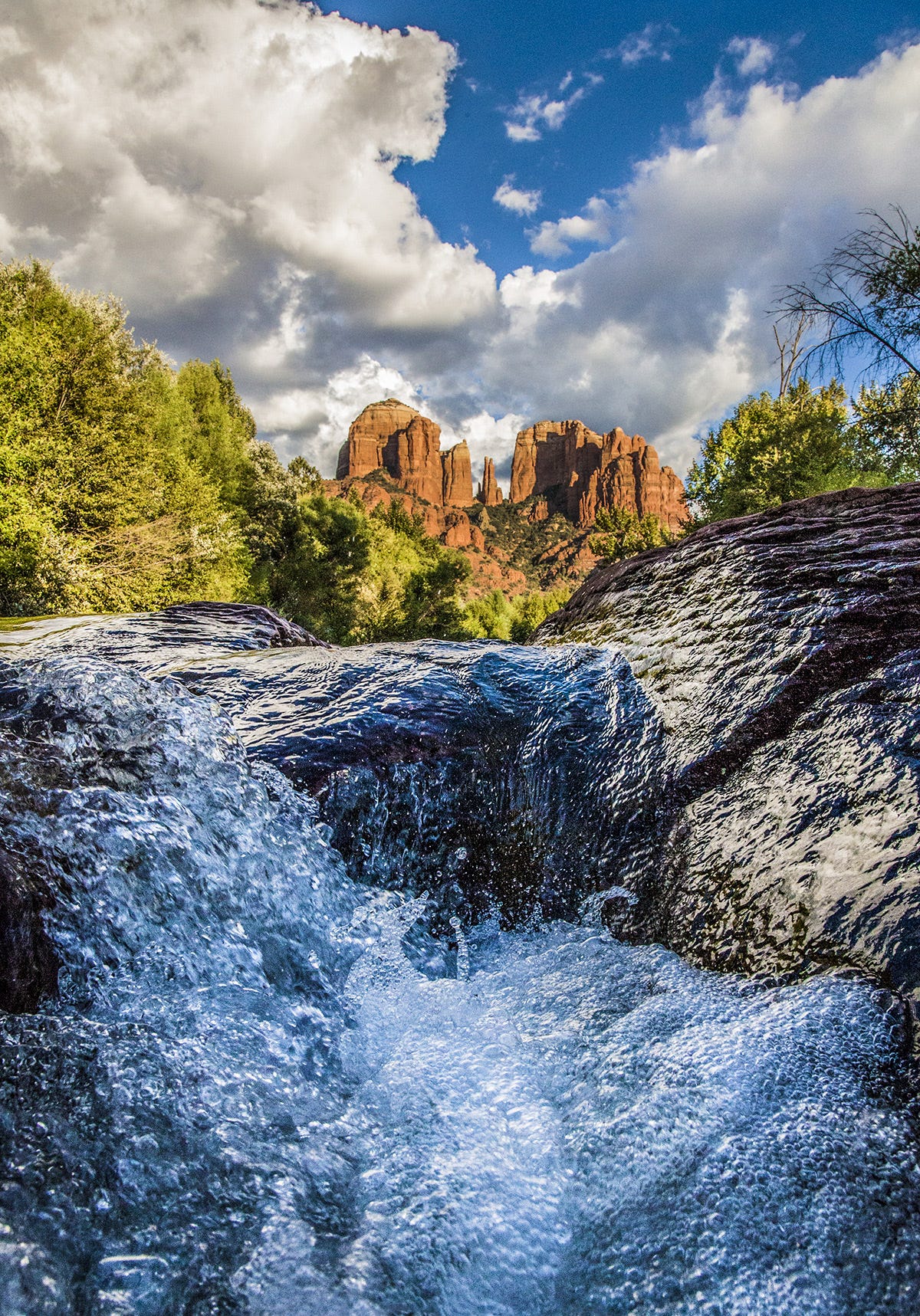
The water moving over rocks. The trees along the creek. The red cliffs rising above the landscape, shaped over millions of years by forces far older than humanity itself.
We recognize these things as belonging to the natural world.
But even here, surrounded by reminders of the ancient forces that shaped this planet, we often create a distinction that is not as clear as we imagine.
The canyon, forest, and river are what we recognize as natural. The computer sitting in my lap is not. The iPhone in my hand is not. The technology and objects we create seem to belong to another category entirely.
But none of them came from another world.
Everything around us is part of the same story.
The atoms that make up our bodies carry a history far older than humanity. The elements that form our bones, our blood, our cells, and the world around us have existed for billions of years.
Many of the heavier elements that make life possible were forged inside ancient stars that lived and died billions of years before our planet existed. Through the vast processes of the universe, those elements became part of new worlds — including Earth — and eventually became part of us.
The carbon in our bodies.
The iron in our blood.
The calcium in our bones.
The minerals beneath our feet.
All of it is part of a much older story.
We are not visitors standing outside nature.
We are nature.
That is something we too often forget.
Humans have a tendency to separate ourselves from the rest of life on this planet. We talk about “humans” and “animals” as if we are somehow outside the same evolutionary process that created every living thing around us.
But we are animals.
We are just one branch on a tree of life that has been growing for billions of years.
The dinosaurs that once walked across this planet were not a story separate from ours. They were part of the long chain of evolution that shaped the world we inherited.
They lived.
They changed.
They disappeared.
Life continued.
And eventually, after billions of years of adaptation, one species developed the extraordinary ability to look backward and ask where it came from.
Human creativity is one of the most remarkable things nature has produced.
A telescope isn’t separate from nature. Not really. It’s matter from the Earth transformed by a species curious enough to study the universe.
A painting is the same kind of transformation: chemistry, light, materials, and imagination — the physical world transformed through a human mind.
Even the phone I use to teach my iPhoneography classes is part of that same story. It’s the result of the elements of this planet transformed through human creativity and knowledge into a tool that allows us to notice, capture, and share the world around us.
Human ingenuity is not the opposite of nature.
It is one of nature’s expressions.
But intelligence creates responsibility.
The same creativity that allows us to build extraordinary things also allows us to reshape the planet in ways that can harm all the systems that sustain life. The Industrial Revolution transformed human civilization. It brought incredible advances in medicine, transportation, communication, and technology.
But it also brought pollution on a scale humanity had never experienced.
Rivers caught fire. Air quality became dangerous. Industrial waste poisoned communities. And eventually, we recognized the damage and began to correct course. Environmental protections were created. Pollution controls improved. International cooperation helped address threats like the hole in the ozone layer.
Those moments mattered because they showed something important:
Human beings are capable of recognizing harm and changing direction.
But we continue to face the same question. What kind of future are we building? Progress is not simply the ability to create more. It’s the wisdom to understand what creation costs.
A technology company, a factory, a city, or an industry shouldn’t measure success only by what it extracts or what it earns.
Human ingenuity should improve human life while protecting the living systems that make human life possible. Because there is no economy without a planet. There is no future without the natural world that supports it.
The question has never been whether humans are part of nature.
We always have been.
The question is whether we remember that connection when we decide what we value, what we protect, and what kind of world we want to leave behind.
The creek flowing over these rocks was here long before us.
The stone beneath our feet carries a history older than our species.
The elements inside our bodies have traveled through stars, oceans, plants, animals, and countless forms of life before becoming us.
We are not separate from this story.
We are the newest chapter in it.
Caring for nature is not about protecting something separate from ourselves.
It’s an act of understanding that the world we depend on is the same world that created us.
And perhaps the greatest responsibility of being human is remembering that we are not separate from nature, but part of it.
Comments
Nothing yet. Say the first thing.
Sign in to join the conversation.