
Today, I want to take a moment to reflect on something that existed long before humanity arrived and will continue long after we’re gone.
A reminder that there’s a much larger story happening around us all the time.
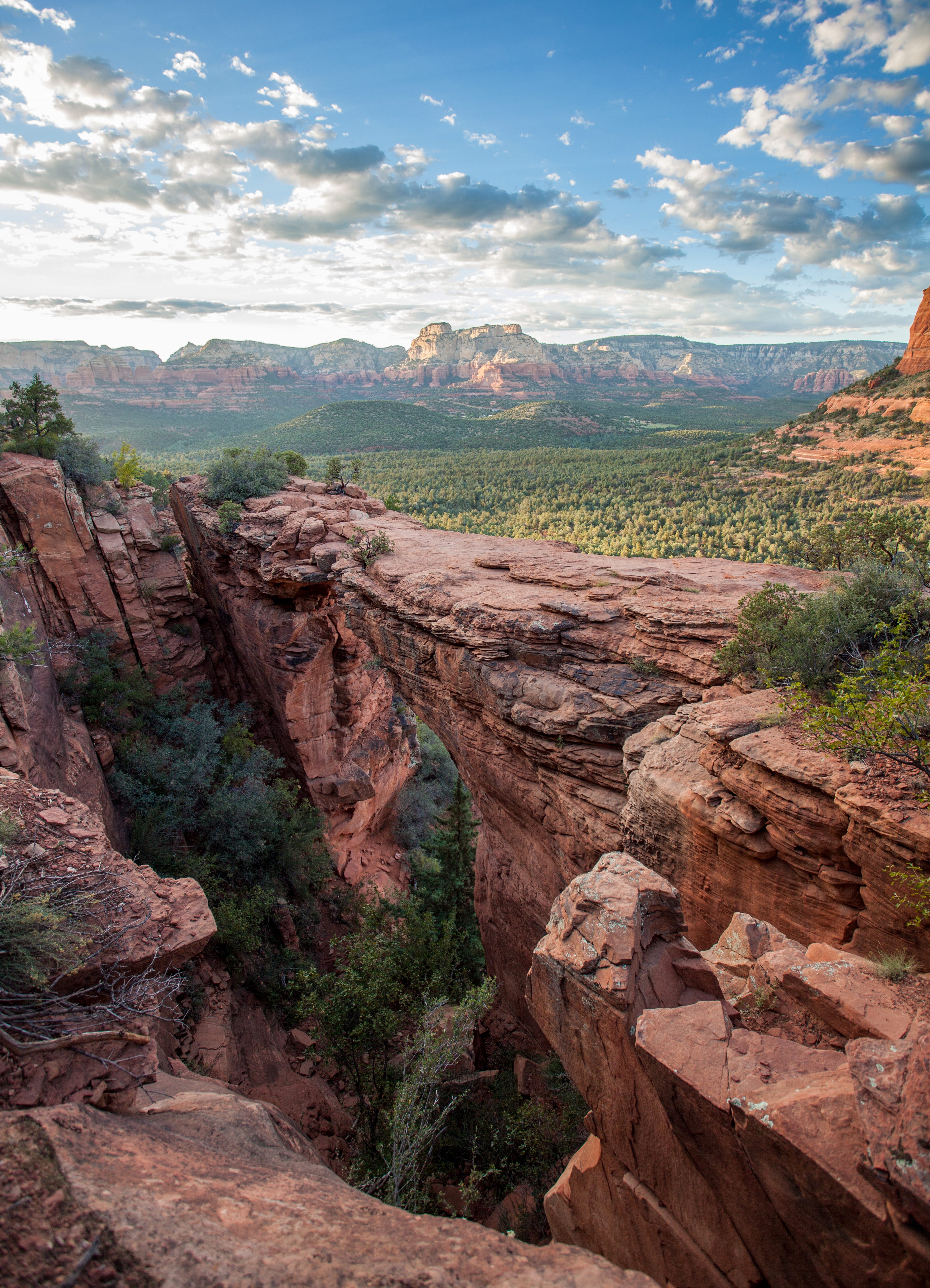
Devil’s Bridge is one of those places.
But the photograph only shows one moment of a much longer story.
Devil’s Bridge sits within the Red Rock-Secret Mountain Wilderness, a nearly 44,000-acre protected wilderness area in the Coconino National Forest.
It’s easy to look at a place like this and see a beautiful destination, because of course it is. A place to hike to. A place to photograph. A place to stand for a moment and take in the view.
And what we’re seeing is just a small piece of a much older story.
The red rocks surrounding Sedona are evidence of environments that disappeared hundreds of millions of years ago. Layers of ancient sand dunes and coastal landscapes were compressed into sandstone, lifted, exposed, and slowly reshaped into the formations we recognize today.
This landscape is essentially a fossilized record of a world that no longer exists.
The rocks around us are carrying information about a completely different Earth — different environments, different climates, and different conditions that existed long before humans were here to witness them.
And the process that created these formations is ongoing.
We often think of erosion as something entirely destructive.
But Devil’s Bridge exists because erosion shaped it.
Water and wind removed the surrounding sandstone faster than the area under the bridge, leaving behind the natural arch we see today.
And it’s not finished. The erosion that began millions of years ago continues today.
There’s something remarkable about the fact that a force as powerful as erosion can also create something so beautiful. The same natural processes that wear landscapes away can also reveal incredible forms hidden within them.
But the story here was never only written in stone.
The landscape around Devil’s Bridge is a high desert ecosystem shaped by adaptation.
Pinyon-juniper woodlands, manzanita, prickly pear, ponderosa pine, riparian areas, and other plant communities exist together in a landscape that looks harsh at first glance, but is filled with life.
The high desert is not empty.
It’s a place where plants and animals have adapted to scarcity, where every species has found its own way to survive in a landscape defined by sun, wind, limited water, and changing seasons.
Living in Sedona means learning that the wilderness doesn’t end where the neighborhoods begin.
I’ve watched elk, mule deer, javelinas, coyotes, rabbits, squirrels, and bobcats move through the places around my home. I’ve seen a mountain lion in my backyard. Recently, a black bear wandered through the Village of Oak Creek, a reminder that even our neighborhoods exist within a much larger ecosystem.
The land we call Sedona also has a much older human history.
The Red Rock-Secret Mountain Wilderness is within the ancestral homelands of Indigenous peoples, including the Yavapai and the ancestral communities whose descendants continue their relationships with this landscape today. The people who lived here long before modern Sedona left behind stories, knowledge, and connections to this place that continue across generations. This land has been home, a place of connection, and a source of knowledge for generations.
The rocks will continue changing.
The plants will continue adapting.
The animals will continue moving through this landscape.
We’re here for a brief moment in that story.
Everything we love is temporary. The landscapes we admire, the creatures that share this planet with us, and even our own time here are all part of something much larger than ourselves.
That doesn’t make them less meaningful.
It makes them more precious.
The least we can do is be thoughtful caretakers of the small piece of this story we have been lucky enough to experience. We are temporary visitors on a planet that has been telling its story for billions of years.
The privilege is not that we get to own any part of it.
The privilege is that, for a brief moment, we get to witness it.
Comments
Nothing yet. Say the first thing.
Sign in to join the conversation.