
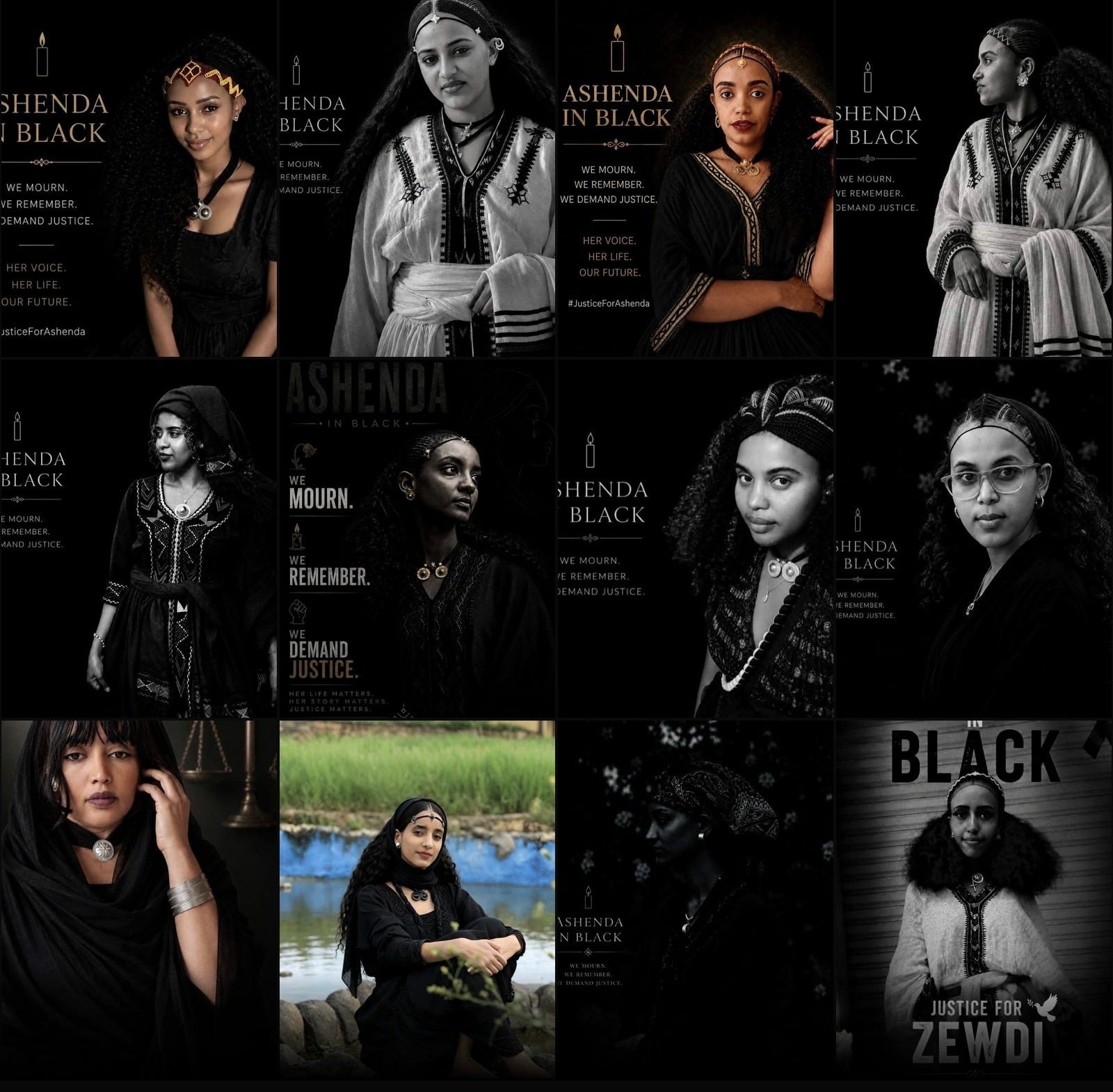
Mekelle, Tigray (Wegahta) - Tigrayan human rights advocates and social media users have launched an online campaign calling for justice for Zewdu Haftu, posting photographs of themselves wearing black versions of traditional Ashenda clothing and using the hashtag #AshendaInBlack.
Photographs shared on social media show women wearing black traditional dresses associated with Ashenda, replacing the bright colours commonly seen during the celebrations. Many of the posts include messages calling for justice for Haftu and accountability in her case.
The campaign follows a court ruling this week that acquitted two men previously sentenced to life imprisonment for Haftu’s murder. The Central Court of Mekelle overturned their convictions after key digital evidence was found to be missing from the archived case file and could not be obtained again from the Federal authorities, according to sources familiar with the proceedings.
With Ashenda celebrations still ahead, campaigners are calling on women and girls to mark this year’s festival in black traditional dress rather than the colourful clothing typically associated with the occasion.
Ashenda is traditionally celebrated by women and girls across Tigray with participants wearing traditional clothing, decorating themselves with jewellery and other accessories, sing, dance and gather in groups during the festival. The celebration has also become an important expression of Tigrayan cultural identity, including among communities living outside the region.
Participants in the #AshendaInBlack campaign are calling for the use of the cultural festival to express grief and protest.
Rather than the colourful clothing normally associated with Ashenda, photographs posted online show Women and Girls dressed in black. Some users have accompanied their photographs with messages about Haftu, while others have simply used the hashtag to associate their images with the campaign.
The campaign is largely taking place on social media, where users are encouraging others to post photographs in black Ashenda clothing and use the same hashtag. Tigrayans participating in the campaign say the acquittal of the two men has renewed concerns about whether Zewdu’s murder will receive full accountability.
Zewdu Haftu, a 32 year old resident of Mekelle was brutally killed in her home town in August 19, 2023, during the Ashenda season. She was walking with her friend, Semhal Gebregziabiher, when she was attacked, according to testimony presented in court. Eye witnesses said she resisted an attempted sexual assault before the attackers dragged her by the hair and fatally crushed her with a vehicle.
Her case was marked by lengthy delays, disruptions and allegations of political interference. Semhal Gebregziabiher, a key eye witness, was detained for more than eight months without charge, according to reports on the case. In May 2026, a disturbance involving relatives of the defendants also erupted inside the Mekelle Central Court as proceedings were nearing the sentencing stage. The incident prompted the suspension of judicial and prosecutorial work, and authorities temporarily closed courts in Mekelle, citing security and safety concerns.
The Mekelle Zone Court later sentenced Yared Gebreselassie and Angesom Hailemariam to life imprisonment for Haftu’s killing. Their convictions were overturned by the Central Court of Mekelle this week after key digital evidence was found to be missing from the archived case file and could not be obtained again from the Federal authorities, according to sources familiar with the proceedings.
During the appeal, the court requested the complete case file and found that the material was no longer in the archive. Police were then ordered to obtain the evidence again from the Federal authorities but reported that they had been unable to retrieve it, the sources said. The court subsequently acquitted the two men and ordered their release. The ruling has renewed attention on the case, with campaign participants questioning how the evidence disappeared and calling for further accountability.
The #AshendaInBlack campaign has spread among Tigrayan communities outside Tigray, with users posting photographs of themselves in black traditional clothing and using the hashtag to express support for Haftu’s family and calls for justice.
By calling for Ashenda to be celebrated in black, campaigners are using the festival’s cultural symbolism to express mourning for Haftu and draw attention to demands for accountability in her case.
No posts
Comments
Nothing yet. Say the first thing.
Sign in to join the conversation.