
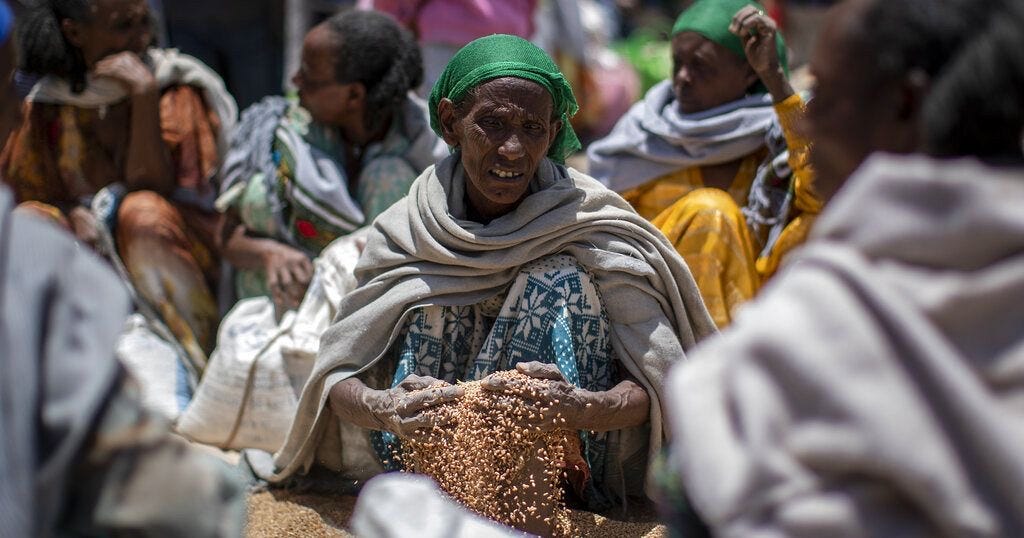
Mekelle, Tigray (Wegahta) — Tigray is heading into a potentially severe humanitarian emergency as drought, disease outbreaks, flooding and displacement threaten to converge on a population still struggling to recover from the devastation of the 2020-2022 war, according to a regional emergency preparedness and response plan.
The 2026 Multi-Sectoral Emergency Preparedness and Response Plan prepared by Tigray’s Disaster Risk Management Commission estimates that 3.7 million people across 50 rural woredas, more than half of the region’s territory could require humanitarian assistance this year.
The assessment comes as meteorological forecasts point to a moderate to strong El Niño pattern, bringing the possibility of delayed and uneven rainfall, prolonged dry spells and worsening water shortages across a region where more than 90 percent of the land is classified as arid or semi-arid. Twenty-one woredas have been placed in the plan’s highest severity category, where authorities anticipate “severe and widespread humanitarian impacts across most communities” and say immediate large-scale intervention could be required.
But Tigray faces a problem beyond the hazards themselves: the authorities say they have identified measures to prepare for and respond to the anticipated emergencies, yet a shortage of resources is limiting their ability to implement those measures at the scale required. That leaves the region facing a widening gap between the risks it has identified and its capacity to act before those risks translate into humanitarian needs. The plan estimates the overall financial requirement for the response at roughly $623 million, covering interventions across the multiple hazards expected to affect the region.
The coming months could therefore test not only Tigray’s ability to withstand another major shock, but also whether its preparedness plans can be turned into action before the crisis reaches its most damaging stage.
The most immediate concern is the rainfall-dependent agricultural system on which much of Tigray’s rural population relies. The weather outlook cited in the plan indicates that the main rains could arrive late and fall irregularly, with dry spells of two to three weeks potentially occurring during flowering and grain-filling periods stages that are critical to crop development.
In woredas classified as facing Extreme Drought, the plan anticipates complete or near-complete failure of rain-fed crops. In areas facing Severe Drought, crop yields could decline by between 50 and 55 percent. The consequences would extend rapidly from farms to household food supplies and markets.
The assessment warns that substantial crop and livelihood losses could lead to food shortages, depletion of household assets and increasingly severe coping strategies. Reduced food availability and dietary diversity would also raise the risk of malnutrition, particularly among children under five. The effects could be compounded by shortages of livestock feed, disease outbreaks and disruptions to markets and essential services.
For families that have already exhausted assets during years of conflict and displacement, another failed agricultural season could leave little buffer against hunger.
Water is expected to become another major pressure point. In drought-prone woredas, almost 60 percent of the population lacks access to safe and sustainable water supplies, according to the plan. Many households depend on seasonal rivers, ponds, dams and unprotected springs, sources that can become unavailable soon after the rainy season ends.
The region has more than 17,000 water schemes, but most are shallow and particularly vulnerable to prolonged dry conditions. More than 4,600 schemes are already non-functional, according to the assessment.
In the most drought-affected areas, shallow wells are expected to dry up two to three months earlier than usual. The plan projects that average water availability could fall to 12.44 litres per person per day, well below the national rural standard. Households are already spending an average of about two hours each day collecting water. As sources dry up, that burden could increase, taking time away from farming, schooling and other income-generating activities while forcing families to rely increasingly on unsafe water sources.
The decline in water availability is also expected to worsen sanitation and public health conditions, creating a pathway for outbreaks of waterborne and other infectious diseases.
For rural households, the drought will not be measured only in lost crops. Livestock remain a central source of food, income and household wealth in Tigray, but the emergency plan anticipates a sharp decline in surface water and pasture availability.
As animals lose access to adequate feed and water, productivity is expected to fall. Families may then be forced into distress sales, selling animals at depressed prices to purchase food or meet other immediate needs.
Such sales provide short-term relief but undermine household resilience by removing assets that families depend on to recover after a crisis. The plan therefore warns that the drought could damage both current food security and the longer-term ability of rural households to rebuild their livelihoods.
The anticipated food and livelihood losses are expected to have their greatest consequences for children, pregnant women and breastfeeding mothers.
Authorities plan to screen 552,007 children aged between six and 59 months, along with 152,404 pregnant and lactating women and 134,473 elderly people and other vulnerable adults across 54 prioritized woredas. The scale of the planned screening reflects concerns raised by nutrition surveillance, SMART surveys and assessments from the Meher agricultural season indicating an increasing risk of acute malnutrition.
Among those screened, the plan estimates that 75,188 children and 67,754 pregnant and lactating women could require supplementary feeding because of moderate acute malnutrition. Children suffering severe acute malnutrition would require treatment through community-based management programmes.
But food availability alone will not determine nutritional outcomes. The plan identifies reduced access to healthcare, education and water and sanitation services as additional factors that could make it harder for families to protect children’s nutritional status.
A child who has access to food but is repeatedly exposed to contaminated water or infectious disease can remain vulnerable to malnutrition. For displaced families, the combination of inadequate shelter, poor sanitation and limited healthcare can make that vulnerability even greater.
The expected deterioration in water and sanitation conditions is raising concern about a range of infectious diseases. The emergency plan identifies cholera, malaria and zoonotic diseases particularly anthrax and rabies among the most significant recurring health threats. Cholera has become an increasingly serious concern in recent years.
A major outbreak between 2016 and 2018 resulted in more than 10,000 cases and 182 deaths. Disease surveillance was disrupted during the war, before cholera re-emerged in late 2023 with 229 reported cases. The disease spread further in 2024, beginning in Asgede woreda, while reported cases increased again in 2025.
The plan records a rise from 229 cases in 2023 to 1,075 in 2025, describing the trend as increasing. For 2026, authorities project 1,522 cholera cases, including 304 severe cases, across 29 high-risk woredas and urban centres. The expected cases would not be confined to one population group.
The assessment identifies host communities, Tigray’s approximately 903,000 internally displaced people and people living in gold-mining areas among those potentially affected. The combination of unsafe water, weakened health infrastructure and population movement could make outbreaks more difficult to contain.
Malaria poses another significant threat, particularly as rainfall patterns shift and standing water creates breeding grounds for mosquitoes. Approximately 75 percent of Tigray’s landmass and population are considered at risk, with transmission concentrated below 2,000 metres above sea level but capable of extending to about 2,400 metres during epidemics.
Transmission generally peaks between September and December following the main rainy season, with another seasonal increase between May and June. Health facilities recorded 270,335 malaria cases in 2025, including 1,470 severe cases and two deaths.
The actual burden may be higher, the plan says, because reporting from private health facilities is incomplete. For 2026, authorities project 329,883 malaria cases, including 1,649 severe cases, across 30 high-risk woredas and among a population of more than three million people considered at risk. The disease burden could further strain health facilities that are already operating in the aftermath of years of conflict-related damage and disruption.
The health threat extends beyond diseases transmitted directly between people. Tigray has reported nine of Ethiopia’s 15 major zoonotic diseases, according to the emergency plan, with veterinary services weakened by the conflict.
Anthrax is endemic in the region and can occur throughout the year, with the risk increasing during May and June — a period described by authorities as the region’s “anthrax season,” particularly among farming communities.
In 2025, suspected anthrax outbreaks were reported in 41 woredas, resulting in 1,278 cases and eight deaths. Rabies presents an even wider geographic threat. Outbreaks were reported in 48 woredas in 2025, with 1,292 cases, the highest reported number in recent consecutive years. The plan links the continuing threat to disrupted veterinary services, low vaccination coverage and large populations of stray dogs.
For 2026, authorities project 1,617 anthrax cases, including 85 severe cases, and 1,961 rabies cases. The plan treats all projected rabies cases as severe because clinical rabies is almost universally fatal once symptoms develop without effective intervention.
A drought emergency does not eliminate the threat of flooding. Tigray’s steep terrain, intense rainfall events and inadequate drainage systems can produce flash and river flooding, sometimes with little warning.
The risk is particularly serious for internally displaced people living in ageing shelters and informal settlements, many of which are located in densely populated and low-lying areas around towns including Mekelle, Shire, Axum, Adigrat and Wukro.
In 2025, flooding affected 87 kebeles and approximately 140,615 people, according to the plan. About 2,800 people were displaced and six people died. The floods destroyed 12,987 hectares of crops and killed livestock including 116 cattle, 584 sheep and goats, 29 donkeys, one camel and 190 poultry. They also damaged 397 houses, 15 schools, 82 beehives and one church.
The outlook for 2026 is more severe. Authorities estimate that as many as 198,724 people could be affected by flooding, with approximately 31,398 people nearly 16 percent of those affected at risk of displacement. The plan warns that the situation could deteriorate further because shelters in displacement sites are already in poor condition and climate variability could increase the intensity of extreme weather.
For people who have already fled their homes once, another displacement could compound an already prolonged humanitarian crisis.
The consequences of drought, crop losses and disease are expected to extend beyond individual households. As livelihoods deteriorate, some families may be forced to move in search of food, water, employment or humanitarian assistance.
The plan warns that further displacement would place additional pressure on host communities and humanitarian operations while increasing demand for emergency shelter and camp management.
It also identifies heightened protection risks, including gender-based violence, child labour, early marriage, psychosocial distress and conflict over scarce resources. Those risks could be especially pronounced in overcrowded displacement settings where access to basic services is already limited.
The potential for resource-based tensions also illustrates how the crisis could move beyond humanitarian needs and begin affecting relations between communities competing for water, pasture, food and other essential resources.
Schools are also likely to feel the impact. The emergency plan projects disruption in 41 woredas across all five zones of Tigray, putting nearly 600,000 primary-school students and 325,000 pre-primary children at risk of school closures, absenteeism and declining learning outcomes.
The risks are interconnected. Malnutrition can reduce children’s ability to attend and concentrate in school, while shortages of water and inadequate sanitation can make schools unsafe or inaccessible.
Displacement can interrupt children’s education altogether, while families facing severe economic pressure may rely increasingly on children for labour or household responsibilities. The result could be another generation whose education is disrupted by crises that began well beyond the classroom.
The scale of the projected emergency is partly explained by the condition in which Tigray enters the drought. The region is still dealing with the consequences of the 2020-2022 war, during which an estimated 385,000 to 600,000 people died, according to figures cited in the plan.
Around 2.5 million people were displaced during the conflict, while approximately 80 percent of health facilities were damaged or destroyed. Nearly one million people remain displaced, according to the emergency assessment. The war also weakened livelihoods, public services and institutional capacity, leaving households with fewer resources to absorb another major shock. The national safety-net programme that previously supported chronically food-insecure households has not resumed since 2020 in five Tigray woredas, according to the plan.
That means the region is entering another difficult agricultural season with many of the mechanisms that could normally help families absorb a drought either weakened, disrupted or unavailable.
Tigray’s authorities have not ignored the warning. The emergency preparedness plan lays out anticipated hazards, identifies vulnerable populations and sets out measures intended to reduce the impact of drought, disease outbreaks, floods and displacement. But officials say the existence of a plan has not solved the more fundamental problem of resources.
A regional official involved in emergency preparedness said authorities have planned measures to respond to the anticipated crisis but are constrained by shortages of resources needed to implement them. That constraint is significant given the scale of the projected needs and the number of sectors expected to be affected simultaneously.
The plan calls for interventions spanning food security, nutrition, health, water and sanitation, livestock, education, shelter, protection and disaster response. Without sufficient funding and operational capacity, however, measures intended to prevent a crisis can become measures deployed only after the crisis has already begun.
The distinction matters. Early action repairing water schemes before they fail, pre-positioning medicines and supplies, protecting livestock, screening children for malnutrition and strengthening disease surveillance can be considerably less costly and more effective than responding after households have lost their crops, livestock, health and shelter.
For Tigray, the coming rainy season therefore represents more than a test of rainfall forecasts. It is a test of whether a region still carrying the consequences of war can withstand several shocks at once.
The emergency plan describes a chain in which one hazard can amplify another: crop losses can deepen food insecurity; food insecurity can increase malnutrition; water scarcity can worsen disease transmission; flooding can destroy the little infrastructure and household assets that remain; and displacement can place additional pressure on already stretched services.
“These overlapping risks are expected to aggravate food insecurity, malnutrition, and public health challenges while increasing vulnerability among already affected populations,” the plan says.
The warning is ultimately about more than drought. For the 3.7 million people identified as potentially needing assistance, the danger lies in the convergence of several emergencies at a time when households, public institutions and humanitarian responders have limited capacity to absorb another shock.
Tigray’s authorities have already drawn up a blueprint for what they expect to come. The unresolved question is whether they will have enough resources to act on it before the forecasts become reality.
No posts
Comments
Nothing yet. Say the first thing.
Sign in to join the conversation.