
In Madison, Wisconsin, local leaders, nonprofit partners, and community members recently celebrated something that the headlines often suggest is out of reach in today’s energy landscape: real, measurable progress towards lowering energy bills.
The progress was thanks to Efficiency Navigator, a powerful program led by IOF partners Sustain Dane and Elevate that is supported by the Cities of Madison and Fitchburg. Designed to help affordable housing providers navigate the often-complicated process of improving building efficiency, the program offers free technical support, energy assessments, contractor coordination, financing guidance, and connections to available incentives. Together, Sustain Dane and Elevate are showing that energy efficiency is far more than a climate solution. It’s a housing, health, and affordability solution, too.
“Building upgrades provided by the Efficiency Navigator make it easier to stay warm in the winter and cool in the summer while also lowering energy bills. I’m grateful to our project partners and, especially, to program participants for showing that providing healthy, affordable housing and taking climate action can go hand in hand,” said Madison Mayor Satya Rhodes-Conway during a press conference in March to celebrate the program’s achievements.
The numbers tell part of the story: in 2025 alone, the program reached approximately 200 residents across 128 units in 20 buildings, delivering 75 energy efficiency upgrades and 28 health and safety improvements. The result: lower utility bills — by an estimated $700 to $900 per building annually — and healthier, more comfortable homes.
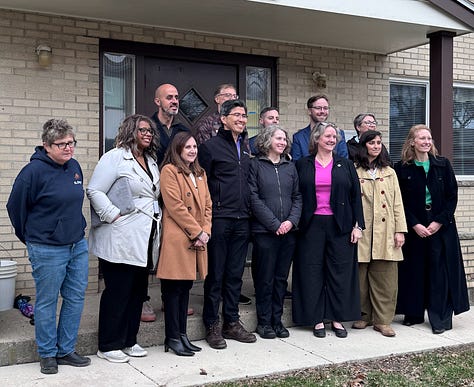
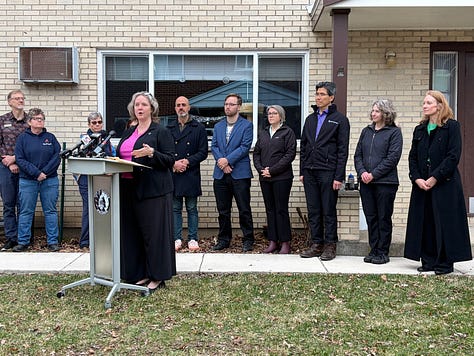
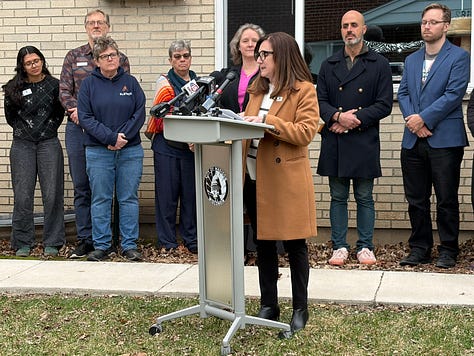
Other speakers, including Fitchburg Mayor Julia Arata-Fratta, reinforced a simple but important point: Investments in people’s homes deliver immediate, tangible benefits that keep people in their homes with more reliable heating and cooling, better insulation, safer air, and lower bills.
“Efficiency Navigator demonstrates that smart housing investments can deliver real benefits for our residents and our environment,” said Mayor Arata-Fratta. “By upgrading older buildings and improving energy efficiency, we are reducing emissions, lowering energy costs for families, and making our homes healthier and more comfortable. It’s a practical step toward a stronger and more sustainable Fitchburg.”
According to a recent analysis published by The Conversation, roughly 1 in 3 U.S. households struggle to pay their energy bills — and the true number is likely even higher. That burden falls especially hard on lower-income renters living in older, less efficient buildings. Efficiency Navigator specifically focuses on naturally occurring affordable housing (NOAH), renter-occupied buildings affordable to families earning at or below 80% of Area Median Income, and helps property owners make upgrades that lower utility costs, improve living conditions, and offer real relief for families struggling to keep the lights on. It was a theme echoed throughout the event: when communities invest in affordable housing preservation and energy efficiency together, residents feel the benefits immediately.
The celebration also marked the launch of the program’s 2026 application cycle, opening the door for more affordable housing providers to access free technical assistance and building upgrades, such as improved insulation or HVAC equipment, upgrades that ultimately reduce energy bills and keeps rent affordable. Unsurprisingly, the momentum didn’t stop at the press conference.
Local and regional outlets quickly picked up the story, including coverage from WMTV 15 News, Channel 3000, and In Business Madison, alongside radio and community press. These stories helped extend the reach of what is, at its core, a local solution with national relevance. Because what’s happening in Madison is replicable.
In an interview with the Wisconsin Independent, property owners Peter Tan and Rachel Durfee shared why they ultimately decided to take advantage of the Efficiency Navigator program for their 1964 building that houses 8 apartment units:
“For years, Tan said, he knew the nearly three dozen windows in the building were drafty and frosted up during the winter. Durfee said they looked at replacing the windows for a long time, but they couldn’t financially justify replacing them all on their own.
“‘We were saving and saving and trying to make the numbers work,’ Durfee said.
“They have tried to keep their rents in check over the years, and rising costs were a key consideration for them when they applied to the program, Durfee said.
“‘It was a game changer for us because if we had blown every bit of money that we had on the windows, we would not have any money to do any other things on the building,’ she said. ‘It’s an older building. It needs stuff.’
“Durfee felt relieved that they could improve the building without making rents skyrocket for tenants. The program also allowed the building to get better insulation.”
Efficiency Navigator shows what’s possible when cities, nonprofits, and community stakeholders align around a shared goal: lowering costs and improving quality of life for residents who need it most. It’s practical, effective, and scalable.
For those of us across this network, the takeaway is clear: if we want more communities to benefit from programs like Efficiency Navigator, we have to help build the ecosystem that makes them possible. That means supporting local partnerships, sharing successful models, and continuing to invest in energy affordability as a community priority.
If Madison is any indication, the solutions are already within reach. We just need to keep building on them, together.
Comments
Nothing yet. Say the first thing.
Sign in to join the conversation.