
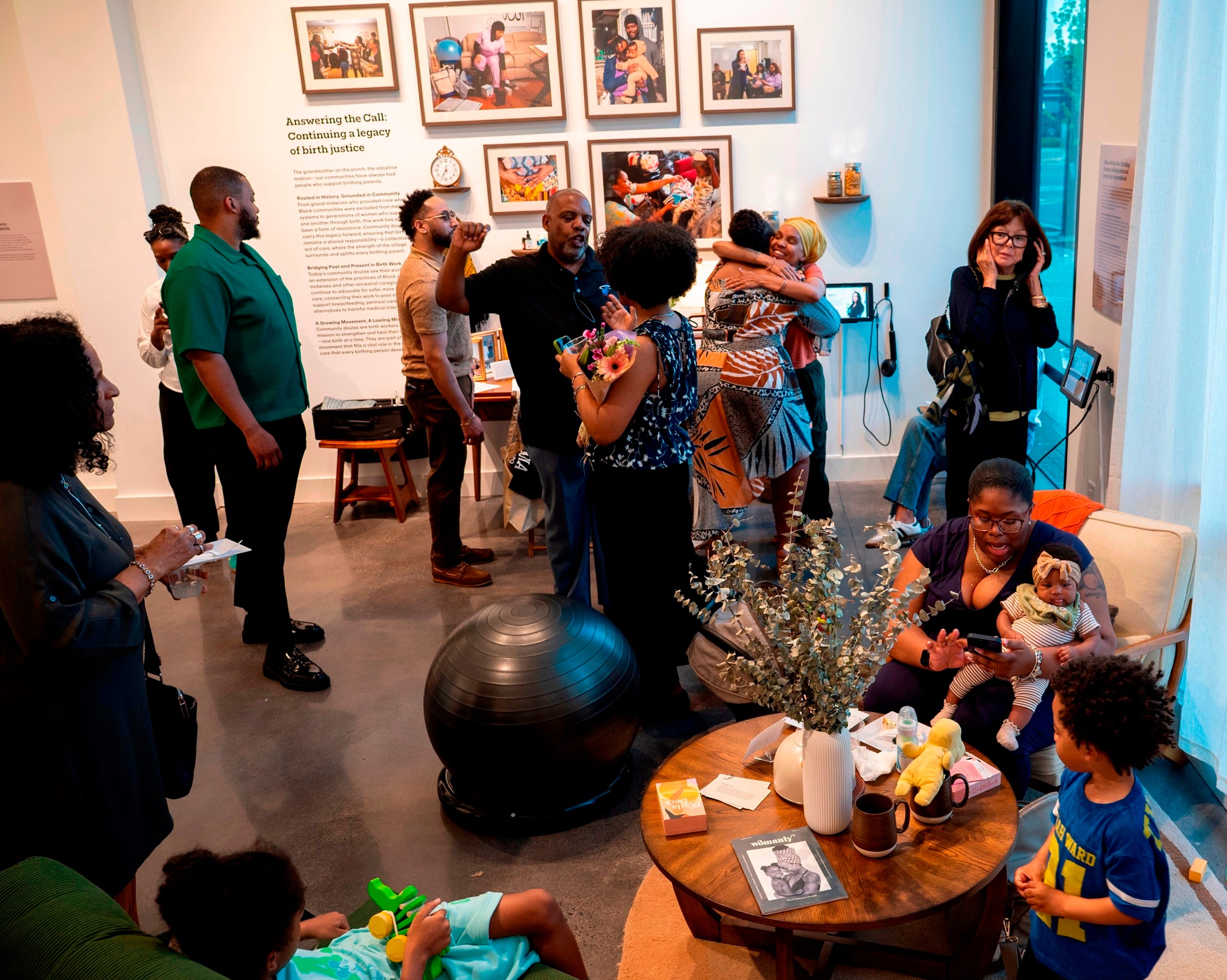
What does it look like to design an exhibit where the gallery wall is the last thing we build—where trust comes first, and story leads the way? What does it look like to design an exhibit that doesn’t begin with objects—but with relationships?
This spring, we opened The Courage in Care. It centers the work of Black community doulas in New Jersey—birth workers who walk alongside families through one of life’s most vulnerable transitions, offering support rooted in tradition, trust, and resistance.
But what you see in the gallery isn’t just an exhibit. It’s the final layer of something much deeper.
The Courage in Care was co-authored with community doulas and guided by New Jersey maternal care advocates through a multi-month process of listening, reflection, and design.
Text within this block will maintain its original spacing when published
The people we met didn’t ask us to interpret them.
Text within this block will maintain its original spacing when published
They asked us to hold space with them.
Text within this block will maintain its original spacing when published
To make room for their stories to breathe, to sing, to teach.
Text within this block will maintain its original spacing when published
To design something not in their image, but in relationship with their truth.
Text within this block will maintain its original spacing when published
We didn’t bring answers—we brought attention and our expertise.
There’s a kind of design that begins with blank pages and a concept. Ours begins with conversations and a circle.
We built a design process to hold complexity and care:
A local advisory council of doulas, midwives, and physicians
Deep research and community interviews
Iterative, prototyped co-design sessions
A design team expanded to include birth workers, artists, and spatial collaborators
Only after months of listening did we begin shaping the exhibit itself. Across six zones—from ancestry and advocacy to grief, tools, and policy—we created a space to surface stories that are too often ignored: stories of systemic neglect, of sacred labor, of everyday care.
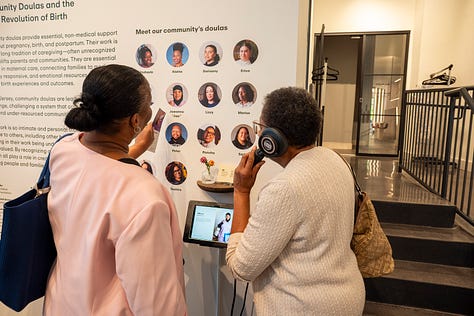
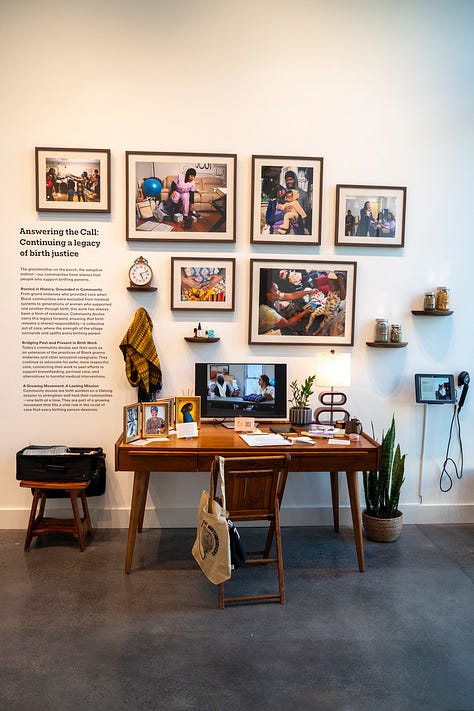

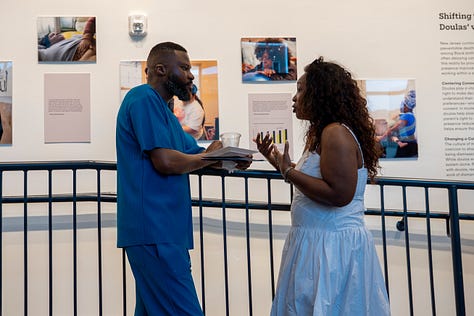

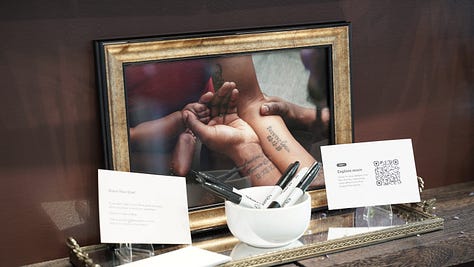
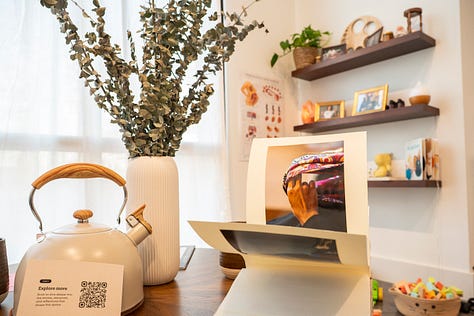
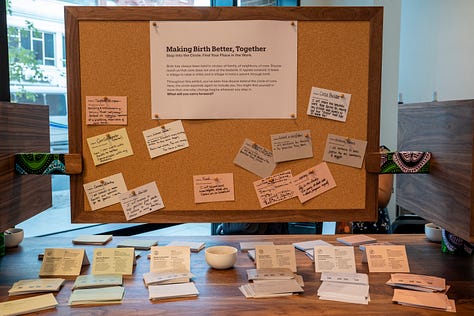

Through object interpretation, sensory storytelling, and audio narratives, the exhibit makes visible the cultural labor doulas carry every day—and calls for sustained investment in their work.
From the doulas we heard a clear message: the exhibition couldn’t just reflect their story. It had to act.
“This story is ours. And it has to do more than sit on a wall.”
So we designed for transformation and impact.
As they moved through the exhibition, people left notes at the grief altar, reflected on their own role in supporting maternal care, and scanned QR codes to listen, learn, and act.
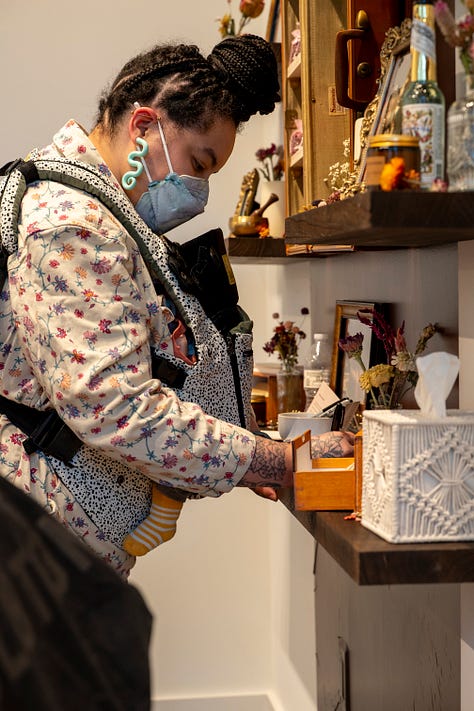
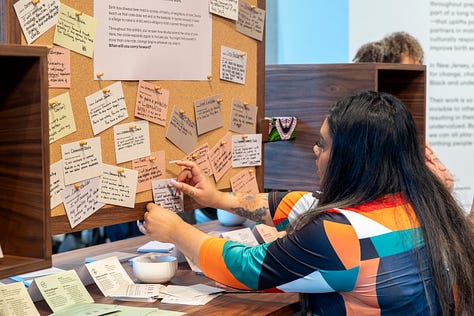
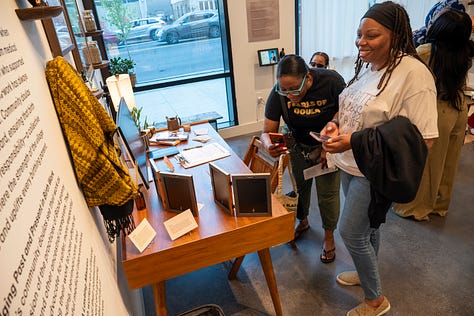
The Courage in Care continues to be activated by local partners, public events, and an evolving digital companion. From news features to community events to facilitated group visits with key decision makers, the exhibition is being championed by those moved by the work.
Like this feature below from New Jersey Spotlight News:
In Good Company works at the intersection of engagement, storytelling, and public design.
The Courage in Care doesn’t just tell a story. It shares authorship. It shares ownership. It creates the relational infrastructure necessary to be a community platform.
And that’s our studio’s belief: that design can be a form of kinship. Not just making things for communities, but with them, in ways that nourish, challenge, and last.
There is no single methodology for that. But there is a way of showing up. And there is a design ethic we return to:
Want to co-create a public storytelling platform? Let’s build it together.
Working to better honor community voices? We’ll help you hold that space.
Funding narrative change? We’ll show you what design can do.
If you believe that design should begin in relationship and end in invitation—we’d love to connect.
Because the exhibition is the last thing we build.
The first thing we build is trust.
No posts
Comments
Nothing yet. Say the first thing.
Sign in to join the conversation.