
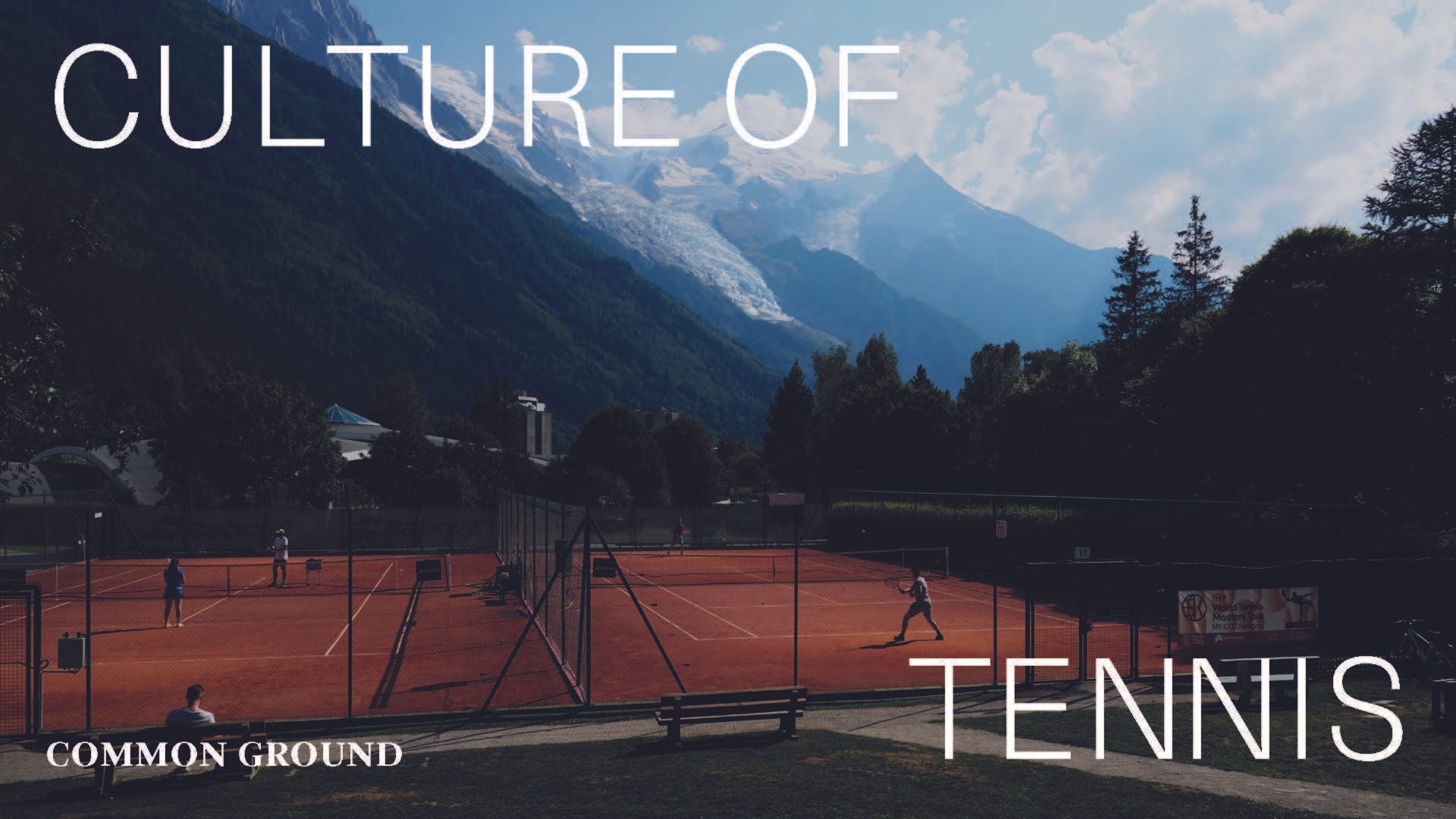
We’ve been watching the courts for a while now. From fashion’s tennis obsession to the rise and rise of padel, racquet sports have entered the zeitgeist - and our new report not only documents this shift but also looks ahead, to what’s next.
The Culture of Tennis gathers insight from our field research in London, Porto and Amsterdam. It follows the conversations we’ve had with the founders creating new kinds of tennis communities. It takes a deep dive into academic and industry research and, as ever, it’s based on what we do best: listening, observing and understanding communities.
So, for this report, we’ve taken the time to play and observe the community at play. We’ve documented the relationships and camaraderie, and the mindsets of players at every stage – from raw beginners to seasoned athletes, coaches and community-builders. And we’ve spoken to those who are shaping the future of tennis culture.
The result is original insight and meaningful prediction that you can use to understand the forces shaping racquet sports - and what they mean for you. Find that common ground: comment below and we’ll send you a copy.
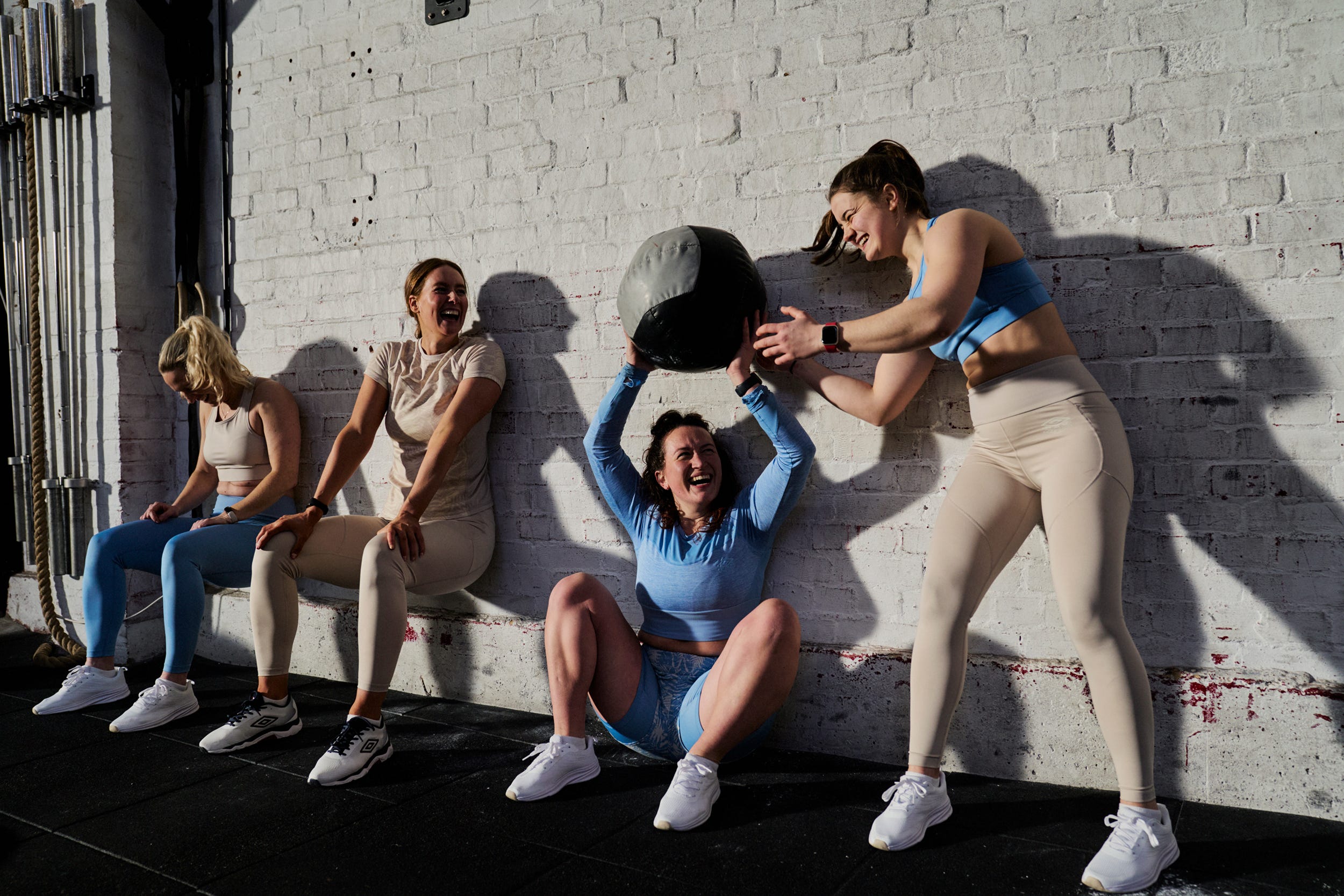
No time to exercise? You’re really not alone – but cramming it in at the weekend may not just be good for you. New research shows it might actually be better for you.
If you haven’t managed to get to the gym this week/month/year, you’re not alone. Data shows that around 40% of UK adults take no exercise at all and, along with all the usual reasons we find not to, is the fact that our brains are wired to make us avoid it. “For most of human existence people had to be physically active to carry out the basic functions of life, such as finding or growing food. Humans evolved to tolerate a high level of activity - but also to gravitate toward rest, to conserve energy for when movement was either necessary or pleasurable,” says Daniel Lieberman, a human evolutionary biologist and author of Exercised: Why Something We Never Evolved to Do is Healthy and Rewarding.
Yet we all know that we need to move to stay healthy – and some new research might just give us the tools and the motivation to get on and do it.
Let’s start with the tools.
Often, the way we think about exercise robs it of its joy. “From running round the track during PE lessons, a spin class at the gym, or the Park Run, we tend to think of exercise as aiming for a specific goal. This belief continues to be fed into our subconsciousness. Many people think of these goals as a chore that we feel we should do, not something to enjoy,” said Dr Jackie Hargreaves, Senior Lecturer in sport and exercise psychology at Leeds Beckett University.
By simply reframing exercise as enjoyable, however, you can overcome that barrier. “People still have the perception that to be active you have to be sporty and competitive. We need to draw on what people find pleasurable because if you don’t enjoy exercise, you’re not going to do it,” continued Jackie. And the easiest way of making exercise more enjoyable? Combine it with something else. A bike ride with friends or walking to work would both tick that box, for example.
“Intertwining exercise with something you already want or need to do,” said Sam Zizzi, an exercise psychologist at West Virginia University, “can make it easier to ignore the part of your brain that’s telling you it’s better to park yourself on the couch.”
Now, let’s look at motivation.
When it comes to motivation, two related studies might just give you what you need to get moving again.
First, a study from Harvard-affiliated Massachusetts General Hospital (MGH) not only shows that you need 150 minutes a week of moderate-to-vigorous physical activity for overall health. Its analysis of almost 90,000 people shows that you don’t have to exercise regularly to get the benefits. Being a “weekend warrior”, fitting those 150 minutes in to the one part of the week when you actually have time and energy, delivers the same results as spreading exercise evenly through the week. As long as you do the time, you face substantially lower risks of 264 diseases compared to someone who does nothing at all.
“Because there appears to be similar benefits for weekend warrior versus regular activity, it may be the total volume of activity, rather than the pattern, that matters most,” explained co-author Shaan Khurshid, a faculty member in the Demoulas Center for Cardiac Arrhythmias at MGH.
Not only that: a second study published this month suggests that weekend warriors actually have a lower risk – a staggering 25% lower – of developing mild dementia than those who took no exercise at all. And that this compared to 11% who regularly exercised.
While the authors of the study can’t be sure why weekend warriors perform better than regular exercisers, the message is clear. If you can’t drag yourself out of bed every morning for a 5am run, you’re OK. You can hang tight until the weekend. You can rope in a friend. You can tack on a post-run brunch as reward. All of which would mean you’re not only healthy, but that you have the tools and motivation to make exercise sustainable in the long-term.
What does this mean for brands?
Don’t go too hard on the “superhuman athlete” trope. While performance has its place, particularly when it comes the spectacle of big sporting events, tapping into sport’s fun side – exactly like pop-up tennis club, Bisque (below) - will open up new audiences. Not only that, but audiences who are year-round and long term, committed not just to exercise but to the brands that work with them to reframe it.
Words: Susie Stubbs. Image: Chris Baker for Umbro.
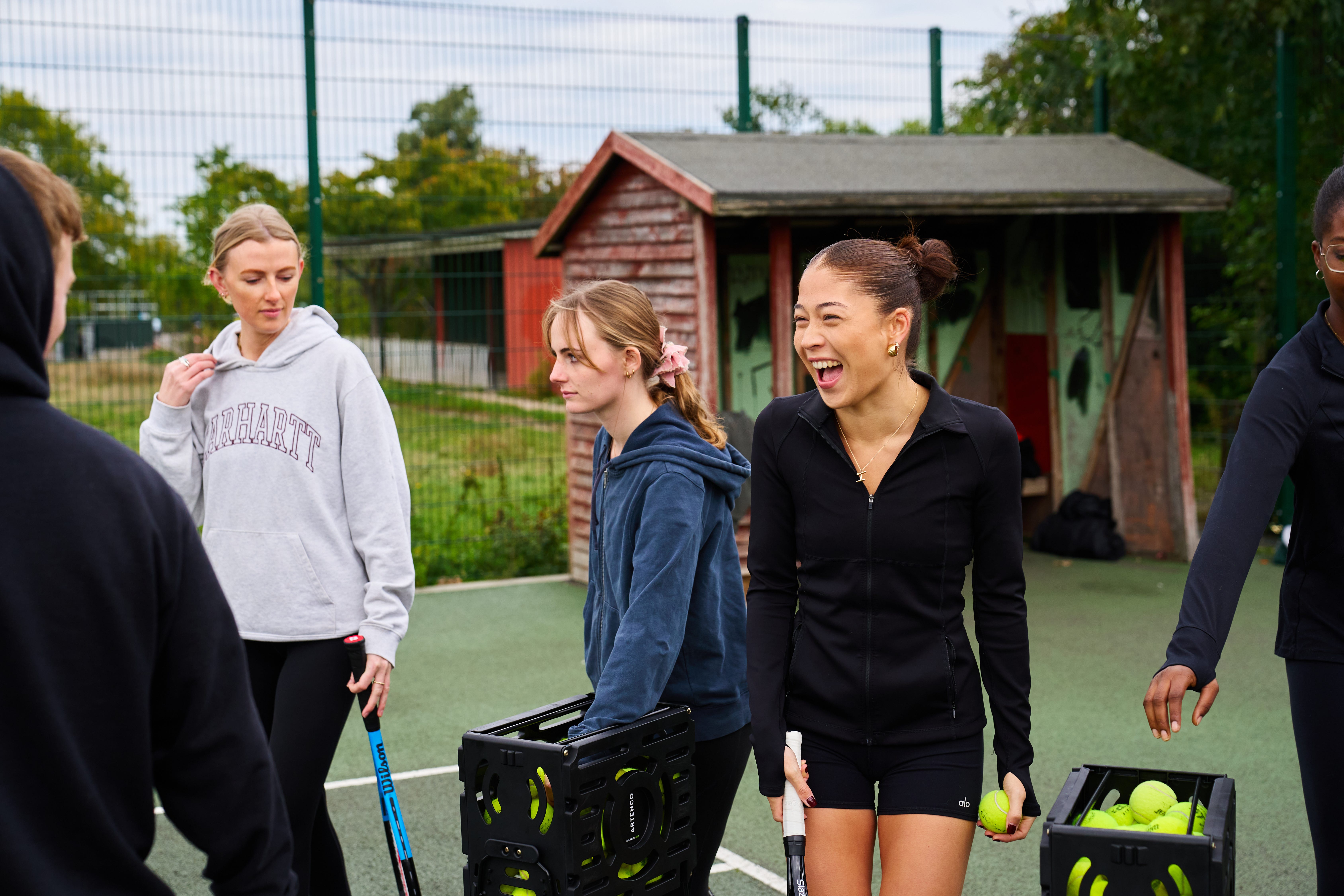
As part of our field research we hung out with London’s Bisque Tennis Club, a social media-fuelled community shaking things up on court.
Tennis can often feel a little intimidating to casual or new players. As one of the Bisque co-founders put it: “People are scared of tennis. You have to book the court, you have to get the equipment, you have to learn the game.”
But Bisque are doing things differently, and tackling the barriers to play head on. They recently took over two courts in Brockwell and all players had to do was pay a tenner and turn up. There, they were met with two courts side by side, speakers set up in between (tennis with music!), rackets and balls ready to use, and the sorts of drills and multiplayer games like king of the court that see people in constant play.
There was so much going on that was interesting in Brockwell: the way this kind of tennis mixes people up and allows for more chat and connection. The focus on fun and weekending rather than points and matches. The way Bisque use social media to not only to advertise but to demystify the game, and the way people respond to their posts (from the five who turned up for the first-ever session to the 25 who turned out for the second).
The clothes and trainers, the music, and the easy, almost Sunday football, feel to the whole thing – it feels like a new way to do tennis.
Words and photo: Chris Baker
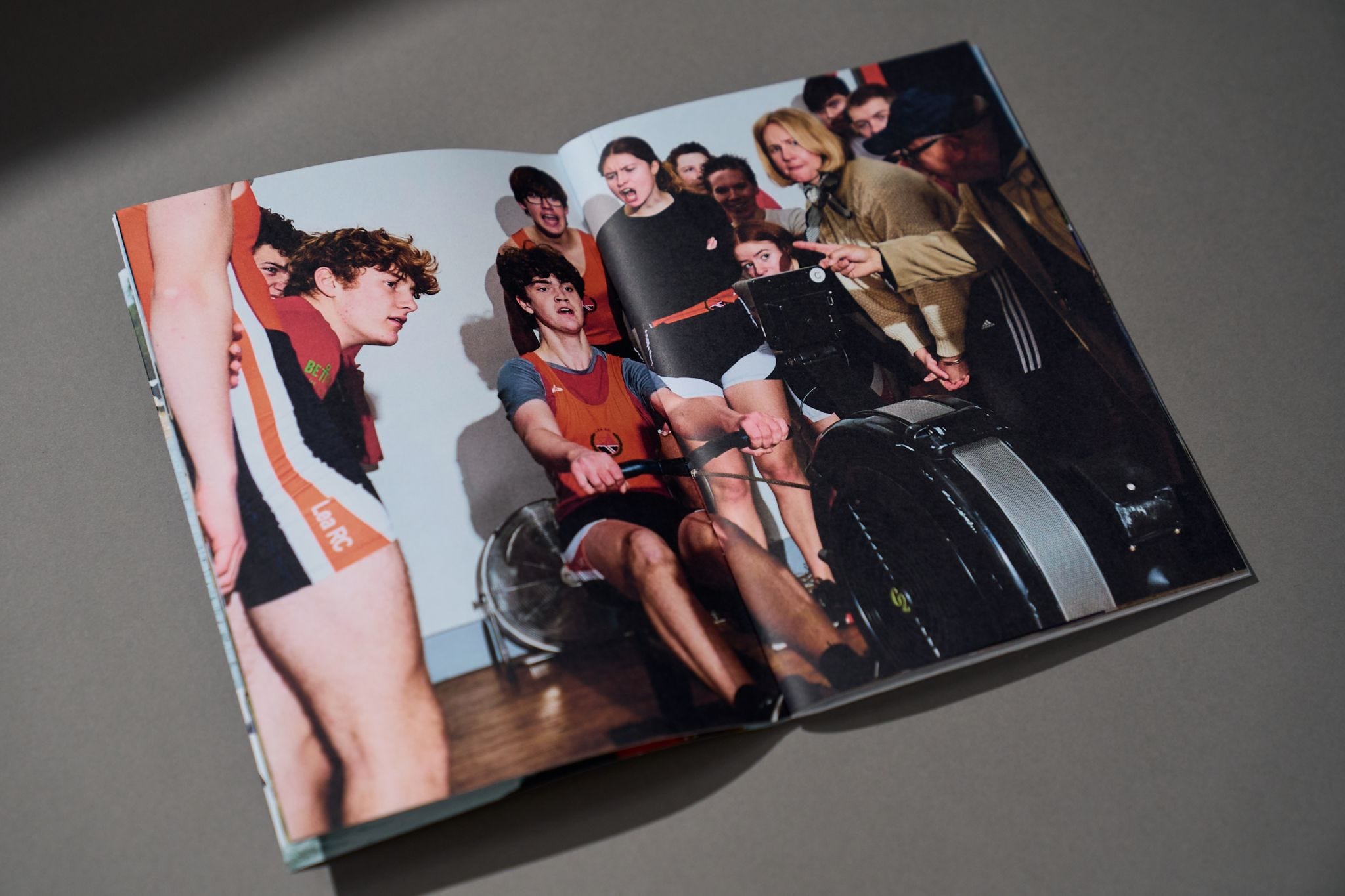
Showcasing beautiful new work from one of our co-founders, Chris Baker - The Rowers.
The Rowers is a year-long series that follows the teenage rowers at Lea Rowing Club in Hackney. As they stand on the cusp of adulthood, Chris’ remarkably candid yet empathetic photographs show them not only as they train and race, but as they navigate relationships, education, and identity. It is, says Chris, “a year, a season, and a moment in their lives.”
“At this point in their lives, a year feels like a long time. Their sense of identity is in flux, their relationships – to themselves, family, friends and the world – evolving as they accumulate new information and new experiences. Throw in intense physical training, the high level of competition with their peers, pivotal moments in education, and audacious clothing, and it accelerates that process to lighting speed. Still children in some respect, yet adults in another,” says Chris.
Chris’ work can be seen in a new ‘zine and in situ, in an exhibition at Lea Rowing Club.
Comments
Nothing yet. Say the first thing.
Sign in to join the conversation.