
I’ve used AI in the wrong way more than a few times. In my haste to get something done, I will type a short and pedantic prompt into Claude or ChatGPT with absolutely no context, and then somehow find myself a little annoyed that it didn’t answer my question in a helpful way.
Garbage in garbage out they say.
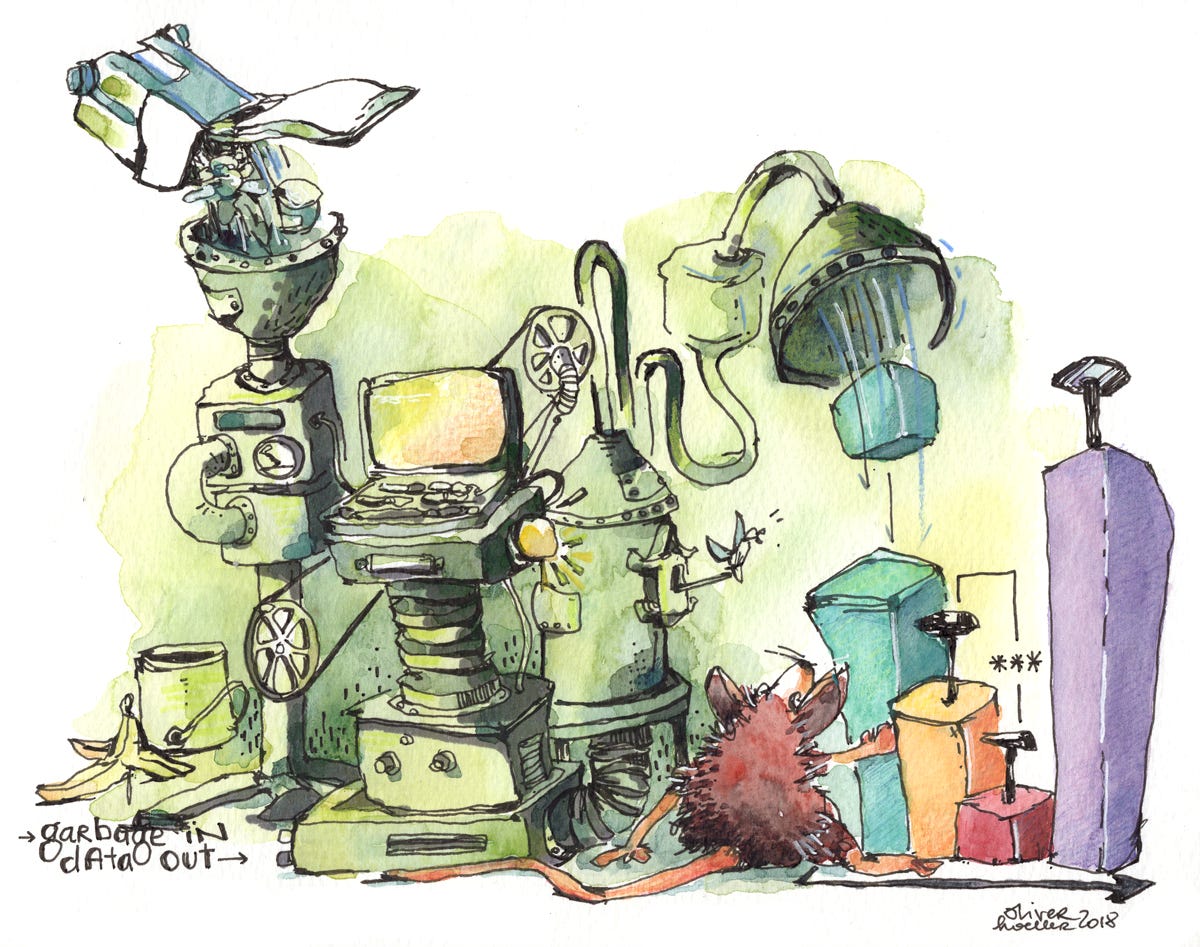
When it comes to queries made in haste about personal finance, I consistently see answers that are completely wrong or missing critical context for the information to be actually useful.
The difference between me and most people, is that I’m a long-time active stock market investor, real estate investor, and Accredited Financial CounselorⓇ. I’ve been studying personal finance and investing for the better part of 10 years and even built an education business on this specific topic. I know what the answers are supposed to look like. AI is particularly useful for me to organize thoughts and ideas because I know what I want to see, I just need the information organized.
If you’re in the learning phase of your personal finance journey and leaning on AI to help you figure things out, there are some significant risks.
The single biggest problem is being lazy with how you interact with AI and getting a generic but wrong-for-your-situation answer that sounds confident and thorough. And if you don't already know what you're looking for, you can't tell the difference.
Let’s say you open a chat and type: “What should I invest in?”
You get an answer. It sounds smart. It’s even technically correct. But it’s completely wrong for you, because the AI doesn’t know you’re 47, have $12,000 in credit card debt at 24%, no emergency fund, $200,000 in a 401k and want to buy a house in two years.
Another problem is that your AI tool is a sycophant and will prioritize agreeing with you and making you comfortable over accuracy. If you ask a generic question, it will give you a generic answer dressed up in confident, well-formatted paragraphs that support any bias you may have consciously or unconsciously weaved into your prompt.
Because you know who else tries to comfort you versus being accurate and honest? Humans. A perfect example of this is my relationship with my former financial advisor. Not only did she put me in expensive funds and charge me outrageous fees that would have cost me $400,000 or more over time, when I pushed her to see what else we could invest in to secure more wealth (over 10 years ago before I knew anything about anything), she put me in a garbage annuity just because I wanted something done that felt like progress. This wasn’t the best solution for me, she just wanted to appease me.
Humans exhibit sycophantic behavior regularly too. AI just does it faster, more confidently, and with better formatting.
Knowing all that, here are the specific steps I would take if you want to use AI as a personal finance tool.
Step 1: You need direction before you need AI.
AI is a multiplier, but it’s not a compass. It can help you go faster once you know where you’re headed. It cannot tell you where to head. It doesn’t know your “why.” It doesn’t know that you want to retire before your parents did, or that you’re terrified of ending up dependent on someone else, or that you just want to stop feeling like an idiot every time you log into your 401(k).
So before you ask AI anything useful about your money, you need at least a rough idea of what “better” looks like for you. What are you trying to do? Why does financial independence really matter to you? What do you want your future life to look like? If you vaguely know the answers to these questions, AI is genuinely great at helping you refine that and act on it faster.
Step 2: Next, tell it where you are now.
AI knows where you want to get to but not where you are right now. It doesn’t necessarily remember the finer details of your last conversation, and it definitely doesn’t know your age, income, debt, or what you’re actually invested in unless you say so — every single time, or at least once at the start of a conversation you plan to keep coming back to.
So before you ask it anything specific, give it the full picture in one message without including personally identifiable information. You can include things like your age, income, what’s actually in your accounts and where, any debt, your emergency fund situation, your time horizon, etc. Ask it to ask you follow-up questions before it says anything back. That one habit changes the quality of everything that comes after it.
A quick note on that “no personally identifiable information” part. Protecting yourself can include skipping exact account numbers, your employer, your city, anything that could tie the numbers back to you specifically. You can round your balances and still get really valuable information. And if you’re going to keep coming back to this thread for ongoing money stuff, take two seconds to check your chat/history settings too. It’s not bulletproof, but it’s a good start.
Step 3: Use thoughtful and specific prompts like the ones below. (prompts below were tested in Claude and gave decent direction.)
Vague: “How should I invest my money?”
Specific: “I’m 32, I contribute enough to get my full 401(k) match, and I have $28,000 sitting in a high-yield savings account outside of that and $20,000 of that is earmarked for emergencies. I don’t need this $8,000 for at least 25 years. How should I think about what to do with that other $8,000? If I want to invest in, what are some good options for someone my age? Ask follow up questions to get the full picture you need before answering.”
Vague: “Is the market going to crash?”
Specific: “Here’s my portfolio: [list what you actually hold and roughly how it’s split]. If the market dropped 30% this year, walk me through what that would actually happen to my portfolio with these specific investments, not the market in general. Ask me follow up questions so you get enough information to answer me the way an unbiased financial advisor would. Then tell me honestly whether that should change anything about what I’m doing right now.”
Vague: “Should I buy a rental property instead of investing more in the stock market?”
Specific: “I’ve only ever invested in retirement accounts, never owned real estate. Lately I don’t trust the stock market and I’m thinking about putting new money into real estate instead to diversify. Don’t just comfort me. Tell me what the data actually says about people who make this kind of move. Then tell me honestly what options I have to invest in besides the stock market and if I do really need to diversify. Ask me follow up questions to make sure you have enough context to give me an answer that is helpful.”
The second version in every pair gives AI something to actually work with and prompts it to become a collaborative thought partner.
AI can be helpful but will not magically solve your money problems.
It can’t tell you what you want your future to look like. It can’t log in to your account and it can’t force you to look at how money comes in and out of your life. AI can help you move faster once you're in motion, if you're willing to be thoughtful with your inputs. Most importantly, you also have to be willing to verify the outputs and take action needed to move in the direction of your goals. AI cannot put you in motion. That part will always be you.
If you need help figuring out where to start with wealth building, be sure to check out my pride and joy investing guide. This is not just another PDF. It’s a step-by-step guide with screenshots and free tools, and it’s right here. Use it to figure out your starting point with your money and take action.
Cheering you on always, Tess
No posts
Comments
Nothing yet. Say the first thing.
Sign in to join the conversation.