
Today’s Hidden Cost series is all about tile because no matter how many houses we work on and tile installers we work with, there still seems to be a lot of variables we run into when it comes to the implementation of our designs/materials, and I’m sure you have a lot of the same questions we have.
I worked with Mark Christensen of Tarkus Tile on my own home 13 years ago and to this day he is still one of the best tile installers I have worked with so I was thrilled when he made time to talk to us. I used our hour together to ask every tile-related question I could think of—from design decisions to installation considerations and long-term performance.
I hope this conversation provides valuable insight and helps guide you through your next tiling project.
In this interview we truly started from the beginning and the main takeaway was that proper preparation is everything. Preparation can be broken down into the following categories and it’s important that the installer you have selected has experience with and will be taking all these steps (it can take a couple of days of prep before they are even ready to start installing tile).
Surface prep (flat, plumb, square walls): Your installer should be making sure that your walls and floors are flat, plumb, and square rather than simply tiling over existing conditions. For anyone who’s unfamiliar with tiling terms, a plumb prep wall is a wall that has been straightened, flattened, and made perfectly vertical (plumb) so that it is ready for tile to be installed. He emphasized how important it is to take the proper steps in prepping and leveling the wall so there aren’t any imperfections.
Waterproofing: This is one of the most important steps in the preparation process, specifically for showers and is one of the biggest areas of failure when it comes to installers. Systems such as Schluter are effective products, but they often fail because they are installed incorrectly. Mark said “The waterproofing system itself is often less important than whether the installer follows the manufacturer's instructions and tests the assembly before tile is installed.” Homeowners should verify that their installer has specific waterproofing experience before hiring them.
Because this step is so important, Flood Testing should always be performed by your installer. And this is actually something you can test yourself if you are worried. (To flood test your shower - plug the drain, fill the shower pan with water, and monitoring the water level for leaks)
Dry layouts: I brought up dry layouts because this is something that we really like to see before tile is installed in our clients homes. Mark said that he always does dry layouts for his own process and that all good installers most likely do. (a dry layout is when the tile installer lays out the tile on the floor in the exact dimensions and design as they will be installing on the shower wall to work out the kinks and get approval from the client/designer before installing it in the shower)
Proper installation
Transitions: This is one of the biggest challenge areas when it comes to tile installation. Transitions between tile and hardwoods is something that needs to be planned for in the framing and subfloor installation process—not when the tile installer shows up. Ideally, when you move from hardwood to tile, there should be little to no height difference. The transition should feel intentional rather than creating a trip hazard.

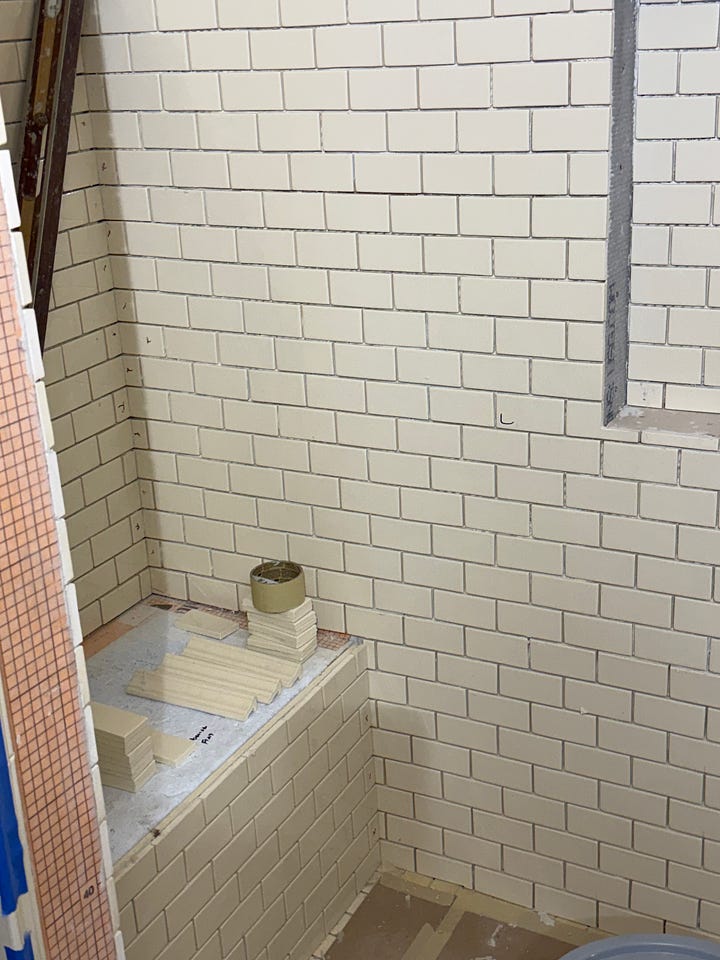
What Mark recommended for transitions-
Comments
Nothing yet. Say the first thing.
Sign in to join the conversation.