
We’ve been told to be cautious about our salt intake and yet many of our food contain so much of it. Let’s dig a bit deeper into this.
The Importance of Salt as Food
Salt, chemically known as sodium chloride (NaCl), has been one of humanity’s most valuable and essential substances for thousands of years. While often discussed in modern times primarily in the context of health risks associated with overconsumption, salt plays numerous vital roles in human nutrition, food preservation, culinary arts, and even cultural history.
1. Essential Nutrient
At its core, salt is not merely a flavoring agent—it is a biologically essential nutrient. Sodium, one of the two components of salt (with chloride making up the other), is required for basic bodily functions:
Nerve Impulse Transmission: Sodium ions are critical for generating and transmitting electrical signals throughout the nervous system. Without adequate sodium, nerve cells cannot communicate properly, leading to serious neurological dysfunction.
Muscle Function: Both smooth and skeletal muscles require proper sodium balance for contraction and relaxation. This includes the heart muscle itself—imbalances can lead to arrhythmias or cardiac complications.
Fluid Balance: Sodium regulates the distribution of water between intracellular and extracellular compartments, maintaining blood volume, blood pressure, and overall hydration. Cells depend on this balance to function optimally.
Acid-Base Balance: Chloride, the other component of salt, is essential for maintaining the body’s acid-base equilibrium through its role in stomach acid (hydrochloric acid) production and systemic pH regulation.
According to Harvard T.H. Chan School of Public Health, the human body requires approximately 500 mg of sodium daily (less than 1/8 teaspoon) for these fundamental physiological processes—a surprisingly small amount that underscores how little salt we truly need biologically.
2. Culinary Value: Beyond Flavor Enhancement
While the health guidelines emphasize moderation, salt remains an indispensable ingredient in cooking and food preparation. Its culinary importance is multifaceted:
Flavors and Taste Enhancement
Salt enhances the perception of sweetness, reduces bitterness, and amplifies other flavors simultaneously. It does this by suppressing bitter taste receptors while enhancing sweet and savory ones—a phenomenon that makes otherwise bland foods palatable and enjoyable. In many cuisines around the world, salt is considered the foundational seasoning without which dishes lack depth and character.
Texture Preservation
In curing meats such as bacon, ham, and salami, salt draws moisture out of the meat through osmosis, creating an environment where bacterial growth is inhibited while preserving desirable texture and developing characteristic flavors through enzymatic activity during the drying process.
Fermentation Control
In fermented foods like sauerkraut, pickles, kimchi, and certain breads, salt selectively promotes beneficial bacteria while inhibiting spoilage organisms. This controlled microbial environment allows fermentation to proceed safely and predictably, producing tangy flavors and probiotic benefits.
Binding and Stabilization
In processed foods, salt acts as a binding agent and stabilizer—for example, in cheese production where it affects protein structure and moisture retention, helping maintain consistent texture across batches.
3. Historical Significance: More Than Just Seasoning
The importance of salt transcends mere nutrition and gastronomy; it has profoundly shaped human civilization:
Ancient Trade Routes: Salt was so valuable that salt trade routes dotted ancient landscapes—the word “salary” derives from the Latin *salarium*, referring to Roman soldiers’ salt rations or allowances purchased with salt money.
Cultural Symbolism: In many cultures, salt symbolizes purity, protection, and hospitality. Jewish tradition involves placing salt on the Passover Seder plate; Middle Eastern traditions offer salt to guests as a covenant of friendship.
Preservation Technology: Before refrigeration, salting was one of the few reliable methods for preserving food over long periods—critical for sustaining armies, sailors, and populations during winter months.
Economic Power: Throughout history, control of salt production and distribution conferred immense economic and political power—from monopolies in imperial China to taxes levied by colonial powers (e.g., France’s *gabelle*).
4. Dietary Context and Modern Guidelines
While salt is undeniably important, understanding its role within a balanced diet requires nuance. Here are key points about contemporary dietary recommendations:
Recommended Intake Levels
Based on extensive research, health authorities recommend the following approximate daily limits:
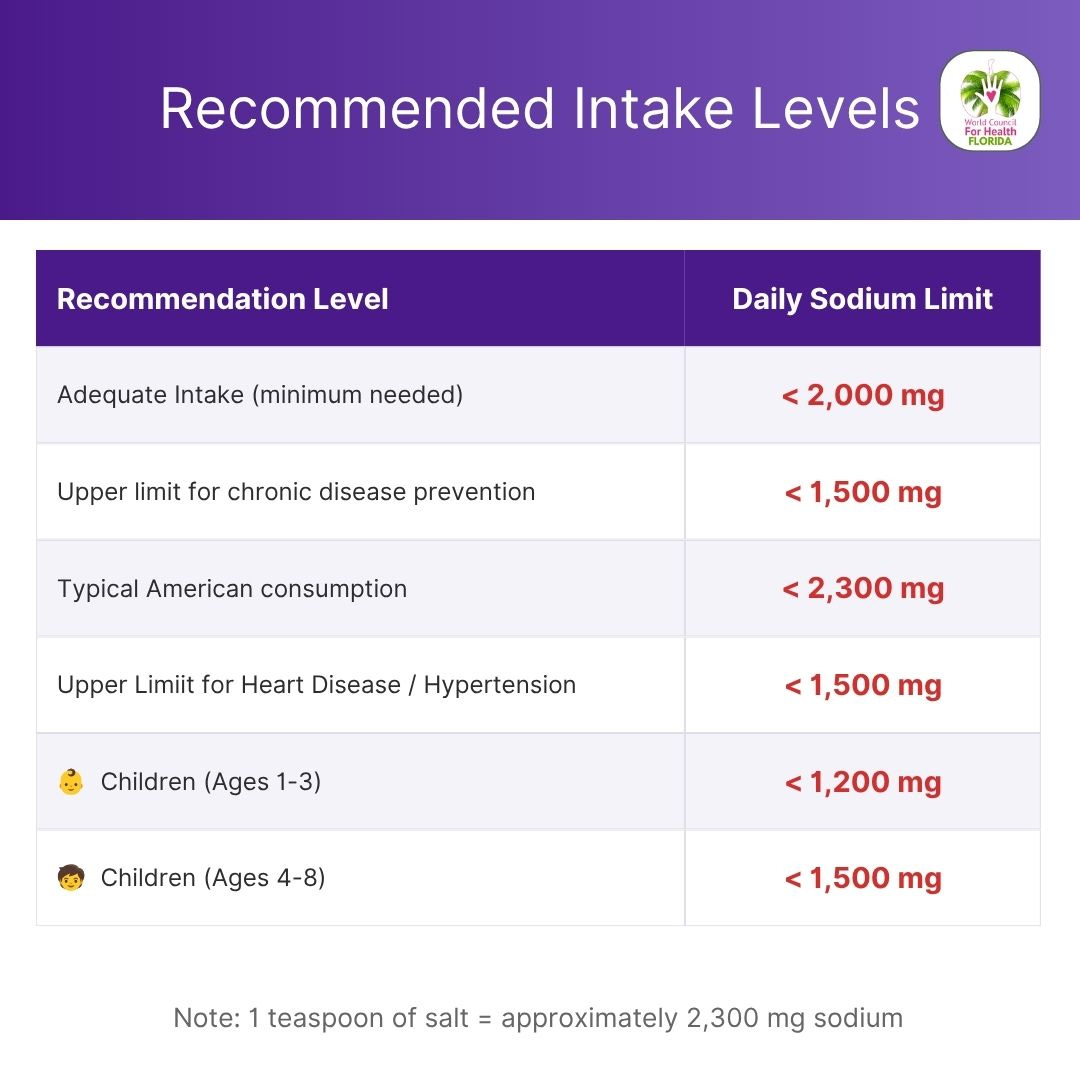
The discrepancy between what humans need biologically (~500 mg) versus what health organizations recommend accounts for losses through sweat and individual variations among populations. Many people consume far more than necessary—not only from added table salt but also from naturally occurring sodium in foods and especially from heavily processed items.
Types of Salt Available
Not all salts are created equal, though nutritionally they are largely similar regarding sodium content:
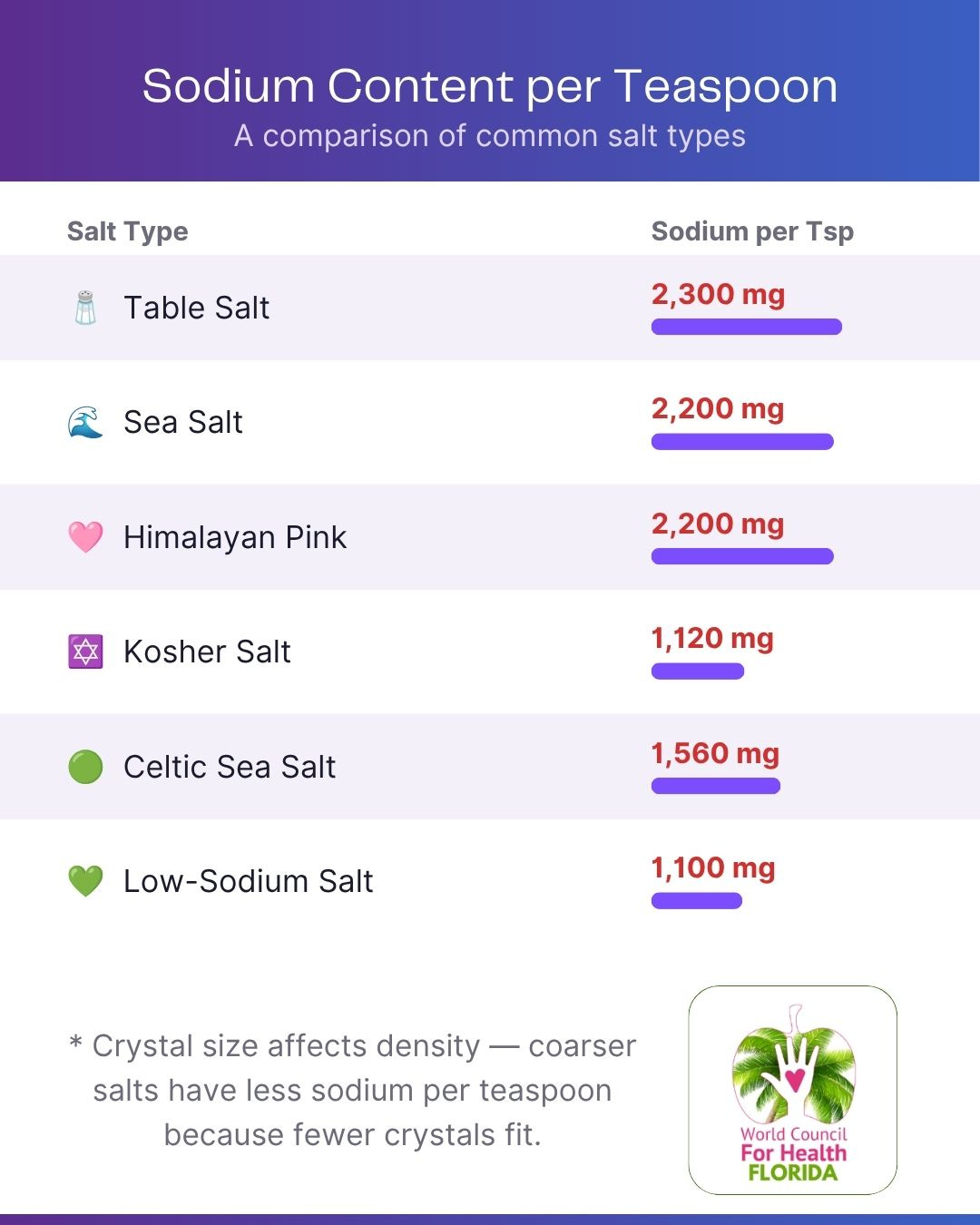
Note that coarser salts contain less sodium per teaspoon because larger crystals pack less densely. Iodized table salt additionally provides iodine—an important trace mineral deficient in many regions worldwide, supporting thyroid function.
Health Considerations: Balance Is Key
Excessive sodium intake contributes to elevated blood pressure, increasing risks for cardiovascular disease, stroke, and kidney strain. However, hyponatremia (dangerously low sodium levels) poses equally serious threats including confusion, seizures, and coma—particularly relevant for endurance athletes who drink excessive water without replacing electrolytes.
Modern nutritional guidance therefore advocates moderation rather than elimination: using salt intentionally during cooking, avoiding salty processed foods, tasting before seasoning, and balancing potassium-rich foods (fruits, vegetables, legumes) to help regulate the sodium-potassium ratio—a key determinant of cardiovascular health.
The Final Take
Salt occupies a unique position at the intersection of biology, chemistry, culture, and cuisine. As an essential micronutrient supporting fundamental physiological processes, as a time-tested method of food preservation, as a transformative agent in cooking, and as a historical commodity that shaped economies and civilizations, its importance is undeniable.
Yet like many powerful tools, salt demands respect and wisdom. Understanding both its necessity and potential dangers allows us to use judiciously—in appropriate amounts, with awareness of our individual needs, as part of a varied and balanced diet. Whether used purposefully in home kitchens or encountered unavoidably in processed foods, mindful engagement with salt honors its dual nature as both life-sustaining mineral and a substance whose excess challenges our health.
In short: salt matters—but as with nearly everything worthwhile in nutrition, the key lies in balance.
We hope you liked this article. Please do consider sharing and subscribing. You may also want to be a member and support World Council for Health Florida.
No posts
Comments
Nothing yet. Say the first thing.
Sign in to join the conversation.