
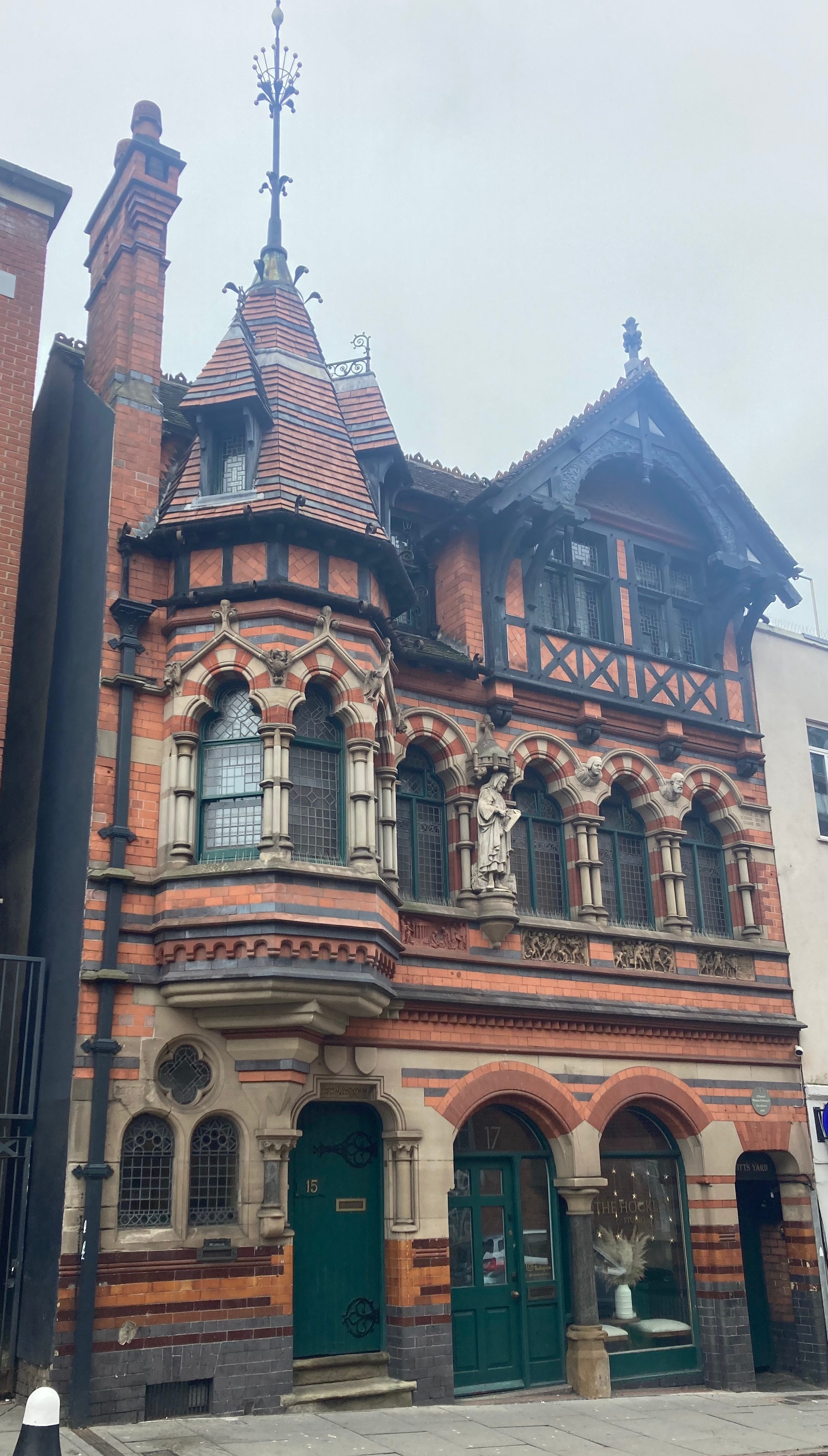
Alan, who conducts The Bendigo Story, a tour of Nottingham that looks at significant locations in the life of the legendary Nottingham boxer William “Bendigo” Thompson, has been researching other historic moments in the city’s sporting history. He got in touch to ask if I knew anything about Samuel Weston, whose address was listed as 17 George Street, Nottingham - the shop on the ground floor of Watson Fothergill’s office.
Alan had found Weston’s name and address on a Certificate of Bond, a share that was sold as part of the Nottingham Forest New Ground Scheme in 1898.
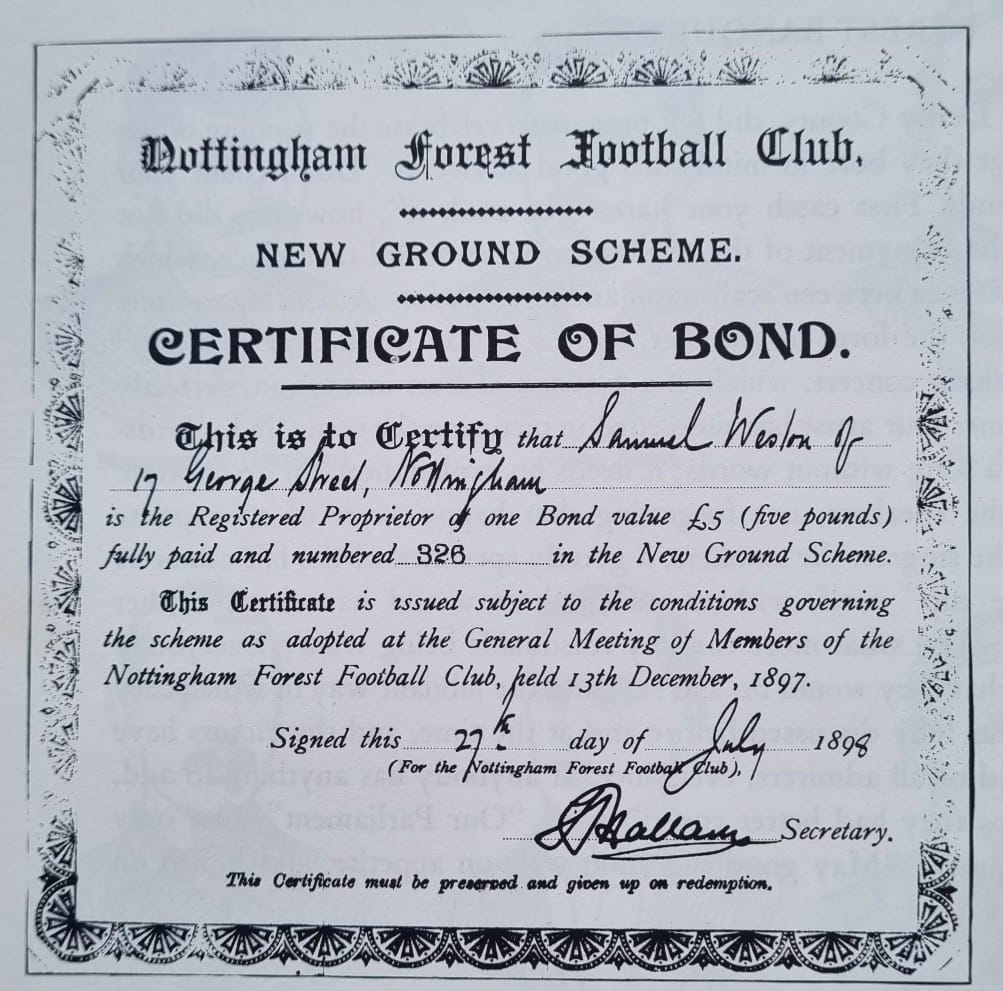
Nottingham Forest moved to The City Ground on 3 September 1898. The team’s seventh (and current) location was situated only a few hundred yards from the old Town Ground at the opposite end of Trent Bridge; it was named in celebration of Nottingham’s newly awarded city status.
£3,000 was required to finance the move, £2,000 of which came from supporters, members and businessmen who bought ‘New Ground Scheme’ bearer bonds at £5 each. (Source).
The first match at the new City Ground was Forest V. Blackburn Rovers on Saturday, 3 September 1898. The Football News waxed lyrical about the warm weather, the lovely views and the fact that Forest were the FA Cup holders. They may have “looked smart in their red shirts”, but in this game, Forest were defeated 0-1 by a Blackburn goal in the second half.
Back to our investor. In the 1890s, Samuel Weston (1863-1942) was in partnership as Yarn Merchant with Anthony J. Mundella, trading as Mundella & Weston at 17 George Street, Nottingham.
There is mention of the firm, cited as Yarn Agents, in the Nottingham Journal in July 1898, when a salesman from Lenton was in dispute over a commission from the firm. The article states that Mundella & Weston were Nottingham agents for “two large Manchester or Lancashire firms.” Yarn Agents were the middlemen who provided the yarn to the lace and hosiery firms. This was often cotton or silk, imported from India and America.
I believe this Mr Mundella to be the nephew of A.J. Mundell (1825-1897), the M.P. who had been a partner in the hosiery firm Hine & Mundella, with Benjamin Hornbuckle Hine, brother of the architect Thomas Chambers Hine.
Anthony J. Mundella (1859-1933) had been apprenticed to his Grandfather William Wright’s firm as an agent until the age of 21. Later, he was private secretary to his Uncle in London. It seems uncertain whether he was present in Nottingham, or was a partner in the firm in name only.
His partnership with Samuel Weston, who had also begun his career with William Wright, was dissolved in 1904, with the reason stated as Mundella’s retirement. Samuel Weston continued at 17 George Street, and in 1905 was living on Musters Road in West Bridgford.
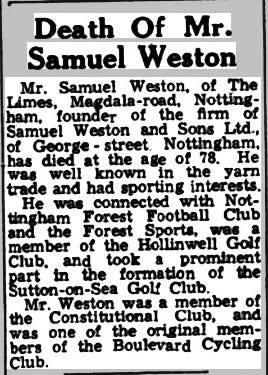
I was able to establish the identity of Samuel Weston and found notices of his death in 1942. He had continued the firm, with his sons Harry and Arthur, as Samuel Weston and Sons at 17 George Street.
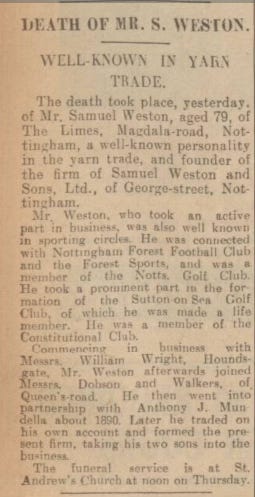
Another article in the Nottingham Journal confirmed Weston’s association with Nottingham Forest Football Club and the Forest Sports. Weston was on the committee for the annual sports day, which in April 1899 comprised a day running races, hurdles and a novelty cycle race, plus a performance by the Robin Hood Regimental band. He was also a golfer, a cyclist and a member of the Constitutional Club.
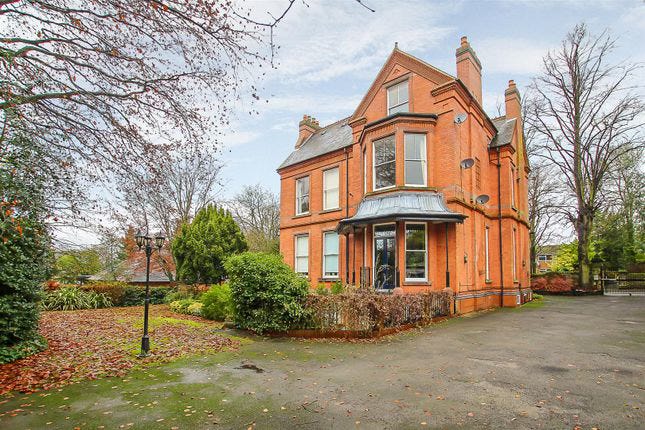
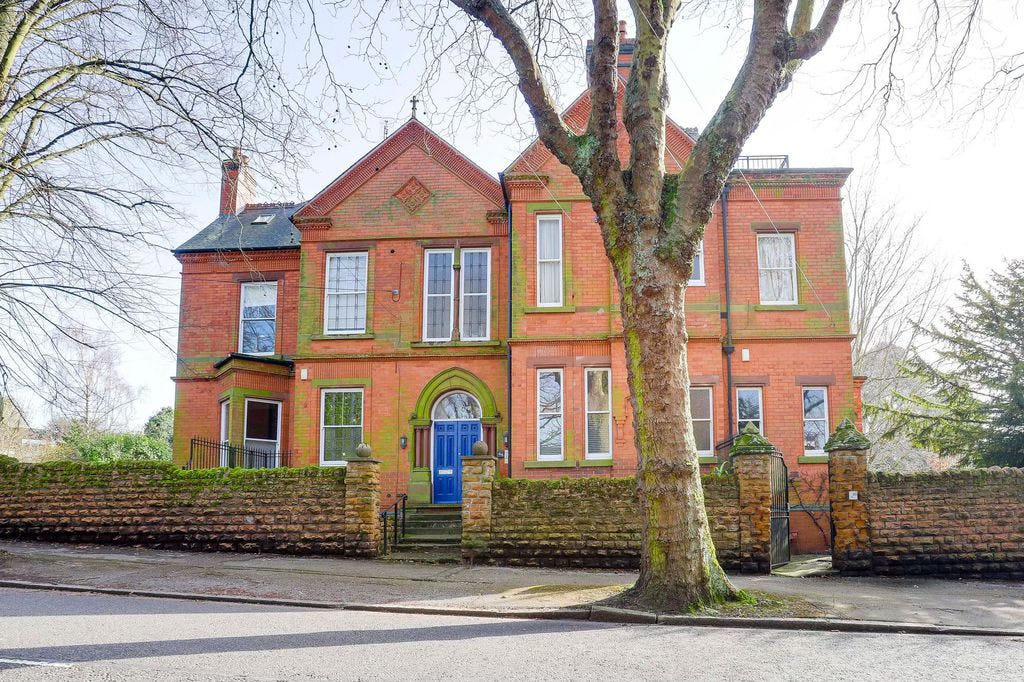
Since at least 1911, Weston, his wife Elizabeth and 7 children were resident at The Limes, Magdala Road, in Mapperley Park, Nottingham.
The firm seems to have continued at George Street after Samuel’s death, perhaps even taking over the rest of the building. An advertisement in the Evening Post for a shorthand typist in February 1954 cites the address of Samuel Weston and Sons Ltd. as 15 George Street.
Later, from the mid-1960s until 1988, the George Street office, along with premises around the corner on Lincoln Street, would be home to Cecil Godfrey & Son, a firm of solicitors. Sometimes in this period the building is referred to as Leighton House.
These days, 15 George Street retains many of its original features and has been converted into an apartment which can be rented as accommodation or for events. 17 George Street is home to the Hockley Hair Studio.
Find out more about architect Watson Fothergill and his unique office on the Watson Fothergill Walk, my tour of his architecture in Nottingham city centre.
Comments
Nothing yet. Say the first thing.
Sign in to join the conversation.