
I want to pay tribute to David Hockney, one of the great artists of our generation. He gave us seven decades of work that never stopped reinventing itself. Pools, portraits, iPad landscapes, opera sets, he did all of it, and he did it with a joy that inspired millions of people toward art who might never have come otherwise.
He was first and foremost an oil and acrylic painter. That is where his biggest, most famous work lives. But he also used watercolour to wonderful effect, and in a way that is close to my heart: in a sketchbook, outdoors, working fast.
In the early 2000s Hockney returned to the East Yorkshire of his childhood and painted the landscape in watercolour, on location. The Midsummer: East Yorkshire series and the sketchbooks from those years look simple at a glance, but critics agree they hold the spatial complexity of finished paintings while keeping the spontaneity of a quick impression.
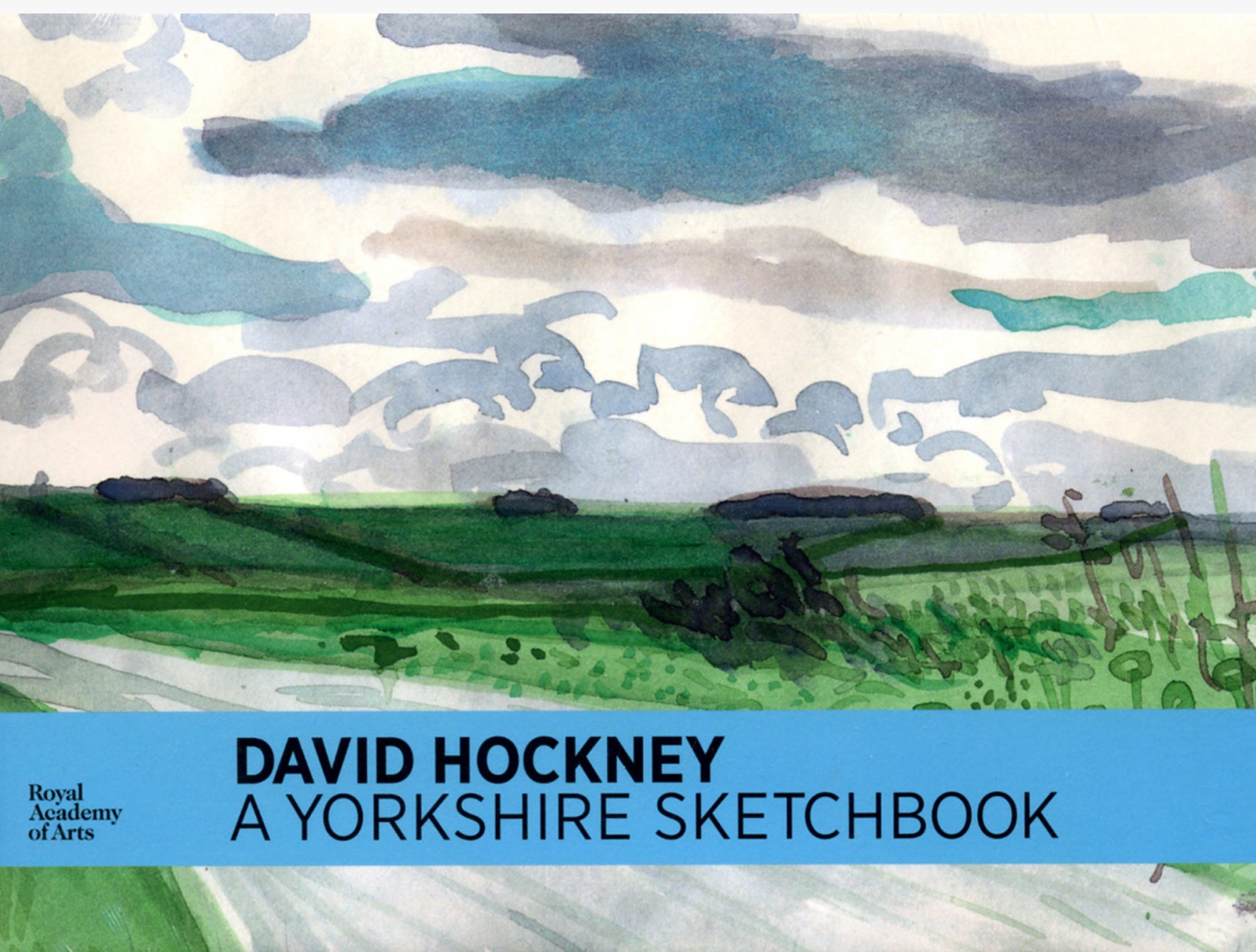
Accounts of him at work describe how he premixed his colours so he could paint as fast as possible, with no pencil underdrawing at all. Brush straight onto paper.
That immediacy requires deciding your next move before the brush touches the paper. This week we practise exactly that.
We are going to paint simple landscapes a là Hockney’s Yorkshire sketches. Mix colours first, then paint without lines. This builds directly on the sketchbook habit we have talked about before.
Find a simple landscape, ideally something in front of you, a view from a window, a park, a field, or a reference photo if that is easier today.
A bit of sky, a bit of land, one or two features.Plan your sketch. Before mixing colour, make a tiny thumbnail, two minutes, no more. You are only working out the big shapes and where the lights and darks sit.
Mix just two or three colours in advance before you start painting. Keep them muted and natural: a sky or distance tone, a green or earth for the land, and a colour for accents. Mixing first means you will not lose momentum looking for the next colour. Or get lost in too many choices.
Paint directly with the brush, no pencil sketch first. Start with your largest shapes, the sky, the land, etc. Then drop darker accents in while everything is still workable. Because there is no drawing underneath, every shape and mark is a decision you commit to.
Once dry add some darks and glaze some more details where needed. Two layers, that’s all.
Keep it small and keep it quick. Stop before you are tempted to tidy it up.
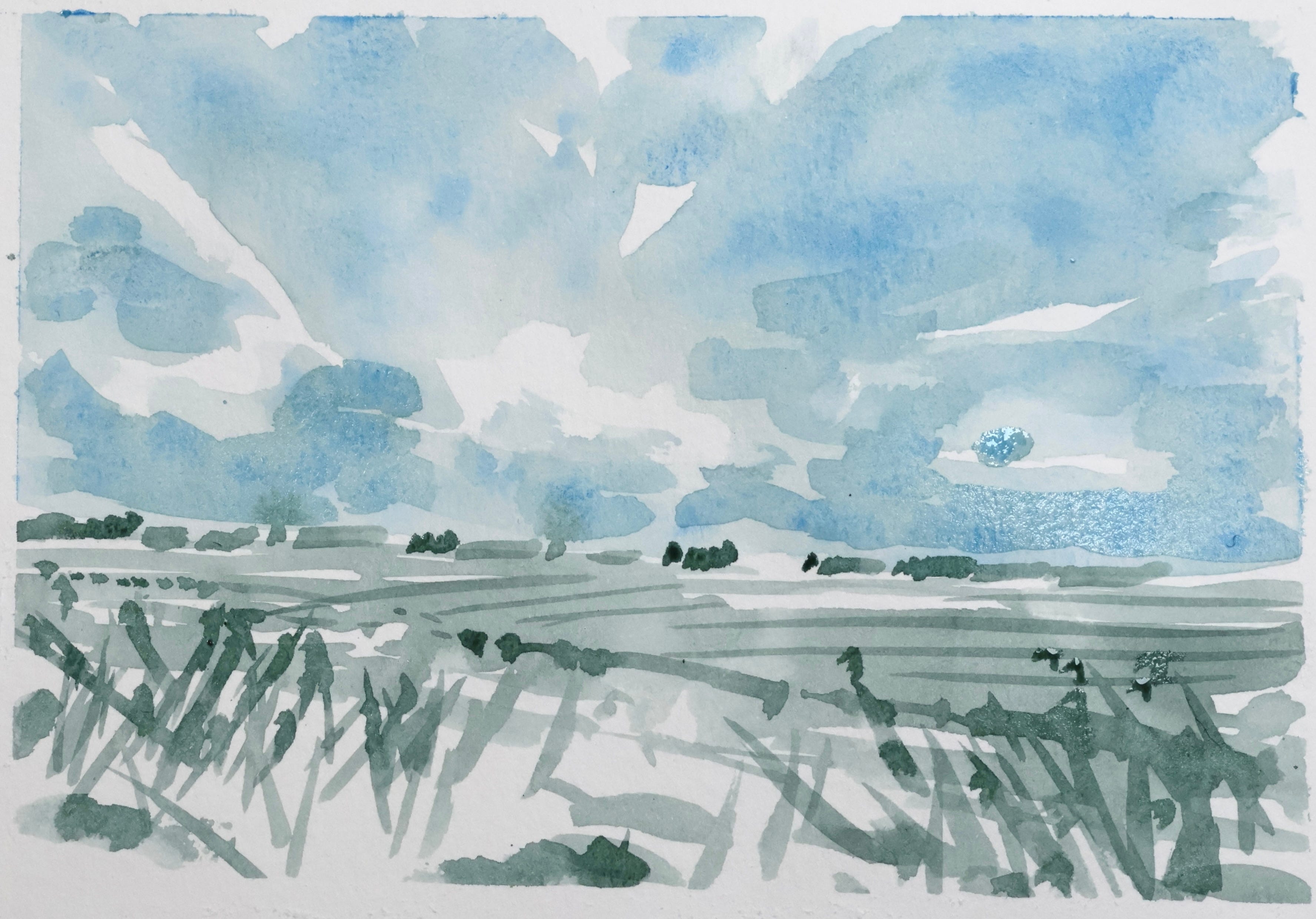
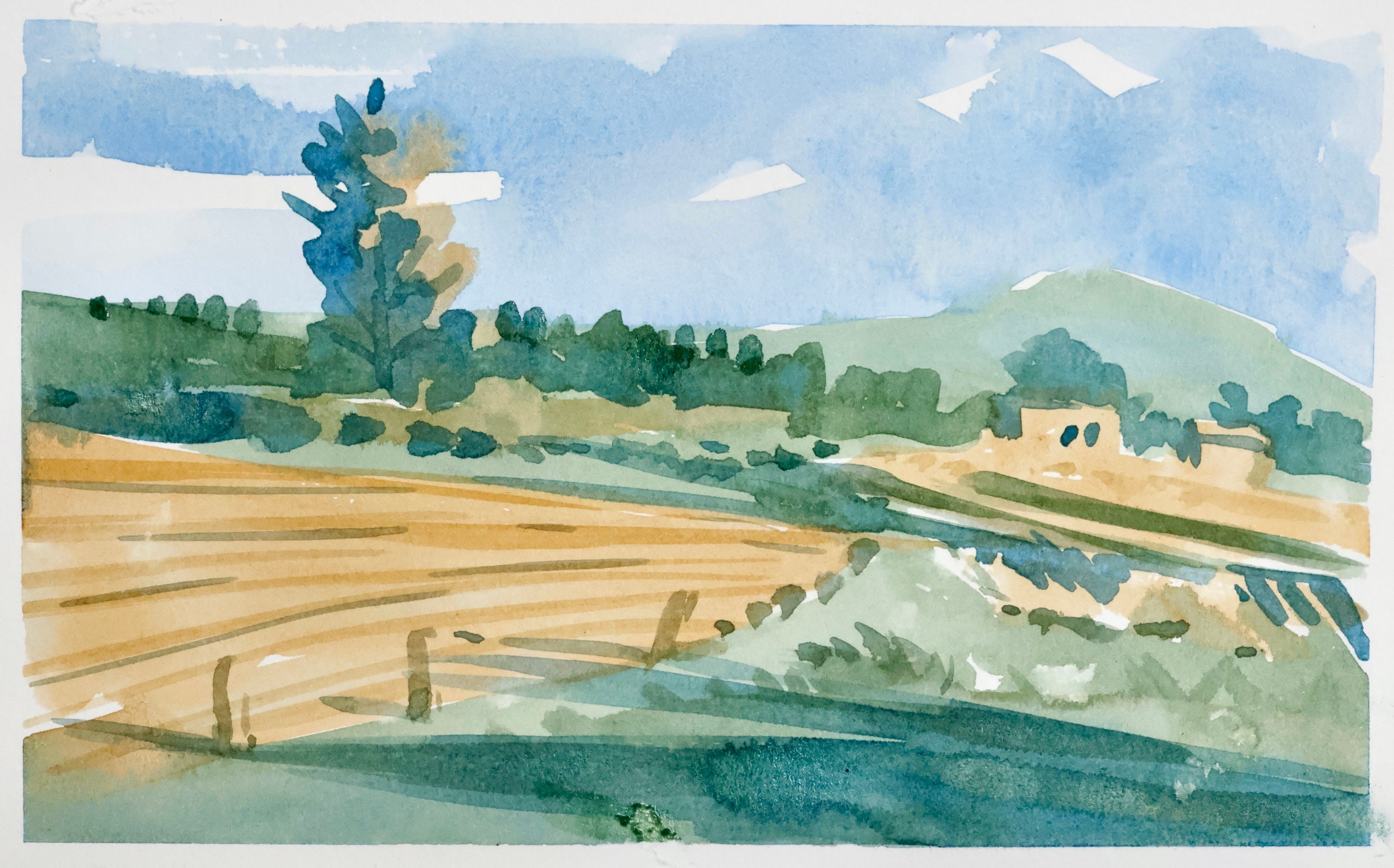
Planning lets you paint with confidence instead of working it out as you go
Premixing colours keeps you in flow
No sketching forces you to see the landscape as shapes and masses, not outlines to fill
Working fast is how you capture an impression
Paint with me, live
Next week I'm running a free Landscape Marathon: five live sessions, five landscapes, five days, painting together start to finish.
It’s your chance to tackle full paintings in real time and put all those exercises to good use.
Sessions run on European hours, but every one is recorded so you can paint along whenever suits you.
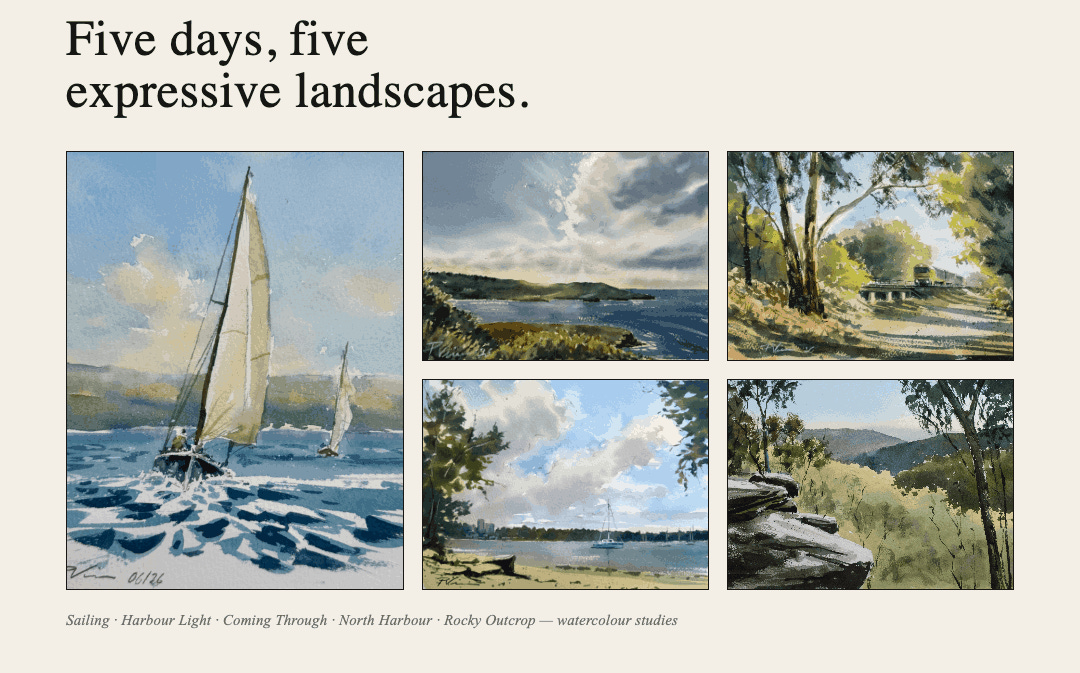
Video demo of my examples with explanations and reference photos
Advanced practice idea
Comments
Nothing yet. Say the first thing.
Sign in to join the conversation.