
If you’d prefer to read this over on the site, just click here.
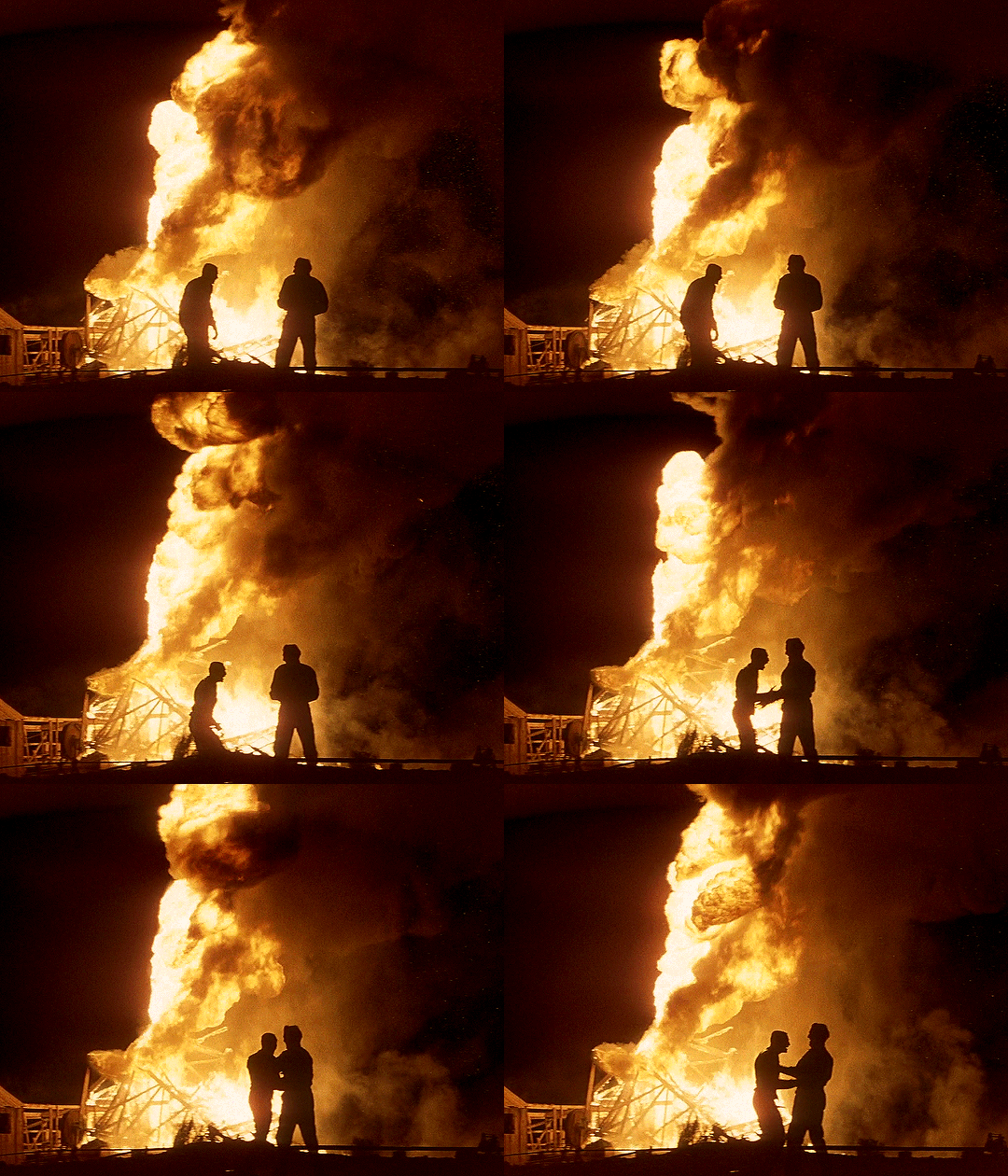
First the shaking, then the hiss of gas, finally; eruption. The day has been fading out and everything else is still and calm, a landscape painted in shades of beige beneath a sky of cloud-laced blue. The derrick creaks and aches as the drill heaves and plunges, heaves and plunges and then, oil rushing up from below, violent and immense.
Everything becomes chaos. The workers are coated in this black rain, panicking bodies rendered in crude. The son is thrown back by the pressure of the explosion, his hearing broken and tender face slick with grease and fear. The father leaves him to bask in this moment of madness and profit when the sky has become dark and he can feel the future erupting around him.
Paul Thomas Anderson’s There Will Be Blood has up until this point been a film of abrasion and tension, the pressure building under the harsh strings of Greenwood’s score as long, lingering shots colour the landscape with a latent threat. And now, the release. This wet matter that comes out of the hole in the ground drives everyone here. It is the raw kinetic force at the heart of the film. Fire blossoms, unfurling along the stem of the erupting oil, and nothing will be the same again. The local town will grow, with a new school, a bigger church, all the slick benefits of capital rushing up out of the ground and into this middle of nowhere town in this middle of something time.
But other things will fracture under the pressure. Daniel Day-Lewis’ character, Daniel Plainview the developer of this well, broke his leg in his earlier mining exploits. Now his son has lost his hearing and will come to hate him. The idea that he is his son will also break. Plainview himself will decay. Wrapped up in all the wealth in the world, he will dissolve himself in a bottle and break another man’s brain with a bowling pin.
The bulk of the film takes place around 1911. Industrialisation has not yet reached its current scale; oil production is only just developing, mining is not as advanced or far-flung, logging has not yet reached so deep into the woodland. This erupting hole in the ground is lodged here at the start of the future. From these initial moments of industrial advance, of drilling and digging, of boundary-rupturing and unearthing, all the violence and the pain and the chaos are released. The suffering that follows is clear and dark in Anderson’s title (changed from the original book’s Oil!). There will be blood. It is certain, the trauma built into this embryonic industry that will help make and break the modern world, just as it makes and breaks all of them.
Ninety-nine years later and oil extraction has come on some way from Plainview poking around in the desert. The scene now is the wide blue of the Gulf of Mexico rather than the sandy open of California, and the BP-owned Deepwater Horizon is searching the seabed for new drilling sites. Decades of growth and greed have driven a global expansion of resource extraction and this rig is exploring the planet’s final horizon down in the deep-water; 5,600 metres below the surface, 65 kilometres off the coast. The disaster at this rig in 2010 was the largest environmental disaster America has ever seen. They think over seven hundred million litres of oil were released as the well erupted for eighty-seven days in the deep dark, leaving hundreds of miles of coastline with black sand and dead or dying animals deposited with the tides. The bodies of eleven of the workers were never found.
Deepwater Horizon (2016) is by the same director as Lone Survivor and works to the same emotional beats: American heroes given weight through opening scenes with cute kids and caring partners, Mark Wahlberg playing the everyman centrepin of the film, a second half that is a sensory onslaught as these everyday people are attacked by a relentless and foreign adversary. There is a nice bit of exposition early on where a school class presentation is used to explain what it is exactly that the rig does. In these childlike terms, the oil is ancient, angry dinosaurs compressed below the seabed, coiled in the dark and waiting to escape. The kid talks about how the workers tame them, control them. Oil is not just some innate matter here but is an almost alien force, dormant now but pure pressure ready and waiting to burst into the clear air. And again, when the oil comes to the surface, it erupts: violent and immense. There is such a raw fury to the explosion. Oil rigs are awesome structures, mind-bending constructions of system and metal, and every part of this one is either exploding or on fire. What was buried rises up to the surface, and everything is torn apart.
In the presentation, we are told that ‘that oil is a monster!’, the same word the critic Mark Kermode uses in a discussion of There Will Be Blood, and it is easy to see how resource extraction blends into the mythic, the monstrous. There are such huge, terrifying scales at play here. Think about the amount of time involved in making and mining this stuff, the amount of pressure coiled below the surface, the lengths to which people will go to control it. This pattern is repeated across films that deal with resource extraction, whether they are drilling for oil, mining or logging. As soon as that boundary is crossed, as soon as you reach out into the dark, unknown places and bring something back, the monsters appear.
There is a little mini-genre of films that take place on oil rigs where they drill too deep and something else comes up from the water, a series of B-Movie action-horrors like Rig (2010), The Thing Below (2004), Sector 7 (2011). The latter is a South Korean film set in the real Jeju Oil Field, situated between South Korea, Japan and China, and is typical of the others. They have discovered strange, bioluminescent creatures in the oil field that are like living oil. Warnings are ignored and greed pushes on. What emerges is a lethal creature iridescent with oil and average CGI. In a painfully drawn-out series of fights, it hunts down the crew, methodically, brutally. The results are the same as the other films - bodies mangled, flames flickering over the water, more rigs, more drilling. These ideas are not restricted to oil. The 2020 film Underwater, led by the ever-brilliant Kristen Stewart, flows from these anxieties. Here they are mining the seabed and have drilled too deep, too far, and things go very wrong. This time it is Cthulhu; immense, all-powerful. Again, the result is the same: bodies mangled, flames under the water, more rigs, more drilling.
These are all films of transition, moments where industry crosses some boundary, takes a step too far and disturbs something older, something bigger. In the creature-feature monster flicks, the corrosion that follows is given a form. Where Anderson gives you Plainview hounding himself into nothingness in his greed, Sector 7 gives you an oil-sea-murder monster. The creature-ness gives body to this feeling of new and old things coming to the surface, this feeling of causing something that we cannot control, and that in our lack of control, might be the end.
These films are all deeply, fundamentally violent. Things blow up. People die. Bodies are broken, torn apart. This seems logical. Industrial resource extraction is a violent thing. The explosions of mine development, the hack and slash of logging, the rhythmic drilling of an oil derrick. And the climate breakdown that is the logical follow-up to these acts is a fundamentally violent process. Not violent in some loose, abstract sense, but a violence that is felt with a raw physicality. There is the brute violence of the supercharged typhoon tearing through your town. The slower violence of a famine or a drought, as the body shrivels and consumes itself. The gradual violence of organs failing as you farm under the newly relentless heat. The violence that will come when your city becomes unliveable and so you move, you and your family move and are met with fear, closed borders and a far-right that is paranoia-fuelled and on the rise. The pollution, the deforestation, this is all violence, a kind of war waged on the environment - ecocide in a million acts. This feeling of civilisation and nature completely set against each other. A whole world intentionally torn apart, burnt up, drowned out at the same time. Violence is already spread everywhere throughout this topic, and these films echo it back. The carnage in them feels fitting. How do you process the grief, the rage, the loss, and not regurgitate it as some madness, some chaos, some violence.
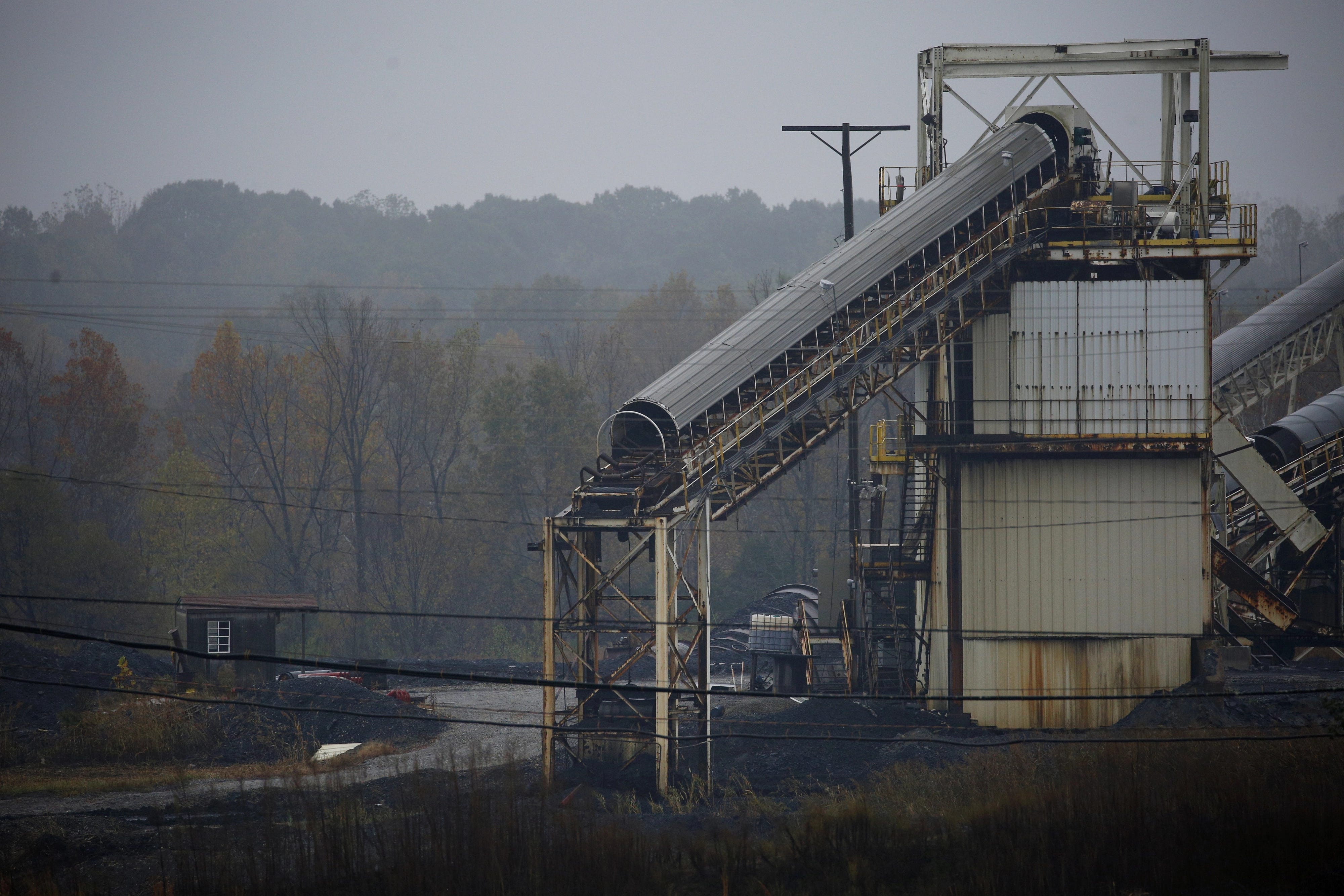
The scene now is an overcast, brooding Oregon. There are high hills coated in evergreens and thick clouds. Lingering shots of buildings decaying into rust. We see logged trees, industrial waste, a meth lab in an abandoned mine. It is a suffering, coming-apart place, and Antlers (2021) is a film that is overloaded with trauma; personal, societal, ecological. The start is immediately environmentally focused, a black screen with white text appearing, voiced over in the Ojibwe language:
Text within this block will maintain its original spacing when published
Mother Earth has been pillaged, stripped of her life’s blood.
Text within this block will maintain its original spacing when published
A violation that has awakened the Malevolent Spirit.
The world has been wounded, physically and spiritually, and there are consequences to this.
The film starts and ends in the local mine, currently disused but soon to be brought back into action as part of a revival of the coal industry in the US. It is a dark, buried place of old equipment and cold walls where the Wendigo, a Native American folkloric creature, has been lurking. The people of the town do not know how far back the mine goes but it feels like somewhere fundamentally different; a place that is deeper, darker, a place where old landscape-tied spirits hide away from the human advance. The adoption of an indigenous monster for this feeds into the idea of an older landscape; wounded, vengeful, finally pushed to the point where it emerges and attacks the latest wave of people here to colonise and dominate its space. When this place-spirit comes above ground we are left with bodies that are not just broken but ruined. It uses the human as a literal breeding ground, the trauma that comes from the mine growing within the body until it tears it apart and walks the woodland with a face as a ragged mask.
Here, disturbing the ground means disturbing the body. From the moment people reach that moment of transition – when they venture into the mine here, when Plainview begins to drill, when Stewart’s mining rig drills that bit too deep – this transgression is echoed back at the workers. The boundaries of the earth are mirrored in the boundaries of the body, the rupturing of one resulting in the rupturing of the other.
This is not all as theoretical as it sounds. The link between the body and these industries is clear and corrosive and this pattern plays out across the world. It is clear in the oil-soaked waters of the Niger Delta, legible in the dying fish and failing crops. You can see it in the silicosis of the workers of South African gold mines, in the Black Lung disease of coal miners in West Virginia. This is the inverse of Plainview’s promise in There Will Be Blood, the other edge of the bargain you make: wealth will flow from the ground, but this wealth will poison someone somewhere.
These films are clear about who is responsible and who is at fault. All of their empathy is with these normal people that have had their futures ruined and their bodies twisted out of shape. In Deepwater Horizon every effort of the film goes into humanising these working-class figures that are caught between uncaring, profit-driven executives above and the oil below until everything is on fire and exploding around them. In Sector 7, again there is corporate greed to your left and a monster to your right. These are normal, skilled people working good jobs, living as best as they can in the system they have been placed into.
The pattern we have seen here is again found in the 2014 film Dark Was The Night: industry overreaches, disturbs something ancient and buried and then bodies are rent, mangled and torn apart. The film opens with a frost-covered woodland and the sound and violence of industrial logging. It is hectic, the heavy machinery looking cold in the film’s grey-blue filter, edited so that it feels like a war scene – harsh cuts, pulsing music, and then everything is still. We learn later that this logging camp has just been set up, ninety miles north of the town where the film is set. A species of monster has lived here undisturbed (based on the same Wendigo myth as Antlers) and the industrial progress of logging has increasingly confined their space. Like the monster oil of Deepwater Horizon, more and more pressure has been forced onto this dormant, alien force until it has no choice but to react, and the pressure erupts in this orgy of violence. Like Antlers, the population of this town are just normal people, in the wrong place.
There is a tortured union here between class and earth, a symmetry to them. In each of these films, it is these working figures who suffer the violence that mimics the hurt that is done to the landscape. They are tied together by this same system that is brutalising them both, body and landscape torn apart by the same pressure. Here, the war-like opening logging scene and the viscerality of the monsters’ violence mirror each other, chainsaws at one end and claws gouging at the other, with working-class bodies traumatised in the middle.
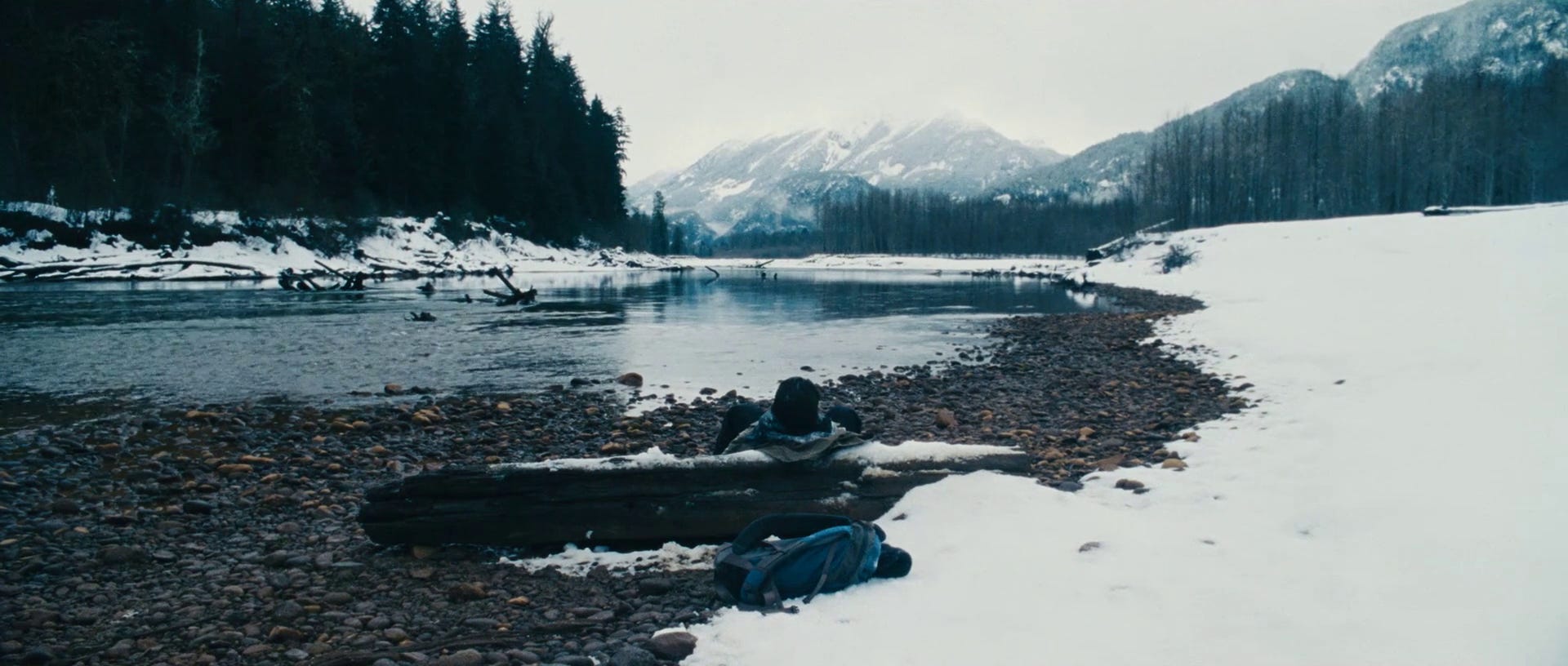
The day is crisp and clear, with pale blue skies still and icy over the white snow that stretches everywhere. The camera pans around, mimicking scanning eyes. Four men work on some kind of pipe. A hint of movement against the white, then wolf running. Four legs sprinting through snow at men and then, shot echoing and motion stops. The body lays panting, ragged, with red growing in the whiteness that is everywhere and Liam Neeson holds his hand to its fur, comforting it as it dies.
His character, John Ottway, is working his ‘job at the end of the world’, a phrase that feels as temporal as it does geographic, as ‘a salaried killer for a big petroleum company’. He is there to protect the workers of this oil station in Alaska against the grey wolves of the area. He is the defensive boundary between these oil men, the farthest outpost of the fossil fuel web that supports modern society, and the teeth and claws of the wild. The film is built along these territorial lines, focusing on the invasion of the workers into the wolves’ territory – a remote, wild space where people are not meant to be. The result is the same that is played out in the sea around Korea, the Gulf of Mexico, the mines of Oregon, the woodlands of rural New York: industry ventures into the deep, wild places and bodies are broken, torn apart.
There is such a sadness to the film; an icy, hopeless melancholy. I love the opening monologue at the oil plant. The sheer grief and despair of it, with Neeson’s perfect delivery over the top of strings and images of industrial lights in the snow. This is the overall tone of the film; sadness, loss, irreparable damage. It is elegiac, mournful. The scenes of action are adrenaline rushes between extended ruminations on their past lives and pains. Like so many of these films, all its empathy and heart lie with these working people, torn between a system that does not care about them and a natural world that is hurt and vengeful.
It is the clearest embodiment of the core tones and fundamental feeling of the other films. They all seem animated by a sense of ambient guilt rather than anger and wish for some brutal justice. Violence is met with violence as an anthropomorphised nature rises up to destroy the machines that are ruining it; bodies breaking as ecosystems will, minds eroding like future coastlines. They are the off-shoots of an anxiety-laced awareness of how far industry has stretched, cultural products moulded by a sense of lingering guilt in a time where the buried things are coming to the surface, where what was submerged before is becoming clearer and clearer. The feeling that things are coming to a head, that we have piled more and more pressure onto the world and are waiting for the inevitable release. That we are truly running out of time now. There are no winners at the close of these films, no one is happy. Even the small victories are set against a background of absence and irreparable loss. They are the most melancholic form of anger; a hopeless, futile rage.
No posts
Comments
Nothing yet. Say the first thing.
Sign in to join the conversation.