Every month, Charlie Linney and Lewis Brooks speak to a diverse group of practitioners, experts, and commentators from around the world to discuss the impacts of security policy on contemporary conflict. Join us to talk about the long-term implications of securitised interventions and policies, both for democratic controls over the use of force in Europe, the US and elsewhere and for the communities most impacted in places like the Middle East, the Sahel, the Horn of Africa, South America and…
In this episode we explore how the United Nations (UN) counter-terrorism architecture has expanded – and what it means for peace, human rights and multilateral action. Over the past two decades, counter-terrorism has become one of the UN’s fastest-growing areas of work. From a small footprint with very limited capacity, to a dedicated UN Office of Counterterrorism with 200 staff, the…
In July 2025, the UK government released three major policy reviews that will shape its approach to security and defence for years to come: the Strategic Defence Review (SDR), the National Security Strategy (NSS), and the Comprehensive Spending Review. Together, these documents set the tone for the UK’s defence and foreign policy — but how well do they respond to the threats and challenges that…
Training and equipping police, military, and border forces is a common part of international security policy. But how can this kind of support affect communities in conflict-affected countries? In this episode, we speak to Hamsatu Allamin, a peacebuilder from northeast Nigeria, and Major George Ashton of the British Army’s Royal Military Police, about the practice known as security force…
The tenth anniversary of the Arms Trade Treaty (ATT) coming into force provides a unique opportunity for reflection on the impact and challenges of the Treaty to date. We took some time to talk with Roy Isbister and Elizabeth Kirkham from Saferworld’s Arms Unit and to reflect on their experience of working on the global treaty to regulate the international arms trade. The discussion explores…
With a new Labour government in power after the UK’s 2024 General Election, what does the future hold for the UK’s Integrated Security Fund (UK ISF)? The UK ISF is a cross-government fund designed to address UK national security challenges, with a budget of approx. £1 billion. The idea of such a fund began in 2001 when a previous Labour government introduced the Conflict Pool, which evolved in…
With the African Union Transition Mission in Somalia (ATMIS) set to withdraw and the al-Shabaab insurgency still posing a very real threat, how can the Somali security sector address some of the challenges facing the region? In this episode of Warpod, we speak with regional security analyst and Somalia security expert Samira Gaid alongside Saferworld’s Country Director for Somalia Ali Hersi. We…
Our conversation with Olivia O’Sullivan and Christine Cheng was so interesting that it ended up being too long to fit into one episode. This shorter bonus episode focuses on how the next UK government might approach US and EU relationships. If you haven’t listened to the full episode, you can do by clicking here or searching for Ep#5 How are UK political parties thinking about security policy?…
The UK’s place in the world is changing, and so is the nature of the conflict around the world. With new risks and developing dynamics pulling policymakers and politicians in different directions, we spoke to great guests. Olivia O'Sullivan is the Director of the UK in the World Programme at Chatham House and contributor to their podcast Independent Thinking. Christine Cheng is senior lecturer in…
In this episode, we explore the future of United Nations (UN) peacekeeping and the role of the African Union (AU) in peace operations with three guests: Congresswoman Sara Jacobs, the representative for California’s 51st District and a member of the United States House Foreign Affairs Committee, where she serves as Ranking Member of the Subcommittee on Africa; David Haeri from the UN Department of…
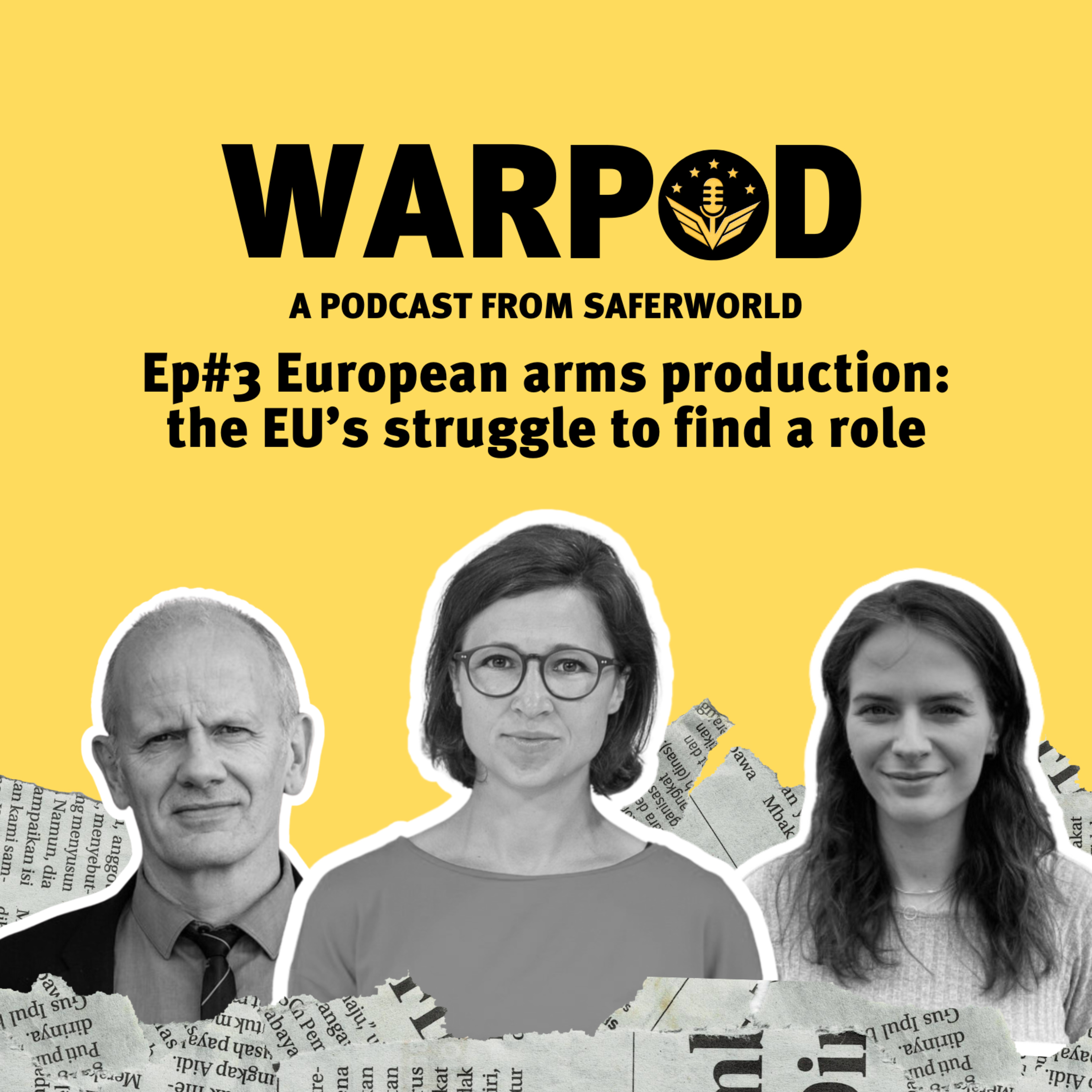
In this episode, we explore the role of the European Union in the research, development and joint production of arms and military equipment. Unlike other industrial policy areas such as commercial trade, decisions around arms production and export have traditionally been held solely by individual EU member states – linked closely to their sovereignty and national defence ambitions. However, in…