
Right now, I have 39 images displayed in five different locations around the Twin Cities.
Thirty-nine.
And yet, somehow, I still have moments where I wonder: am I a real photographer?
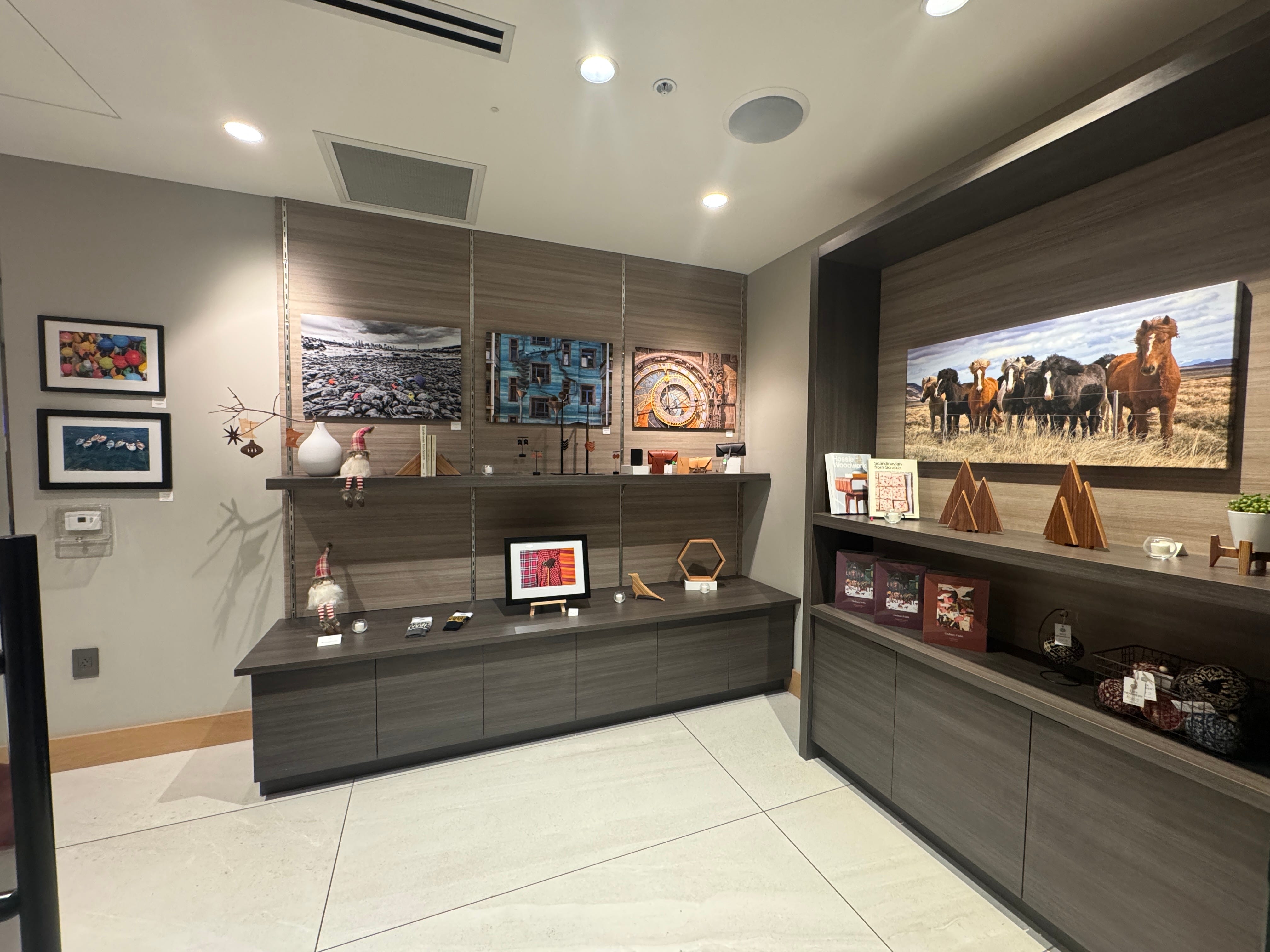
I came to that number while getting ready for art fair season and trying to figure out what was hanging where, what I have available, and what I might still be able to bring to upcoming shows.
I expected the list to be useful.
I did not expect it to stop me in my tracks.
That question has a way of sneaking in, even when the evidence says otherwise.
Part of it, I think, comes from the fact that I came to photography late, at least in the sense of trying to make a real career out of it. I went back to school for photography in 2015, when I was 45 years old, and graduated in 2018 with honors.
That was not a small thing for me.
In high school, and even in college the first time around, I was mostly a C student. Photography changed that. For the first time, I was studying something that meant a lot to me, something I felt deeply drawn to, and I threw myself into it completely.
But photography itself was never new to me.
Growing up, I loved looking at photography, especially in National Geographic. Those images pulled me in. I loved where they could take you, the way they could show you a different world, a different culture, or a moment you never would have seen otherwise.
I started out shooting on my dad’s Nikon film camera. I remember taking classes where I learned in the darkroom, developing film, making prints with an enlarger, and burning and dodging to shape the final image by hand. That was the version of photography I first knew and loved.
So when I went back to school in 2015, I was not discovering photography for the first time. I was returning to it. The difference was that I was returning in a digital world. The tools had changed. The workflow had changed. The industry had changed. And in some ways, I had changed too.
Part of that was exciting, and part of it was intimidating.
Before photography became my focus, I had spent more than 20 years working in IT. So even now, there is still a part of me that feels like I arrived after everyone else had already chosen their lane. Like maybe I got a late start in an industry where so many people seem to begin young.
While I was in school, I had the chance to intern in my company’s photography studio one day a week, for four hours at a time. That internship changed a lot for me.
Up until then, my view of photography careers had been pretty narrow. I saw the usual paths: wedding photography, baby photos, senior portraits, standard product photography. All perfectly valid, of course, but none of them really felt like me.
The internship opened my eyes.
I realized there was so much more to photography than the versions most people think of first. There were technical paths, specialized paths, and emerging paths. That was when I discovered photogrammetry and the process of creating 3D objects from photographs.
That was my light bulb moment.
I remember realizing this could be my road in. Photography is a tough industry, especially in the product world. But photogrammetry was still relatively new, and it felt like an opportunity. It felt like a place where I could build something unique and find my entry point.
Eventually, I was able to transition internally at the company where I work, moving from IT into the photo studio. I know how fortunate that was, and I do not take it for granted.
Maybe that is part of it too.
Sometimes gratitude and doubt get tangled together. I know I worked hard for it, and I know I did not land here by accident. But there is still a part of me that wonders whether I was talented enough, or whether I was simply lucky enough to have a door open at the right time.
Then there is the nature of the work itself.
I specialize in photogrammetry, creating 3D objects from photographs. The images I make are functional. They are used by a computer program to build something else. They are not the final image. They are not meant to be framed, admired, or seen as the finished piece.
They are precise. Technical. Purposeful.
But they are not what most people picture when they hear the word photographer.
I am not shooting glossy ad campaigns or beautiful hero images all day. A lot of my work disappears into a process that ends with a 3D asset, not a photograph on a wall. And I think that contributes to the imposter syndrome too. If the photos themselves are not the final result, do they count the same way? If my daily work is highly specialized and mostly functional, does that somehow make me less of a photographer?
I know the answer is no.
But that voice still shows up.
What makes it stranger is that it shows up even with so much evidence pushing back against it.
I have my fine art photography business, and that work is rooted in my travel photography, especially the architecture, color, and shape that naturally draw me in. Those are the kinds of images I love most and understand at a gut level. I have images I am deeply proud of.
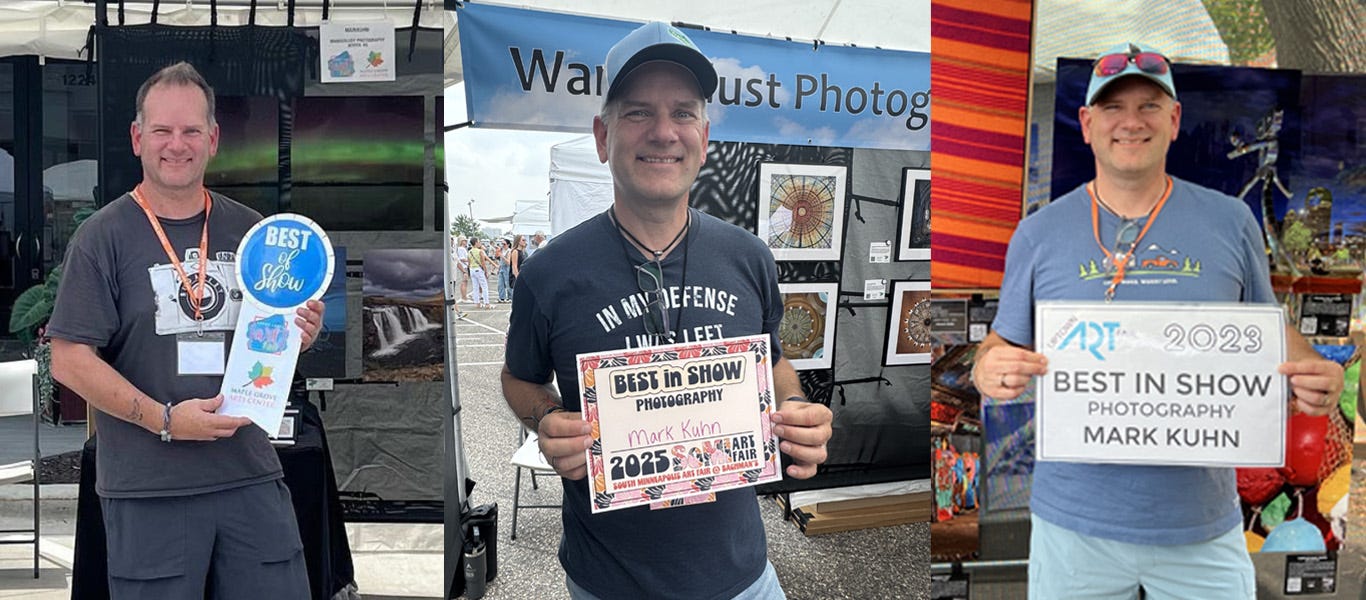
I have had sales. I have won awards. I have won Best in Show at three different art fairs.
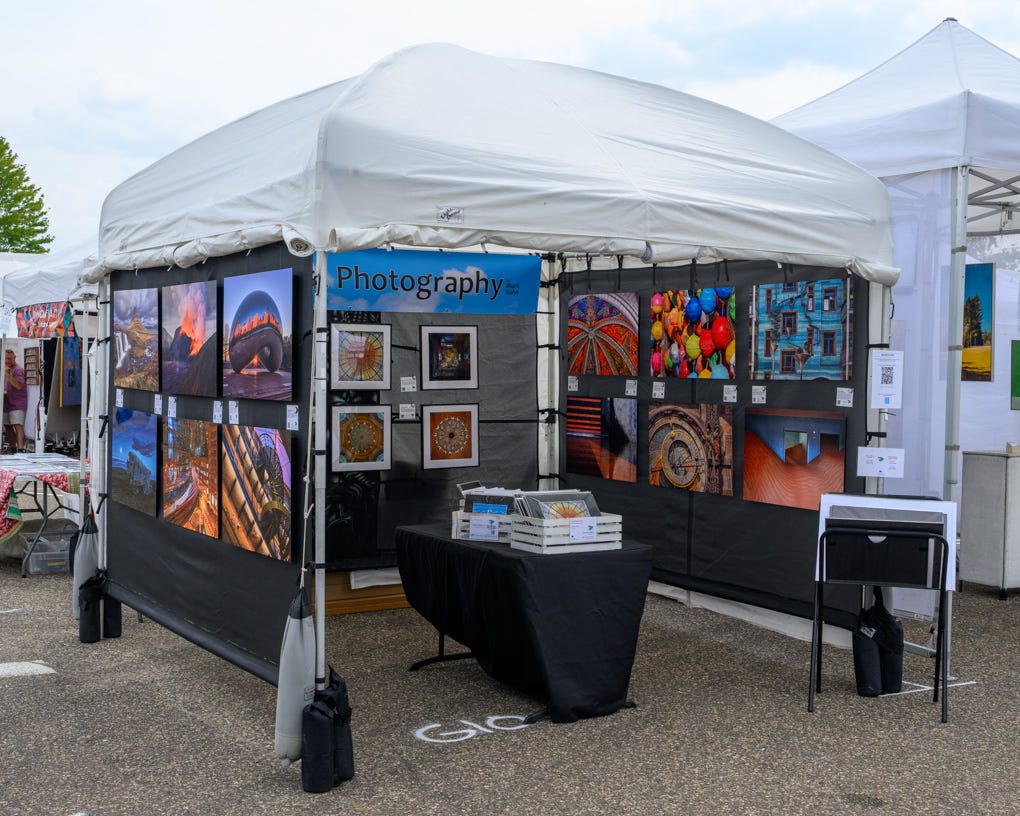
A week and a half ago, I was one of five featured artists in a gallery show, and my work was prominently displayed on one of the main walls in the gallery. It was absolutely stunning to see. One of those moments where you stop and think, wow, that’s mine. That came from me.
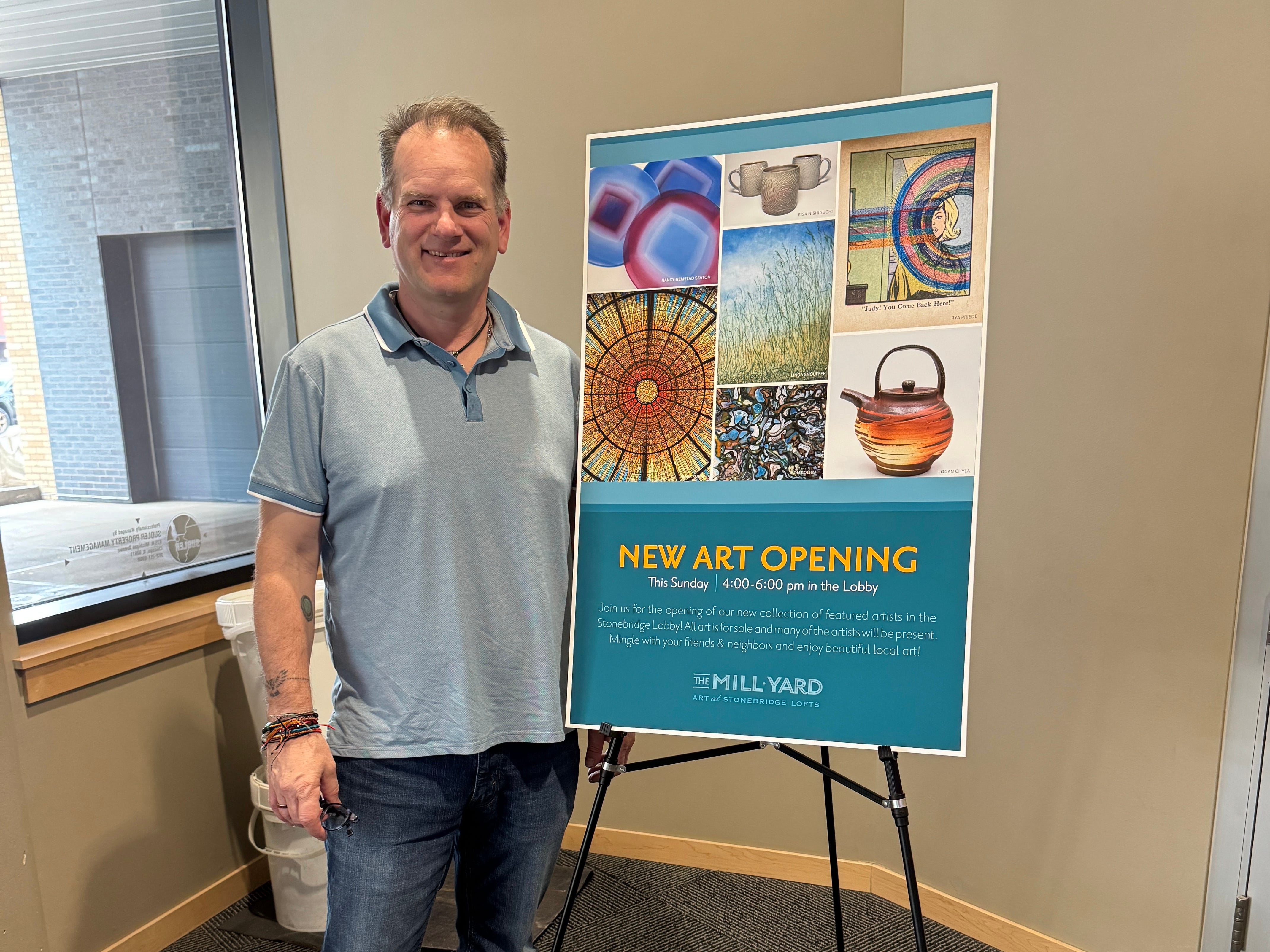
This week, I’m dropping off two more pieces that were juried into Primavera, a prestigious show here in Plymouth, Minnesota.
On paper, this is not the story of someone pretending to be a photographer.
But imposter syndrome does not care much about paper. Even with all the evidence, those same doubts still show up:
You started too late.
You took an unusual path.
Your day job does not look like what people imagine when they picture a photographer.
Maybe you have just been lucky.
That is why the list of 39 images hit me the way it did.
It was proof. Not abstract proof, but visible proof. Work that had been selected, juried into shows, printed, framed, hung, and seen. Work that exists outside my own head. Work that is out in the world, doing exactly what art is supposed to do.
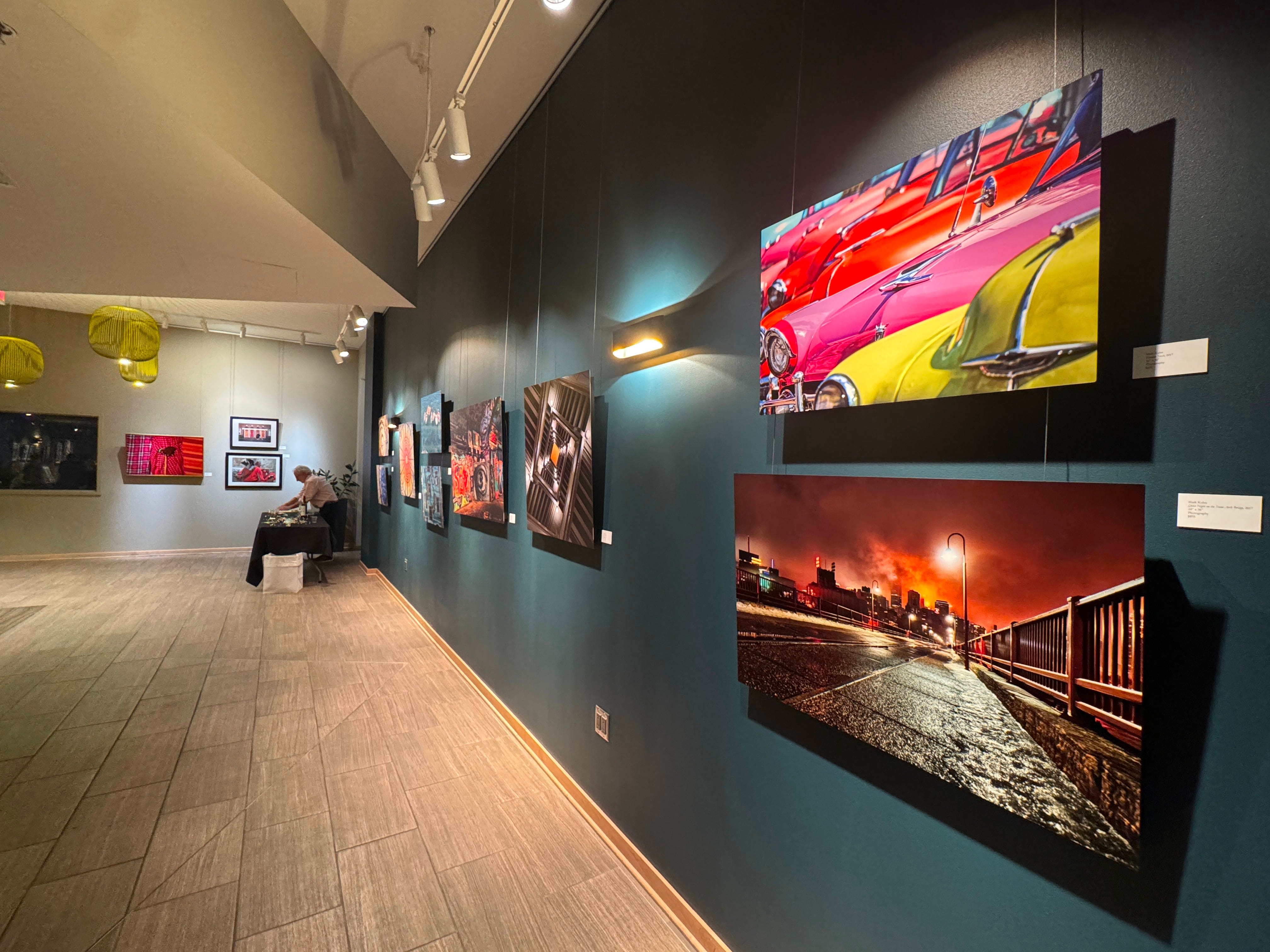
It reminded me that my photography is not theoretical.
It is real.
Maybe that is what I need to remember more often.
There is no one way to become a photographer. Some people start early. Some go straight through school. Some follow a direct path. Mine took a long detour through IT. It started to become something more when I went back to school at 45. Three years later, after a lot of hard work and building the right connections at my company, it became a real career. An internship opened my eyes to an entirely different future and led me into 3D capture, photogrammetry, travel photography, art fairs, gallery walls, and a body of work I care deeply about.
Mine still counts.
Right now at work, I am deep into one of the most challenging projects I do all year. We are in the third week of a three-week Christmas tree shoot, a project we do once a year, and I think being so immersed in it is part of what stirred up these thoughts in the first place.
Last year, I took over the project as lead photographer. This year, I’m leading it again, as the only photographer on a team that also includes two stylists, a producer, an assistant, an art director, and a samples coordinator.
That matters.
This is not a small, routine assignment. It is a major photo shoot with a lot of moving parts, a lot of pressure, and a lot of problem solving. The trees are photographed to be placed into virtual scenes, so the lighting has to be carefully crafted to match environments that do not physically exist around us.
And this year, we are pushing the project in a new direction again. We are transitioning to working with blue screen, which brings a whole new set of challenges. It is new territory, and I am not just learning it myself, I am also helping lead that transition.
In a lot of ways, this project should be proof enough. I am a photographer. I can lead a major shoot. I can solve problems on the fly. I can adapt, learn, and help move a complex production forward.
And yet, even in the middle of doing exactly that, the doubts still creep in.
Maybe that is what makes imposter syndrome so frustrating. It does not always show up when you are failing. Sometimes it shows up when you are doing the work, leading the project, and proving to yourself in real time that you belong.
Maybe that is part of being a photographer too. Not the absence of doubt, but the willingness to keep going anyway. To keep learning. To keep leading. To keep trusting that your eye, your experience, and your path count, even when they do not look like someone else’s.
I still have days when I ask myself if I am a real photographer.
But maybe the better question is this:
How much proof do I need before I finally believe that I am?
Have you ever had a moment where all the evidence said you belonged, but part of you still had a hard time believing it?
All of our articles are free by choice, and your support makes that possible. Consider supporting our writing with a free or paid subscription, or by leaving a tip to our Venmo: @kriskuhn_369
Comments
Nothing yet. Say the first thing.
Sign in to join the conversation.