
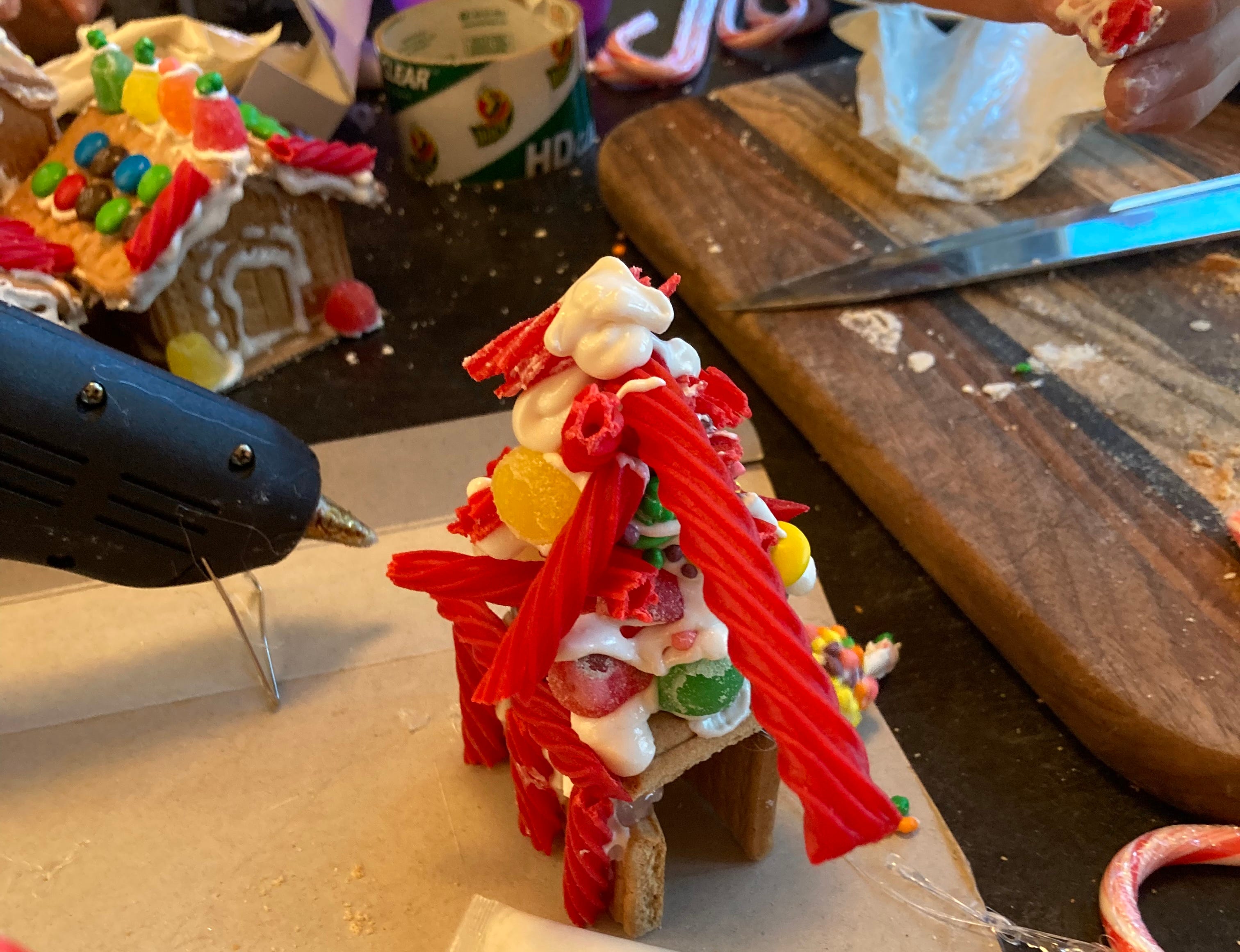
I finally got around to pulling out our gingerbread kits and our tradition of filling out reflection pages about our favorite things from the just finished year. With a house full of teens (and a prickly tween), I’m no longer sure which childhood rituals are welcomed or wanted. Sometimes I feel the need to be the “magic maker” for them in a heavier way than when they were little, when it was easier to elicit delight.
Perhaps I needn’t have worried. The combination of sugar, crafty building, novelty and nostalgia still created a memorable and connecting afternoon with my three.
On the first day back to regular weekday life after the winter holidays (dad at his desk, working from home), I told my younger two we were going to make gingerbread houses and play math. For each math question they answered, they got another piece of their gingerbread walls.
I was surprised by how much they liked this impromptu game. Since I hadn’t prepared anything and was simultaneously prepping pieces and helping with frosting glue, my math questions weren’t particularly inspired - mainly multiplication facts.
My “7th grader” has worked through memorizing math facts with me, but my “3rd grade” PDAer certainly has not. Yet he easily worked out simple problems in his head like 5x4, 6x3, and 8x8 with a bit of thinking time. I was even able to sneak in a tiny bit of math strategies and facts like “all the products for the 9s add to 9 (ie. 9x2=18)”.
Eventually they took over coming up with more creative and interesting challenges for each other, like (6^2) - 5 + 100 - 47 = ?
Honestly, I’m often a bit gobsmacked at what unschooled kids can demonstrate in terms of knowledge they haven’t studied through official channels. My young teen is aiming for more consistency with math practice this year in preparation for a possible interest in attending high school, so these were all well within her comfort zone.
But my 9-year-old’s only formal math practice was six months at age 4, when he had a passion for Reading Eggs and Math Seeds. He taught himself to read and do math through a third grade level, and then promptly decided he had enough knowledge for his purposes and has never played with those kinds of learning apps (or worksheets) ever again.
He randomly showed me that he knew what fractions to the hundredths were the other day, and when I expressed surprise, responded with disdain: “I know more math than you think I do!”
It’s coming from video games, my friends.
Do I know exactly how he has translated gaming into being able to apply math concepts? I do not. And yet it has happened.
As a self-directed learner, he’ll have gaps. Schooled kids have gaps too, from all the things they learn (or don’t learn) for tests and then promptly forget. And unschooled kids fill in those gaps when they need to for their own self-motivated purposes.
Someday, he’ll have a reason to solidify his collection of knowledge in some more formal way - but for now it’s enough for me to see that he’s growing and developing.
Esther Jones always writes about her family’s unschooling path, including her PDAer, in ways that I find inspiring and reassuring. She has a wonderful piece out this week about how unschooled youth pursue self-directed learning in a variety of ways, including classes with teachers, when they are ready. I love that she also notes:
“In case you are now wondering why your child is not seeking out teachers in the things they love, I will add here that each of my children has been quite different, and that there are many interests where they have not wanted any kind of teaching, but preferred to explore on their own. And that when they were younger, they rarely wanted anything other than their own exploring.”
- Esther Jones, Unraveling Gently
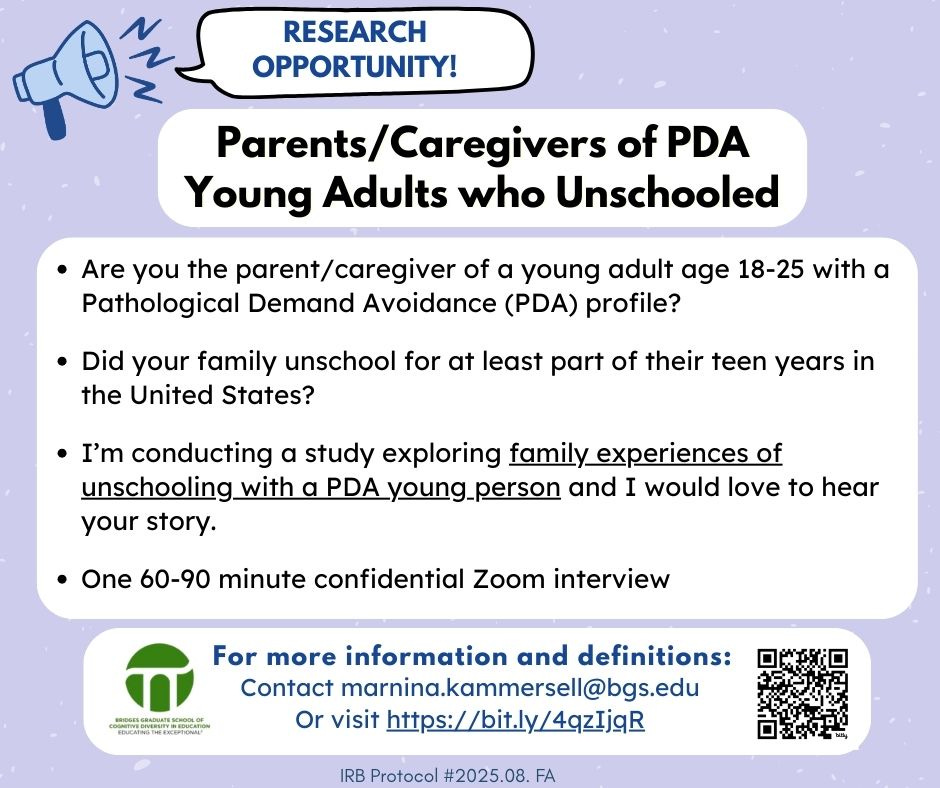
I’ve been quiet, in part because of my dissertation work! I’m so excited to explore and document more stories like Esther’s — family stories of unschooling PDA teens into their young adult years.
I will be exploring both what those young adults are doing now and also the processes their families co-created during their unschooling years that led to their own self-defined success.
It’s a pretty niche group I’m aiming to reach, especially because PDA wasn’t as well known in the U.S. 5-10 years ago. But I’ll still share the Call for Participants here, just in case you or someone you know would fit, and also so that you can learn a bit about my research!
What are some ways that unexpected knowledge has shown up in your house? It’s so fun seeing the interesting and novel ways our kids’ brains work, I’d love to hear your stories in the comments!
No posts
Comments
Nothing yet. Say the first thing.
Sign in to join the conversation.