

We’ve all experienced the stress of waiting for a message or package that is terribly delayed. Well, for Schloss Johannisberg, a tardy courier led to one of the sweetest moments in wine history: the creation of Spätlese — late harvest Riesling.
Wine has been cultivated at Schloss Johannisberg, within Germany’s Rheingau region, since 817. Since 1720, it has cultivated Riesling exclusively and is known as the world’s first Riesling estate winery.
Like many Old-World wineries, from the vineyard to the cellar, monks managed winemaking at Schloss Johannisberg. However, the Benedictine monks were only permitted to begin harvesting upon orders from the Prince-Abbot at the head monastery in Fulda. In 1775, the courier was delayed by two weeks, and by the time he arrived on horseback, the grapes had developed Botrytis cinerea, aka noble rot. This mold shrivels and dries out grapes but beautifully concentrates their flavors and sweetness. Undeterred, the monks moved forward with harvesting and pressing these shriveled grapes. They loved the final result so much that they thanked God and erected a statue to the courier. The late harvest was a happy accident that changed German winemaking forever: the Prince-Abbot was so enthralled by this sweet elixir that he issued an edict that, henceforth, the grape harvest would always happen this late.

There were no discernible monks, couriers, or royalty around in New York City, where I attended a celebration of Schloss Johannisberg’s 250th anniversary Spätlese Riesling. We did, however, have the honor of tasting alongside the estate’s charming managing director, Stefan Doktor, who wowed us with a first pour of the new Ex-Bibliotheca Subterranea Cuvée 100 Spätlese ($650) — a rare blend spanning a full century, from 1915 to 2015.
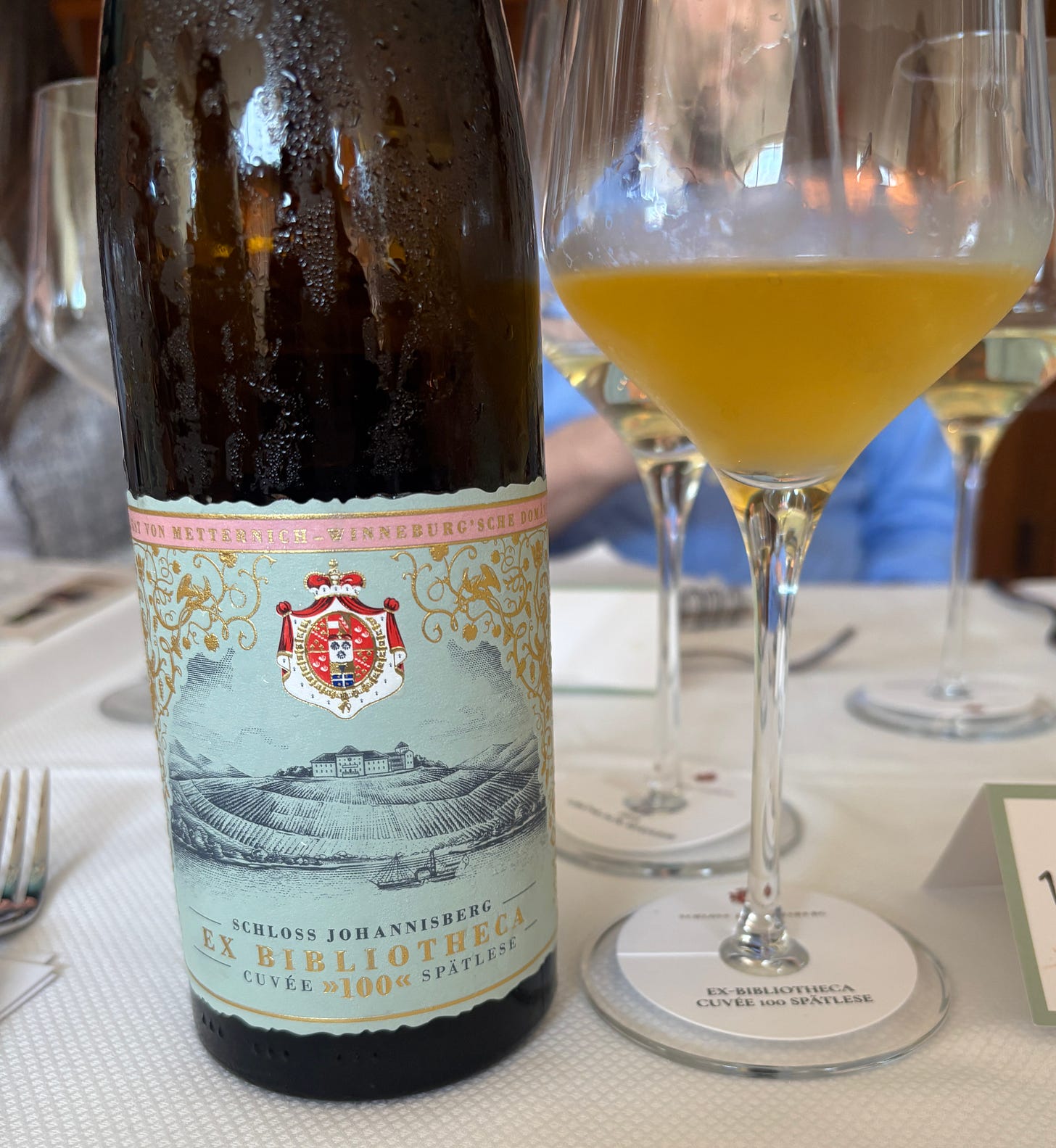
This limited-edition wine is a unique approach to showcasing the aging capacity of Spätlese, weaving together a captivating tapestry of vintages. (Vintages in the blend: 1915, 1921, 1937, 1943, 1945, 1953, 1959, 1963, 1964, 1967, 1971, 1975, 1976, 1985, 1992, 1993, 2007, 2009, 2011, 2015.)
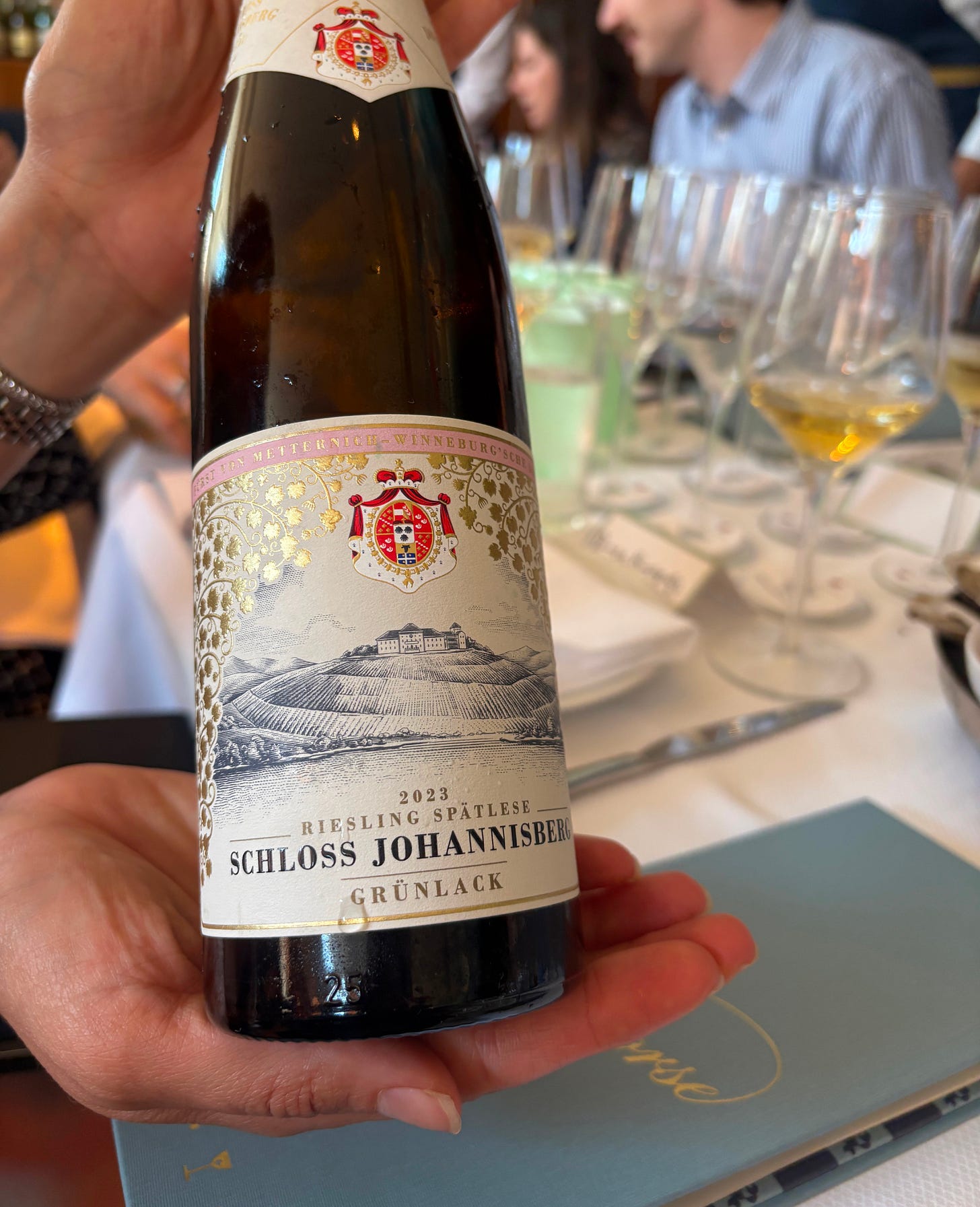
For a delicious snapshot of a single vintage of Spätlese, try the estate’s Grünlack Spätlese, made from Riesling grapes sourced from a distinctive six-hectare parcel of mineral-rich soils and protected by a forest. The 2023 vintage has a suggested retail price of $70, and the 2019 is $100. The beauty of these wines is that their sweetness is not overwhelming; bright acidity keeps it lively on the palate. We also enjoyed a vertical of Grünlack Spätlese back to 2009. The event was a wonderful reminder of Riesling’s elegance, ageability, and versatility.
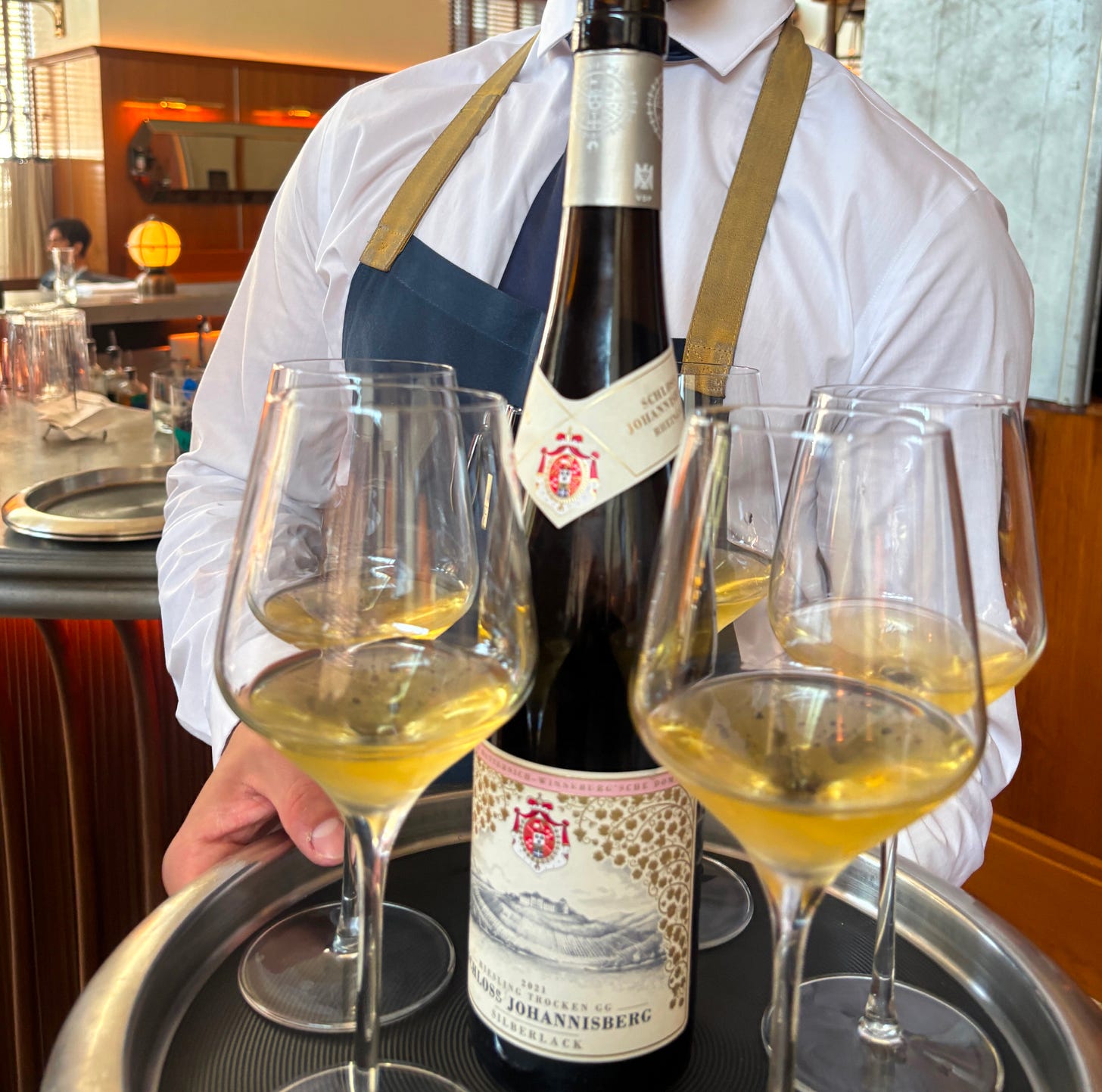
And for those moments when you’re craving a dry Riesling, Schloss Johannisberg Riesling Silberlack Grosse Gewächs Trocken (Dry) 2021($90) is less sweet but far from austere; the beautiful fruit still sings in the glass.
Comments
Nothing yet. Say the first thing.
Sign in to join the conversation.