
[ soundtrack : Neste sommer (Next summer) - deLillos ]
****
This post is too long for email — open in browser for full length.
****
Things are winding down for summer at my end, but before I close shop I thought I’d give my constant companion a bit of love and care. It was probably last post’s close-up of the rear vise that spurred me into action — he’s looking somewhat scruffy … a bit worse for wear … not quite shipshape …
I can easily remember when I bought this workbench. It was during my second year at furniture-making school (1996/97); I had a small, part-time job as a caretaker at a school just up the street. There was a full-time janitor during the daytime who did all the heavy lifting; my job was to chase out the strivers and close up at 10 in the evening. For this I got a small salary and free lodgings with a separate entrance at the street-corner of the school-building.

The entrance to my caretaker’s lodgings: the window to the right of the door opened on my bedroom, and the first one around the corner (facing the street) was my kitchenette window. The little one on the corner was to the cool pantry. My cat came and went as she pleased through the kitchen window that I left open a crack. She wasn’t the only pussy to come and go.
The headmaster encouraged me to do whatever minor repairs I found necessary and would pay me on trust by the hour for this extra maintenance. Needless to say, all the windows and doors in that building swung, shut and locked flawlessly and were kept in fine fettle — for a pittance extra per month. Smart headmaster.
It is not from the benevolence of the young woodworker that we expect him to perform his duties, but from his regard to his own self-interest. We address ourselves not to his humanity but to his lust for spending-money, and never talk to him of our own necessities, but of his advantages. (With apologies to Adam Smith)
Since I could just about subsist on my janitor’s salary, I was free to spend my student loan and stipend on tools! I ordered my workbench from the local hardware store. It cost something in the vincinity of 7.000 Norwegian Crowns / 700 €/ 700 $/ 540 £ back then in the mid-nineties. I gave my address when ordering but was still surprised to have it delivered on my front door a week or two later. Oh joy! I carried it down and set it up in the boiler-room with the blessings of my friend, the daytime janitor (his brother was also a furniture maker so he had sympathy for my plight — God bless your kindness towards a young enthusiast, Henning — not forgotten!) For my ‘student money’ I also bought a portable contractor’s saw and a basic selection of electric handtools so I could moonlight as a carpenter.
My bench is what sometimes is referred to as a ‘five-legged’ Norwegian workbench. It closely resembles the ‘continental cabinetmaker’s bench’ found South of the Sound but differs somewhat in the shape of its front vise, which is simpler and more functional than its peers. It is made by Hamran down in southern Norway — they still make them. It is this kind of bench I was trained on at school, and I have always found a way to make it hold what I need holding, so I have no complaints (although this may be down to my own limitations as a woodworker). He has been my constant companion for 30 years now; without him I would have had to find another way of making a living. I don’t want to do that, so I’d better take good care of him.
My workbench is the most essential tool in my woodshop. Without a reliable way of workholding I am reduced to only machine-work or whittling. The spooncarvers may garner idealistic and ‘artistic’ sympathy from the Greta Thunberg-crowd, but not from me. They seem like unserious dilettanti living off of other people’s money (usually their parents’) and do not contribute in any meaningful way to the continuation of woodworking as a viable trade, which is my concern. They belong to the wood-wanker’s attention-economy. Life is too short to waste time dealing with their self-satisfied delusions. Carving a spoon out of wood is neither cute nor clever — it’s the woodworking equivalent of a luxury belief.
Let’s get down to brass tacks: I need to tighten up my rear vise and give my bench’s working surfaces a clean-up.
The rear vise’s sliding block is kept in alignment by two rebated oak rails.
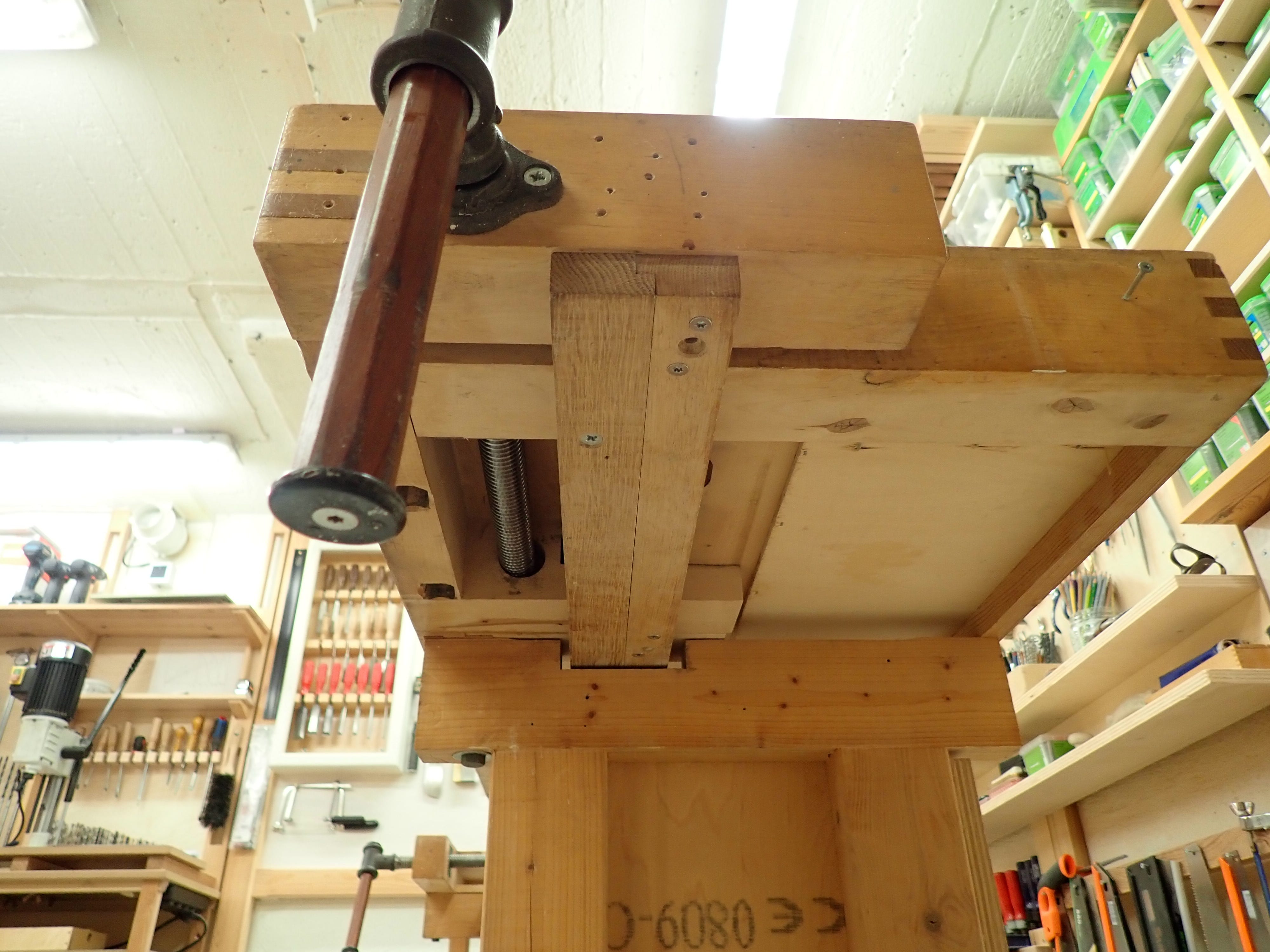
It’s driven by a long threaded rod …
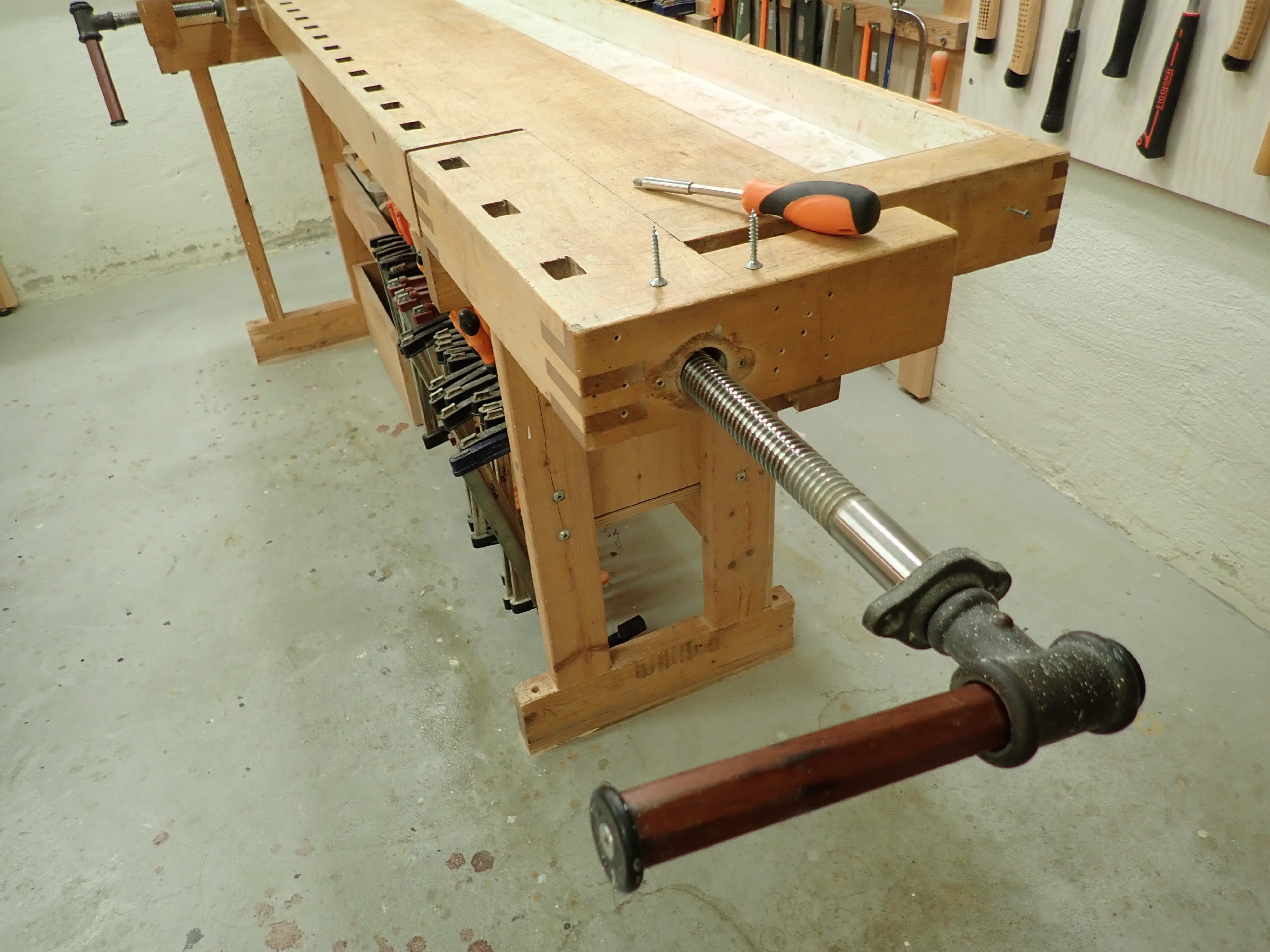
… that gains purchase against the bench’s end-cap.
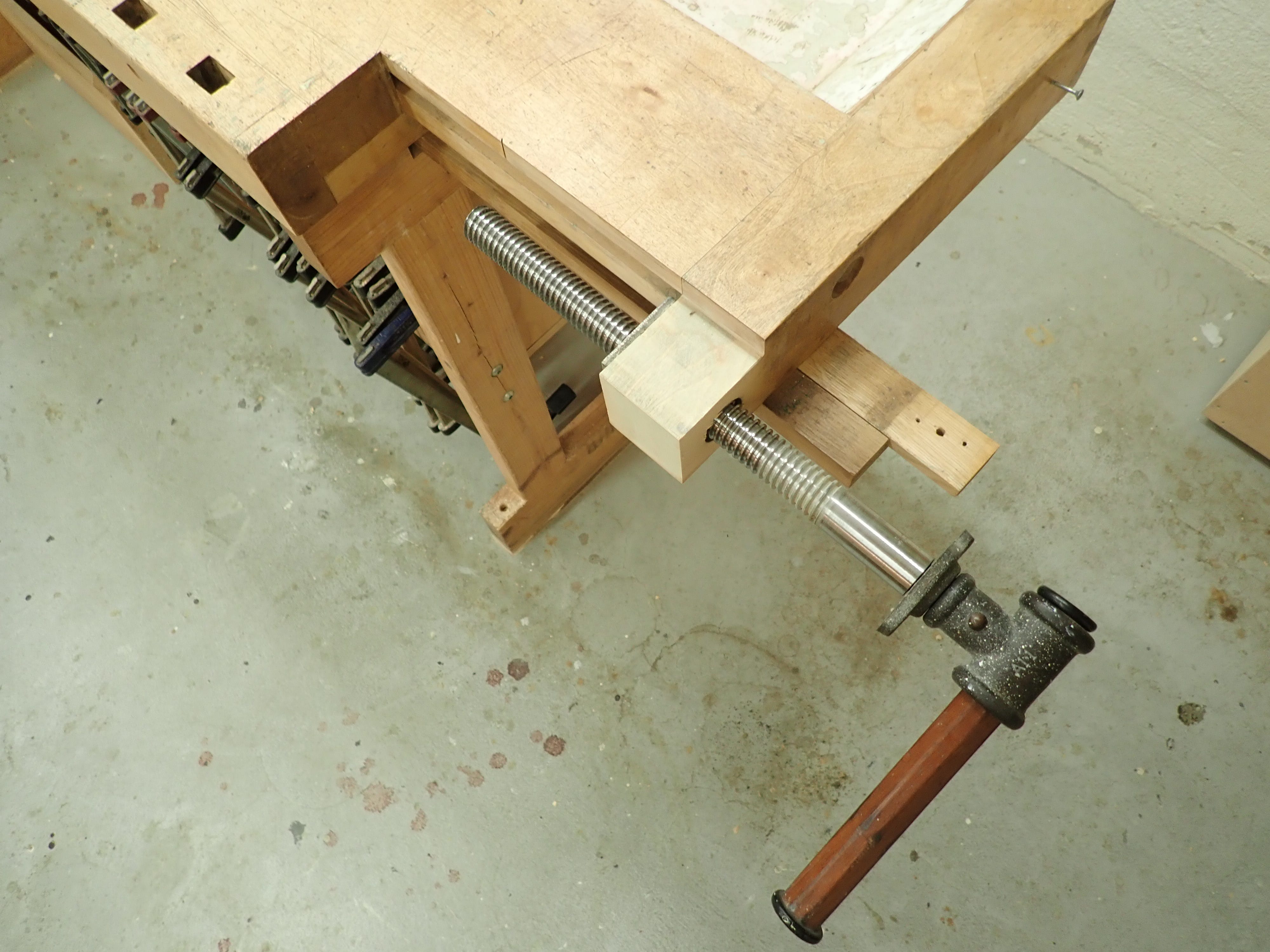
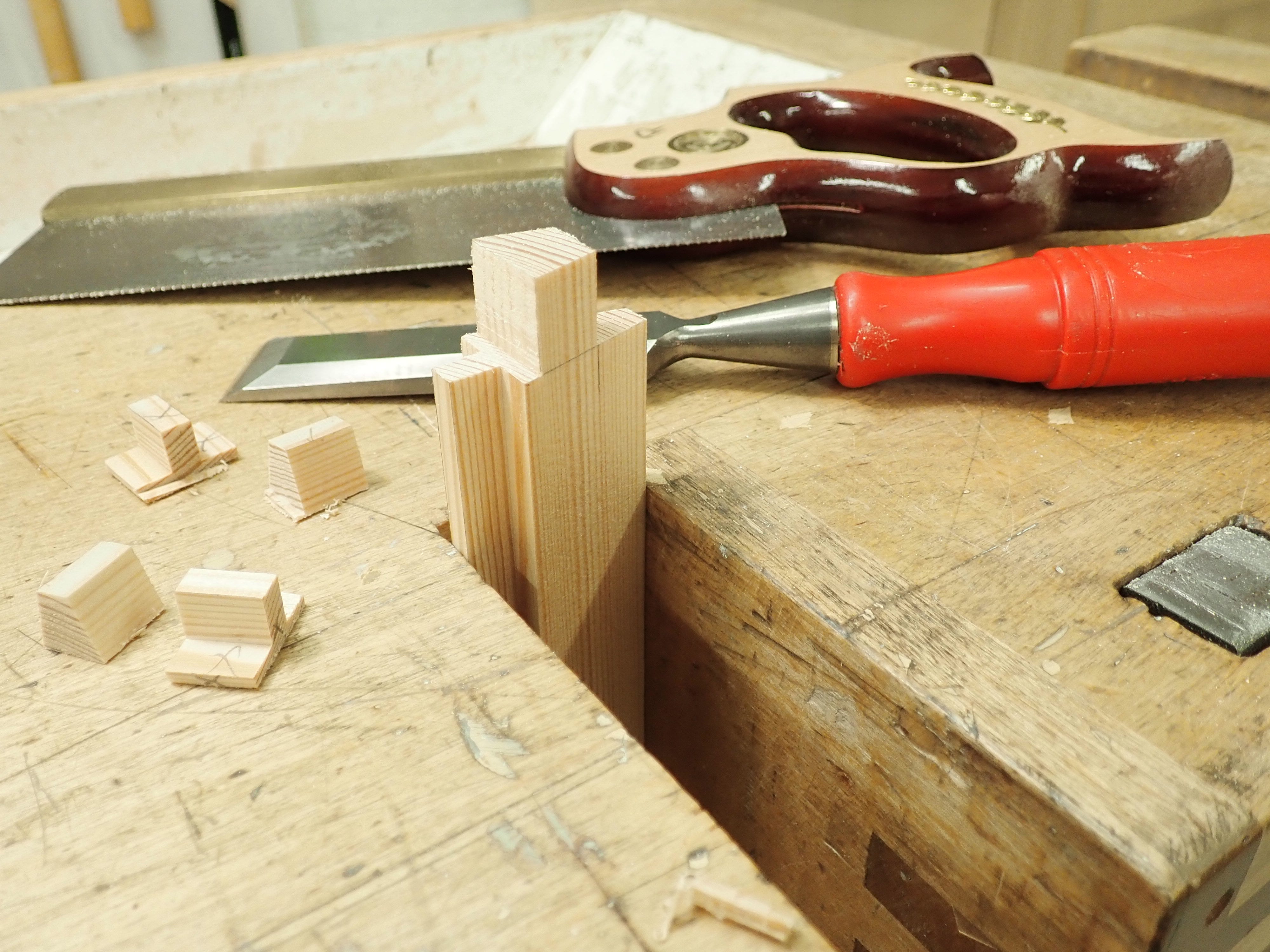
Unscrew one of the guide-rails and spindle, and you can take it off:
I began by sanding the fixed surface flat and perpendicular …
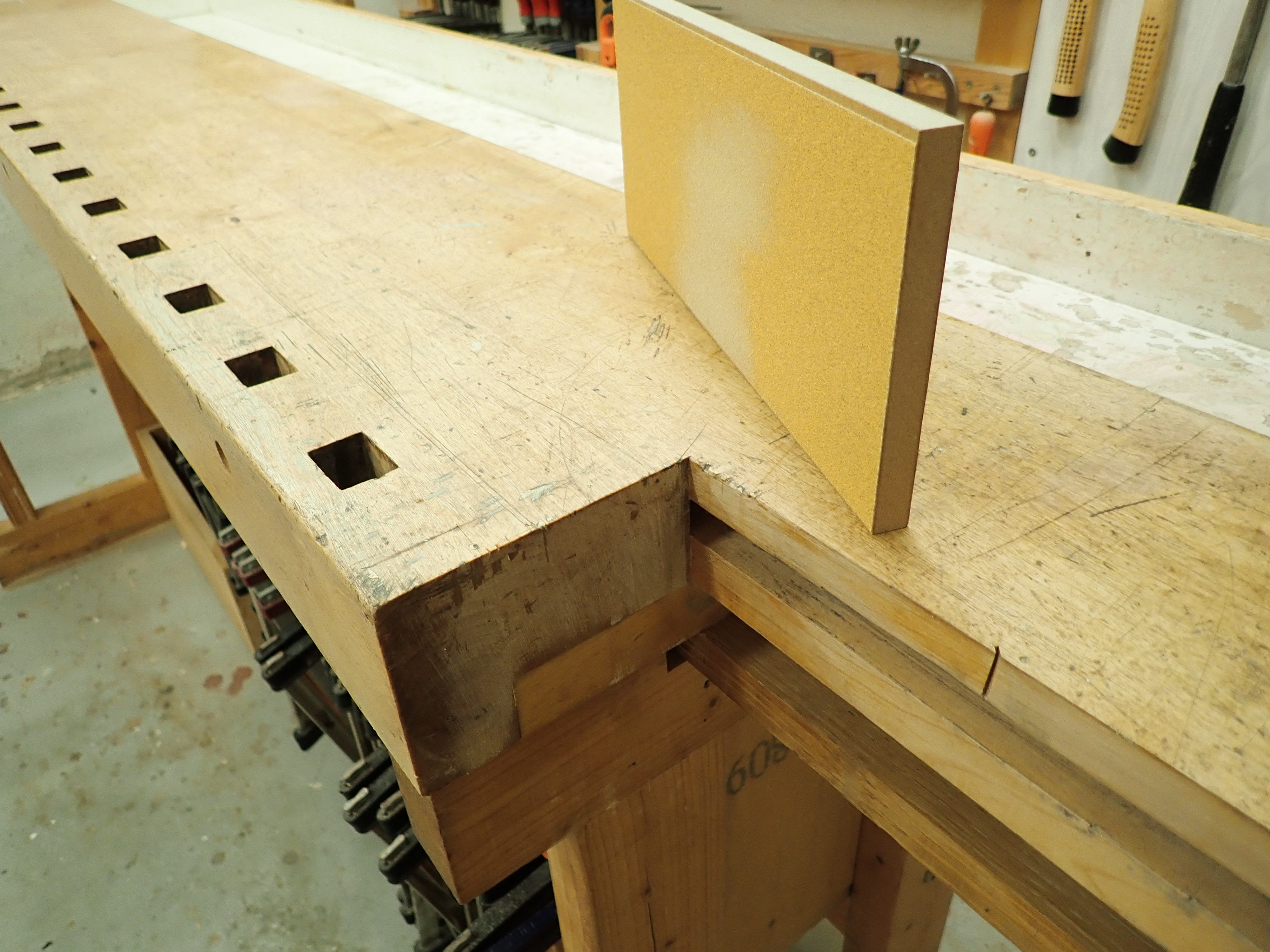
… using a big sanding paddle.
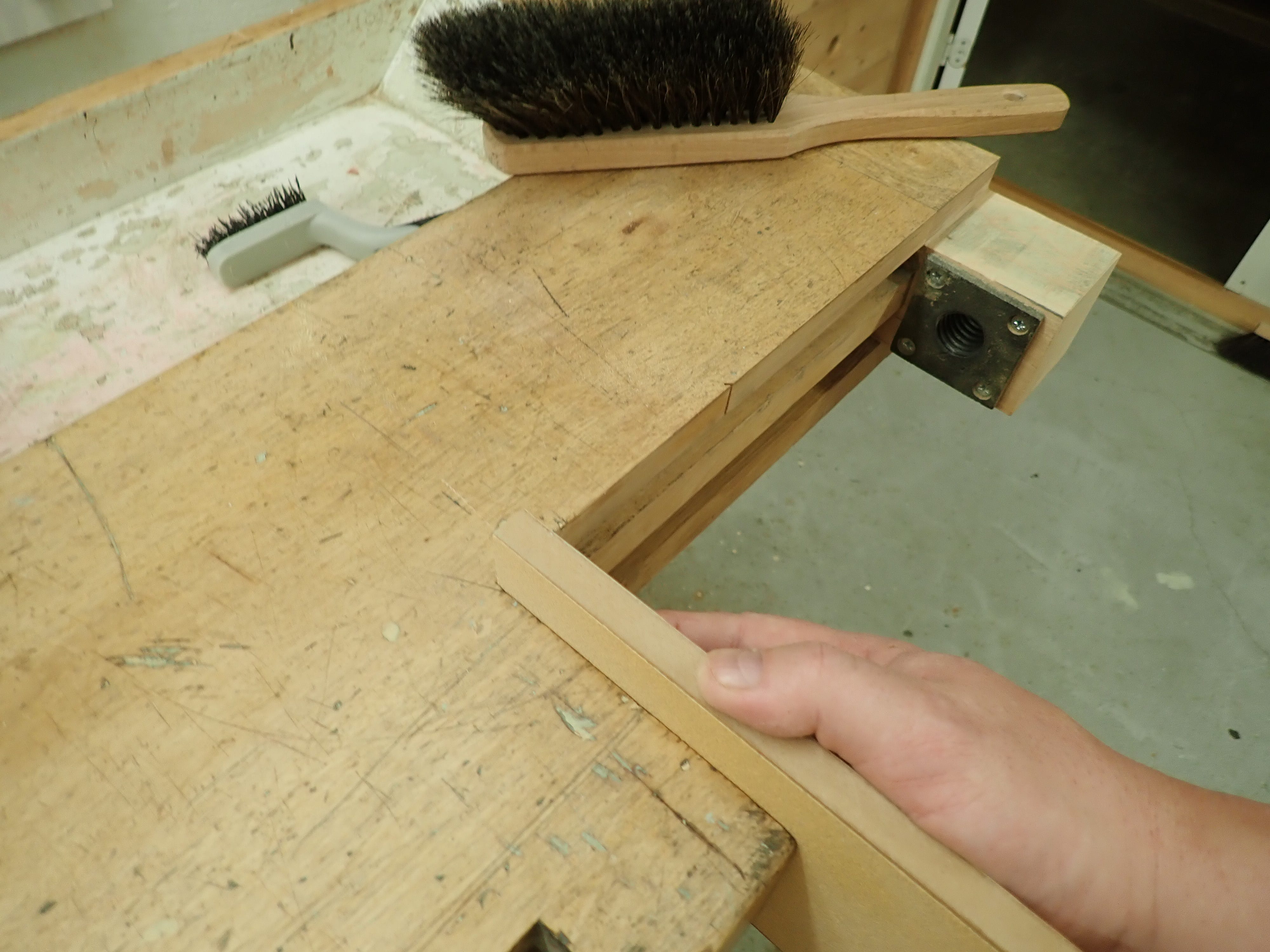
Checking square as I go.
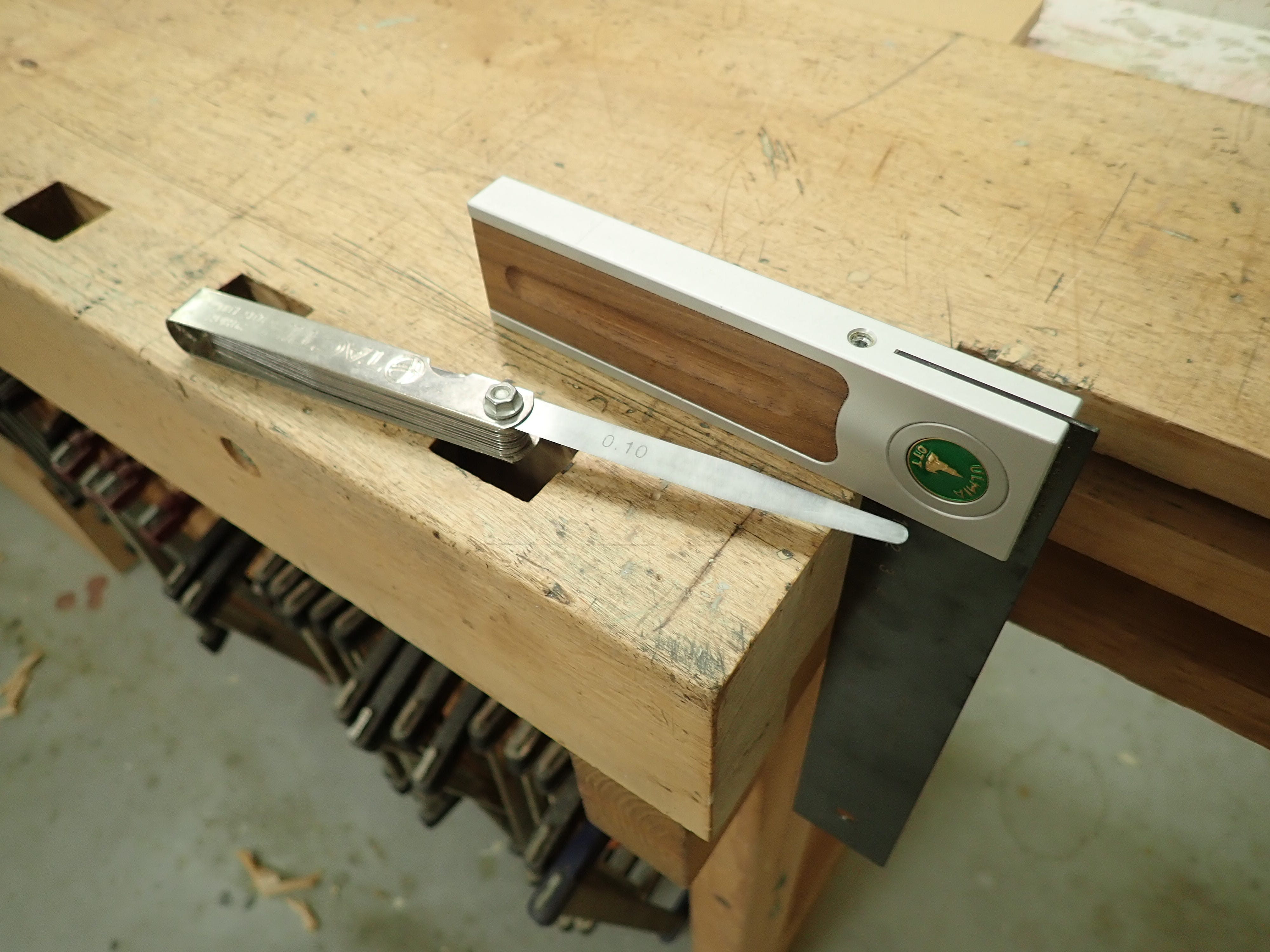
Good enough for the girls I go with.
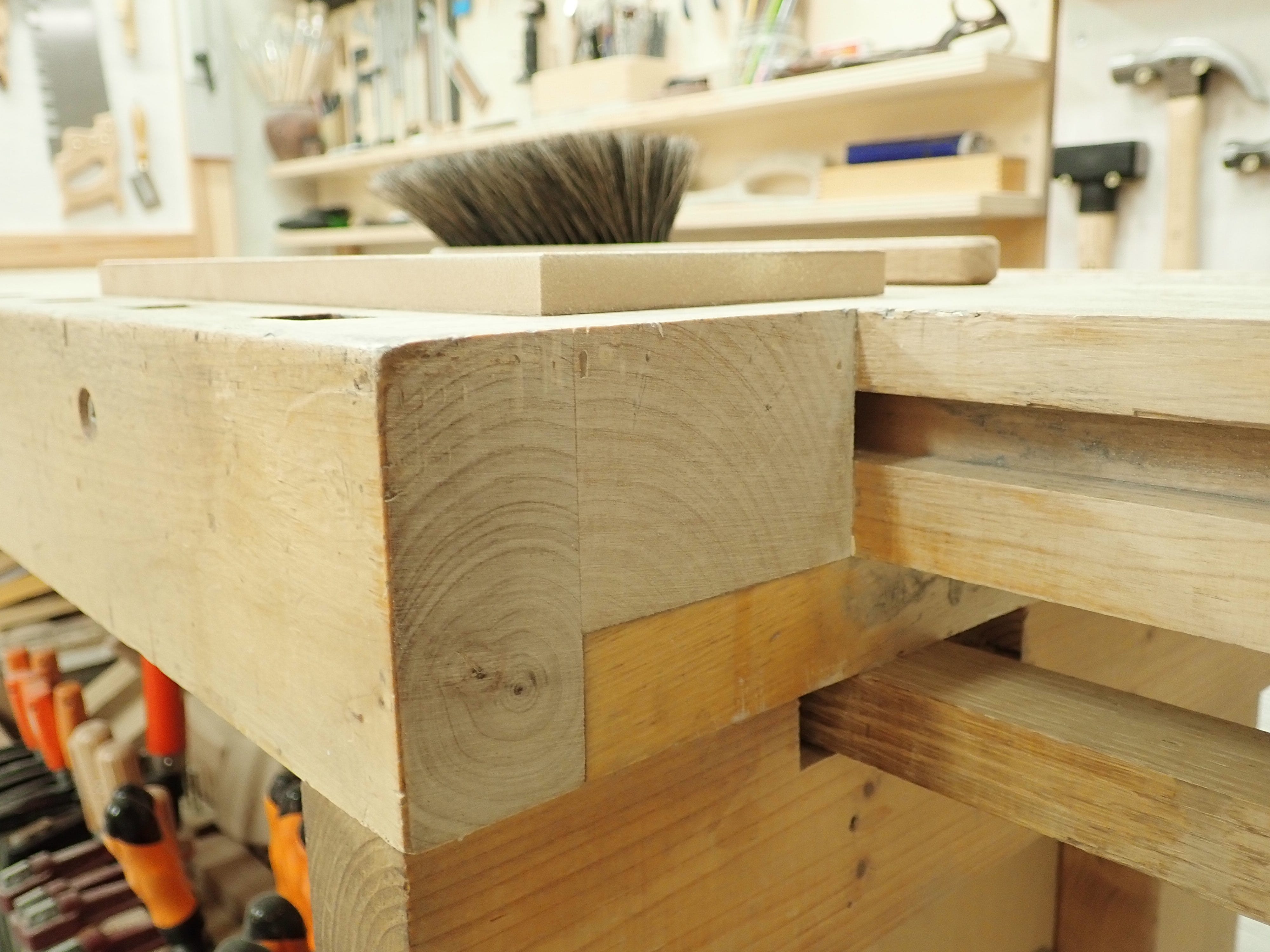
Then I could dress the moving vise-face accordingly.
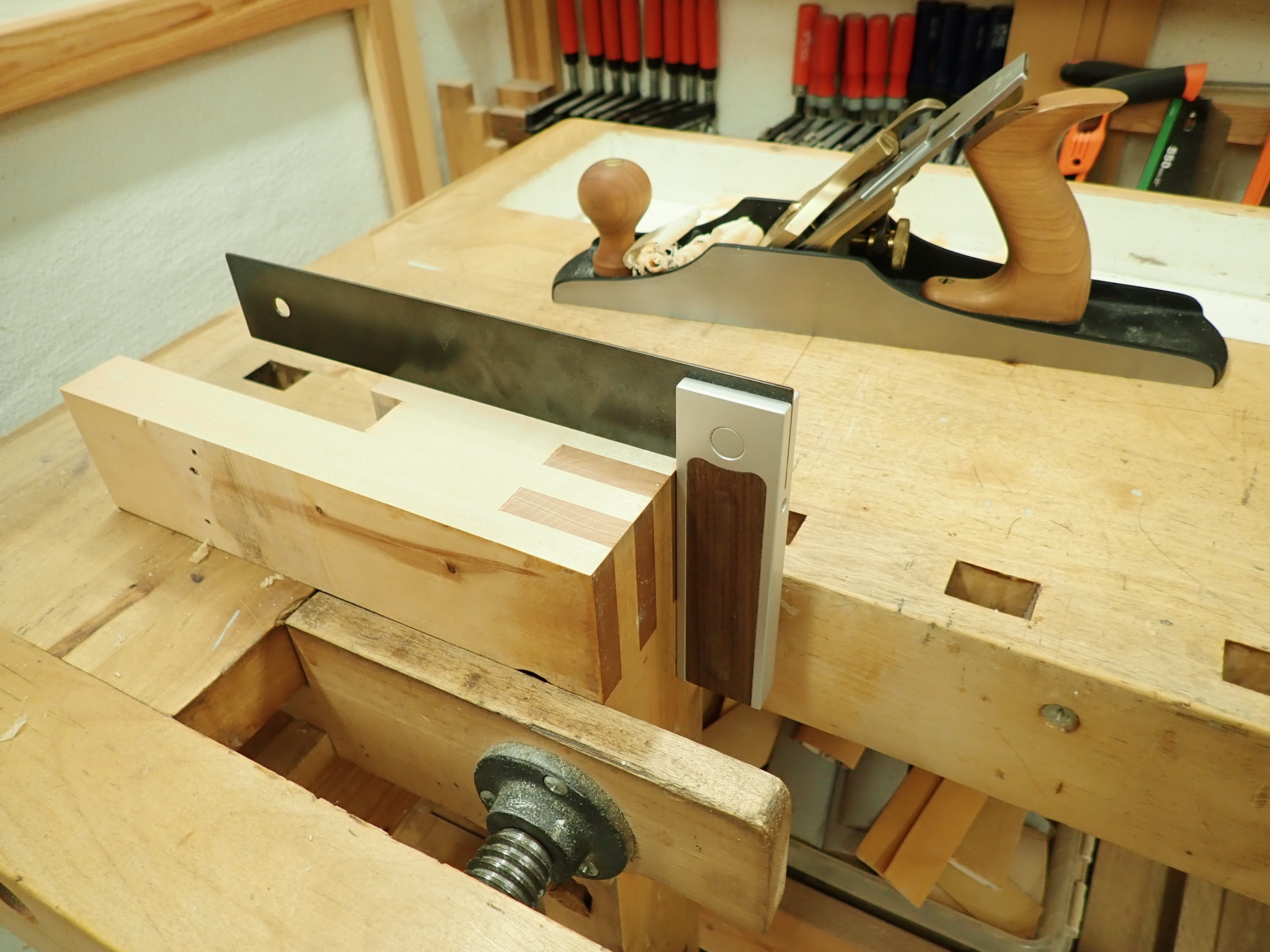
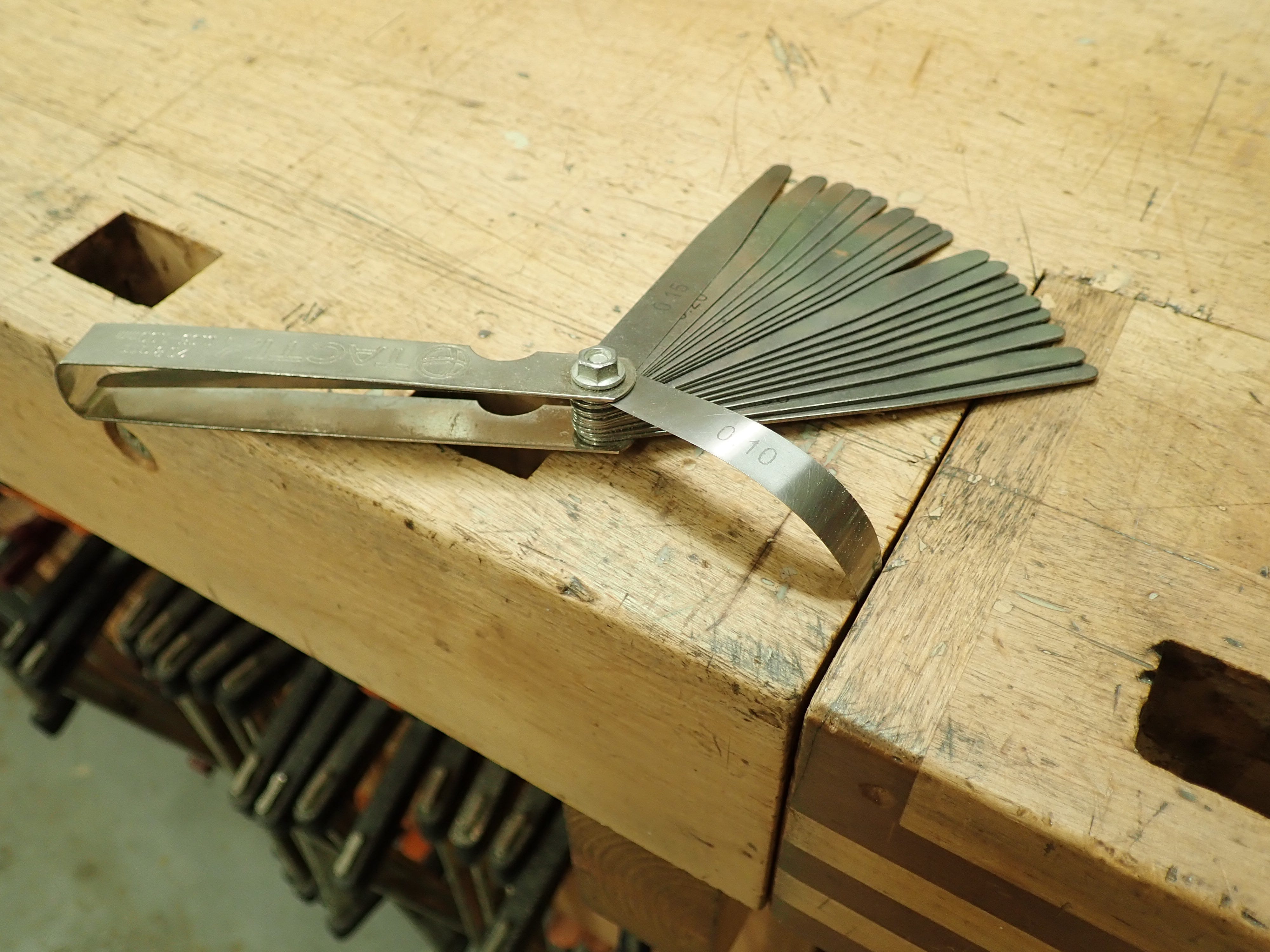
Testing the gap as I go: The better the alignment between the vise’s jaws, the less clamping force is necessary to hold the work-piece, resulting in less crushing / deformation of delicate parts, but 1/10 mm is more than good enough — chasing perfection here is a mug’s game.
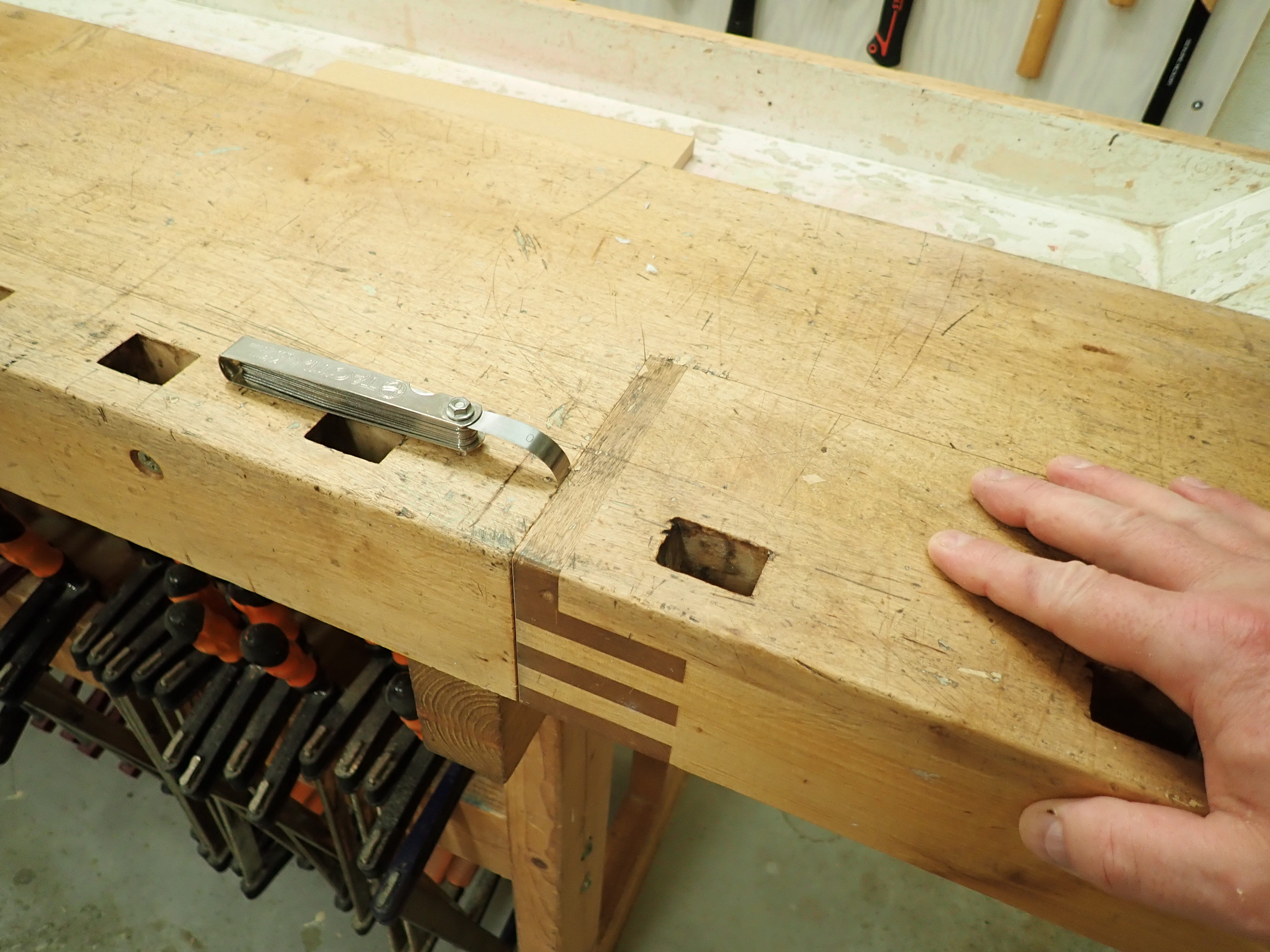
Next: the tool tray looks a bit scruffy. A chisel to pry loose wayward drops of old glue and a block of coarse sandpaper to clean things up.
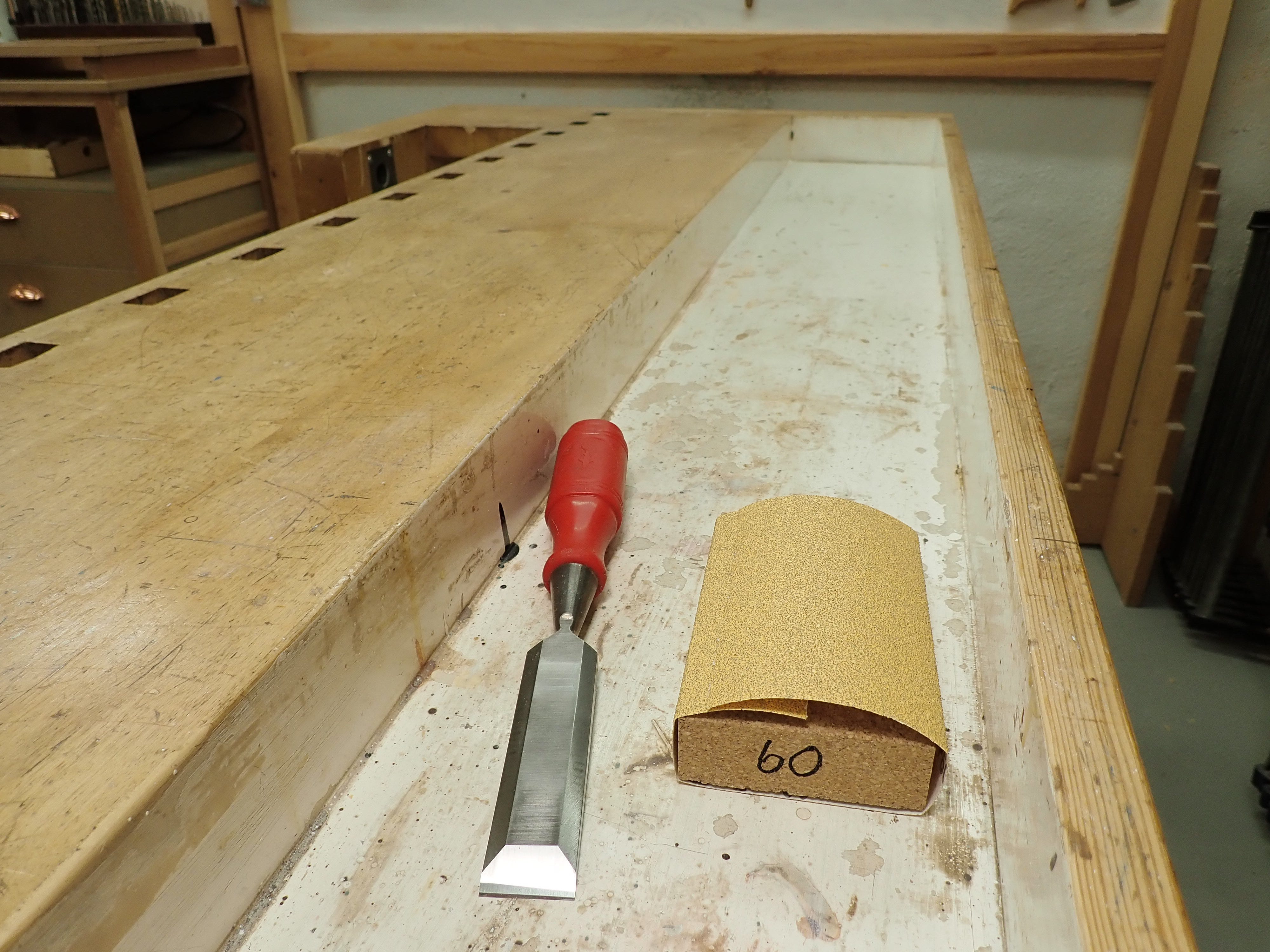
I found a slop of old yacht-enamel — perfect for this job.
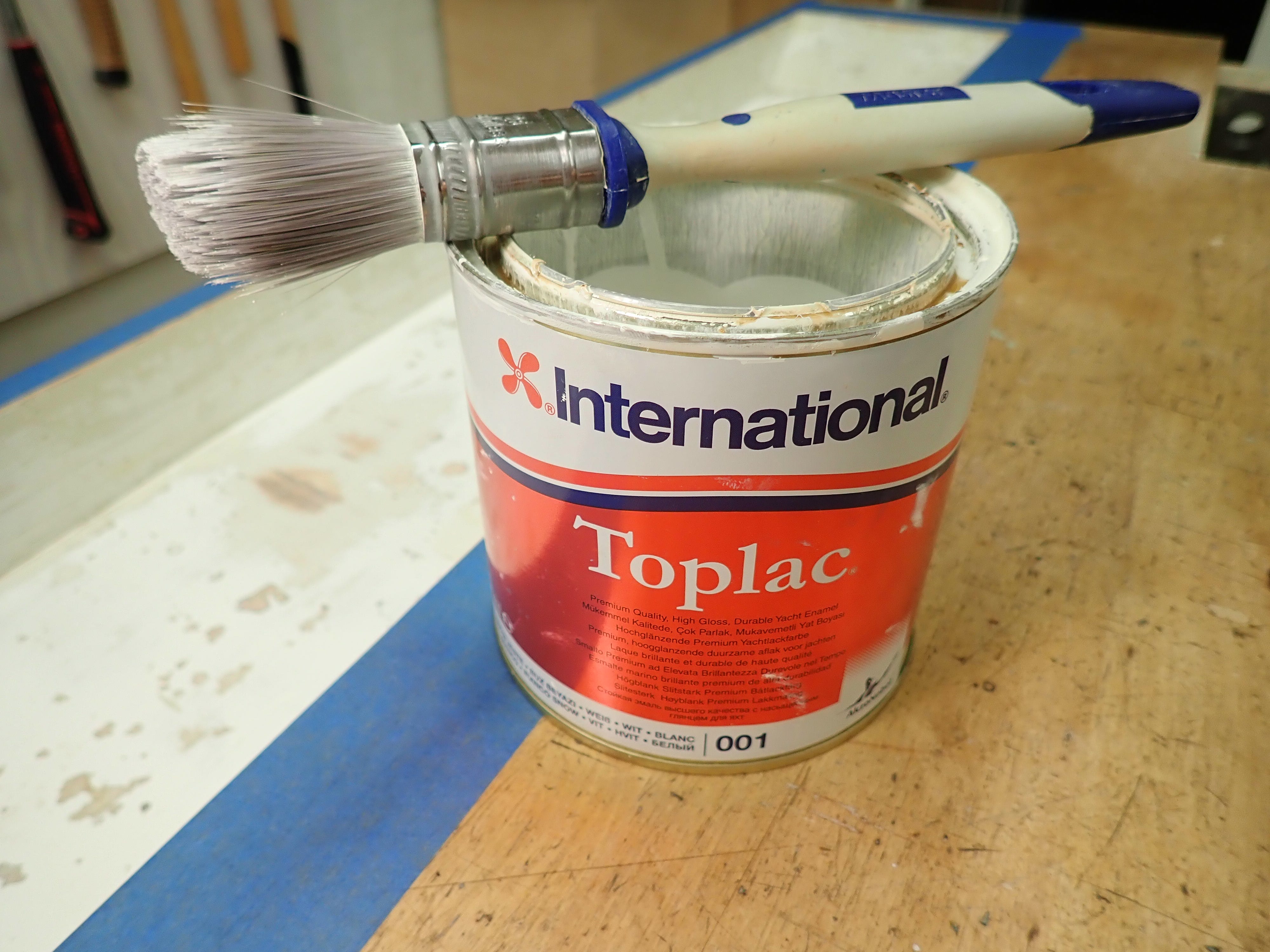
The point of a white tool tray is to aid you sighting down a plane’s sole when setting your iron.
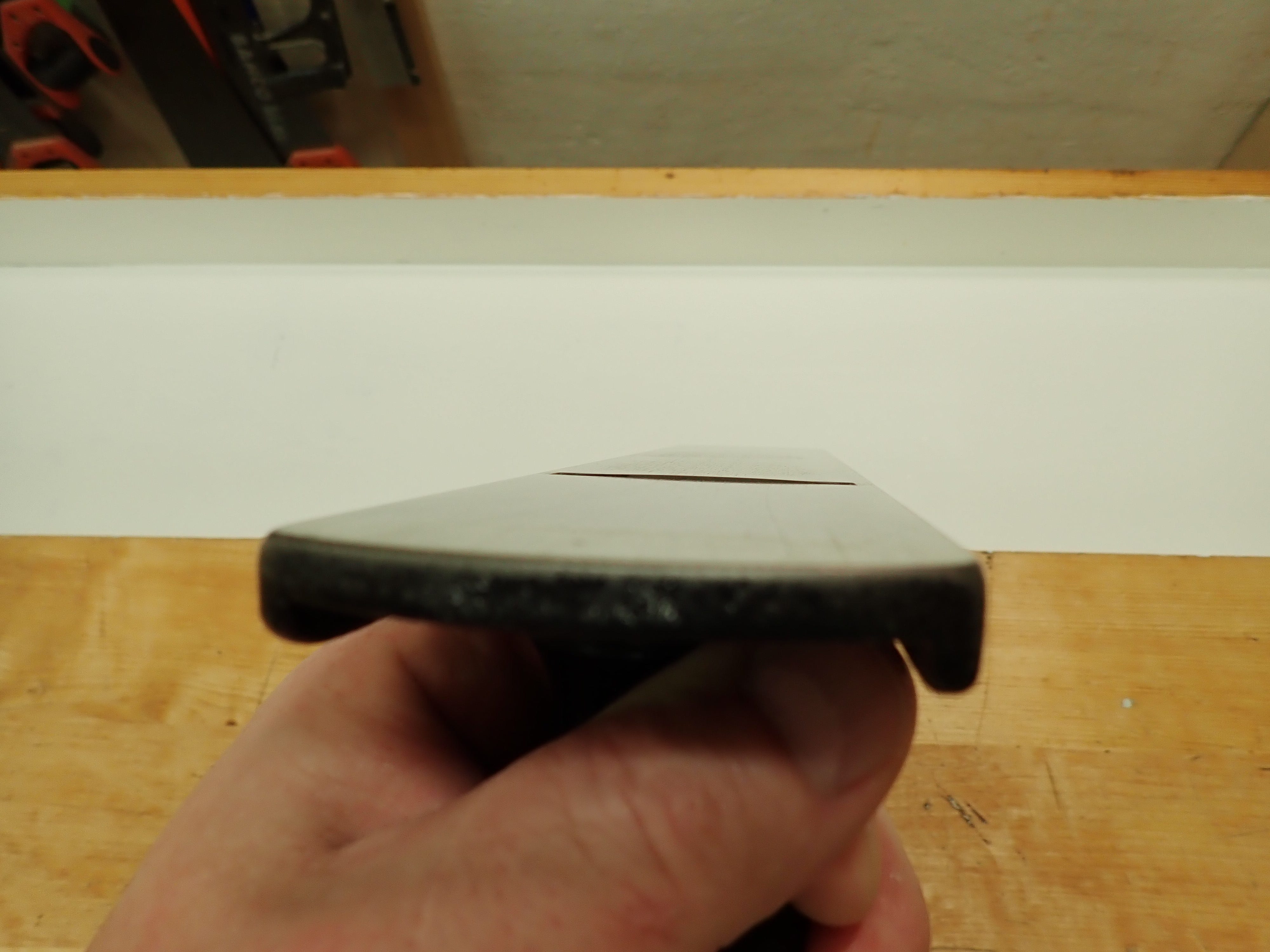
Then: the main working surface. I began by using a card scraper to remove all the years of dirt, blood, sweat and tears that coats the wood. I did not remove any wood, just a layer of gray dust/dirt that would otherwise clog up the sandpaper on my long sanding board. It is made of MDF, a material without much internal stress (unlike solid wood!) so it will keep flat and true; well suited for this use.
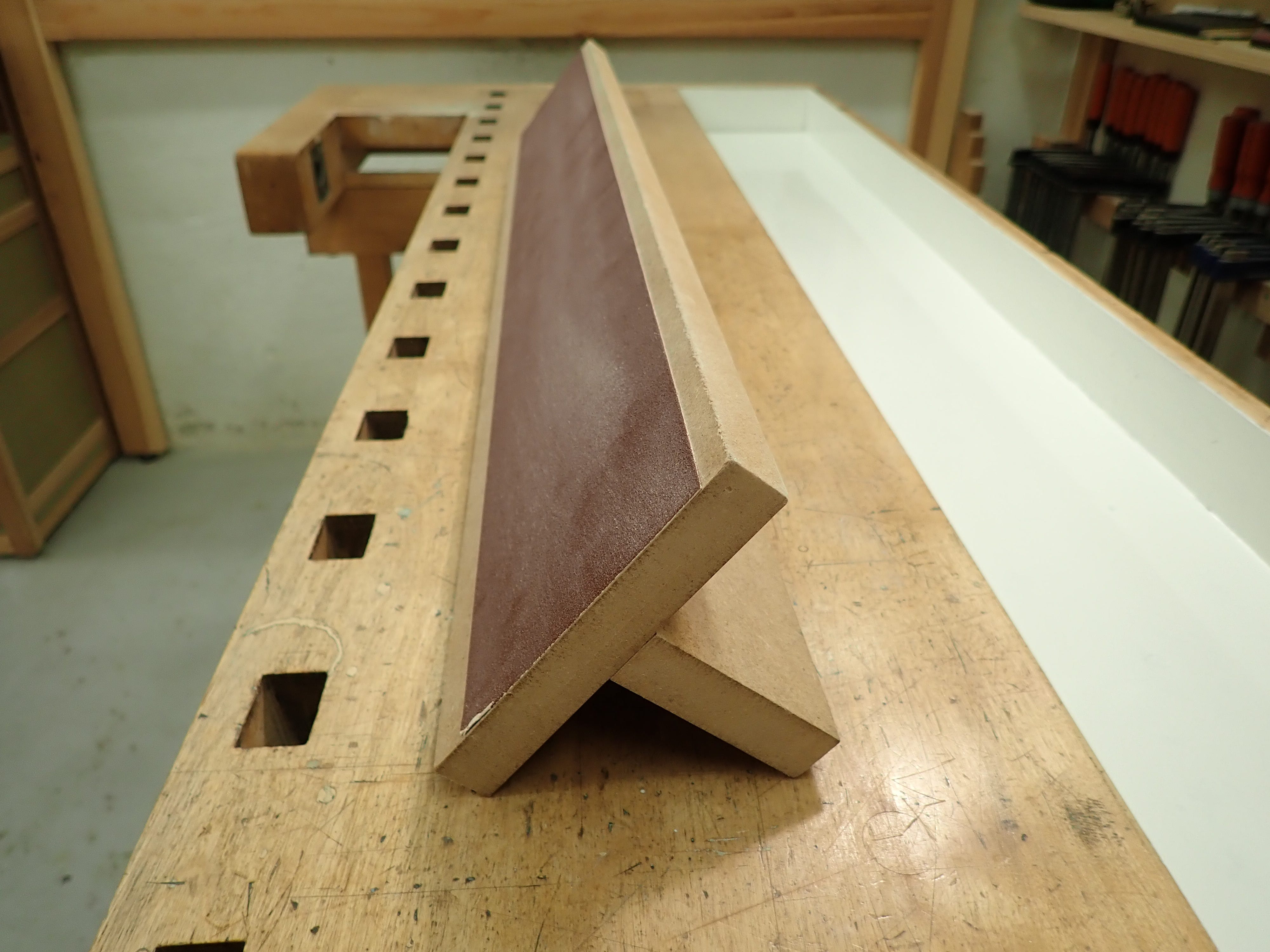
I use it diagonally in both directions, in a cross-hatched pattern much as you would use a scrub/jack plane, but unlike those tools, not so much to remove any amount of wood, but rather to reveal the high spots.
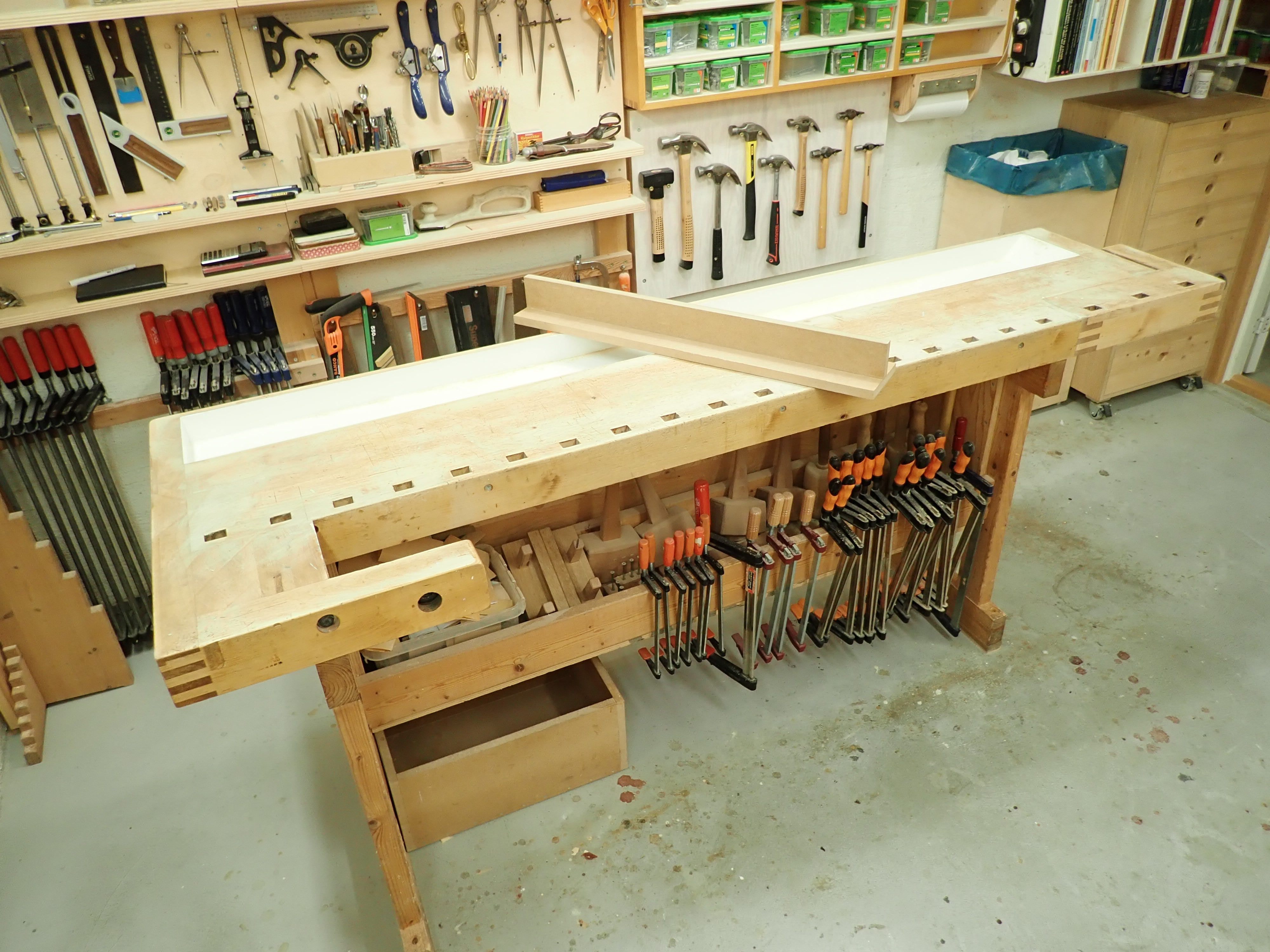
Then I levelled it all off using a freshly honed and very finely set iron in my longest plane, aided and abetted by my precious long straightedge and a set of feeler gauges. I want to remove as little material as possible, so I only chase down the high spots … very gingerly. My bench has stayed pretty flat since last time I did this — 10 years ago? It’s been living indoors in a climatically stable cellar, so not much wood-movement going on.
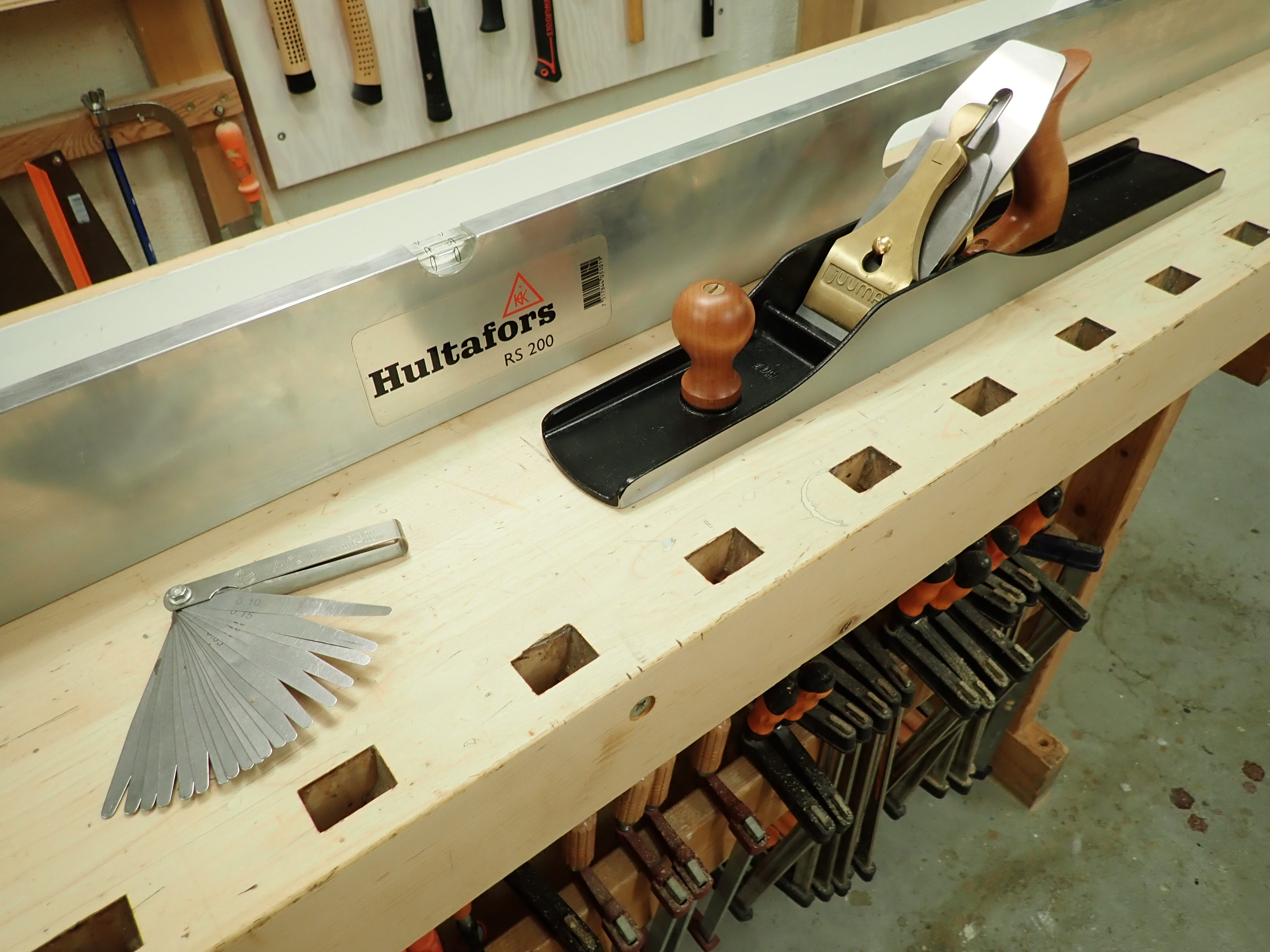
I pay special attention to the ‘run’ from the rear vise along the bench dogs …
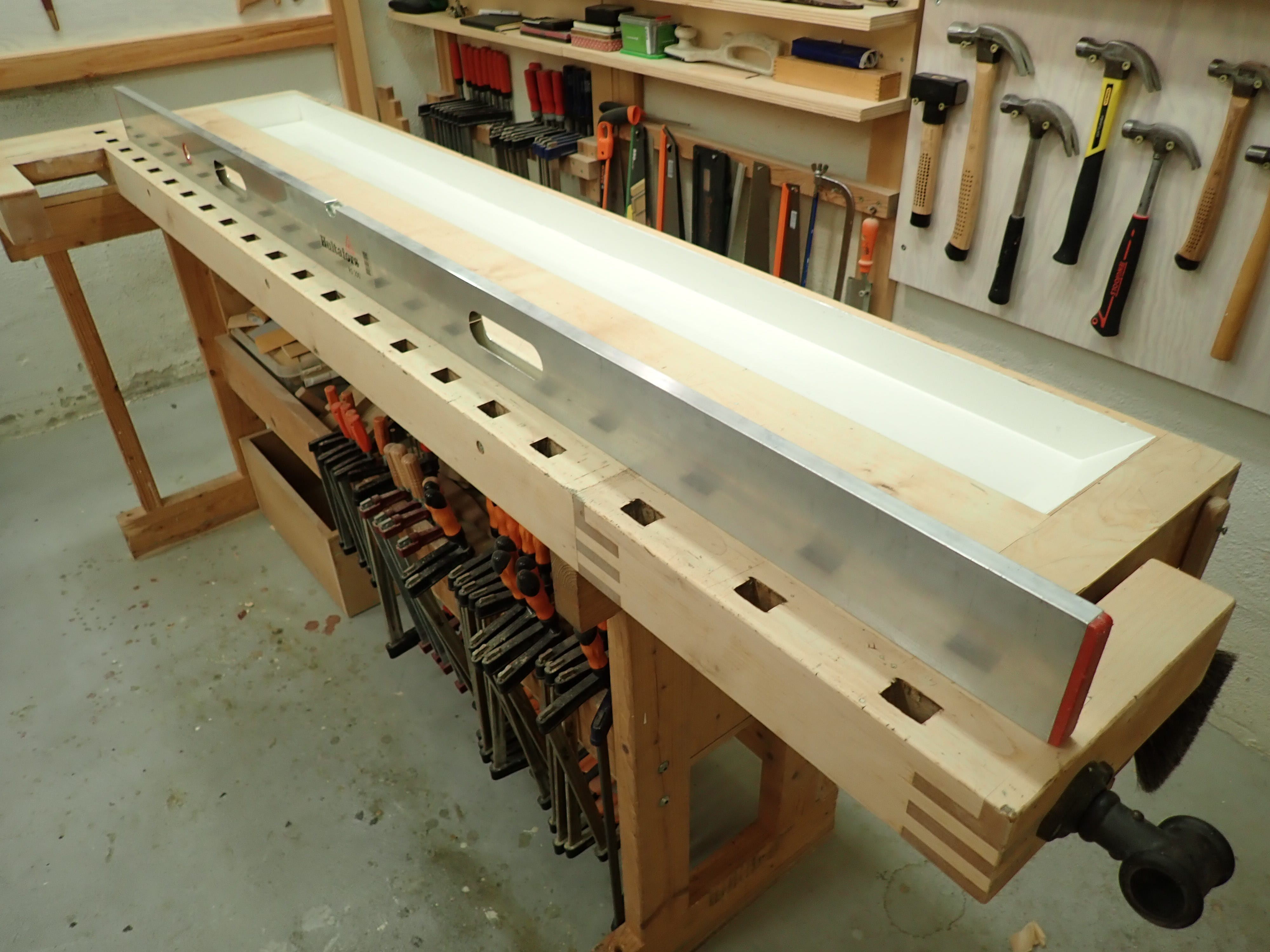
… because when planing thin stock, it will conform to the surface it rests on. If your rear vise is loose and/or droops (very common), that will in effect make for a high spot where the run meets the fixed part of your bench, and thin sections will bend to accomodate that shape, leaving you to plane down that artificially created ‘hill’ — resulting in an unevenly thicknessed piece.
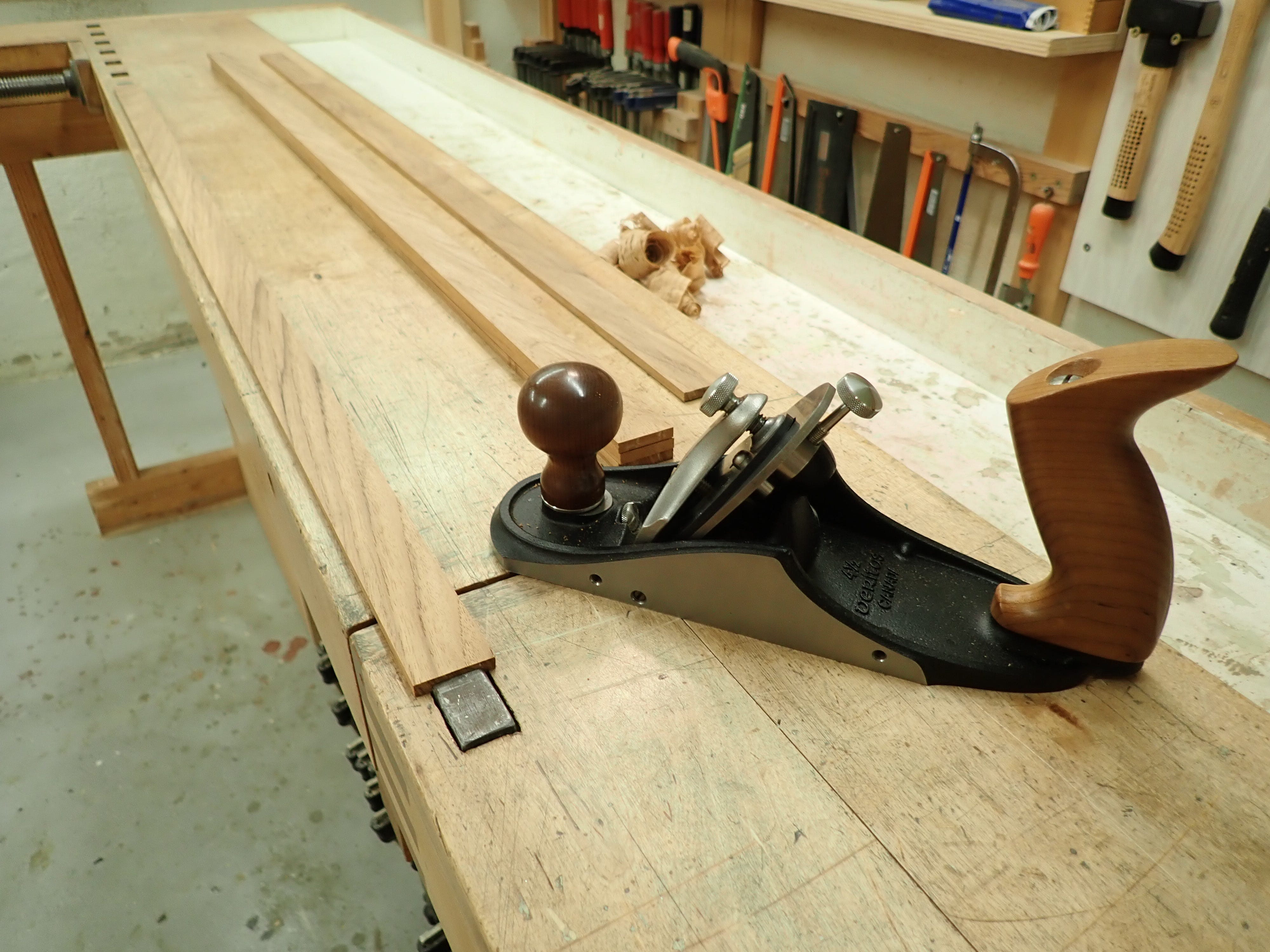
To avoid this, and to keep your rear vise firm and true: Avoid affixing your work on/over the rear vise block — and certainly don’t bang on it with a heavy striking tool! It is not designed to withstand these forces.
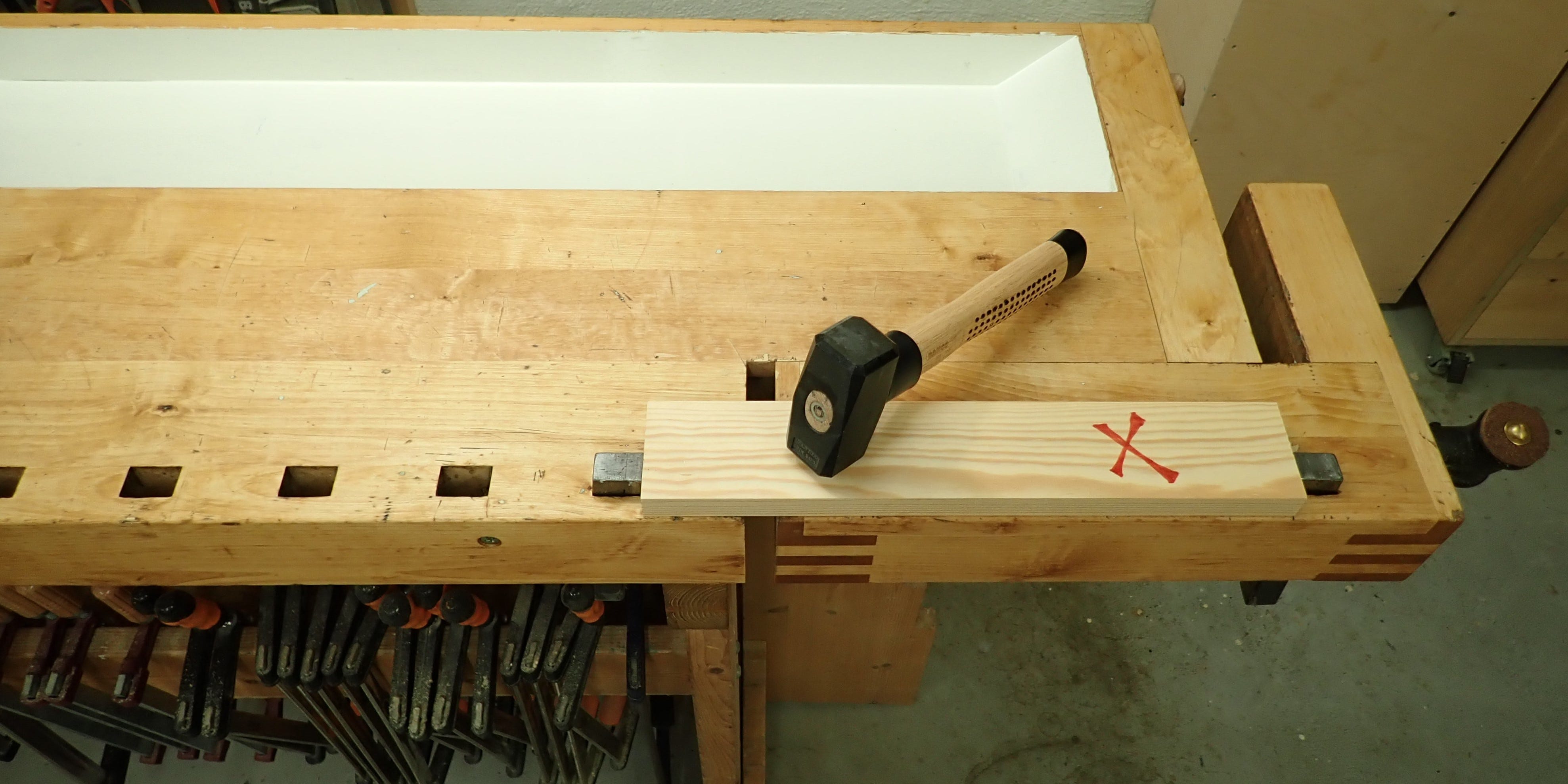
Rather, make a habit of working on/over the fixed, supported part of your bench. It will withstand a beating.
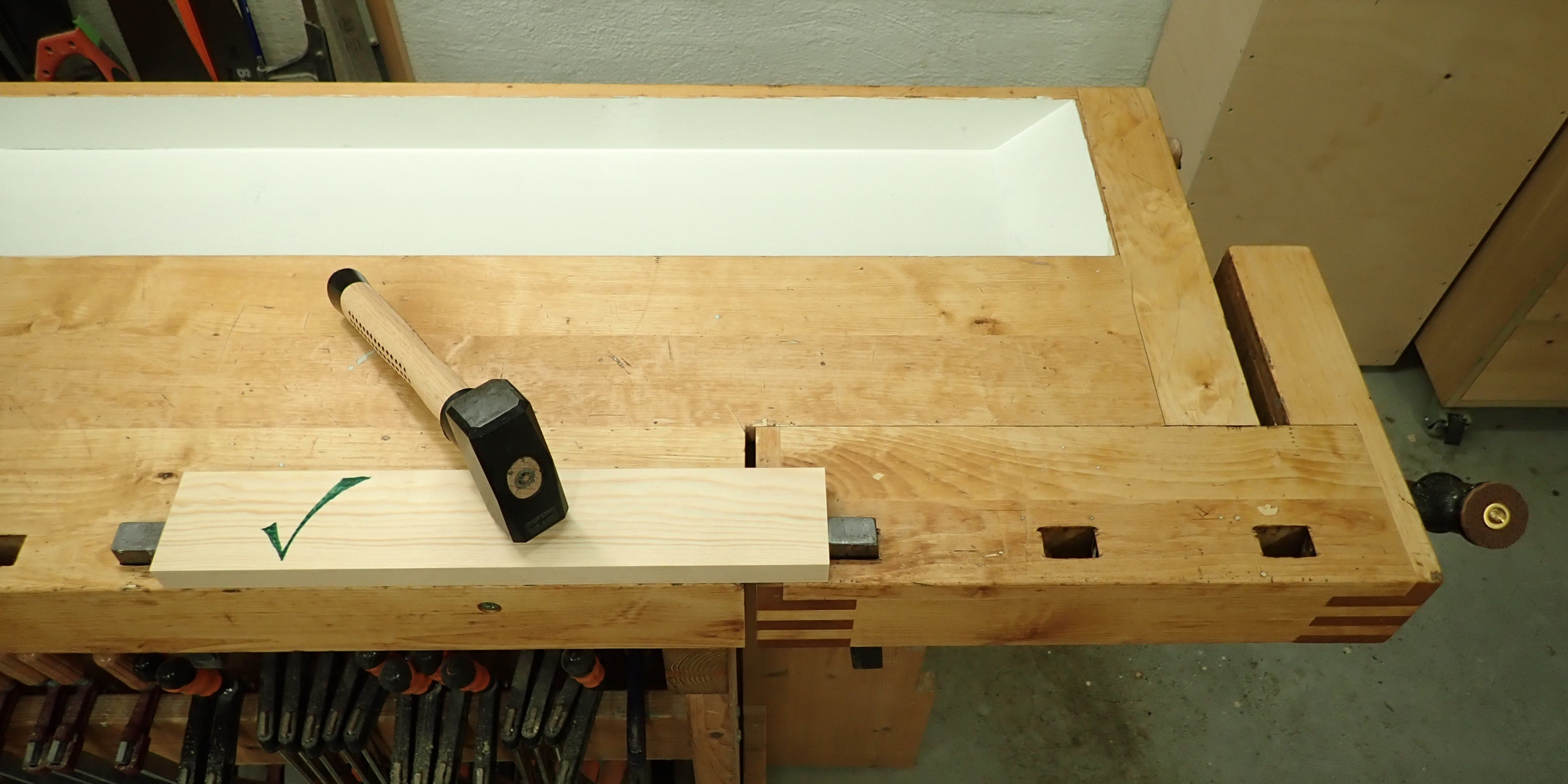
I am well aware that many a reader will look at their own pitted and worn workbenches and think to themselves: What a poncy prat! (or words to that effect). I have no use for such a fine-fettled workbench because I’m a real man doing real woodworking! None of this fancy, effete fuckery for me. (My words …) And you might well be right. Not all kinds of woodworking needs a finely tuned workbench. Far from it! Horses for courses, as always. But some kinds of woodworking do. Fine furniture making with its close tolerances and delicate, often veneered surfaces benefit from a cabinetmaker’s bench in fine fettle. This was always my ambition, and I’m not about to give up on it yet ... hence the care I take with my bench.
Don’t mistake your own slovenliness for some sort of manly virtue — I’ve seen that often enough during a long life in the trades. I am not bound by your limitations. They are nothing to be proud of. I am free to do better.
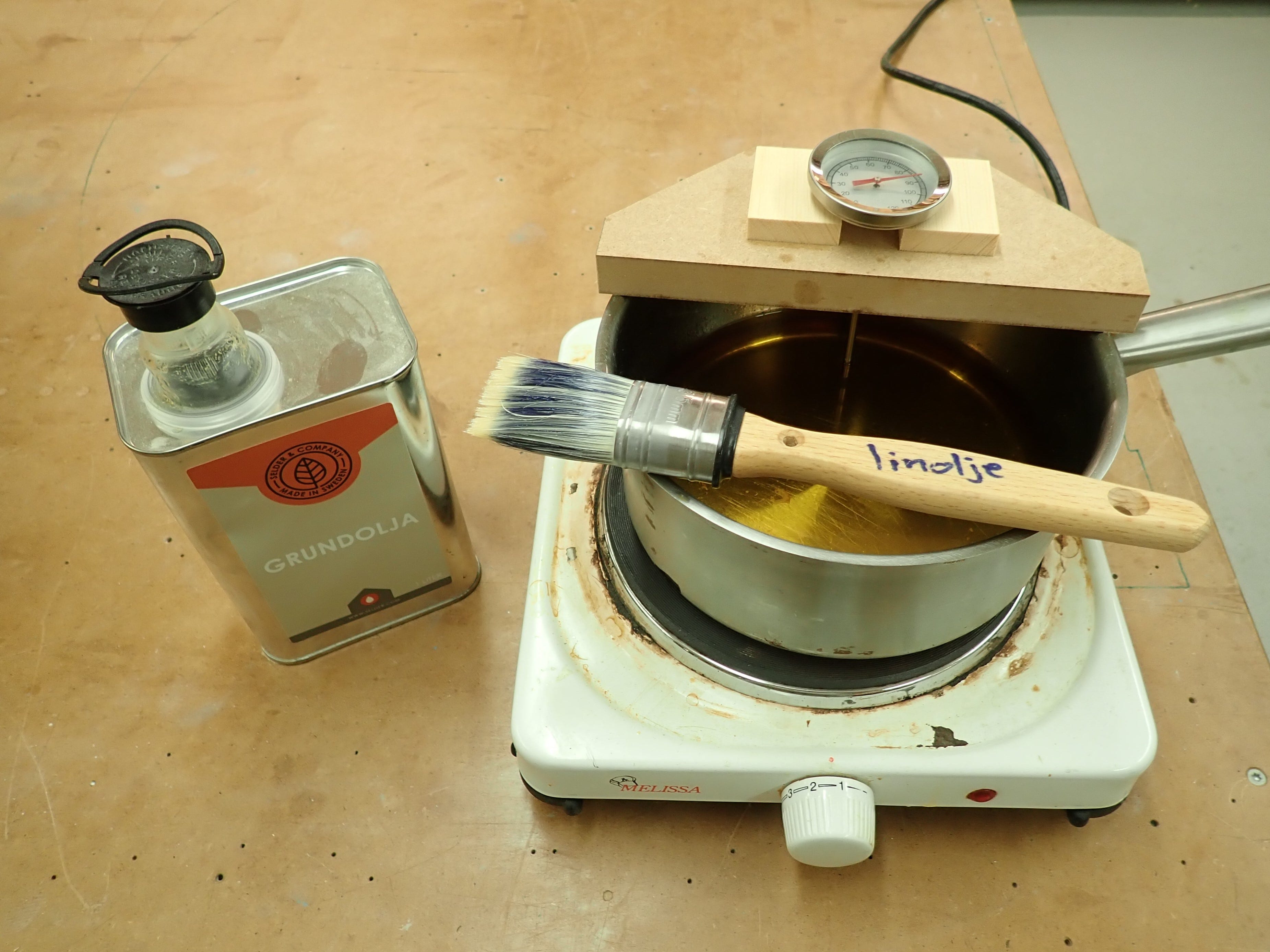
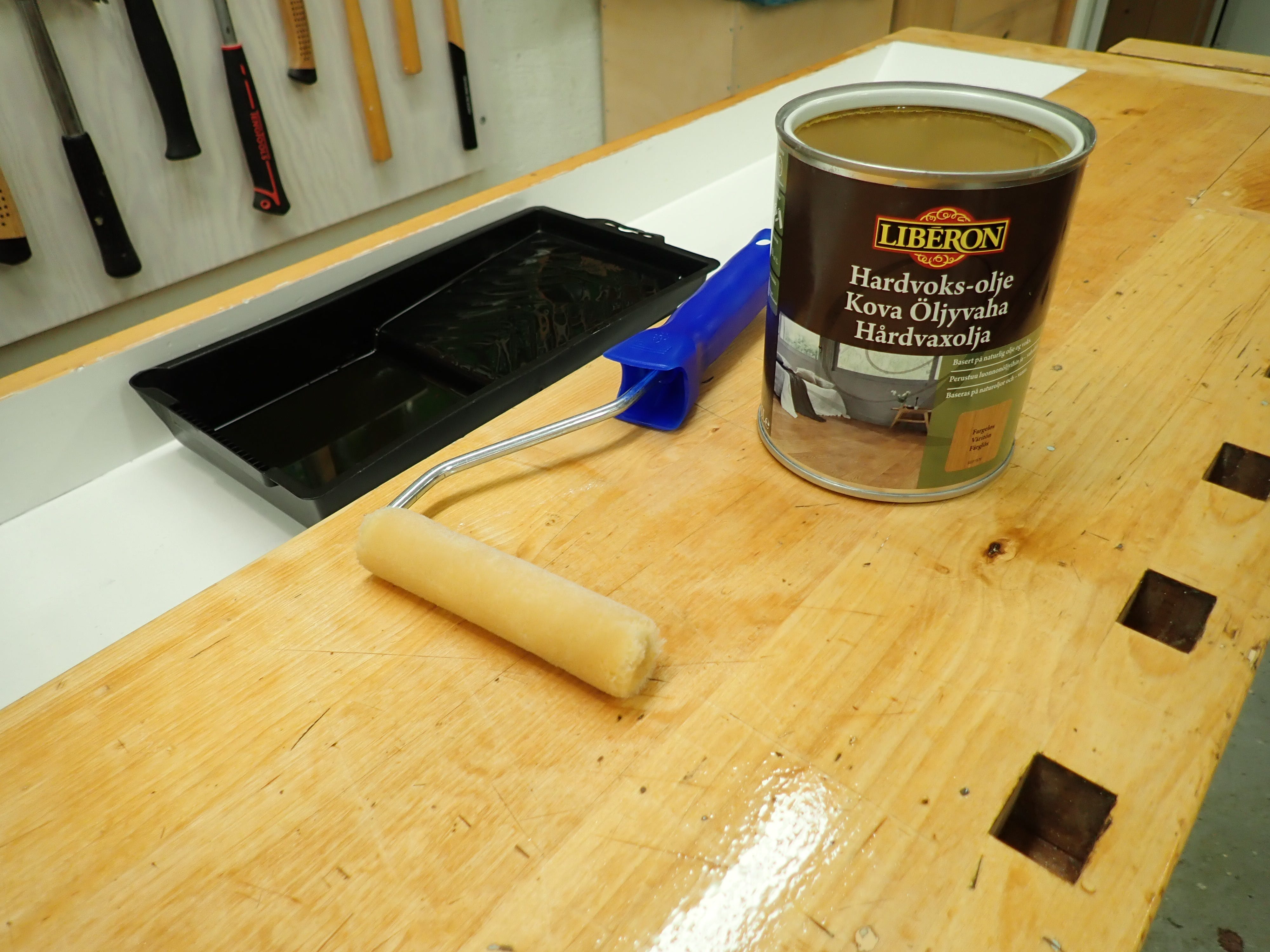
With the worktop planed, smoothed, sanded and licked clean, it’s time to apply some sort of finish. I heated some linseed oil from Selder — the Swedish alchemist. At 100°C the birchwood soaks this stuff up like I drink beer on a hot summer’s day — spectacular penetration.
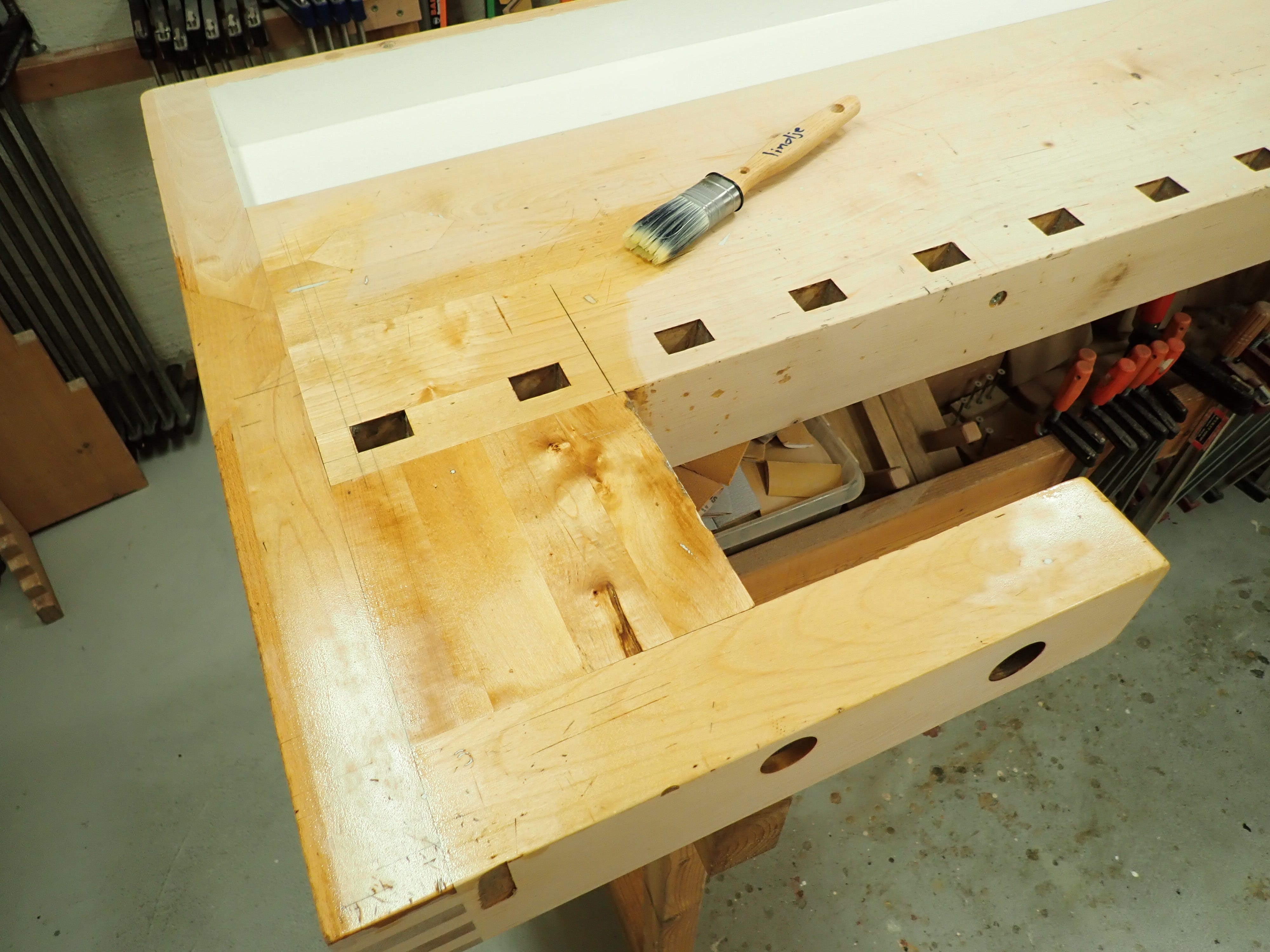
I soak my way around the bench repeatedly, and after a handful of rounds, most of the wood seems saturated, except for some thirsty spots where the grain rises up, presenting oblique endgrain. Feed it for as long as you can be bothered. Kick back and have a beer between bouts!
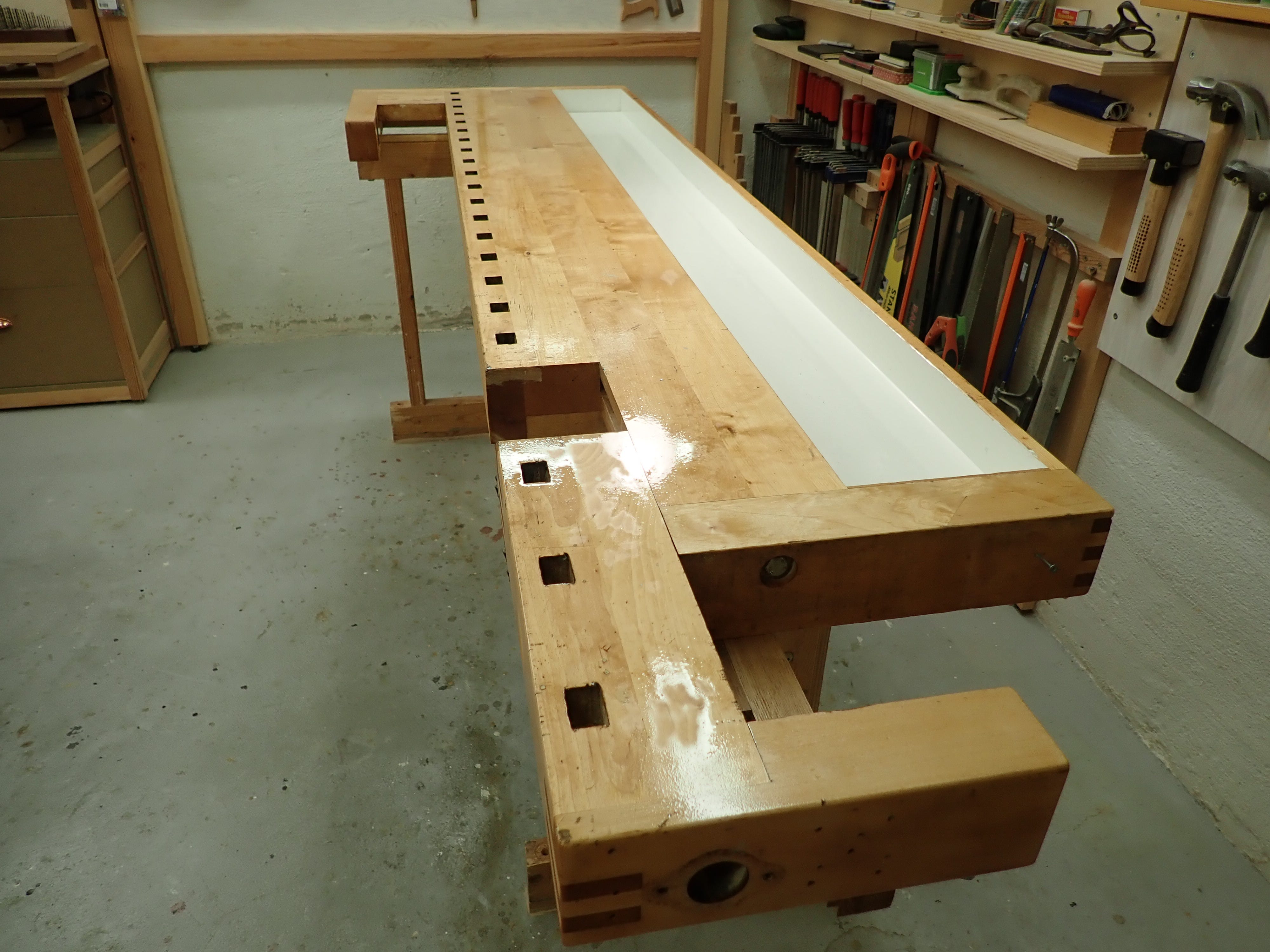
I love Selder’s linseed oil because he has managed to remove those two ingredients that do not polymerize (‘the salad dressing’), leaving only the stuff that does — providing a dry surface next day.
I finished off with a slathering of oil/wax emulsion. My hope being that the waxy residue will provide a bit of non-sticktivity to the benchtop.
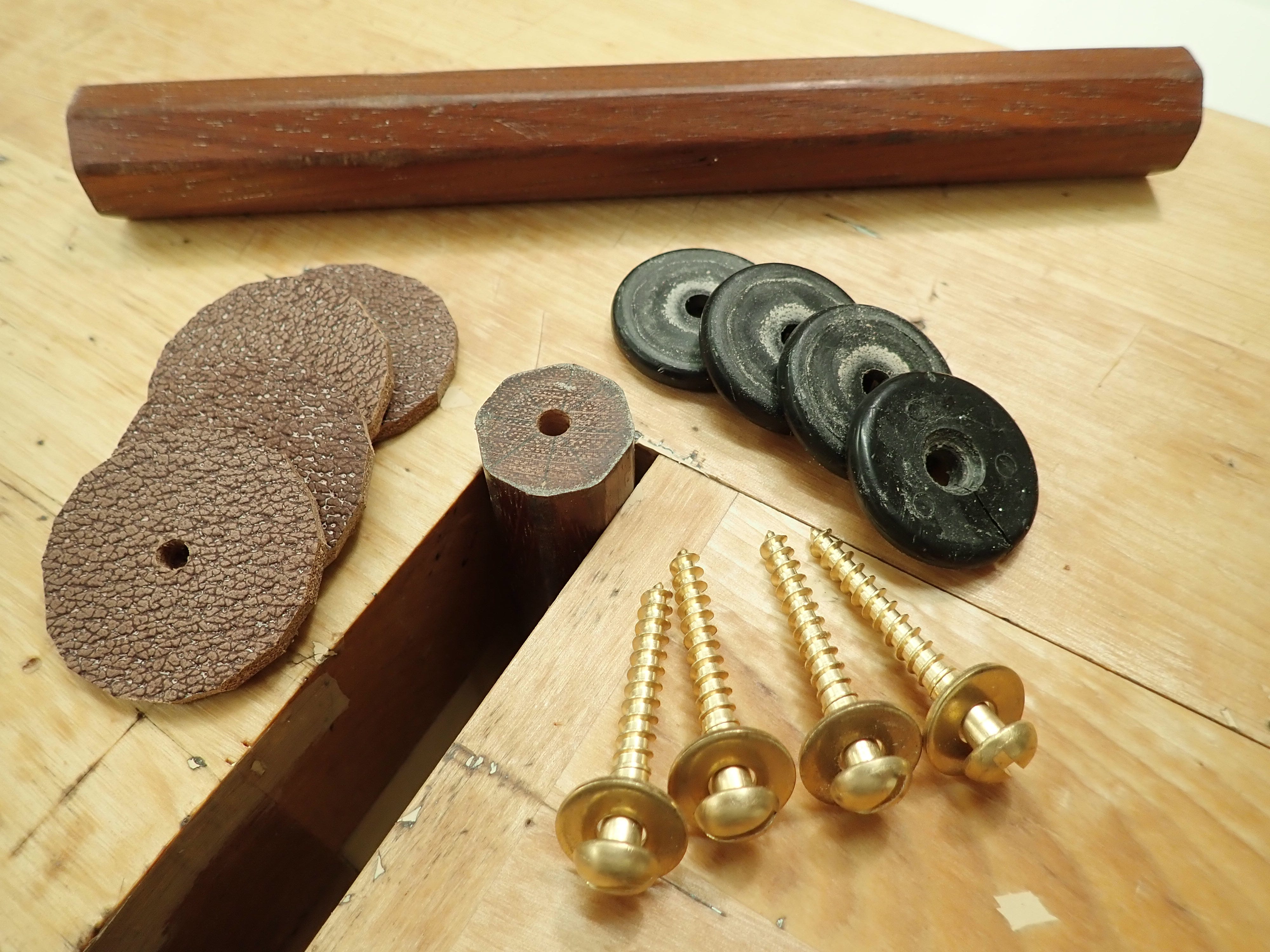
I also pimped my twiddle-sticks while I was at it; replacing the plastic end-caps and stainless screws with leather and brass.
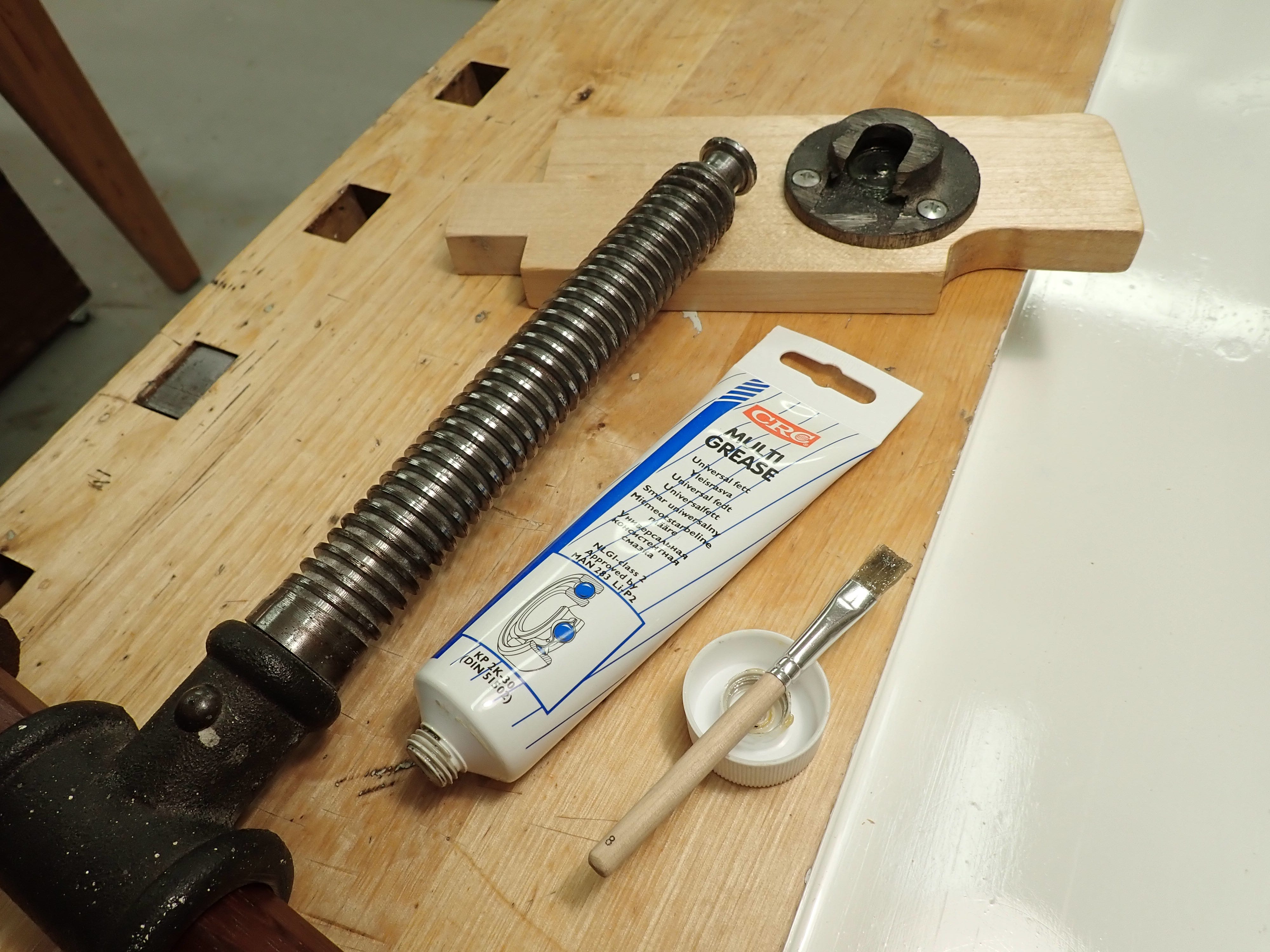
I leave the threaded spindles unlubricated; they don’t move fast, far or often enough to warrant it. Oil would only attract wood-dust and form a nasty paste (same goes for my clamps).
I do, however, grease the spot where the front vise spindle pushes against the ‘thrust plate’ (?). It has already worn a sizeable divot.
That’ll do for this decade.
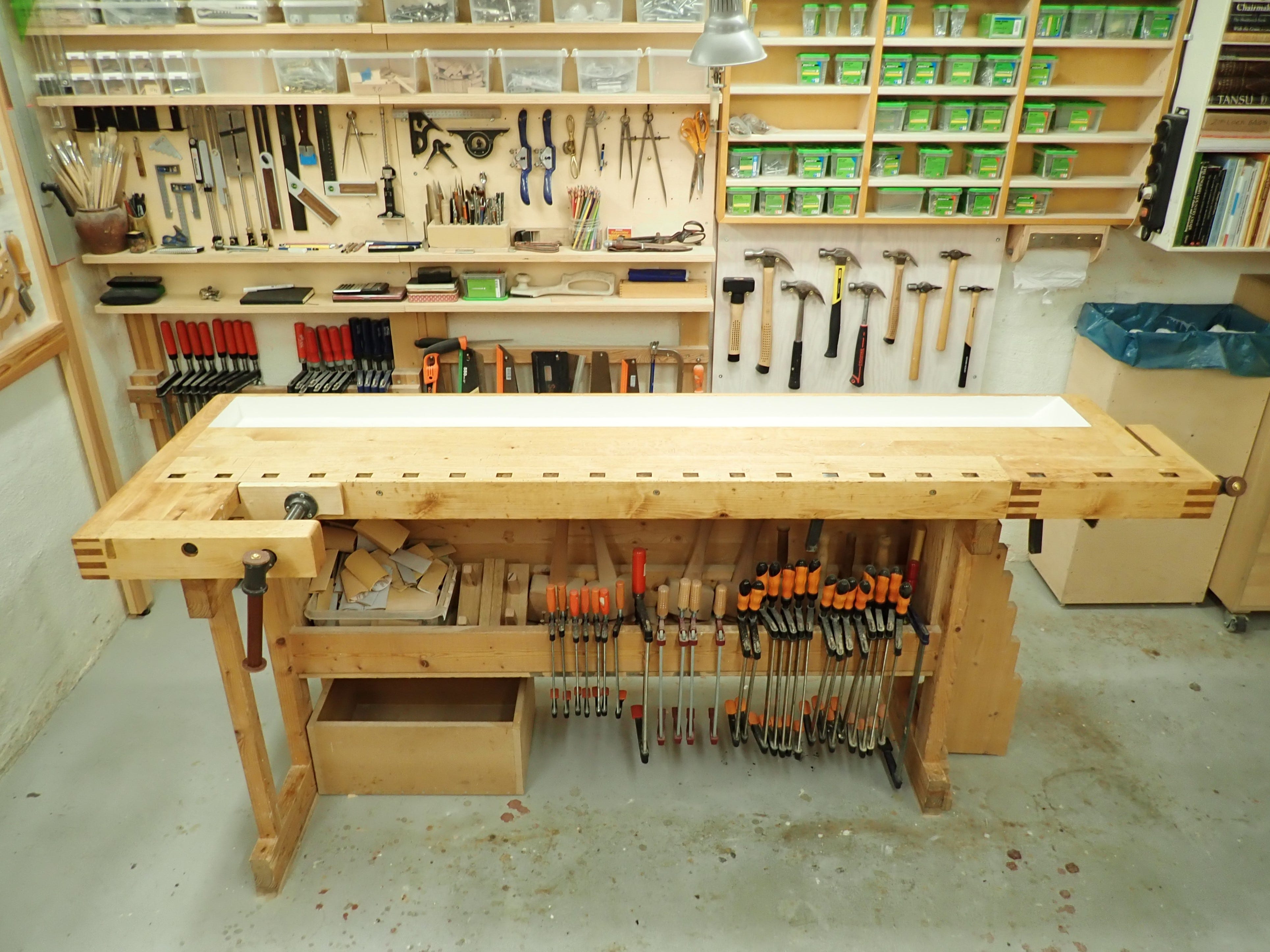
What a good bench I have :-)
Happiness is not doing what you want but wanting what you must.
****
No posts
Comments
Nothing yet. Say the first thing.
Sign in to join the conversation.