
It’s now 8 months since I self-published the second version of my novel, The Better Maker. There was a previous iteration in 2008, but even at the time I knew it was far from perfect, and I soon unpublished it and returned to the editing/rewriting struggle, often without much hope.
This second edition has sold quite well, 13 copies, most of those last December. I was especially pleased to discover some positive & intelligent reviews on Lulu. The platform doesn’t notify creators of new reviews so they came as a very pleasant surprise, 4 months late.
The 2008 edition was also read & reviewed — I agreed with all the reviews, that the book was quite good but patchy, a typically flawed first novel. The 2025 reviews are very different: unambiguously favourable for one thing, but they all also surprised me, I felt that each reviewer was reading a slightly different novel. For example, Laeth describes the university scenes as “dystopian”, quite the opposite of my intention; he also hated the Viking character, who for me is in some ways the true protagonist, God’s holy fool. Speaking of the real-life Viking, although he hasn’t read it and never will, because he’s too ADHD to read books, his wife has and found it amusing; as he messaged me:
Mrs Viking extends her thanks regarding the Better Maker
She got to the scene where the Wrath of the Lamb descends upon the English Dept. and was paralysed with laughter, she said she hadn’t laughed as hard in a year,
This pleased me immensely; there’s something both bizarre & apt about the Viking’s real-life wife reading this novel, and of course she would have to be amused by his fictive antics, or she couldn’t possibly tolerate the real thing at close quarters.
Even where I totally agreed with the new reviews, they somehow still surprised me. Comparing the 2008 and 2025 reviews, it’s as if the first were of a flattened, inert object; and the 2025 reviews are of an uncontainably dynamic & mysterious event.
Grandiose perhaps; however, I hasten to add: I don’t think it’s a great novel: it’s not The Brothers Karamazov or The Portrait of a Lady or Lord Jim; but I think it is a good novel, i.e. head & shoulders above most of the crap lauded by regime media. Over the last 30-odd years I have read dozens of new novels which were very well-reviewed, lauded, bespattered with cum even, and mine is simply better.
Being a good novel, it has a roundness to it.
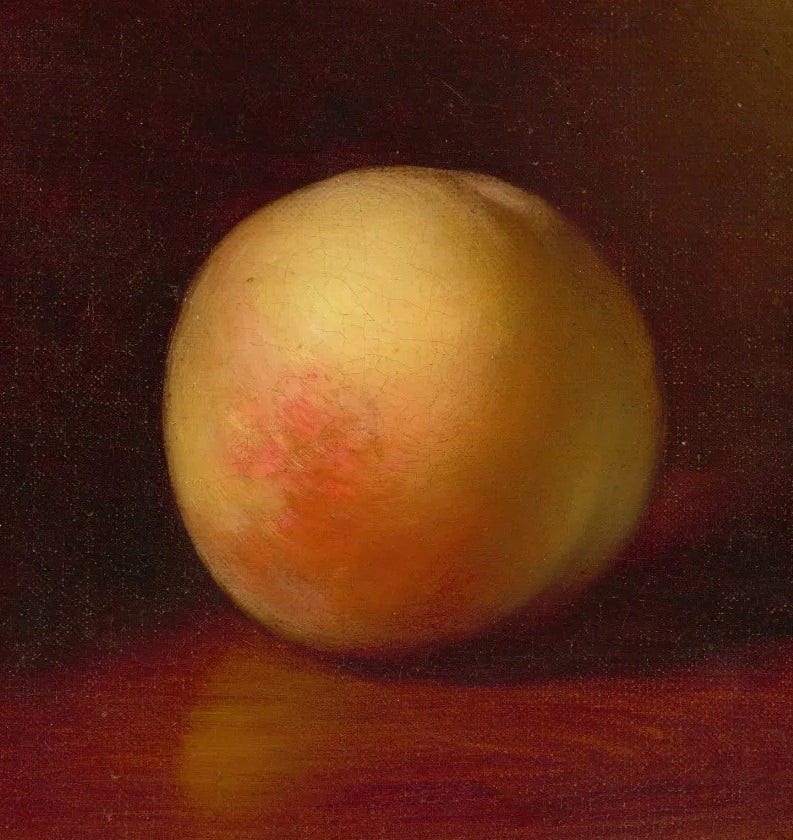
This is one of the differences between a real work of art and a formulaic production: the former has a weird, incalculable energy; the latter is always drably what was intended, what you would expect. Even a merely-good work, such as mine, is unpredictable, irreducible to formula, and hence unmarketable and unpublishable, and will most likely never have more than 20 or 30 readers.
It occurred to me recently, that one way to think of god is not as Buddy Christ or the choleric Nobodaddy, or even as a good father, but as a creator. It would make sense of His whimsical, even volatile temperament. After all, far from being a warrior protector, a kind of Jesus-with-spear, Odin is known as Bǫlverkr (evil-doer), infamous for betraying his warrior followers in order to harvest souls for Valhalla. Artists of all stripes are notably prone to mental illness and personality disorders, and so why should god the creator be otherwise? Our strange and perilous world makes more sense when you suppose a tormented genius working with recalcitrant and perhaps even evil materials; as Will Tell wrote:
Tolkien repeatedly hints that the “nameless things” beneath the world are older than the organized architecture of evil represented by Sauron or Morgoth. In that sense, one could argue that Tolkien unintentionally approaches a metaphysical idea found in certain mystical and theological traditions: that the Deadly Sins are not merely human moral failings, but primordial principles or monstrous archetypes latent within creation before history itself.
Just as we lesser creators cannot simply conjure art out of thin air, but must struggle with our means, so too perhaps for god — presupposing a god who is not omnipotent, who didn’t create ex nihilo; or if the latter then the nihil is a contrary power, and there is necessary violence in creation, a rupturing and rending and reworking.
I think that god would also be most pleased when his works take on the roundedness whereof I wrote, as it were the statue coming to life and having a will and a fate of its own; so Aulë, having illicitly created the dwarves, offers to destroy them as recompense:
Then Aulë took up a great hammer to smite the Dwarves; and he wept. But Ilúvatar had compassion upon Aulë and his desire, because of his humility; and the Dwarves shrank from the hammer and were afraid, and they bowed down their heads and begged for mercy. And the voice of Ilúvatar said to Aulë: 'Thy offer I accepted even as it was made. Dost thou not see that these things have now a life of their own, and speak with their own voices? Else they would not have flinched from thy blow, nor from any command of thy will.'
This is a feeling I often had while labouring on The Better Maker: I thought of just deleting it and (as my friend Bonehead advised) turning my mind to other projects, but the malformed, awkward thing seemed to flinch from the blow, to have its own as yet unrealised will & fate. Its future self called to me, as it were assuring me, Keep working, draw me closer to my future being.
Perhaps we appeal to our creator likewise, as wretched broken things which can yet be remade. Envisioning god as creator, just as I was pleased by these reviews — for most of my writing has sunk without trace — so god would like us to appreciate his work, to respond, to communicate, to be subcreators in our lust.

If the creation does not exceed the creator’s vision, of what use is it? If it is always and exactly what was envisioned & intended, the physical corresponding point to point to the imagined, why create at all, why not merely imagine? The creation must have the capacity to rebel; if not, what is the universe but an array of perfect mannequins performing their perfect, predictable dance?
Comments
Nothing yet. Say the first thing.
Sign in to join the conversation.