
This is the reason for the severity sensed in every lullaby: the sleeping child is a wind chime for the human misadventure that lurks around every corner. They are our only true companions across the great divide (between now, then, and whenever), and their predictive gifts are honored by this lullaby tradition whose notes represent the many rotating visages that an evil world might appropriate at any given threshold or century (arising as corruption, disgust, separation, apathy, delight, or rage). Or, to slightly transfigure the words of an elder writer now lost in time: Praised be [the lullaby], which reminds us that we have the power to create Hell.
— Jason Bahbak Mohaghegh, Evil: A Study of Lost Techniques (Scarlet Press, 2024)
Wake Island is back. It’s been a long hiatus, a lot of life changes and transitions... the usual upheavals that seem to have hit everyone over the last year or so.
We’re kicking things off with past guest of the show, Jason Bahbak Mohaghegh, a philosopher, writer, and teacher, and a vector for a lot of the ideas that shape the tone and approach of Wake Island. What I love about listening to Jason is that he comes at things from the perspective of the avant-garde, whether it’s the after-dark, mania, or the apocalyptic imagination, he brings a level of sophistication to these ideas that I admire.
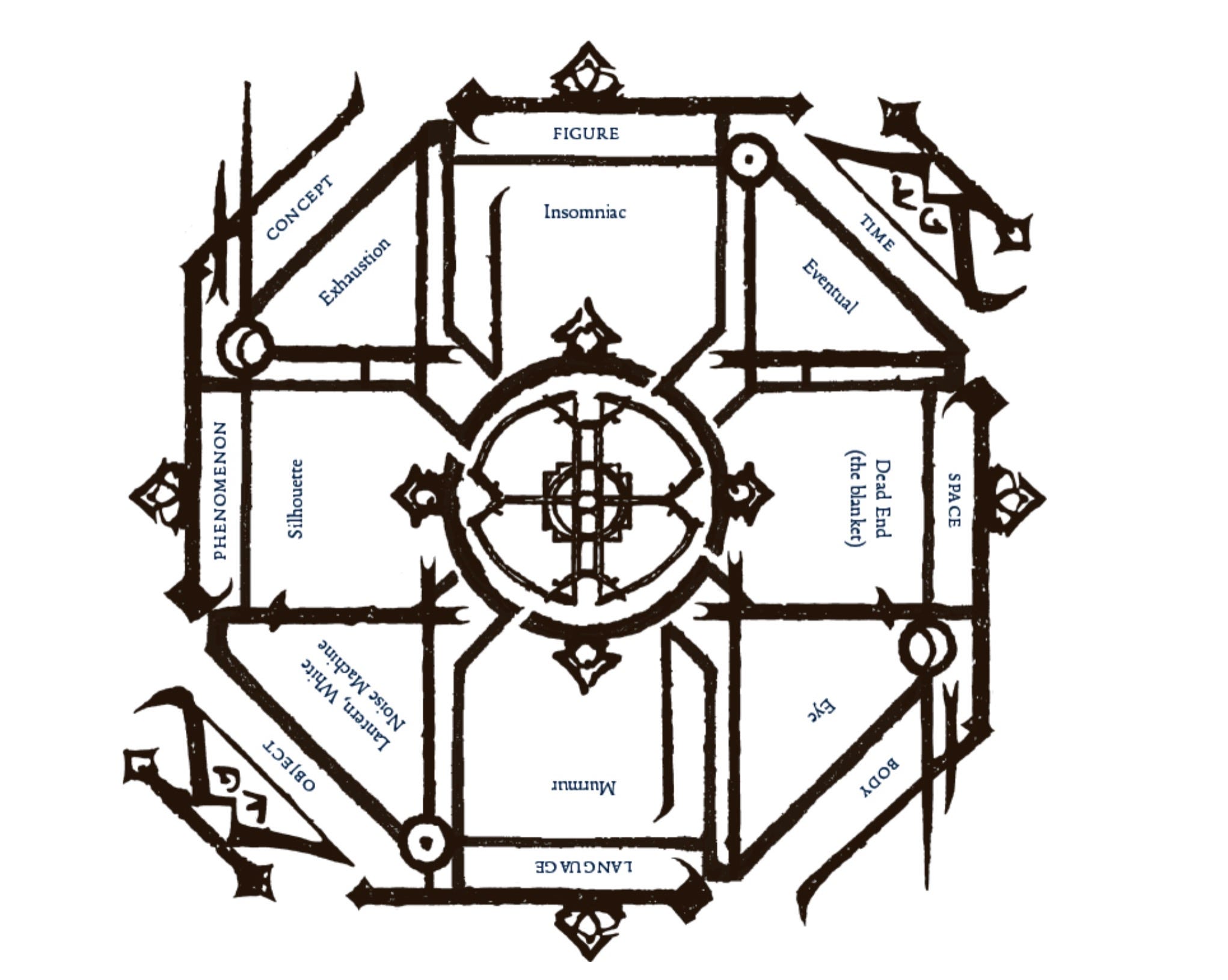
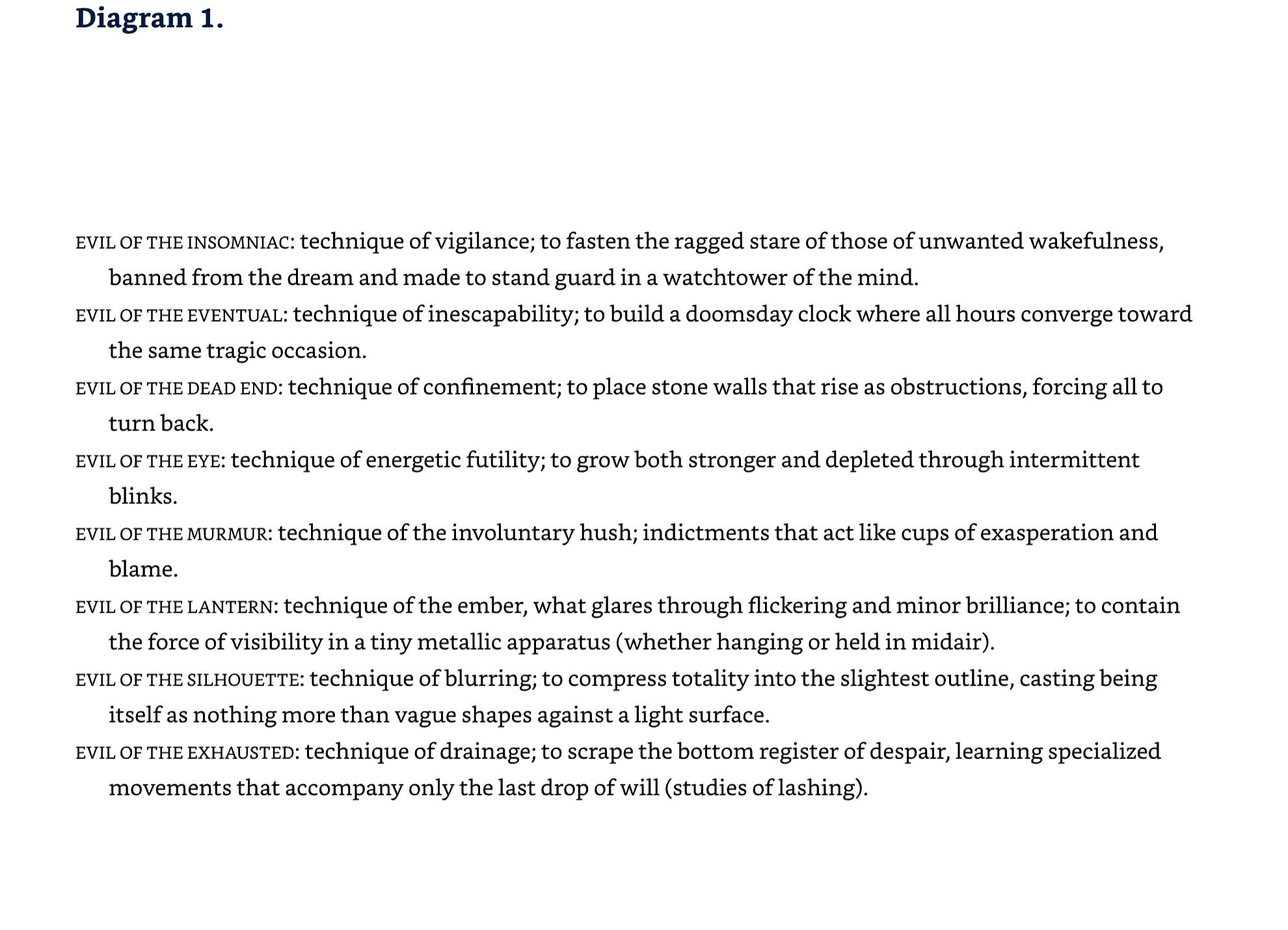
This episode we’re talking about his latest book, Evil: A Study of Lost Techniques from Scarlet Press. Jason doesn’t moralize evil in the ways we’re accustomed to. He treats it as a set of techniques that operate below the threshold of cognition, things that bypass your defenses, in the same way a lullaby ushers a child out of consciousness into the realm of sleep, or doomscrolling steals hours of your life before you realize they’re gone. It’s less a study of bad behavior than a diagrammatic map of how evil reclaims the world.
Listen here on all platforms.
0:00
-1:20:13
Also co-host David Leo Rice wrote this essay about the death of his mother and it's one of the most profound things I've read in a long time. Seriously, I can't recommend it enough: Master of Puppets | On My Mother’s Death and the Last Chapter of the History of the World
Ever since I was a child, I’ve been fascinated by puppets. When I got to college, interested in filmmaking but uninterested in going through the documentary-focused curriculum required to make live-action films, I found my way into the animation department. Although the animations I went on to make used only pen and ink, drawn one frame at a time in the middle of the night with a coffee mug full of Guinness on the table beside me, this period led me to discover the stop-motion masters—Jan Švankmajer and the Quay brothers foremost among them—as well as the literary works of Bruno Schulz, upon whose stories many of their films were directly or indirectly based. This in turn led me to the Symbolist art and literature of the early 20th century, especially to the eerie drawings and writing of Alfred Kubin, whose Other Side, as he called his 1909 novel about a remote dream kingdom, written in the immediate aftermath of his father’s death, seemed already to exist on the margins of my imagination.
From there I ventured further back, to the early 19th century and the works of Heinrich von Kleist, whose 1810 essay “On the Marionette Theater” has been a staple of my thinking and teaching ever since. Through a series of dialogues between two friends, Kleist considers the ways in which marionettes (the progenitors of the figures used by stop-motion animators, all of which I’ll call puppets in what follows) can attain a level of grace, through their lack of self-consciousness, which is beyond the reach of human dancers. He concludes by pointing toward a Third Age in which humanity overcomes or relinquishes the very knowledge it gained by eating the apple and going into exile from Eden, which separates the First Age, of supposed premodern innocence, from the Second Age of alienation and frustrated modernity, an age that may only now be ending:
Grace returns after knowledge has gone through the world of the infinite, in that it appears to best advantage in that human bodily structure that has no consciousness at all—or has infinite consciousness—that is, in the mechanical puppet, or in the God. Therefore . . . we would have to eat again of the tree of knowledge to fall back again into a state of innocence. . . . That is the last chapter of the history of the world.
Most of our adult lives, like most of our known history, exists between these two idealized states: too late for the infantile or ancient state of “no consciousness,” too early for the postapocalyptic or transcendent state of “infinite consciousness.” As they say, the human is the bridge between beast (or puppet) and God, and it seems to be our fate to look backward and forward with equal longing, hoping to overcome the awareness of death that we gained from eating the apple either by retreating to a time before we knew it was coming, or leaping ahead to a time when science or magic will allow us to live forever. Unlike with other animals, children, and (as we understand them) prehistoric peoples, modern adult human consciousness is sufficiently evolved to imagine and require gods and other immortal beings, but not evolved enough to become them.
As Freud notes in his 1919 essay “The Uncanny,” “Children are not afraid of their dolls coming to life—they may even want them to.” It is only adults who, forced into the belief that they alone are truly animate, operate in a world where everything else seems either devoid of life entirely, like rocks and water, or suffused with a form of life that doesn’t attain true consciousness, like plants and other animals. The dream of return to the Garden or of salvation from exile by reaching a new paradise is likely no more than the dream of reintegrating with the world around us—the world that we separated from in the Second Age, under the belief that we could dominate it without destroying ourselves in the process.
The scholar and novelist Victoria Nelson, while analyzing Kleist’s essay in her 2001 book The Secret Life of Puppets, writes, “What seems on the surface like a hollow shell, the antithesis of life and a parody of its expressive nature, [the puppet] in some ineffable way embodies its deepest essence.” My goal in what follows is to consider what this “ineffable way” implies about the relationship between life and death, and therefore how, while we still have the chance, people in the 2020s might move toward the former and away from the latter not by further separating from the “dead” matter that surrounds us, but by integrating into it in some way prior to the final integration implied by the saying “ashes to ashes, dust to dust.”
In the aftermath of my mother’s death over the summer, I’ve had to consider what it means to watch consciousness disappear from the world and what effect this has on the consciousness that remains. Both personally and historically, it feels as though we are at the end of the Second Age, striving to reach the Third, or striving to acknowledge that we’ve failed to prevent its emergence. In our apocalyptic imagination, the Third Age may correlate to the Other Side, to a genuinely new world, perhaps even to the place where the dead go; but, as anyone who has witnessed death understands, all we can truly witness is the vanishing of consciousness—we cannot glimpse the place (if there is one) where it vanishes into, just as we cannot recall the place (if there is one) from which our own consciousness emerged. Therefore, among those living in the aftermath of death—whether the death of a loved one or the death of a culture and a once-familiar mode of thinking about ourselves and our future—the Third Age is not a rapture or a sea change. It is instead an infection or infusion into the known world of something unknown, or, as Freud would have it, something known once and then imperfectly forgotten. As Karl Ove Knausgaard, no stranger to the loss of a parent, writes in My Struggle: Volume 6, “The occurrence of death opens up a new reality within our preexisting reality.” The reality of the living becomes haunted by the presence of absence: the feeling not just that someone or something is gone, but that the fact of their being gone adds a new dimension to all that is still here: a seemingly empty space that is, like a puppet, nevertheless full of something.
As I settle into this haunted state, I’ve been trying to conceive of what the Third Age might look like more broadly, and what we stand to gain by letting go of the Second Age’s doomed dream of mastering reality and achieving the status of gods on Earth. There is no returning to the Garden of the First Age; no regressing to childhood either. But remaining in a Second Age mindset once that age has run its course is an even more deranged and immature prospect. As I saw firsthand in the fragmented and maddening world of elite cancer care, we can abolish the thought of death as much as we like—after abandoning God, we can even abandon any comprehension of natural cycles and patterns of life—and pursue immortality through medicine, and yet, in the end, reality calls our bluff. Whatever may change in the future notwithstanding, from today’s point of view, the only sane adaptation to our obvious failure to conquer death is to find a new means of living with it.
Read the full essay at Southwest Review.
Also thank you to Matti Bye and Mambo Noir Trio for letting us use “Noir” to usher out the episode.
Why exactly is the lullaby evil? Because it is deeply manipulative. The lullaby builds the soundscape of temporary exile from the house of Being; it masks the business of semilethal subsidence through play and softness; it operates an almost surgical procedure that takes place beneath the closed eyelids of the unsuspecting. Because it is handed down by the most neglected and abused entities (midwives, grandmothers).
The lullaby persists as an authorless or anonymous verse sent from other weird ages; it rests on the muted tongues of the overlooked, never attaining the status of a dominant literary or artistic category but content to remain a subcultural echo carried amid shadows by those underestimated among us. Because it partakes of superstition.
The lullaby endorses that magical thinking or omnipotence of thought whereby the recitation of certain ideas is believed to inflict material results; it conjures, above all else, by turning figments into intonations and intonations into physiological responses. When executed properly, its method replaces the entire framework of transcendence with an alternative descent below (falling under).
— Jason Bahbak Mohaghegh, Evil: A Study of Lost Techniques (Scarlet Press, 2024)

No posts
Comments
Nothing yet. Say the first thing.
Sign in to join the conversation.