
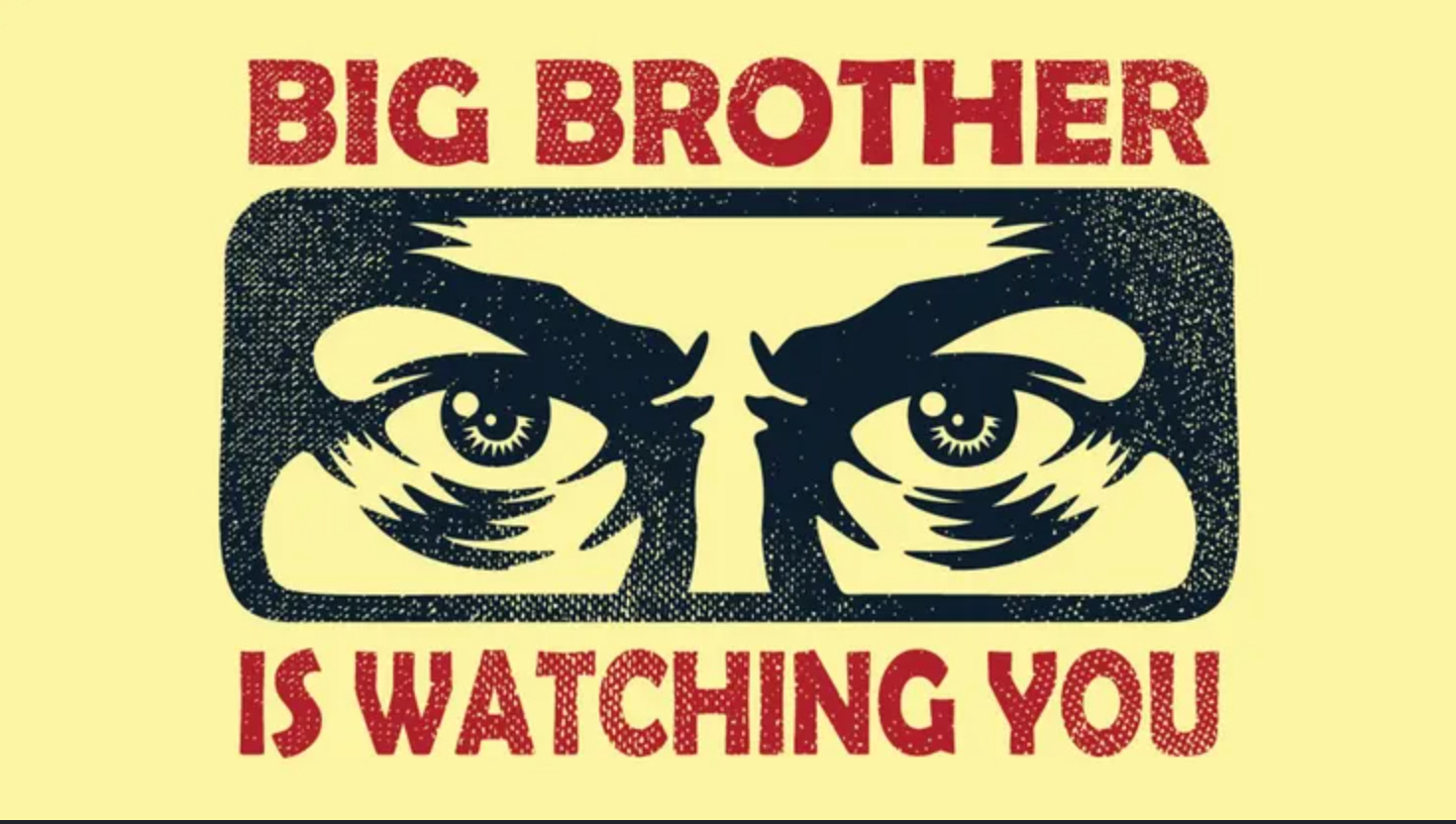
Written in 1949, George Orwell’s 1984 feels terrifyingly relevant today. In fact, at times it almost feels too close to home.
However, the reason it remains so relevant is not because we live in a completely identical totalitarian state as Oceania in 1984, but because many of the social conditions that Orwell warned us about (constant surveillance, self-censorship, and the gradual normalization of losing privacy) have become embedded in everyday life through technology and social media.
One of the most obvious parallels between 1984 and modern society today is the sheer amount of surveillance that surrounds us. Advancements in technology have made cameras nearly impossible to avoid. From smartphones and laptops to Ring doorbells, Flock cameras, traffic cameras, and security cameras in stores, it is increasingly difficult to leave your house and not be recorded in some capacity.
And while these technologies are often introduced for convenience or safety, they have inadvertently created an environment where constant observation (or surveillance) has become normalized.
And social media has only accelerated this shift. For instance, entire careers now revolve around documenting or posting about everyday life. Influencers make a living recording and sharing nearly every single aspect of their life, while we continuously see younger generations increasingly aspire to do the same. And as a result, recording has become default behavior, rather than a conscious decision. It is now incredibly common to see people recording in gyms, restaurants, airports, street corners, stores, and countless other public places; and most often capturing complete strangers who never consented to being a part of someone else’s content.

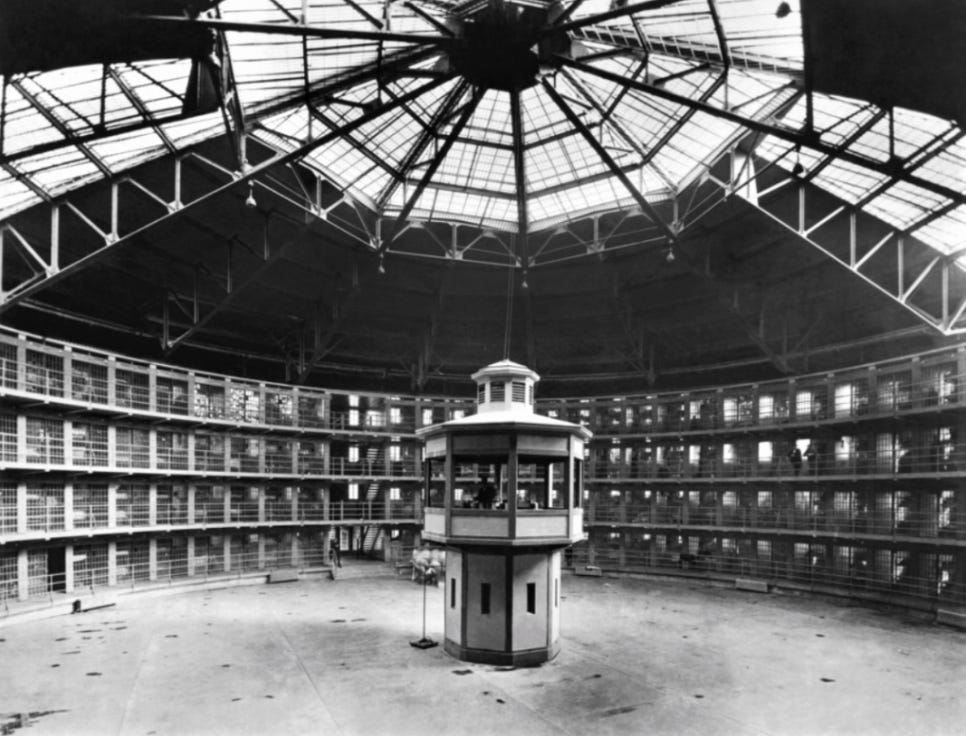
At the same time, conversations online have now begun comparing Gen Z to the modern day “panopticon.” The panopticon was originally proposed by philosopher Jeremy Bentham in the 18th century; it is a circular prison designed around a central watchtower in the middle. This made it so that prisoners never knew for sure if they were being watched, so in turn, they behaved as if they were under constant observation. Later, philosopher Michel Foucault argued that this concept extended beyond prisons and described modern day society: people eventually began policing themselves and their own behavior because they assumed they were constantly being watched.
This idea closely resembles what Orwell described in 1984. For example, the main character, Winston is constantly aware of his facial expressions and has to “set his features into the expression of quiet optimism which [is] advisable to wear when facing the telescreen.” (p 4). Essentially, the telescreen doesn’t just monitor people – it eventually conditions citizens to internalize surveillance culture and begin monitoring themselves.
We can see evidence of this phenomenon in today’s culture. For instance, several news articles have reported that club culture is declining and that younger generations are spending less and less time in ‘third spaces.’ And while there are many factors that contribute to this trend, one of the main cited reasons is for fear of becoming the next viral video online. People are afraid that they’ll make one embarrassing move that will be recorded, posted online, and viewed by millions of strangers on the internet. And as a result, people become more aware and cautious of how they dance or socialize or simply just exist in a public setting.
This is known as the “Hawthorne Effect”: a change in behavior and performance by people who know they are being watched or studied.
However, in my opinion, this normalization of surveillance cannot simply be blamed on younger generations. Older generations have very much contributed to creating a culture in which privacy has diminished. For example, from the minute many children are born – there is immediately a camera placed in their faces.
And it is completely understandable that such an exciting moment creates the desire to be captured and shared online. Parents continue to excitedly post about their kids’ milestones throughout their lives, often from adolescence, well into their teenage years. And while these moments are usually shared with love and good intentions, they also establish an expectation that life is meant to be constantly filmed, documented, and posted on social media for public consumption. In most cases, children lose their agency and the opportunity to decide if they ever wanted to have a digital footprint in the first place.
So when those children grow up, it is not surprising at all that recording others and posting it online feels natural or normalized to them. Because for them, if every single moment of their lives have been documented and shared for public consumption, why would filming strangers feel weird or unusual? This then creates a ripple effect where each generation further normalizes the erosion of privacy, and makes surveillance culture feel more like a natural part of everyday life.
And recent technology, including ‘wearables’ such as Meta smart glasses illustrate just how these boundaries continue to shift (and erode). For example, Meta smart glasses allow people to discreetly record in public with very little indication (a small blinking light) that filming is happening at all.
I recently posted a TikTok arguing that this technology poses concerns, and particularly for women. Consider someone leaving an abusive relationship while staying at a domestic violence shelter, or someone who is a part of a witness protection program. These individuals rely on anonymity for their safety (and even survival). And although someone recording with Meta glasses may have no ill intent, the issue extends way beyond that individual’s motives. The bigger concern is that we have become so accustomed with the idea that anyone, anywhere, at any time can record someone without their knowledge or their consent.
There is also another important distinction between 1984 and today’s modern world: in 1984, surveillance is primarily imposed by the government to maintain political power. Whereas today, surveillance comes from many different directions. While individuals feel comfortable recording themselves and strangers to post online, our government also collects information for security purposes, and companies collect a terrifyingly amount of personal data to build advertising profiles and set dynamic pricing through algorithms. Although it is not entirely the same as in 1984, the outcome is fairly similar: our private lives become increasingly transparent while our expectation of privacy slowly diminishes.
Of course, today’s society is not completely identical to that of Oceania in 1984. However, Orwell’s deeper warning was that surveillance would eventually become so ordinary that people would eventually begin watching and censoring themselves. And in many ways, today’s society has shown just how easily that normalization can happen. Through social media, smartphones, wearable technology like Meta glasses, or the constant awareness that someone may be recording, more and more we augment our behavior because we can (for the most part) correctly assume that we are being observed in some sort of capacity.
No posts
Comments
Nothing yet. Say the first thing.
Sign in to join the conversation.