
While most people focus on the public-private dichotomy as the only relevant property regime scarcely anyone considers the dichotomy of religious-secular as a basis of analysing property relations.
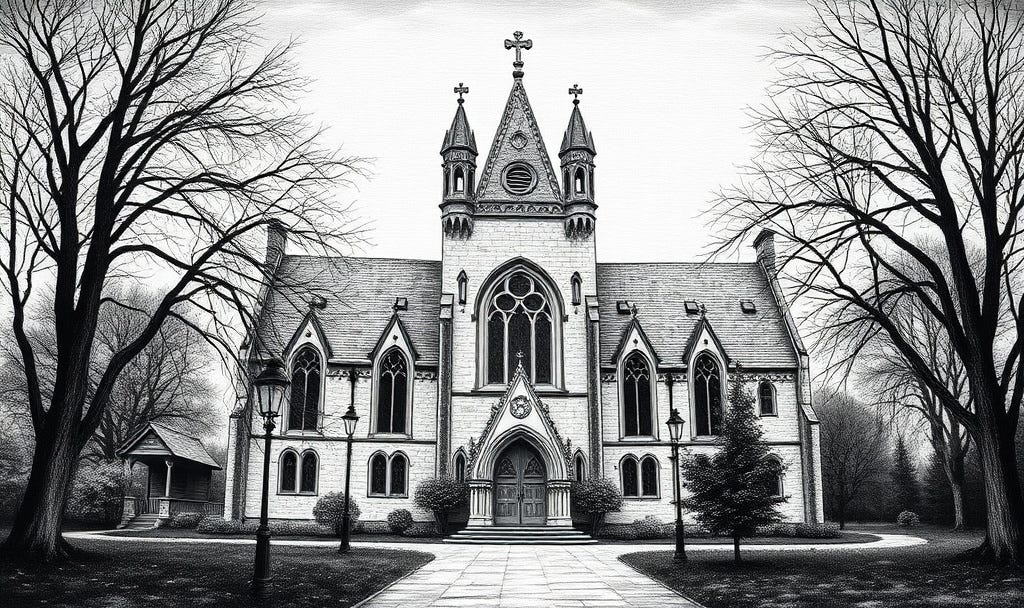
No other society apart from the Christian West carved a distinction between the religious and the secular in their worldviews because such a division served no delineations of ownership for them. Whereas, I argue that the dichotomy between religion and secular crystallized in Europe as a by-product of property conflicts. These conflicts were primarily over land, but also rights, rents, jurisdiction, immunity, and the power to tax or hold courts.
It is only in Latin Christendom where “the Church” became a property-owning actor parallel to kingdoms. In other words, the Western church was one of the first institutions to develop corporate personhood. Nowhere else did a religious institution monopolize such legal autonomy.

When popes and emperors fought over who controls church property and clerical office, they invented the temporal–spiritual distinction as a weapon. See the Investiture Controversy (1075—1122) and the Concordat of Worms (1122) which formalized the split:
The emperor invests bishops with temporalities (lands, regalia, revenues).
The Church invests bishops with spiritualities (ecclesiastical office, cure of souls).
This is the first major legal articulation explicitly dividing property into secular and spiritual domains. The secular–religious distinction emerges as a direct consequence of European conflicts over who owns what, and who governs which properties.
It’s only later than the public-private property distinction emerges from what is considered exclusively secular property. This is why in the West, church property is neither public nor private. This is not true for ownership of masjid or temple property.
No posts
Comments
Nothing yet. Say the first thing.
Sign in to join the conversation.