
We began with a simple question:
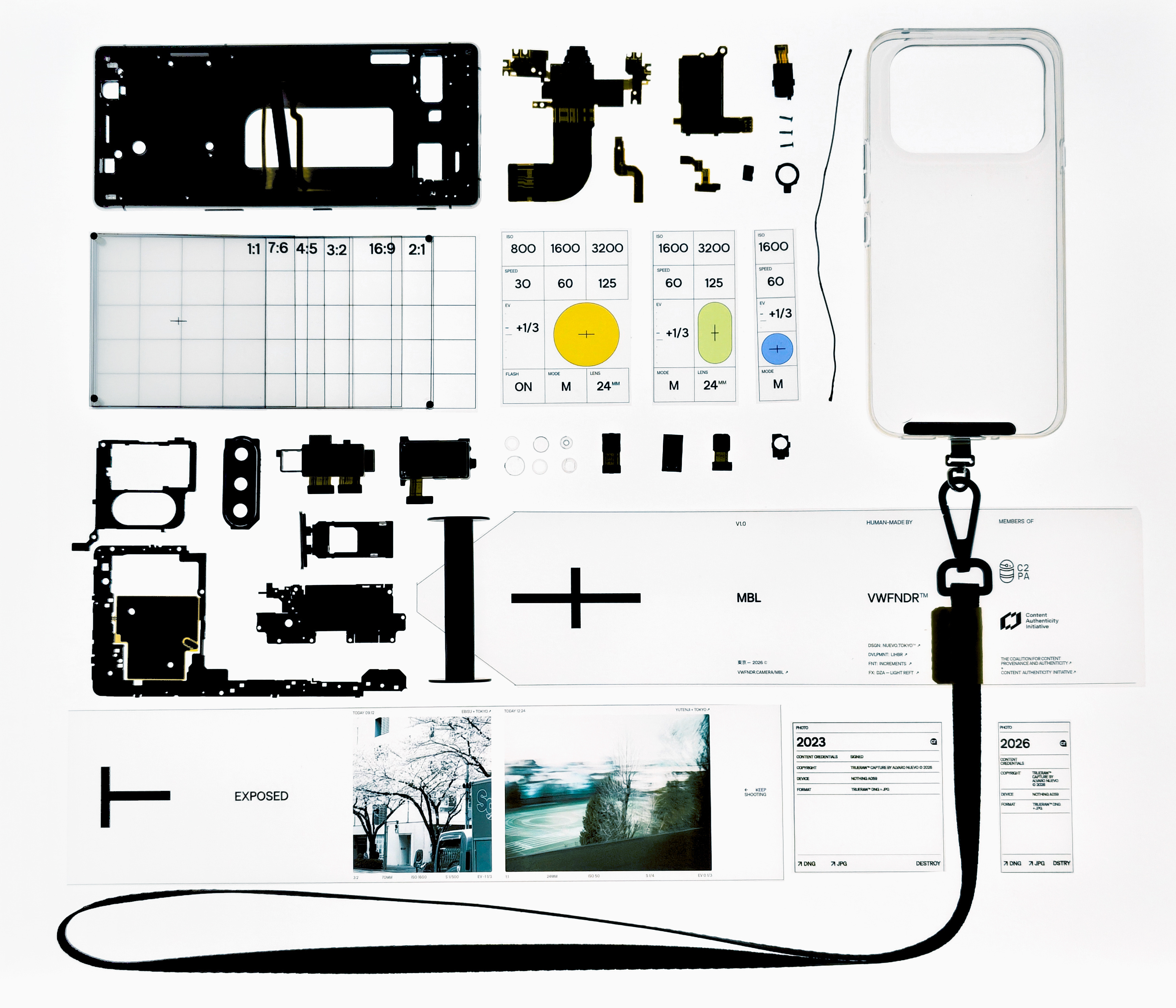
Compact cameras earned their place because of their unique balance: capable enough for serious photography, yet simple enough to carry everywhere.
They became trusted tools through simplicity and immediacy. You could raise them to your eye, instantly understand their state, and capture a moment without interruption. Over time, that predictability became muscle memory.
Phones eventually replaced compact cameras for most of us, largely because they were always with us. As photography became part of everyday life, the camera was no longer a device we carried with intention, but one already in our pocket.
As this transition took place, the experience of taking a photograph evolved as well. Camera software continued to advance, introducing new features, processing pipelines, and interface layers that expanded what was possible and reshaped the photographic experience.
This led us to a simple question: how could a phone truly fulfil the role of a compact camera?
Not by replicating its appearance, but by embracing the qualities that made compact cameras so enjoyable to use in the first place: immediacy, predictability, control, and familiarity.
REDUCTIONISM
A camera should never make you think about the interface before the photograph.
The fewer steps required to take a picture, the more natural photography becomes. Controls should be visible, understandable, and immediately accessible, whether shooting in full automatic or full manual mode.
Rather than introducing additional modes, layers, or abstractions, we focused on keeping essential photographic tools available at all times. Exposure remains visible. Adjustments follow a direct cause-and-effect relationship. The state of the camera is always clear.
The result is a system that feels familiar almost immediately. It behaves like a camera while remaining entirely native to the device already in your pocket, benefiting from the speed, responsiveness, and fluidity that modern smartphones make possible.
FAMILIARITY
Photographers think in terms of light, time, and exposure: relationships that become instinctive over time. MBL supports that way of working through consistency and clarity.
Controls behave predictably, their placement remains stable, and the outcome can be anticipated before the shutter is pressed.
As familiarity develops, the interface gradually recedes. Attention returns to the image.
INTERACTION
There is no such thing as the perfect camera layout. Hands are different. Ways of working are different. What matters to a street photographer may differ entirely from what matters to a landscape photographer.
Most camera applications are designed around a predefined workflow. MBL takes a more flexible approach.
Controls can be repositioned, resized, reassigned, and reorganised. Physical buttons can be mapped to preferred functions. The interface adapts to the photographer, allowing each person to shape the camera around their own way of seeing and working. Over time, this creates something unusual: a camera that feels genuinely personal.
Rather than learning a fixed system, photographers can develop one that reflects their habits, preferences, and priorities. The camera becomes more comfortable, more efficient, and more familiar with every use.
The most enduring camera designs share a common quality: they allow the photographer to focus entirely on the photograph.
MAGIC
Photography should be enjoyable. Beyond image quality, specifications, and technology, there is value in a camera that simply makes you want to go out and take photographs.
Small moments of delight, responsive controls, and a sense of connection to the process can transform photography from a task into an experience.
MBL was designed with that spirit in mind: a camera that encourages curiosity, rewards exploration, and keeps the joy of taking photographs close at hand.
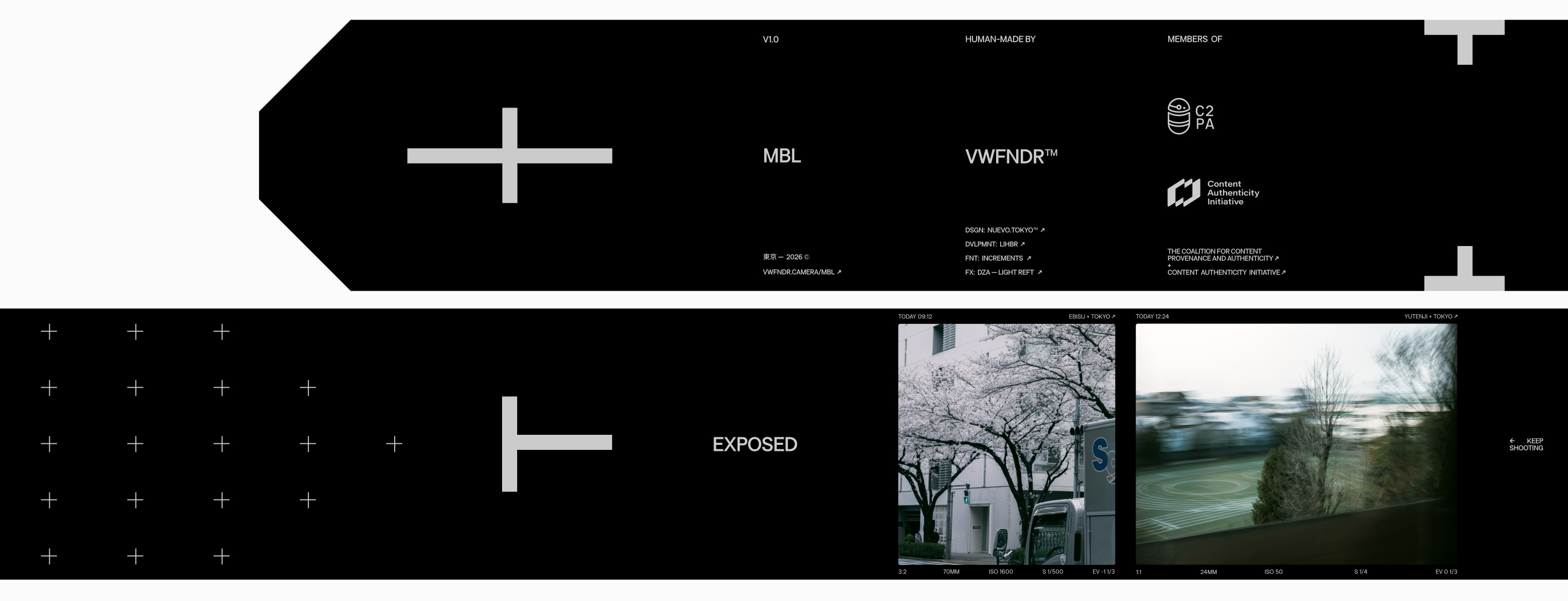
Do you remember film strips and the way they come alive when held against the light? A sequence of moments, fixed in time. A visual record that can be understood at a glance. With MBL™, we wanted to bring that same clarity to mobile photography.
There is something uniquely satisfying about seeing photographs this way. Not only what was captured, but when it was captured, and how each image relates to the moments before and after it.
The film strip on MBL is more than a gallery. It reveals the rhythm of a photographic session. Exposure, framing, and sequence become visible at a glance, making the process of photographing feel tangible once again.
OUTCOME
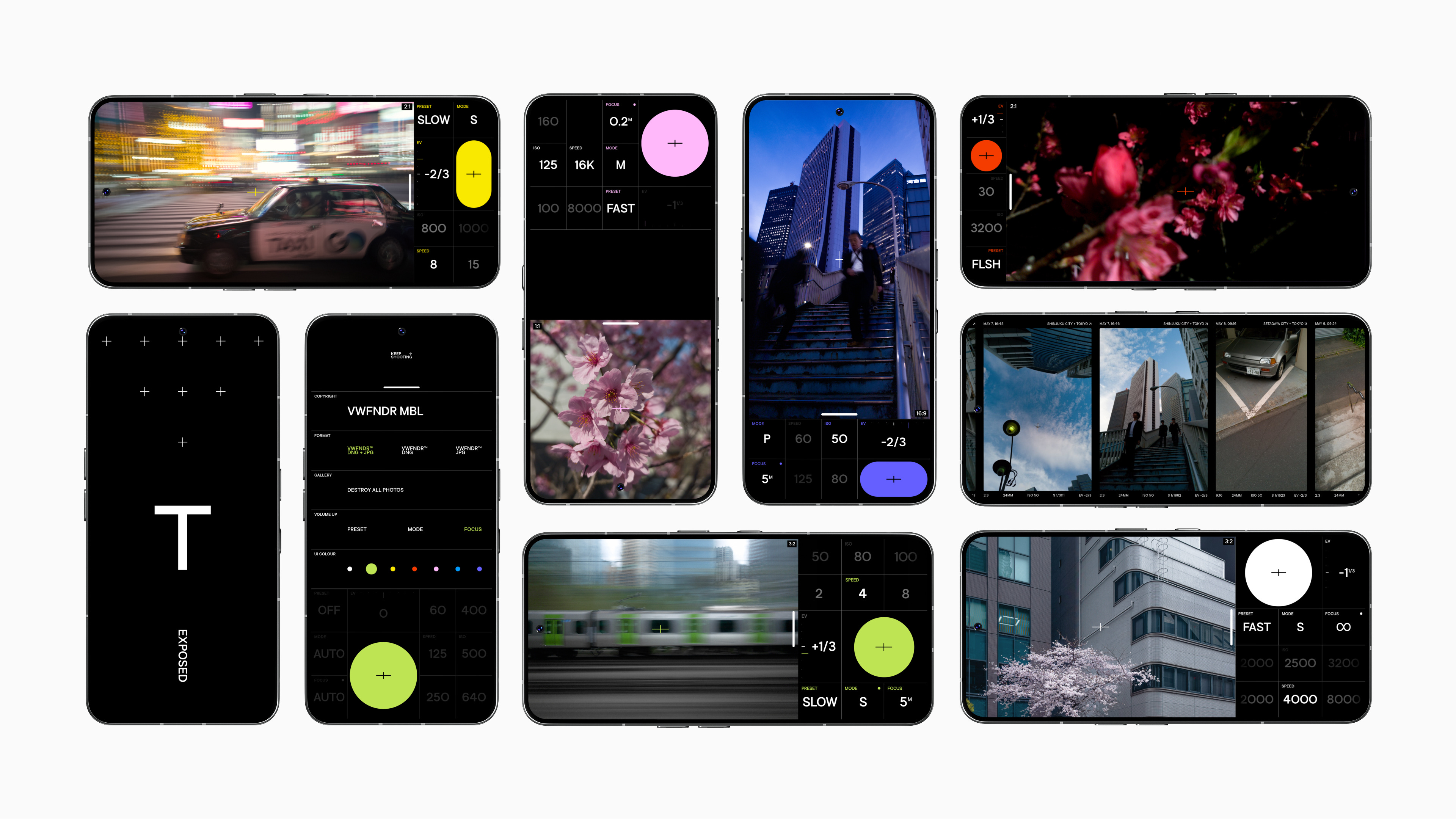
MBL approaches the phone as a photographic tool. It combines the accessibility of a smartphone with the clarity, predictability, and control traditionally associated with dedicated cameras.
We never intended to recreate a compact camera. Our goal was to preserve the qualities that made compact cameras so special, while embracing the speed, responsiveness, and fluidity of a device people already carry every day.
MBL brings that relationship to the fore, reinforcing the connection between seeing, deciding, and capturing. It is a tool designed to support the act of photography, keeping intention and authorship close to the moment itself.
Photography is also about trust. Knowing where an image came from, when it was made, and who created it. MBL was designed to help preserve that connection, maintaining a clear relationship between photographer, camera, and photograph.
A camera should help you see, decide, and capture.
Nothing more. Nothing less.

PREVIOUSLY
VWFNDR™ + MBL — 001
INTRODUCING VIEWFINDER MOBILE
VWFNDR™ + MBL — 002
BRINGING AUTHENTICITY TO THE MASSES
Comments
Nothing yet. Say the first thing.
Sign in to join the conversation.