
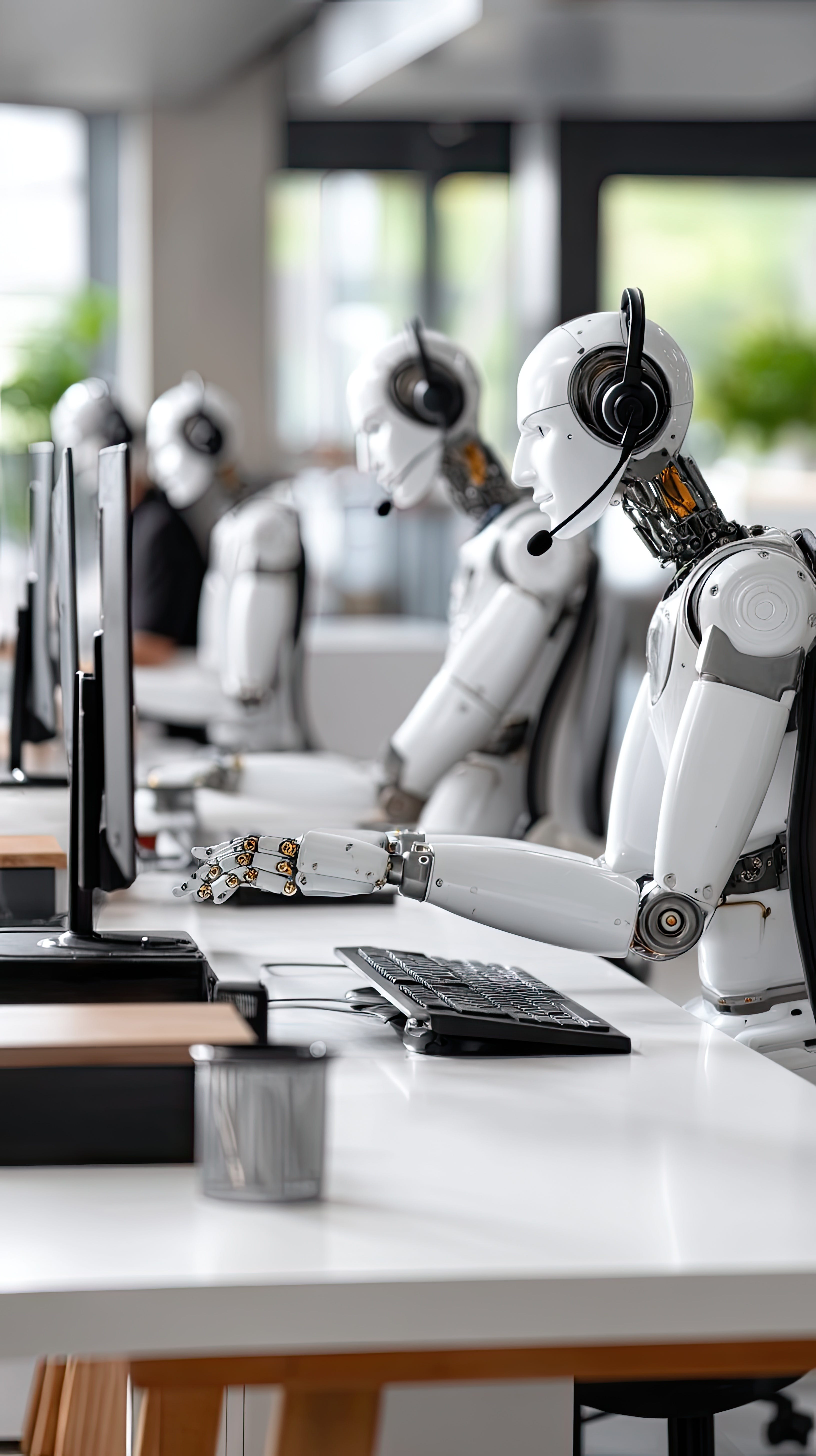
Like many Americans, I enjoy the monthly pleasure of calling Verizon to adjust my bill. OK, it’s not really a pleasure. It’s a ritual. Somewhere in Verizon’s billing department there is a machine, or possibly a person, or possibly a person who has become a machine, whose job is to add charges to my account that we did not agree to. My job is to call and remove them. We’ve been doing this dance for months. I assume it counts as a relationship.
This month the mistake was special. Large enough that I noticed it without looking, which is not the usual craftsmanship. So I made the call.
The first voice was an old friend: the classic chatbot. Chipper, dumb as a toaster. You know this bot. Everyone knows this bot. His purpose is not to help you. His purpose is to waste enough of your time that you give up and pay whatever number appears on the bill. He offered me menus. He offered me the website. He offered me everything except the one thing I called for.
So I did what I always do. I asked for a transfer.
And then something new happened.
For years we were trained like laboratory animals: press zero, say “representative,” keep pressing until a human appears. That ritual created its own expectation. After the first bot, the next voice is supposed to be real. So when the chipper toaster handed me to a woman with a warm, conversational voice, patient in the way call-center workers have learned to be, I assumed the old rule still applied.
Except.
I run an AI startup, and when you spend your days building these systems, you develop an ear for them, the way a sommelier can taste the oak. She had quirks. The answers came a beat too smoothly. The empathy arrived on schedule. The evasions followed a script no human would bother to memorize, because humans go off script.
So after a few rounds of pleasant nothing, I asked the modern question:
“Are you a chatbot?”
A pause. Then, in effect: well, yes.
Yes. Verizon had transferred me from a robot to a better robot. Escalation, in the customer service sense. I had been moved up a tier without changing species.
And here is the part I didn’t expect: I was impressed. Impressed by Verizon, a sentence I have never before typed. Not because anything got fixed. Nothing had. But because the vast majority of callers would never have known. The accent, the warmth, the small hesitations, all synthetic, all convincing. And the technology is not slowing down. This year I caught her. In a year or two, maybe I don’t.
Alan Turing proposed his test in 1950. It got settled on a customer service line, in the most tedious corner of American commerce, which is where you’d expect the future to show up first. Nobody wastes miracles on important things.
This is where I’m supposed to worry about Skynet. I mostly don’t. I doubt the machines are coming for us with red eyes and metal skeletons. If they are, they’ll have to get through their first assignment: customer retention.
The real worry is smaller, and worse. I did eventually reach a flesh-and-blood human, who fixed the mistake in about four minutes. But consider what I was calling about. A “mistake.” The kind that always, somehow, runs in Verizon’s favor. Month after month. A coin that lands heads every time is not a coin. It’s a business model.
Now give that business model a better robot. The bots may get better at serving us. I hope so. But they will certainly get better at the other thing: mistakes engineered to slip past us. Subtler. Priced just under the threshold where you’d bother to call. A machine that can almost pass for human can absolutely pass for an accounting error. The remedy is one sentence at the top of the call: you are speaking to a machine. Say it out loud, every time, whether or not I think to ask. Any company that fights that is telling you what it wants the confusion for.
That’s the real worry. Not robots that kill us. Robots that bill us.
After all, they learned from the best.
- Anastassia, co-founder VSTRAT.ai
No posts
Comments
Nothing yet. Say the first thing.
Sign in to join the conversation.