
Volupta has dedicated many of her articles to the unique and creative ways you can cultivate your beauty, glamour and style. The section archetypes gives you a selection of articles that take it from Jungian goddess archetypes to Tarot archetypes as well as archetypes we see in contemporary media. The sections on beauty and glamour offer articles on both inner and outer aspects of the cultivation, so you may enjoy the art of fragrance or how allure and skill come together or perhaps something else catches your eye.
I often mention how the story is an important component of a woman’s glamour. It is also the one that is often overlooked in the ‘womansphere’ of the internet. There is an article on how your style can become storytelling and also ways to find your myth.
Volupta’s very first article gave a good basis on what we will talk of today and expand upon much deeper. The linked article as well as this one are entirely free for everyone to read. Paid subscribers get an extra of having the read aloud in my voice but the entire article is free for everyone.
Nature, myth and art are aspects of reality that many women develop interest and appreciation for. Reflecting their own tendencies and psyche’s orientation towards the subtle, unseen and sophisticated, they see themselves reflected in these domains of reality. Identifying with animals, looking into the goddess archetypes or various other typologies, making moodboards and curating aesthetic pinboards are all very common. Since these aspects of reality reflect you and talk to you, you can take them as guides towards your own self-cultivation, beauty and glamour.
This approach will have a beautiful effect on you and how you relate to beauty and glamour. When you relate your beauty, glamour and allure to what reflects you, these things cease to be something imposed upon you or something you perform and a re oppressed by. They become an extension of you.
Another beautiful effect, which is healing as well, is that it will bring appreciation for differentiation and uniqueness of form, which will bring greater appreciation of your own nature, including your appearance. I often mention in my articles how the tendency towards uniformity that our contemporary world pushes us towards is anti-Nature. It is therefore anti-Goddess. Goddess is the term I use for the feminine principle we find spoken of in traditions across the world, be she Sophia, Shakti or another. Cultivation and active creation is not opposed to Nature in a sense of seeking uniformity, but has to do with refinement and shaping of the said. I usually bring the example of cuisine — even the most complex, artful cuisine is still nature since the meats, vegetables, dairy, fruit, herbs are all nature. By our human element and activity, we give nature new forms and help her expand.
Differentiation and uniqueness is inconvenient in our age that is committed to systems rather than to humanity. The less differentiated and unique we are in our appearances and tastes, the easiest it is to “standardise” products and sell them en masse. Rather than careful tailoring that makes sure a blazer or a dress fits beautifully a 5 foot or a 6 foot woman and of different shapes, fat distribution, limb length, the systematic approach creates a generic length and shape which can sit fine on most physiques but will not look like it was tailored for you. Fast fashion and bad taste are inseparable from the drive towards systems and uniformity.
True uniqueness and differentiation, when it comes to beauty, style and taste also has nothing to do with what we are commonly sold as ‘authentic self’ which is mere performance of an identity. It mistakes uniqueness to be merely in different performances of identity and outer markers — the punks wear X and hippies Y, but if we dive deeper, the average punk and the average hippie are actually the same at the core because both were given the final product of an identity. The system can generate identities to sell and distribute, but they all come from the same factory. There is no root and cultivation, or simply put, no nature, which brings the true uniqueness.
Which is why I wish to bring the trinity of nature, myth and art that shall be the guiding stars for you towards your story. Story is alluring, story summons into herself because we all want to live a beautiful story. We love fiction, TV shows, video games! We will take each element of this trinity and give some basic ideas so that you can begin practicing it and applying it to your life. As always, take these as guiding arrows and feel free to modify and change anything to fit your own particularities.
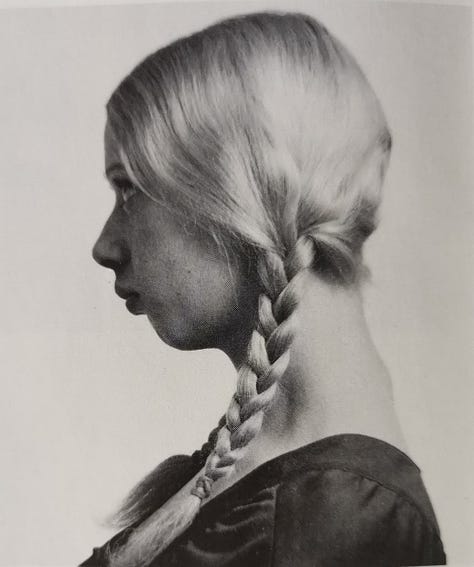
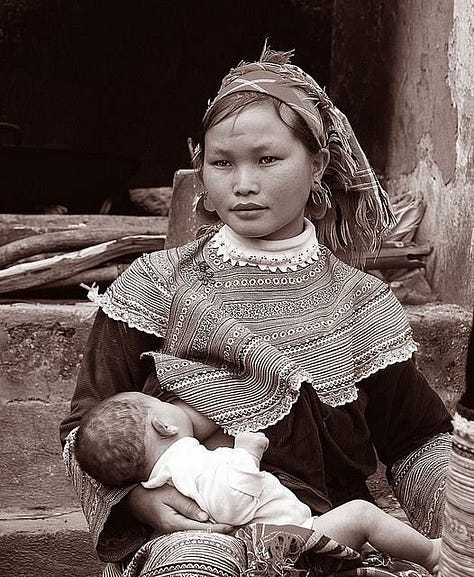
Nature inspires us all with her beauty and variety. Forests and mountains, lakes and rives, deserts and dunes, karst and caves, oceans and beaches, a variety of trees, flowers, fruit, vegetables, animals, habitats. Then of course, we can add to this the beauty and variety of humanity: different features and shapes of the eyes, noses, cheekbones or lips, different skin, hair and eye shades; different amounts and patterns of body hair, different body structures.
Looking upon this in the vast, you begin to bring it closer. You make it particular and personal. You can look upon the landscape of your ancestral land or land you are born in and relate to — what shapes and elements do you see that relate to you? If you were born and grown among the mountains, for example, do you find yourself to resonate with the regal, noble, untouchable aspect of the mountains? Or perhaps you resonate more with the innocent, so called naïve aspect of the mountain, the flowers, the grazing cows and sheep, and the simple but robust, strong, hardworking folk? Do you have features that reflect either of those — for example, high nose bridge, to reflect the nobility of the mountain? Or perhaps your built is what some would call “stocky” but that yet reflects the body’s capacity to climb the mountains easily as it carries weight?
Perhaps you have a flowing, soft form that reflects the soft green hills? The plumpness of your form reflects the fecundity of sunny meadows, gentle breeze and freshwater. It flows and curves like the landscape. Perhaps you are then the ‘milky” type of person — a person who loves leisure, deep sleep, ease, rest.

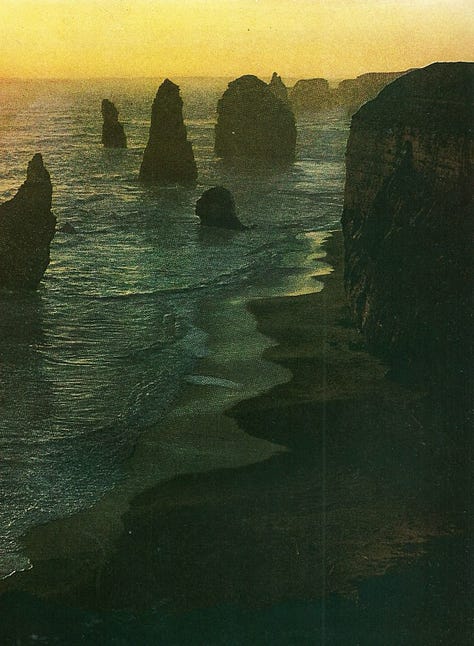

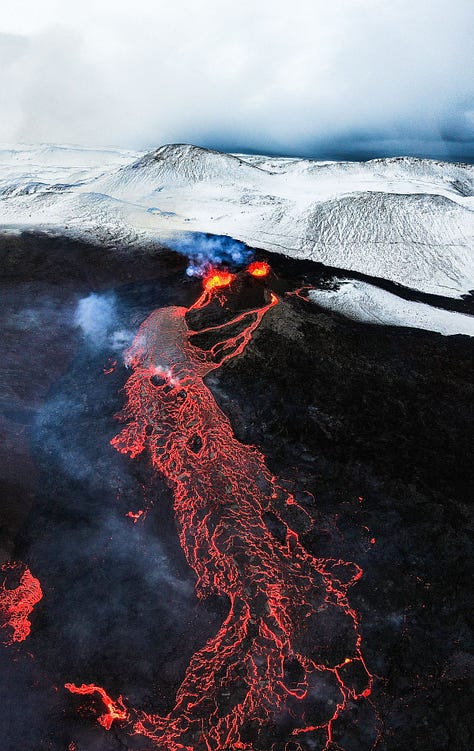
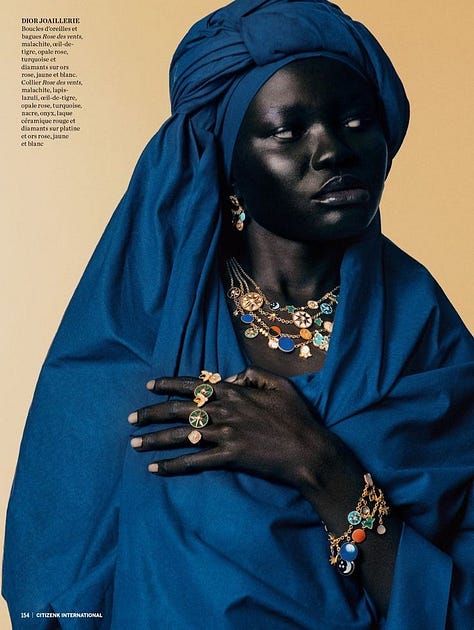
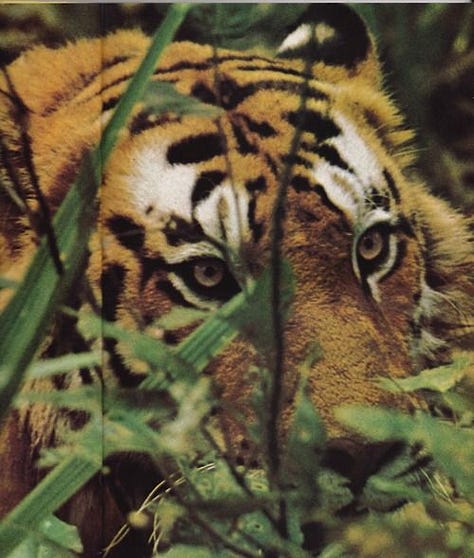
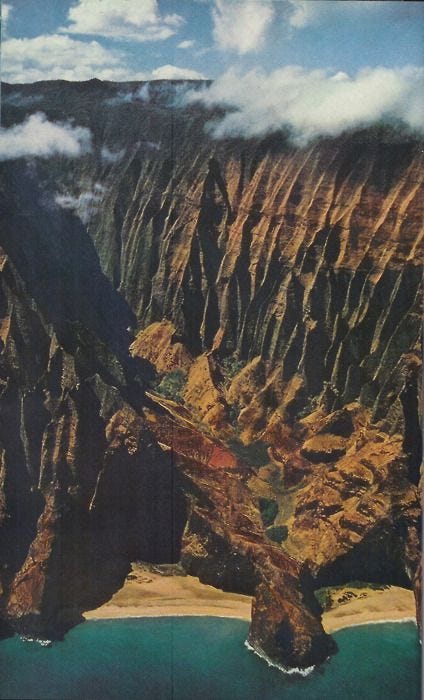
Or you see a desert and her dunes, and your form is not as plump as the one of the meadows but yet is soft and curvy, with a dash of sharpness, robustness or dryness. A ‘drier’ softness. Dry does not mean negative here. It is simply a nature’s quality — air can be dry or soil can be dry, it is just a particular ecosystem. Maybe your skin has the sandy shade to it or it has the terracotta, reddish effect?
Then you see the soil, soaked with water, turning dark, reflecting the colour of your skin. Your skin is the dark soil left behind by the annual flooding of the Nile River, the rich sediment. Maybe you are from a place of snows and sharp noonday Sun of the North, and your skin and hair reflect these natural beauties. Is your skin gentle and delicate like silk, needing soft approach to skincare or is it thicker and stronger like quality leather and therefore needs buttery, rich, penetrating balms?
Another element that I would love to add here is ancestry. Ancestry is the more natural, instinctual, inherited part of us. It is something we cannot choose. It lives inside of us. I commonly speak how important it is to root ourselves in our ancestry. They are not our end points but our beginnings. Only rooted are we strong, and only rooted do we appreciate, learn from and even incorporate the Other in a way that does not project our own deficiencies and fantasies on them. Seeing ourselves allows us to see others. Communing with ourselves allows us to commune with others.
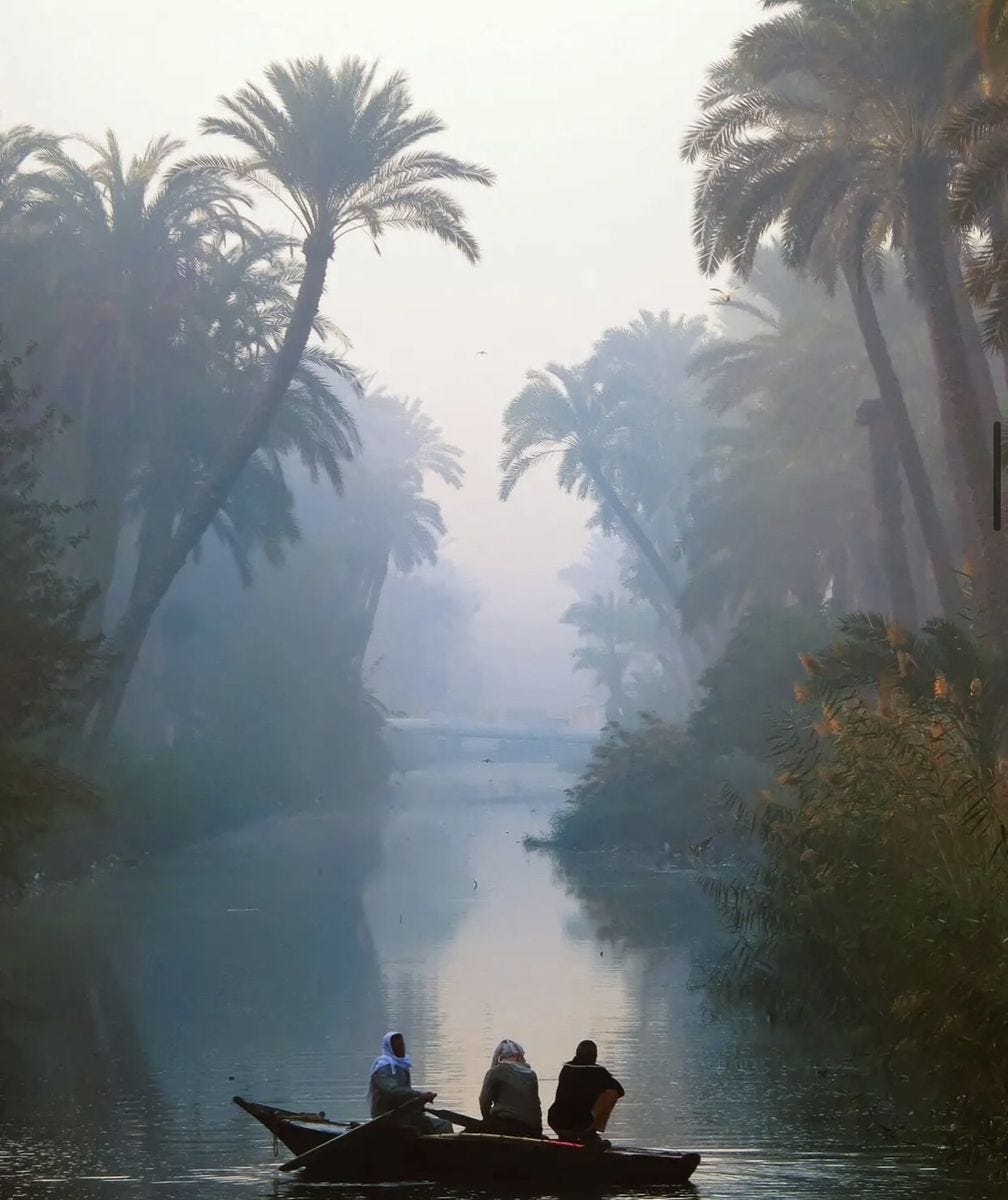
You can make it both individual and broader ancestry. It can be your grandmother’s ancestry or it can be ancestry of the soil or place — you do not have to remain limited to nation states or borders which can change; you can find a more ancient belonging that is populations, culture, regions, civilisational belts, whichever works for you! Let it be yours! It is your story!
Ancestry and your parents or grandparents, can have you develop appreciation for your features. If by extension, you also learn how those specific set of features helped them thrive in certain parts of the planet, you can develop deeper appreciation and see your features not as a mere accident but as something created through unique communion of humanity and geography.
To play with this creatively, you can add elements of folklore to your outfits or make up. You can wear your grandmother’s watch or fur coat. You can learn about their make up rituals, bathing rituals, the prayers they would say before sleep or for beauty and repeat them yourself. You can look up the symbols and stories that were important to them. When the symbolic arises is when our nature, the primordial matter, takes us into myth.
Our earliest myths and tales come from Nature. Sometimes this is known as Subtle or Enchanted Earth. Lakes and rivers are occupied by spirits; the ocean has her creatures; the grove, the volcano, the desert are all full of theirs too. Natural phenomena were personalised and given a story or a myth. It is all very intuitive — all of us women have experienced the wind lifting our skirts or dresses. Having experienced that, we can understand why winds like Zephyr or such may be considered mischievous, playful even perverse. The more abstract application of these principles, like alchemy, assigned the same to the elemental air: exploration, freedom, curiosity, love of pleasure and stimulation. This reminds us of the earlier said that the more etheric is not separate from our more instinctual and primitive experiences but are those same experiences approached from a different level or angle.
I would love to give you two subcategories of the myth that can make it easier for you apply to your beauty and allure. The two categories are the natural myth and the civilisational myth. The natural myth is folklore, the fairies, the ‘strange’ symbols on the embroidery and jewellery. The nature spirits, the Faerie Land belongs here as well.
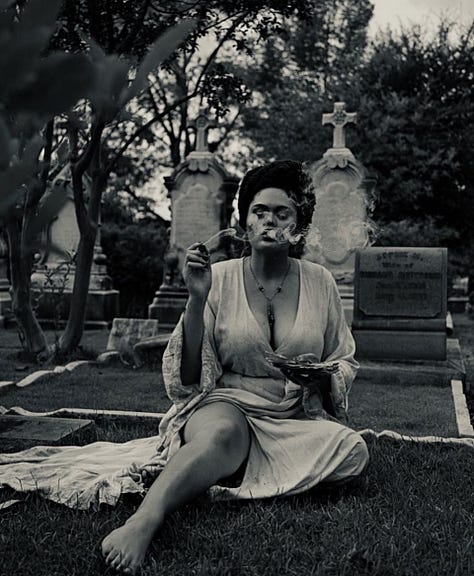
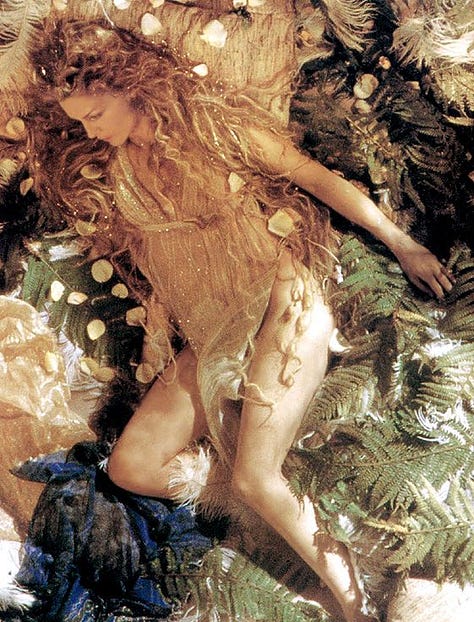
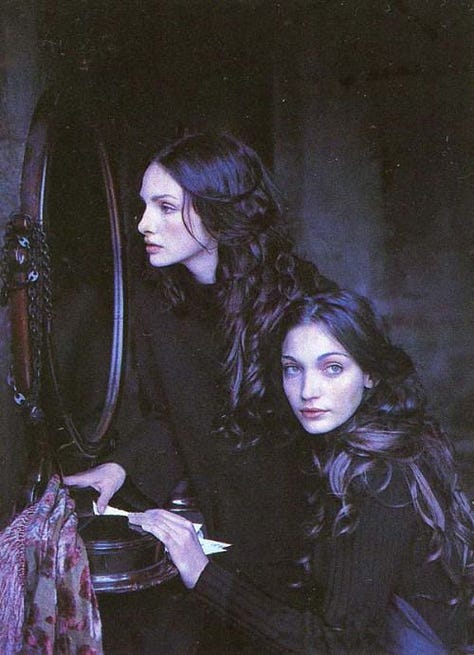

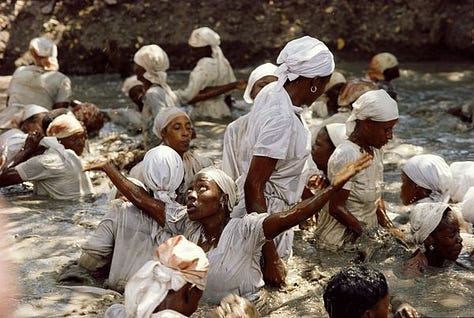
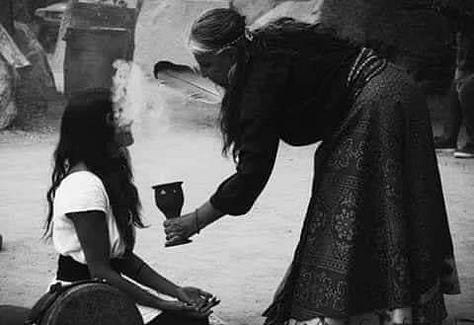
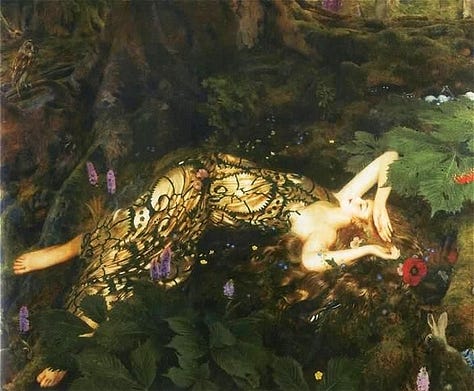
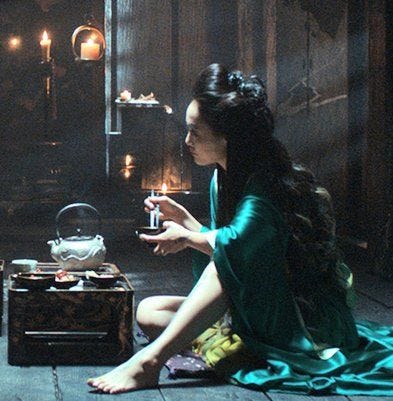

The civilisational myth has to do with courts, kings, queens, princesses, enthroned deities, heroes, troubadours, poets, romance, theatre, cinema and all the so called courtly drama. They of course, are not separate, for a princess in a civilisational myth can carry a necklace that has a folkloric, primordial element. And she can be a nature spirit as well. Differentiation does not imply separation.
To apply the natural myth, you can look into the folklore or beings of the Enchanted Earth. You can take them from your own ancestral background or borrow from others that speak to you, or you can combine both. For example, maybe people commonly tell you that you look like a doll (she is an object but so important in folklore and is the first toy for many girls)? Or they tell you that you look ‘like a bird’ so perhaps a harpy is part of your myth? Maybe you are an athletic Amazon. Are you the Man-Eater, the one who bathes in the blood of men she had slain? You have probably taken a million of quizzes of whether you are a fairy or a mermaid and what kind of witch you are. The concept is not new, but what can be new, if you have not done it, is to actively cultivate it. It does not mean merely wearing a costume although we are not denying the importance of the exterior, but cultivating the said qualities inside and outside.
Enhance your doll-like features, incorporate the maidenly, gentle, vulnerable & even fragile elements in your style. Curl your hair, blush your cheeks, and cultivate the allure of speaking little or speaking so quietly that others have no other option but to lean into you in order to hear you. And then you talk softly into their ear! The Man-Eater should not break her bones in order to prove she is not dangerous. Perhaps she has a soft heart too, it does not have to mean that she is not a Man-Eater! Let people (men) watch from distance, afraid to approach; let it be known that you will not hesitate to drain a life out of him and who knows, maybe, maybe, he may strike your soft chord and you will fall in love! Wear clothes and make up that command power or a degree of unapproachability and even hostility. If you have more than one in yourself (most of us do), then let both shine at different moments without needing to annihilate either.
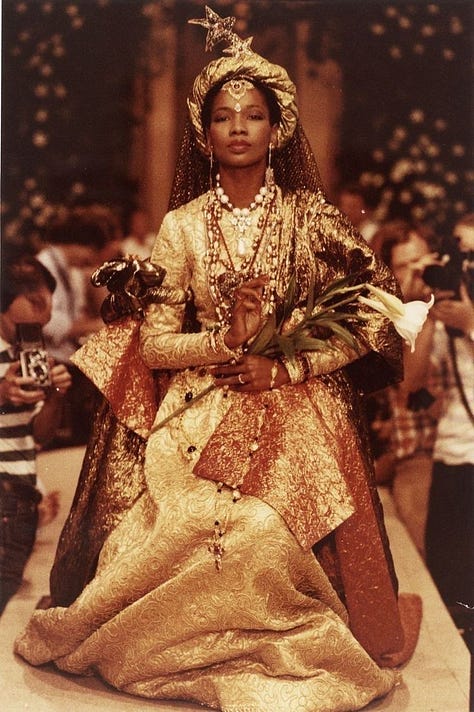
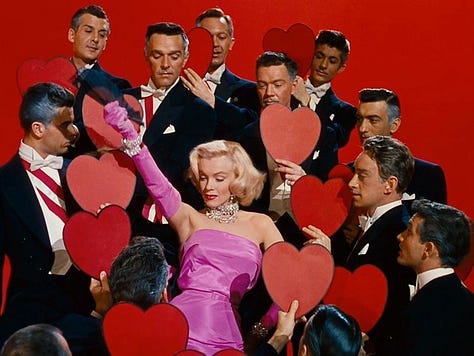
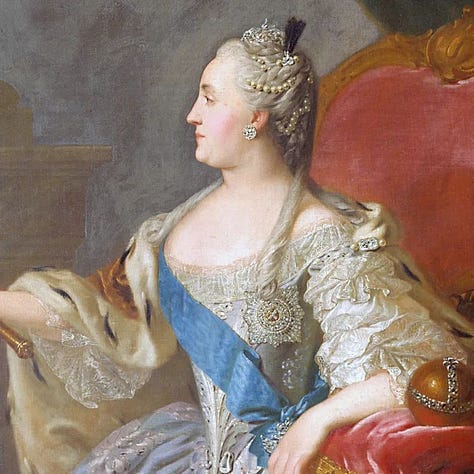
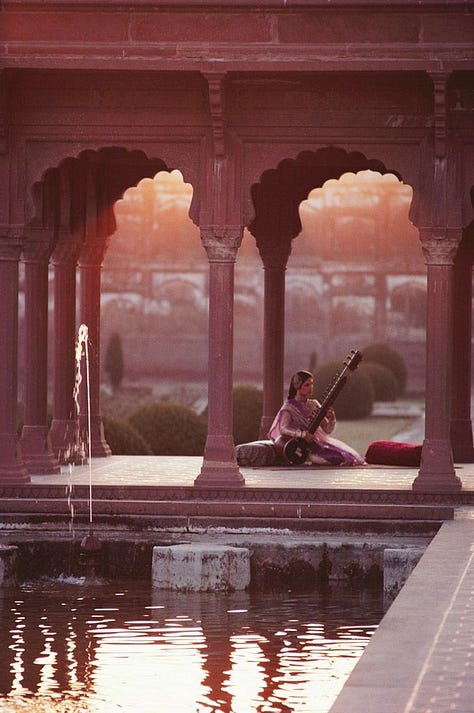

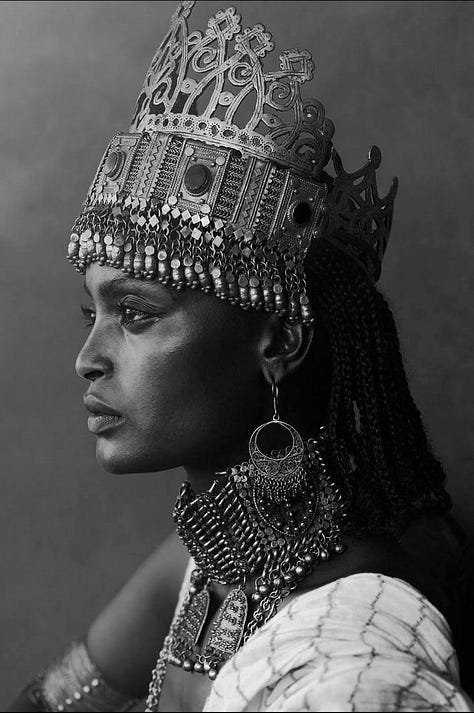
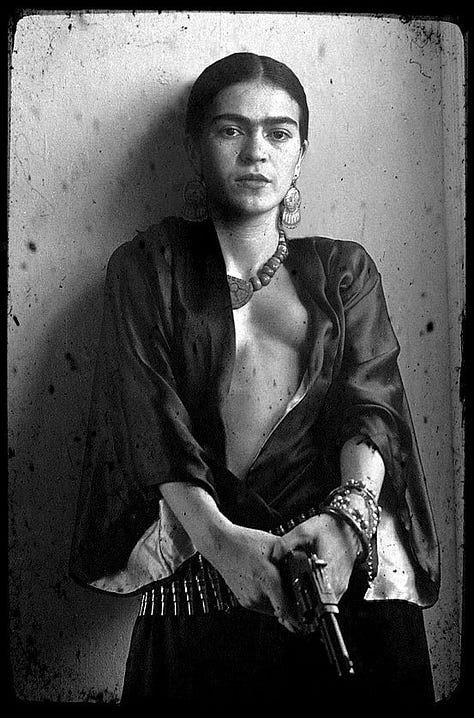

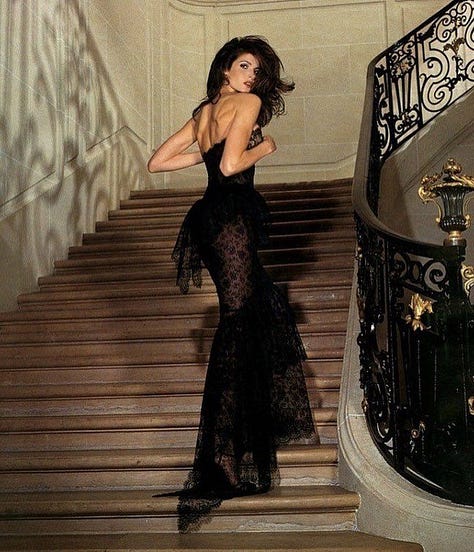
For the civilisational part of your myth, you can look into deities, into queens and princesses, and in the more contemporary context, into women that inspire you (they can be of any profession or life path, yes, even a nun or a saint!). Maybe you love an Enlightenment Empress with her authority and patronage — you can study the lifestyle, the aesthetic and other influences of the time and see creative ways to translate them into contemporary life. If your character and temperament already leans there, learn from Maria Theresa or Catherine of Russia. Maybe you like a Mughal Queen or a Biblical Queen or an Arthurian one. Maybe you have a darling among each. Religion and religious symbols and meanings can be your pool of inspiration and you the embodiment of them.
Maybe a woman from a Greek epic, from a Nordic Edda, from Mahabharata reflects you — then let her be the guiding star! In our contemporary times, starlets, models, actresses, writers, artists, singers, politicians, public figures, socialites and more can be the part of the civilisational myth.
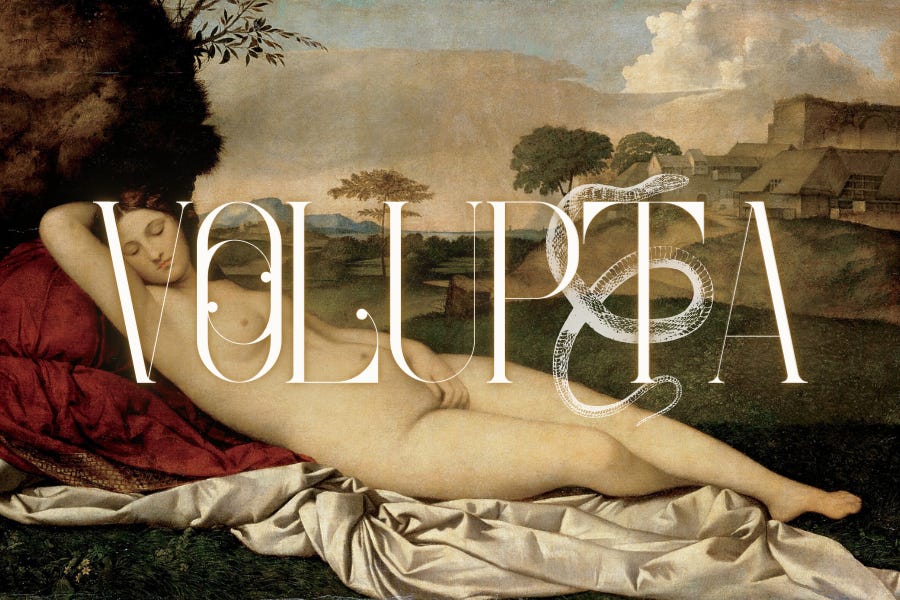
In art, we reach the most conscious ‘world building’. Every art piece may be called a world or cosmos of itself. Using art for our beauty, glamour, allure and personal story means that we use it to guide us. We pay attention to texture and colour, to the sound, to the atmosphere.
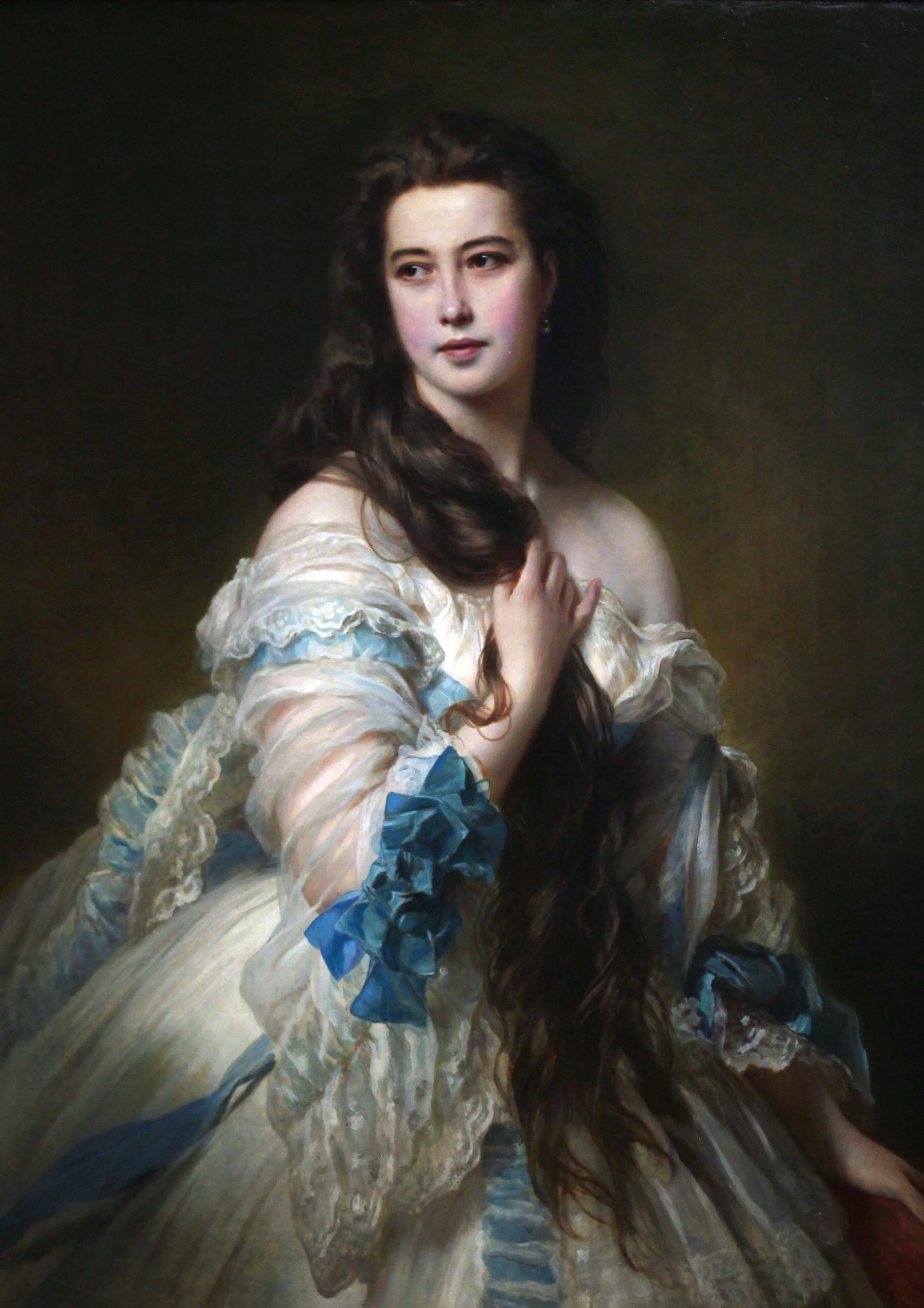
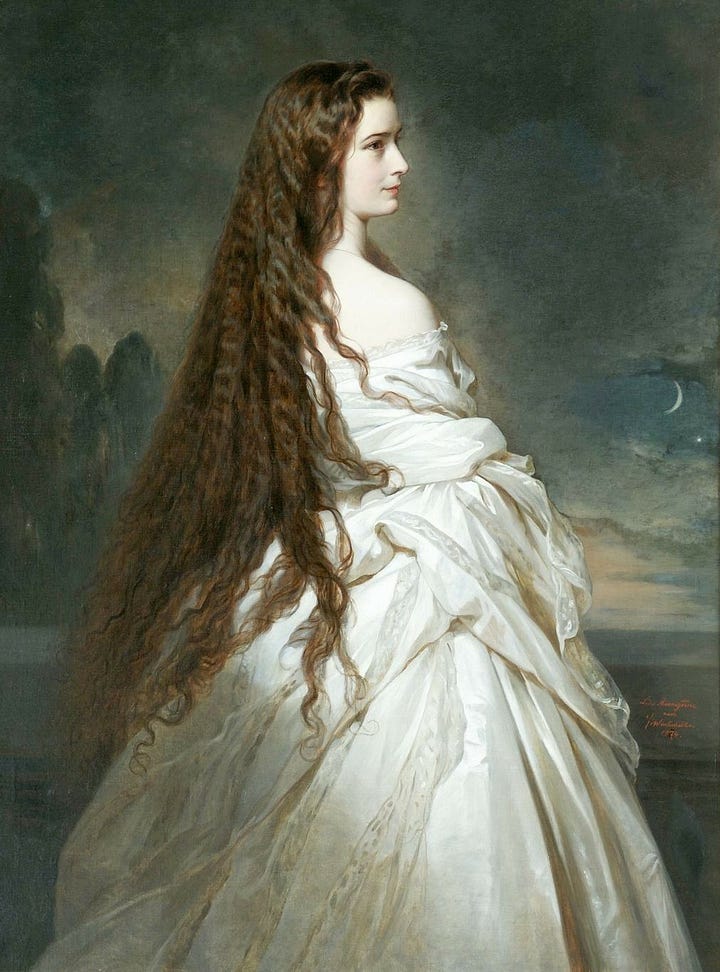
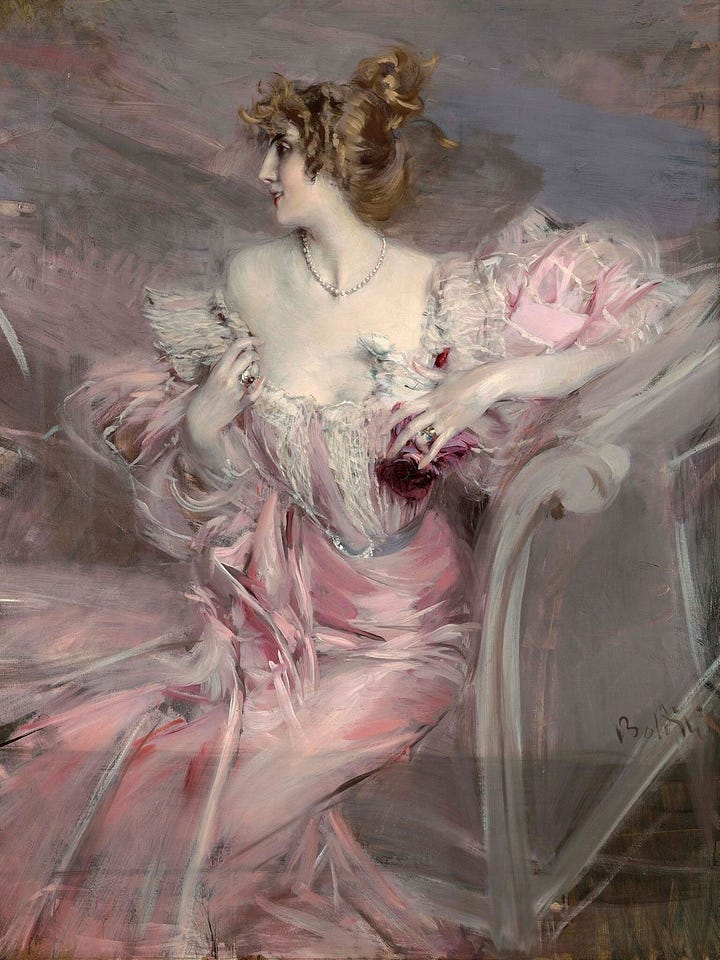
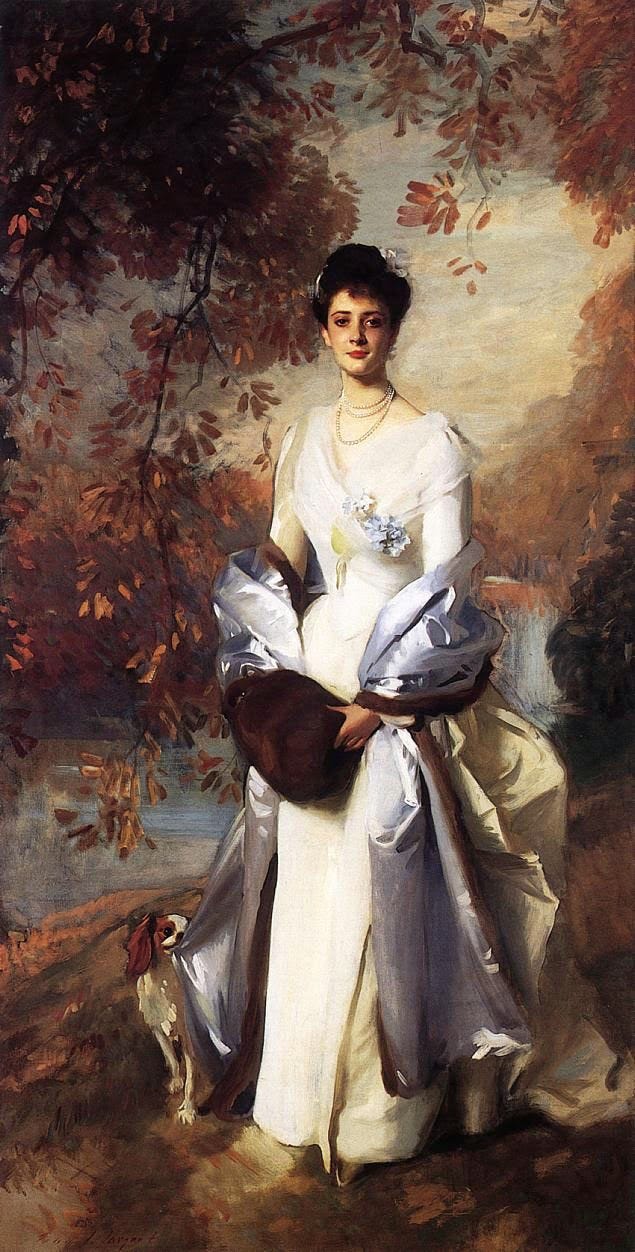
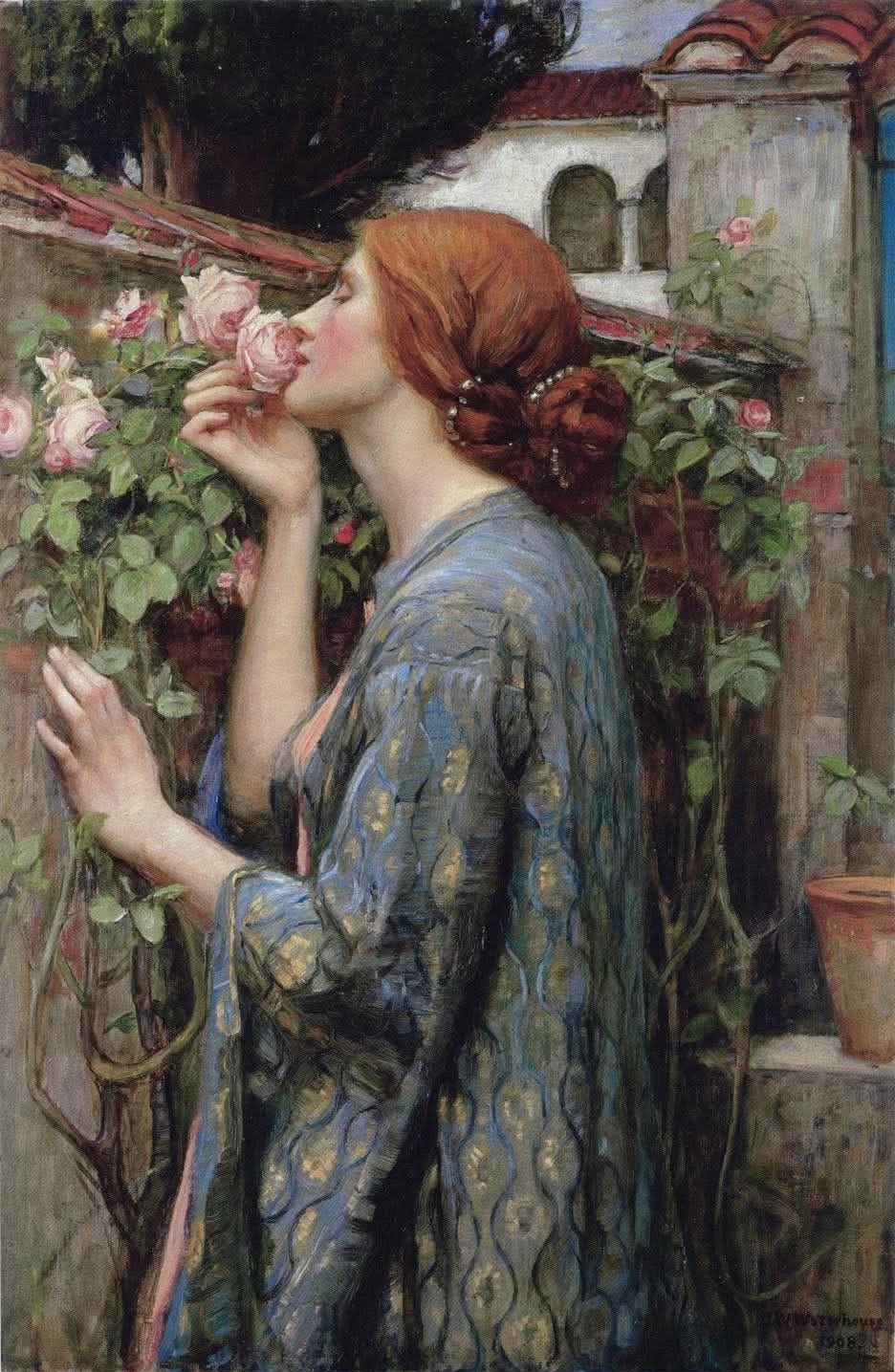
As everything, let it be what you gravitate towards and see yourself reflected in. Maybe you love the romantic portraits of Winterhalter or Reynolds. If so, truly give yourself to them. Study them. Dedicate time and effort to contemplating them. Deduce their essence. What do they communicate to you? Majesty? Regality? Dignity with play? Beauty? How do you translate these into your demeanour, speech, appearance? How do you translate them to your inner life — thoughts, ideas, habits? Perhaps it is a Boldini or Sargent muse that you look towards? Who is she? What is her inner and outer world? How does it reflect you? What do you need to refine, sculpt, add or remove to come closer to your own image that you see reflected in her? Or is it a Pre-Raphaelite one that you see yourself in?
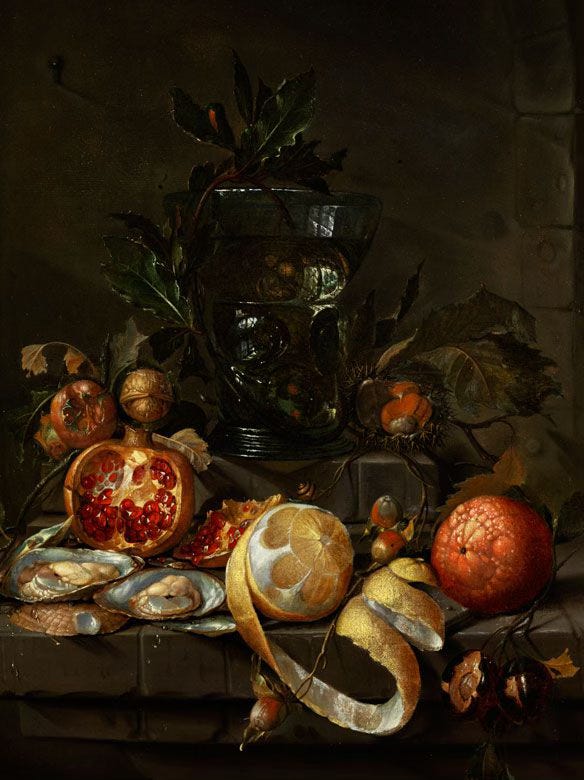
Do not limit yourself to portraits only. Still life, landscape and other paintings can offer as much. If you love a still life by a Flemish master, what is in it that it reflects to you? Fertility in death and ripeness? Life and decay? Indulgence? Excess? How do you translate these?

Music, cinema and literature can also be your source of inspiration. The music you gravitate towards and the playlists you make can be your guide. Ask yourself the same questions like above — what is the heart of what pulls me and how do I translate it into what I am? If you are unsure, sit with the silence and emptiness and let the answers come. The mood and the spirit of films or literature that you love serves the same purpose.
The guiding stars of nature, myth and art are supposed to take you into yourself, your own nature and your own soul, and as you cultivate and refine them, it will also take you outside of yourself, or more precisely, it will allow your own nature and soul to expand. Step by step, you will become the shining star, enchanting and seducing the world with its glow, taking it into an unforgettable story and experience.
I hope you enjoyed the article!
With Love,
Naida
Library
July 19, 2024
This is an ever-growing, regularly updated Volupta library and resources collection that you can come back to any time to explore and engage with. It is curated and includes everything from wellbeing…
Comments
Nothing yet. Say the first thing.
Sign in to join the conversation.