
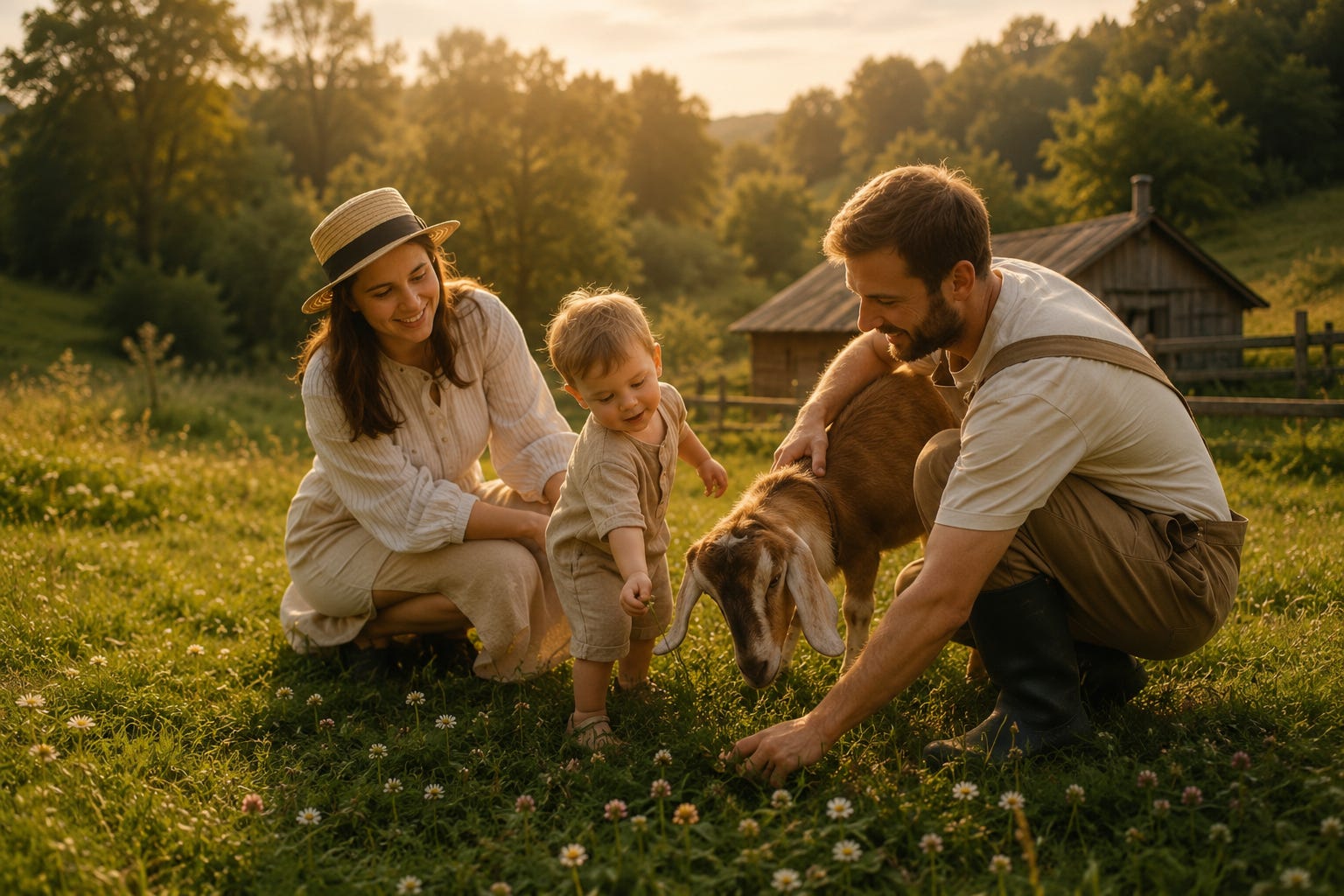
For millions of years, life on Earth moved at the pace of nature.
A seed did not hurry to become a tree. A river never rushed to reach the ocean. Seasons arrived when they were ready. The human body healed in its own time. Children grew slowly, wisdom arrived gradually, and civilizations evolved over centuries.
No one called this “slow.”
It was simply life.
Before factories, railways, and digital networks reshaped the world, human life followed natural rhythms. People depended on the seasons. Farmers waited for rain. Crops took months to grow. Trees took years to bear fruit. Animals determined the speed of travel, and rivers and winds often influenced the pace of journeys.
Life was not necessarily easier.
People faced droughts, diseases, wars, and uncertainty. Yet despite these hardships, there was a broad acceptance that many things could not be rushed. Food required patience. Travel required patience. Healing required patience. Nature set the timetable, and people lived within it.
Then, around two centuries ago, something remarkable happened.
The Industrial Revolution transformed humanity’s relationship with time.
Steam engines replaced muscle. Factories demanded schedules instead of seasons. Production became the measure of success, and speed became the language of progress. Electricity, automobiles, telecommunications, computers, and eventually the digital age accelerated life even further.
For the first time in history, faster became better.
Machines became faster.
Transportation became faster.
Communication became faster.
Business became faster.
Gradually, we began expecting human beings to become faster too.
Today, a webpage that takes a few seconds to load feels frustrating. A delayed train seems inefficient. A slow internet connection irritates us. Even conversations, careers, relationships, and personal growth are often expected to move quickly.
Somewhere along the way, the word “slow” became a criticism.
But nature never made that judgment.
A forest still grows one season at a time. Mountains still change over centuries. Oceans follow their own rhythms. A seed never becomes a tree overnight.
More importantly, neither do we.
Our hearts do not beat as fast as machines. Our nervous systems were not designed around deadlines, notifications, and constant acceleration. Our minds still seek silence, reflection, and recovery.
Perhaps this is why so many people feel exhausted.
The modern world keeps demanding greater speed, while the human body quietly asks for balance.
This becomes especially visible during major transitions in life.
Many people spend decades working against the clock—meeting deadlines, solving problems, chasing targets, and constantly moving. Then one day, retirement arrives, a career changes, children leave home, or life unexpectedly slows down.
The body slows.
But the mind often struggles to follow.
Years of conditioning can make rest feel uncomfortable. Silence feels unproductive. A slow morning begins to feel like wasted time.
The challenge is not slowness itself.
The challenge is that we have forgotten how to live without urgency.
Yet there are moments when something within us begins searching for a different rhythm.
Sometimes after burnout.
Sometimes after loss.
Sometimes after years of rushing.
Without fully understanding why, we find ourselves drawn toward quiet mornings, long walks, gardens, birdsong, oceans, mountains, and simple moments that ask nothing from us except our presence.
Many people mistake this desire for laziness.
I see it differently.
I believe it is our body remembering the rhythm it was designed for.
When your life unexpectedly becomes slower, do not immediately assume something is wrong.
Maybe your mind is asking for recovery.
Maybe your body is asking for rest.
Maybe your soul is asking you to reconnect with something that modern life has pushed aside.
Slowness is not the opposite of success.
Sometimes, it is the beginning of clarity.
Technology will continue to accelerate. Two hundred years from now, today’s fastest innovations may seem incredibly slow. Distances may shrink. Travel may become nearly instantaneous. The future will undoubtedly move faster than the present.
But one question will remain:
Can the human heart keep adapting to every increase in speed?
Progress is necessary.
Innovation is necessary.
But not every part of life is meant to become faster.
Some things lose their beauty when rushed.
Friendship.
Healing.
Learning.
Grief.
Love.
Nature.
The most meaningful lessons in life rarely arrive in a hurry.
Slowness is not laziness.
Slowness is not weakness.
Slowness is not failure.
It is the original rhythm of life—a rhythm that sustained humanity long before factories, clocks, algorithms, and deadlines taught us to measure every second.
Perhaps the future does not only need faster machines.
Perhaps it also needs people who remember that living and rushing are not the same thing.
So if life has slowed for you, do not be afraid of it.
Sit beneath a tree.
Watch a sunrise.
Grow a plant.
Listen to the rain.
Walk without checking the time.
Those moments are not interruptions to life.
They are life itself.
Nature has never been in a hurry, yet every forest, every ocean, and every sunrise arrives exactly on time.
And perhaps when life becomes slow, nature is quietly inviting us back into its rhythm.
Have you ever experienced a season when life unexpectedly slowed down? Did it feel like failure—or did it become one of the most meaningful chapters of your life? Share your thoughts in the comments.
No posts
Comments
Nothing yet. Say the first thing.
Sign in to join the conversation.