
A historic UN vote signals that climate action is no longer just a political choice—it is becoming a global responsibility.
The climate crisis has been debated for decades.
Scientists have warned about rising temperatures, disappearing ecosystems, extreme weather events, and growing risks facing communities across the world.
Yet one question has always sat at the center of the debate:
Who is responsible for acting?
Last week, the world delivered one of its clearest answers yet.
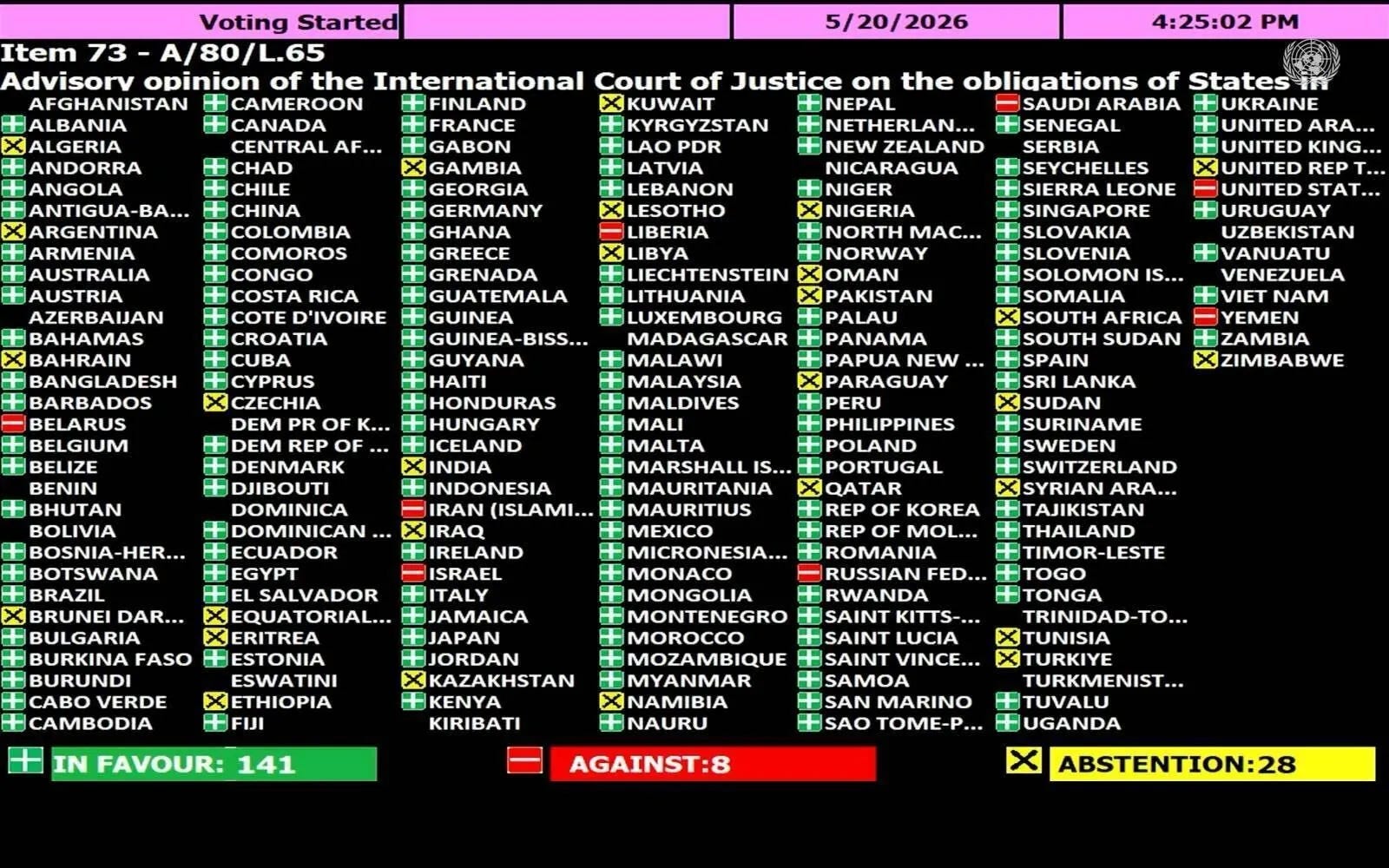
The United Nations General Assembly voted 141–8 in favor of a landmark climate resolution affirming that governments have obligations to address the climate crisis.
The message was unmistakable:
141 countries in support
8 against
28 abstentions
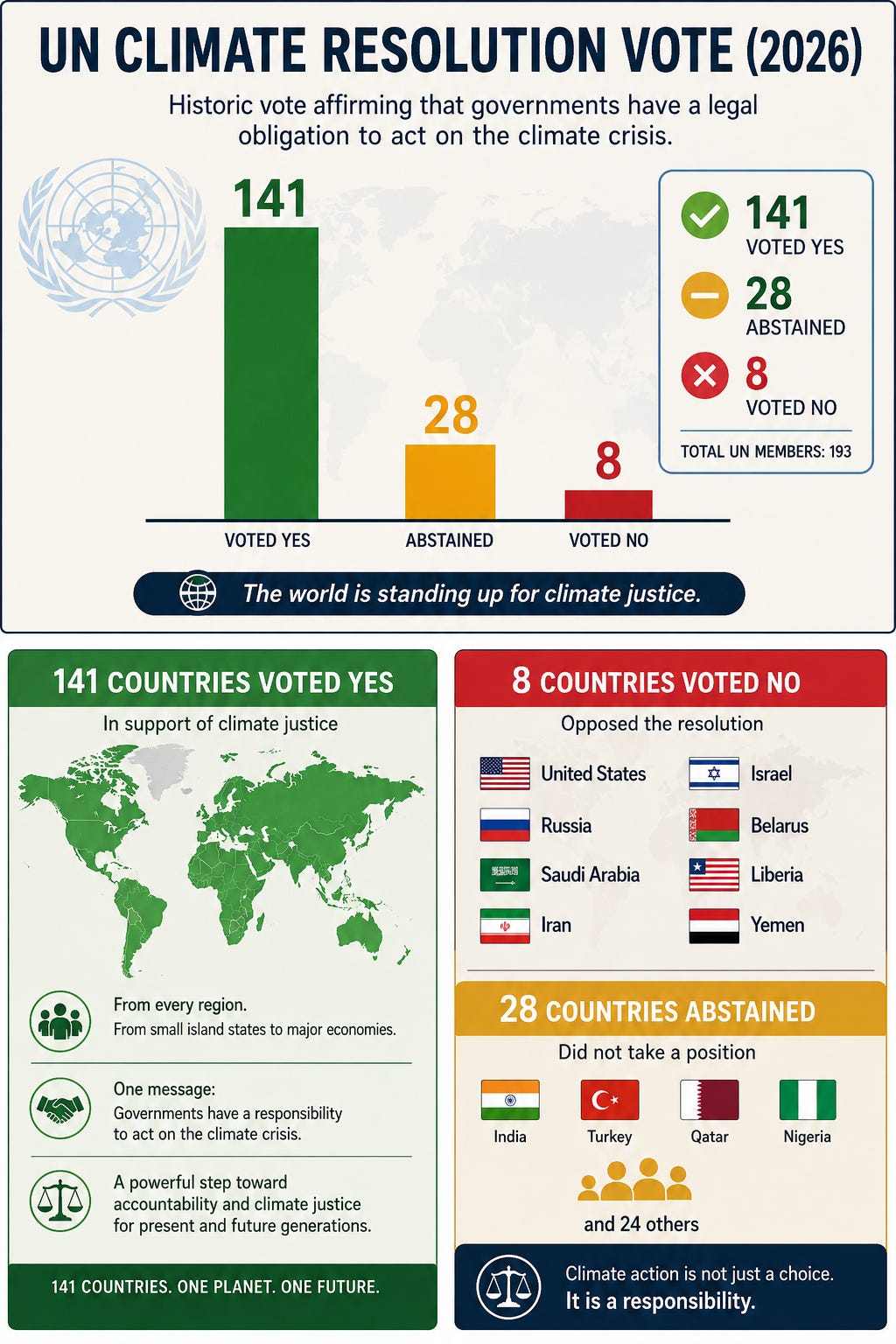
For climate advocates, the meaning of this moment goes far beyond the numbers.
The resolution strengthens a growing global argument: climate action is not just a matter of policy preference—it is a responsibility governments owe to both current and future generations.
What makes this development even more striking is where it came from.
Not from a superpower.
Not from the world’s richest economies.
But from a small island nation already living the reality of climate disruption.
The push was led by Vanuatu, a Pacific island country already facing rising sea levels, coastal erosion, and intensifying storms.
Their message was simple and direct:
If harm is already happening, doesn’t the world have a duty to respond?
That question eventually reached the International Court of Justice, the world’s highest court for international disputes.
And now, it has reached the United Nations General Assembly itself.
141 countries answered in agreement.
The climate crisis has not been solved. Emissions remain high. Transition is uneven. And global cooperation is still fragile.
But something important is changing in the way the world frames the problem.
For years, climate action was treated as optional—something tied to political will, economic convenience, or national interest.
This resolution signals a shift toward a different idea:
Climate protection is becoming a responsibility, not a choice.
And when more than 140 nations move in the same direction, it becomes harder for the world to ignore the direction of travel.
There is another layer quietly shaping this transition.
The rise of renewable energy—especially solar and wind—is slowly changing how nations think about power, dependency, and security.
Energy independence reduces reliance on imported fossil fuels, stabilizes long-term costs, and weakens the geopolitical leverage that has historically come from oil and gas control.
This is where the shift becomes deeper than climate policy alone.
Because energy independence is not just about emissions—it is about balance.
A world powered more by distributed renewable systems is a world with fewer chokepoints, fewer fuel-driven conflicts, and potentially more stability between nations.
The climate crisis is still here. No resolution changes that overnight.
But what this moment reflects is something more subtle—and more important.
A growing recognition that the systems shaping the planet’s future cannot remain unchanged.
141 countries did not solve climate change last week.
But they did something significant:
They made it harder to pretend it is optional.
And that, in global politics, is often how real change begins
No posts
Comments
Nothing yet. Say the first thing.
Sign in to join the conversation.