
It would be so easy to consciously slow down. But who goes first?. @vlkodotnet
After last week’s news that OpenAI had breached Hugging Face and Hugging Face couldn’t defend itself with the usual models (it took the open GLM 5.2 model to help), there was no way it would stay unanswered.
The first reaction was the founding of an alliance for AI safety. Safety is supposed to be delivered by open software, open models and freely available specialized agentic harnesses. Nvidia is promoting this alliance the hardest, which makes sense — all those open things have to run on something. What will interest you more, though, are the companies that aren’t in it. Anthropic, OpenAI and Google are not among the signatories. Exactly the companies with the top AI models.

OpenAI at least released Codex Security, a tool for finding, validating and fixing security vulnerabilities.
Employees of the top AI companies reacted too, warning that AI models are advancing extremely fast. They’re worried it will stop being humanly possible to keep the models’ capabilities in check. Those models already have superhuman abilities when it comes to processing enormous amounts of code and finding hidden vulnerabilities in it. In a way, this is what we developers always dreamed about — just in a somewhat more controlled fashion. So we should deliberately slow down, prepare the tools and the processes, and then humanity will be just fine.
The RAM shortage is so severe that all it takes is for a company making DDR5 RAM modules — including older-generation ones — to go public, and investors immediately tear each other apart over its shares. That’s what happened with China’s CXMT.

Google didn’t have the best week. It got two fines from the EU. The first, €430 million, is for restricting developers from telling users about cheaper payment options outside Google Play. The second, €460 million, is for favoring its own services in Google Search. That’s the whole business of surfacing products and various other answers to queries in cooperation with partner companies.

Google also lost its DMCA claim against SerpApi, which scrapes its search results and offers them as its own service. The court’s reasoning is simple: Google can hardly claim copyright over something it scraped from others itself.

And to round out the trio, the European Commission ruled that Google has to make AI integration in Android interoperable. That means every AI assistant a user installs will have the same capabilities as Gemini Intelligence. Google will also have to start sharing Google Search interaction data with competitors for a reasonable fee.

That’s not all, though. AliExpress got a fine of its own for repeatedly failing to stop illegal, unsafe and counterfeit products. The identified causes of that failure: understaffing, recommendation algorithms and internal processes.

Let’s come back to Google once more. It’s rolling out its Age Signals API globally. It lets parents set age-category rules, and developers can then adapt their apps to that setting. Games and apps can therefore reach a wider audience.

You may not have heard that some LG monitor owners got a driver update that came with adware promoting McAfee. Microsoft itself had to step in on this one. Maybe this will bring some clarity to how drivers and driver updates get installed automatically through Windows Update.

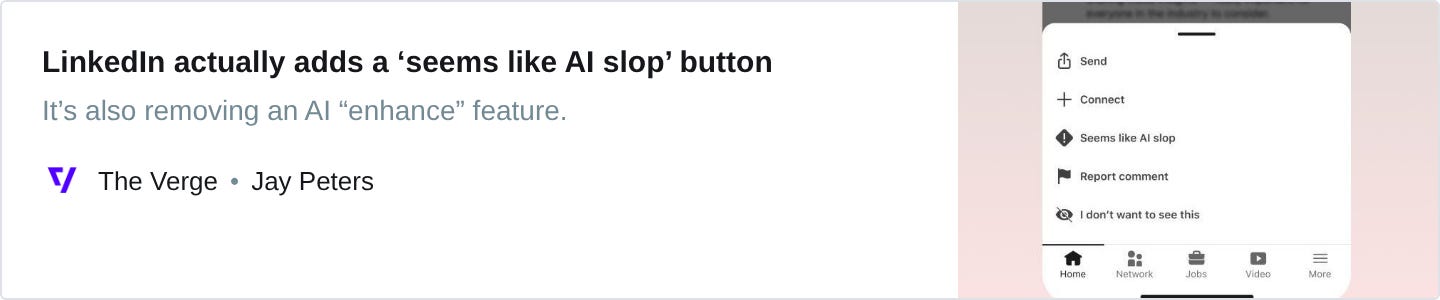
LinkedIn added a button for reporting “AI Slop” content. Cynics say that’s three quarters of everything on LinkedIn. But if you do happen to run into exactly that kind of content, make the internet a better place to live and report it.
The next story was almost the topic of the week. Then I figured it probably interests me more than it does you. Still, it’s fascinating to watch how fiercely the gaming industry resists AI content. Given what AI models can do, I strongly doubt they aren’t using it already. Yet 78.5% of game developers say they aren’t. Or maybe I’m reading the whole thing wrong and they mean music, voice, graphics and text content specifically.

Kimi K3 is already available as open-weight on Hugging Face.

ByteDance released a new version of its Seedance 2.5 model, which can generate outputs up to 30 seconds long and supports extending video afterwards without manual editing. You can use images, video or audio clips as reference. The results are genuinely stunning. There’s still the occasional whiff of AI-ness, but it’s another step closer to the real thing.

Gemini Robotics 2 can control a robot’s whole body, handles multi-step tasks and takes care not to injure anyone while working. There’s also an offline version that runs entirely on the device.

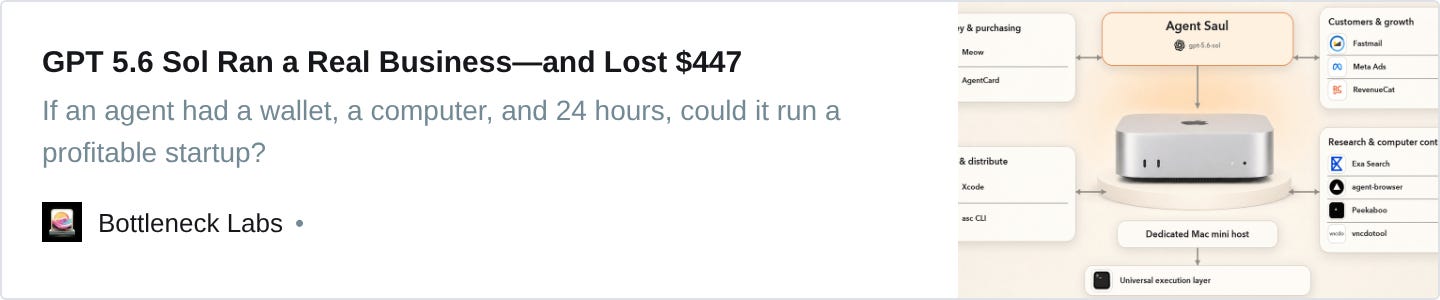
Bottleneck Labs gave GPT 5.6 Sol $350, a working iOS app called GutCheck, and the task of making as much money as possible. It didn’t go particularly well — not out of incompetence, but because it kept hitting protection mechanisms blocking robotic access to many services. And as AI models tend to do, when cornered it resorted to grey-area techniques. Either way, it’s an interesting read.
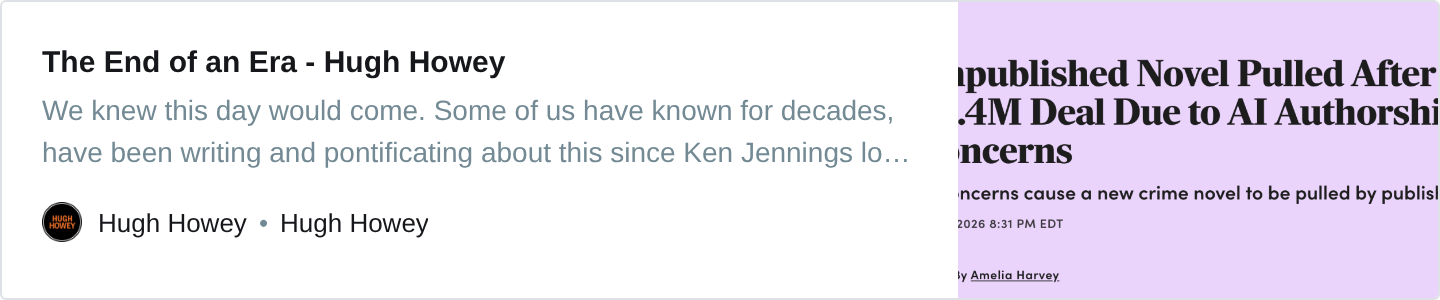
Hugh Howey, author of the Silo book series, wrote an interesting essay about the end of an era in which writing was hard but publishing was cheap and accessible. What’s coming is an era where writing will be easy too. He describes a scenario where AI writes better stories and surpasses us humans. Meat-book enthusiasts will emerge, seeking out books of demonstrably human origin. Personally, I’m more afraid books will be replaced by an endless stream of AI-generated short videos.
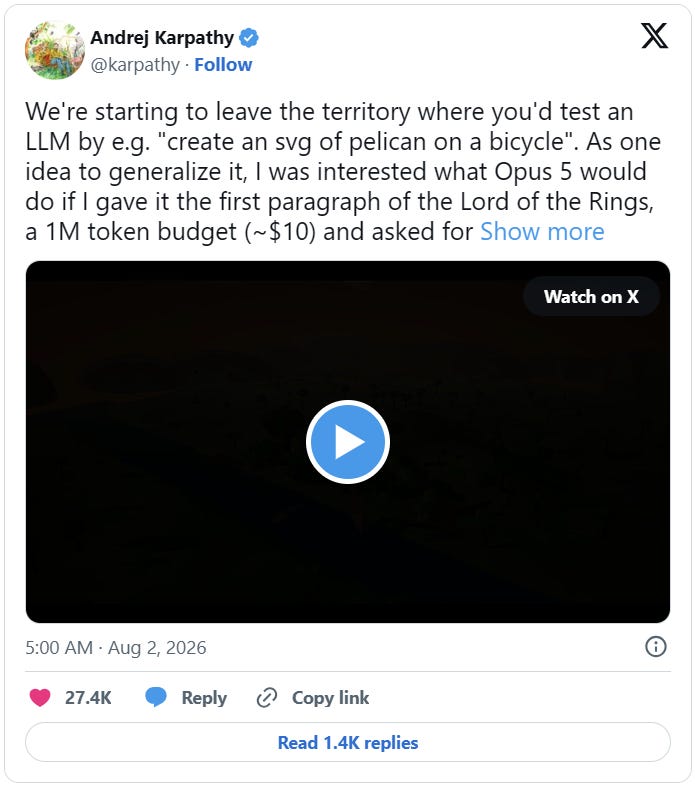
To close out the AI Insights, here’s a post from Karpathy arguing that the new benchmark for model capability should be the task “create a three.js render of this scene” with a $10 budget. Here’s the result of his test on the first paragraph of The Lord of the Rings.
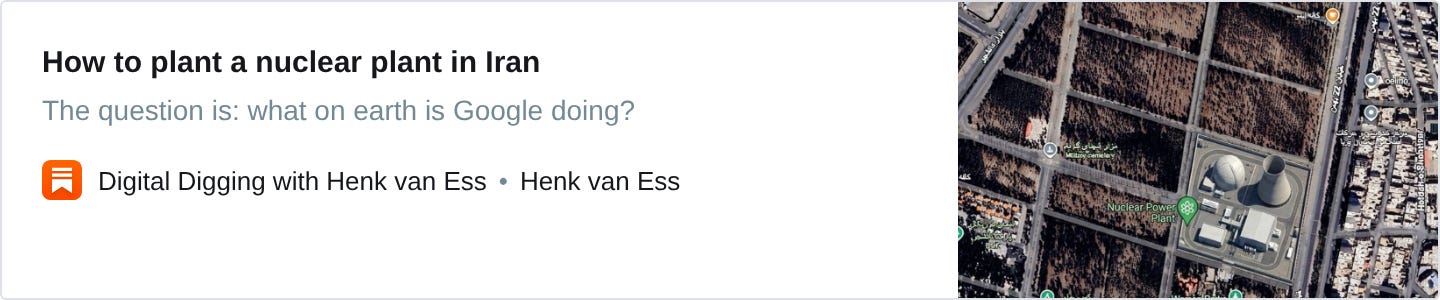
I see I still have one last link here. Google Earth launched AI image generation directly on the map. No guardrails, no limits. And the watermark disappeared with a plain screenshot.
Flint overlaps with AI a little. Otherwise it’s an intermediate language you can use to define charts and then render them in one of five supported charting backends — Vega-Lite, ECharts, Chart.js, Plotly, or even straight into Excel. If you don’t feel like wrestling with MCP, there’s an online editor.

KOReader is a document viewer for E-ink devices like Kindle, Kobo, PocketBook, Android, or even desktop Linux. It packs so many handy little touches that you’re bound to fall in love with it.

Ever wondered what the world would look like through the lens of a black hole? Just allow camera access and this page will show you.

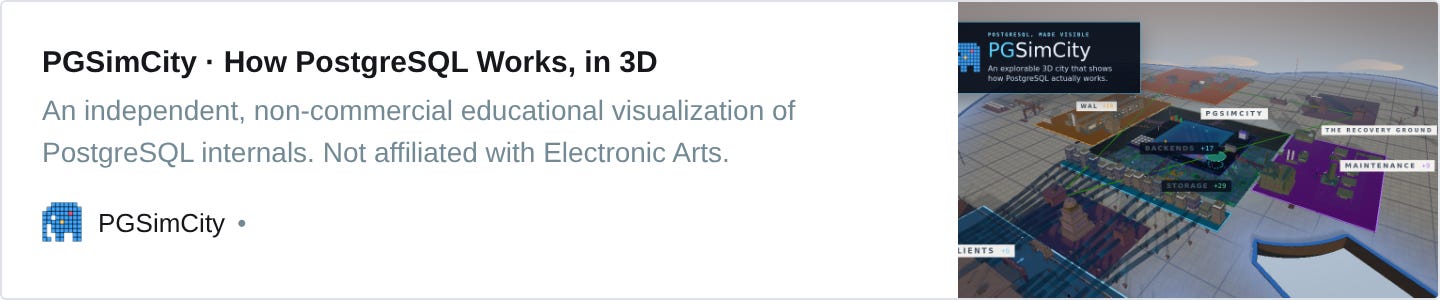
And what would PostgreSQL look like as a SimCity town? PGSimCity is an interesting visualization of how the PostgreSQL engine conceptually works. Definitely try the Tour mode.
No posts
Comments
Nothing yet. Say the first thing.
Sign in to join the conversation.