
(1) Putin thinks Ukraine is trying to destabilise him politically through its war on Russian soil.
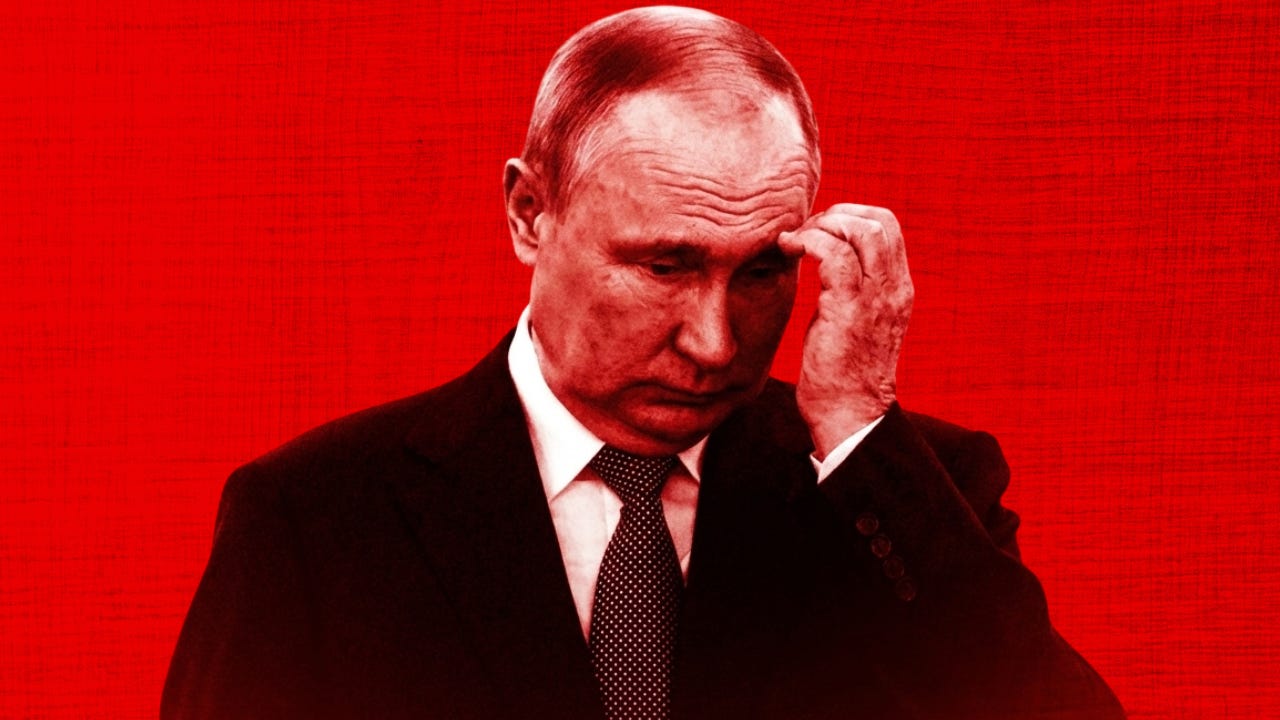
(2) Putin thinks Ukraine is exploiting a temporary period in which his options are limited. Ukraine knows he can’t resort to his most available escalation step, a mobilisation, until October - after the parliamentary elections, which are an essential re-legitimation ritual for his regime.
(3) Putin thinks acknowledging the scale of the attacks would magnify their political effect. Therefore, saying as little as possible is the best way of not playing into Ukraine’s hands.
(4) Putin thinks Russian officials who dramatise economic or logistical problems risk doing Ukraine’s work for it.
(5) Putin thinks time remains on his side, because -
(a) Ukraine’s political order is artificial and historically unsustainable
(b) Western influence in Ukraine and Eastern Europe is unnatural and will eventually recede
(c) The West will become less “democratic” - Putin needs the quote marks - and therefore, less confrontational over time.
(6) Putin trusts the process with Gerasimov - he thinks it will continue producing territorial gains.
(7) Putin is allowing parts of the elite to argue publicly about whether to escalate or end the war. He thinks controlled debate helps him gather information, release pressure, take his time, and reassert his authority as referee of intra-elite conflict. Psychologically, he feels more comfortable when others argue and he adjudicates.
(8) If you presented Putin with the following options - the war is going (a) very well (b) well (c) a bit of both (d) badly (e) very badly - he would probably pick (b) with a few caveats.
(9) You might ask, isn’t that an insane choice? The answer is twofold.
(a) Putin sees his own success relative to how Ukraine’s government is doing - in his view, his power is much more stable than that of Zelensky or Zelensky’s successor.
(b) We have to be aware of how deeply two decades of unchecked and informalised power have distorted Putin’s vision of the world. In his immanent experience, he maintains a non-psychotic sense of reality. He knows what’s in his diary, he knows what he will have for breakfast, and he knows how to appear likeable. But when it comes to his picture of politics and history, psychotic thoughts increasingly seep through. These are thoughts which require Putin to destroy reality in his head in order to tolerate it.
No posts
Comments
Nothing yet. Say the first thing.
Sign in to join the conversation.