
As has often happened to me lately, I returned to the Caelian Hill for another walk. After spending some quiet time relaxing in Villa Celimontana, I decided to visit the Basilica of Santi Giovanni e Paolo, one of the most fascinating churches in this part of Rome.
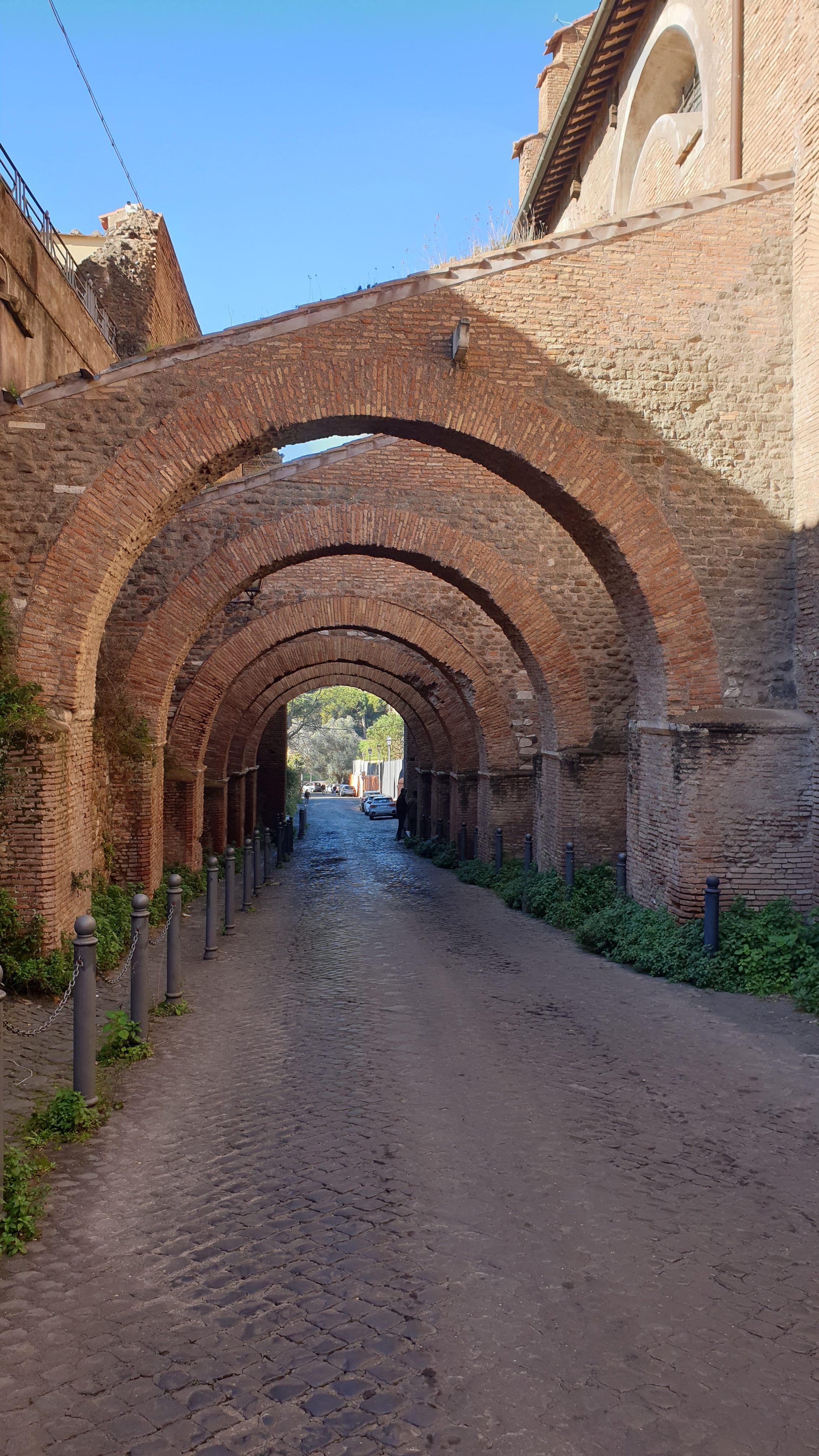
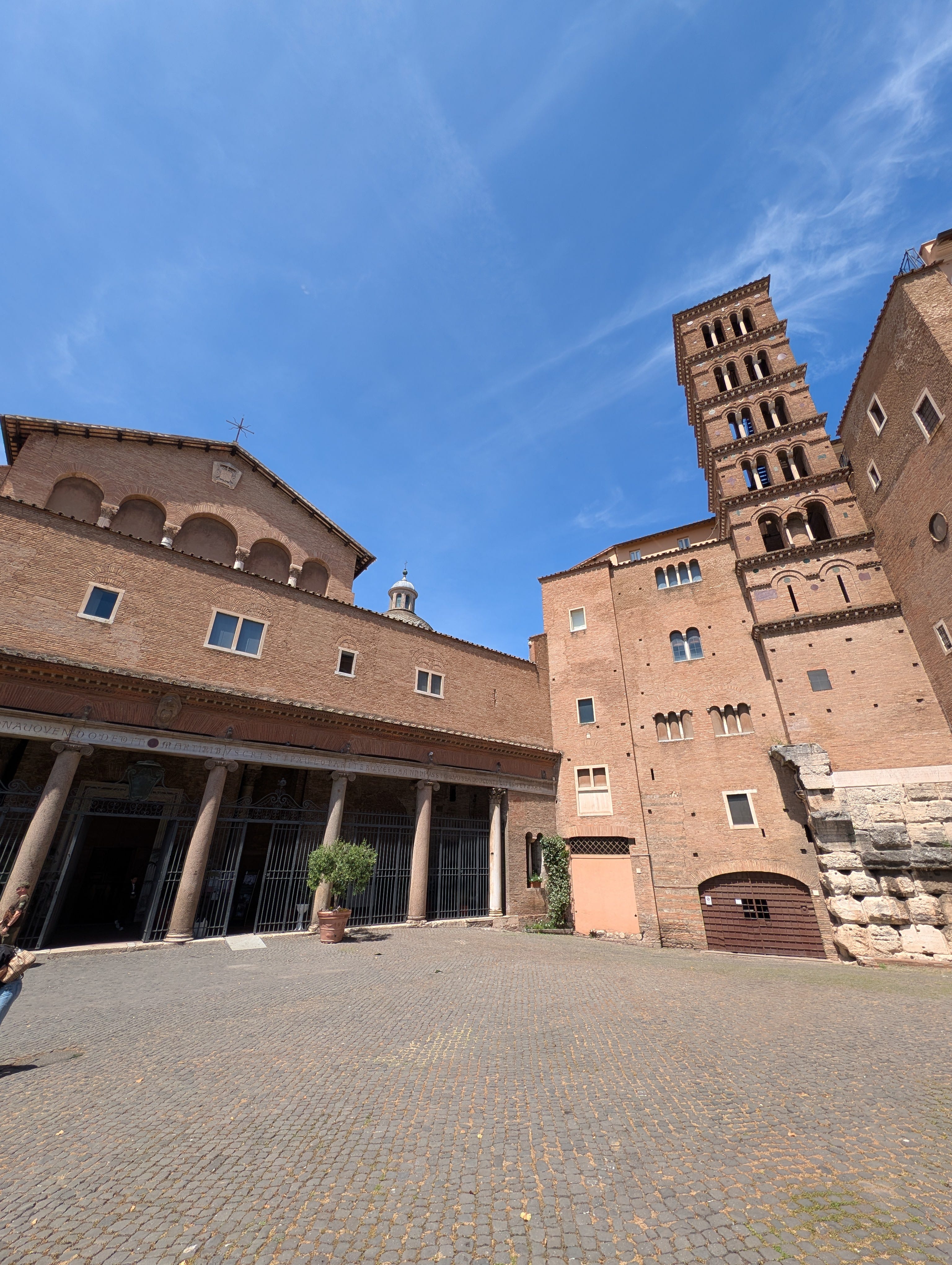
The basilica stands in a particularly evocative setting, along the Clivo di Scauro, a street that still preserves the atmosphere and structure of ancient Rome. Its elegant bell tower, medieval arches and brick façades form one of the most distinctive views of the Caelian Hill.
According to tradition, the church is dedicated to John and Paul, two Christian martyrs who lived during the fourth century and were killed under Emperor Julian the Apostate. They are said to have been buried beneath their own house, on the site where the basilica was later constructed.
The first church was probably built in the late fourth or early fifth century by the Roman senator Pammachius. For this reason, it was also known as the Titulus Pammachii. Over the centuries, the building was repeatedly damaged, restored and transformed. It suffered during the sack of Rome by the Visigoths in 410, was affected by earthquakes and invasions, and was substantially rebuilt during the Middle Ages.
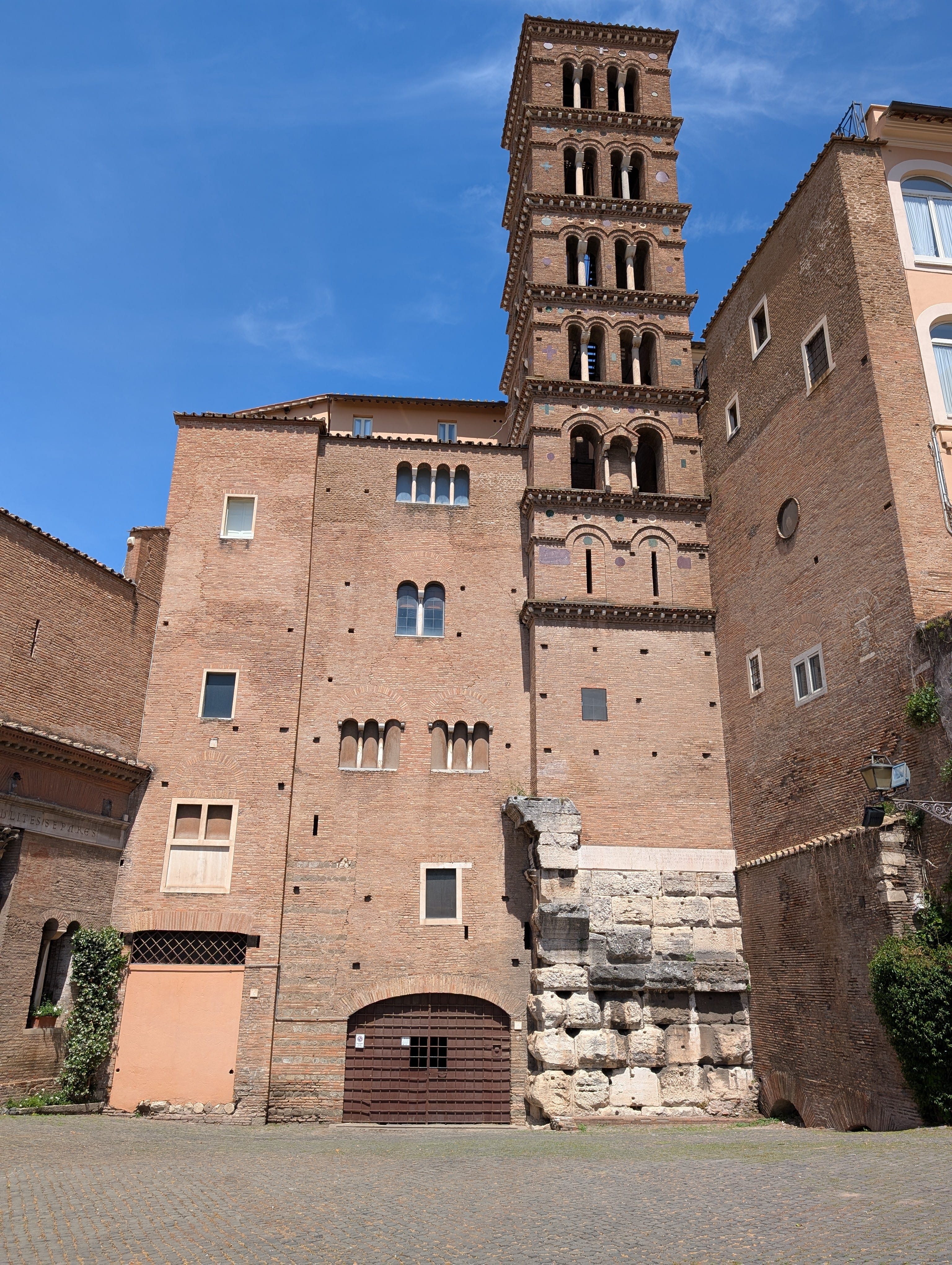
The present appearance of the basilica reflects this long and complex history. The exterior retains a strong medieval character, particularly in the Romanesque bell tower and in the portico, while the interior was extensively remodelled during the Baroque period.
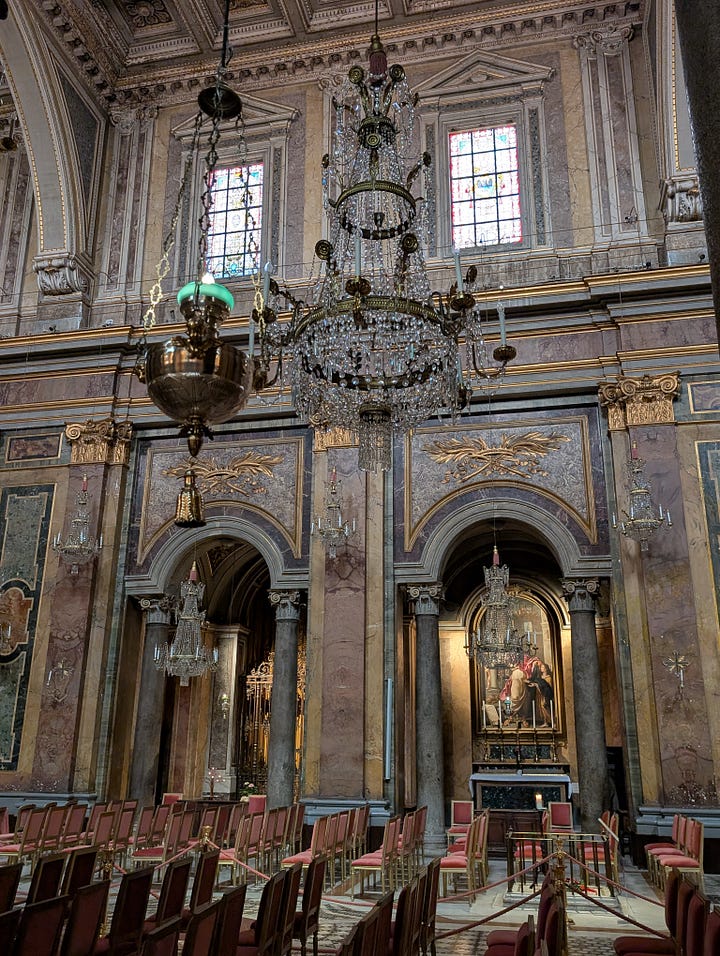
Inside, the basilica has a broad central nave divided from the side aisles by ancient columns. The richly decorated ceiling, the marble floor and the series of chapels create a solemn but welcoming atmosphere.
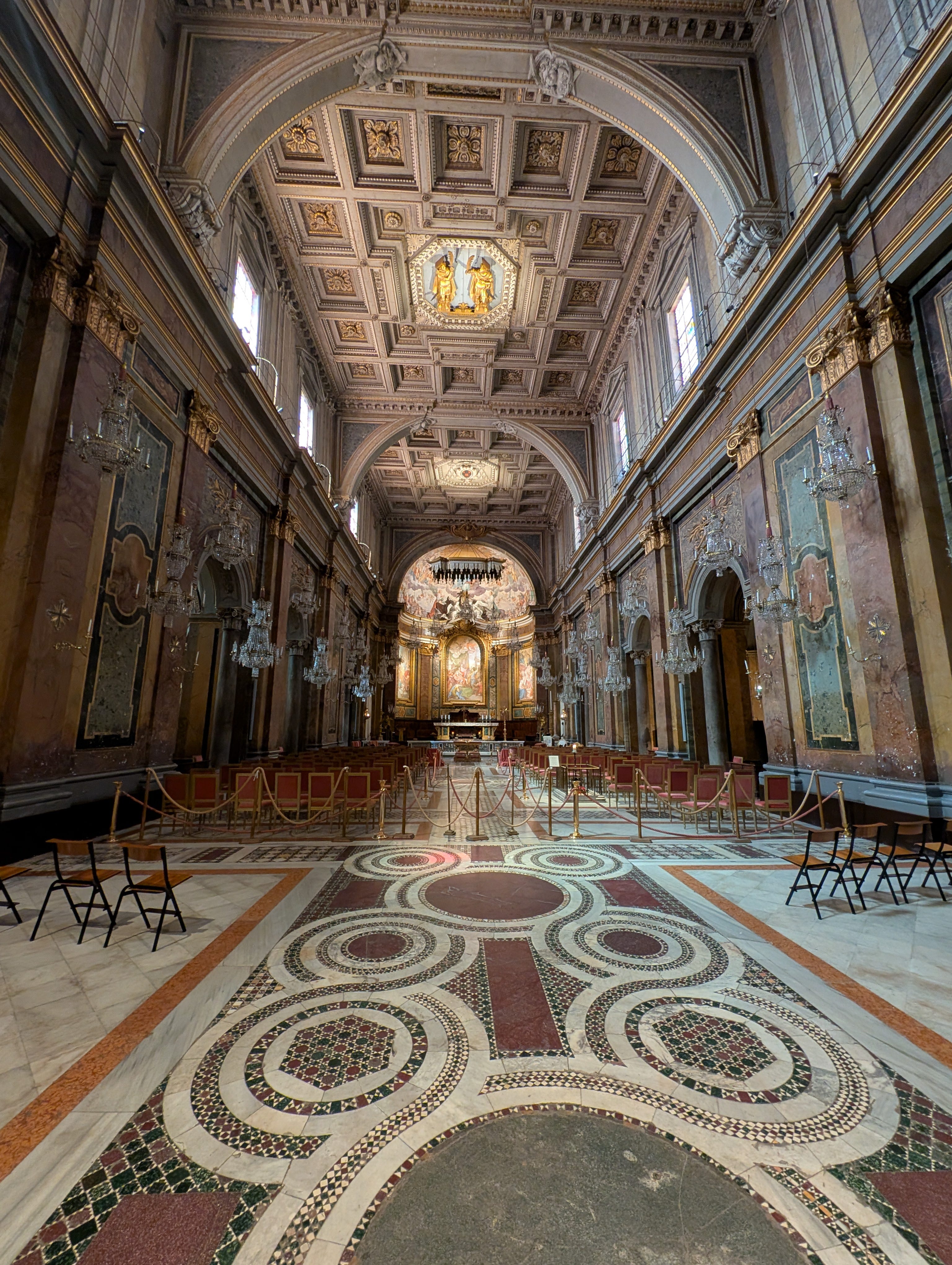
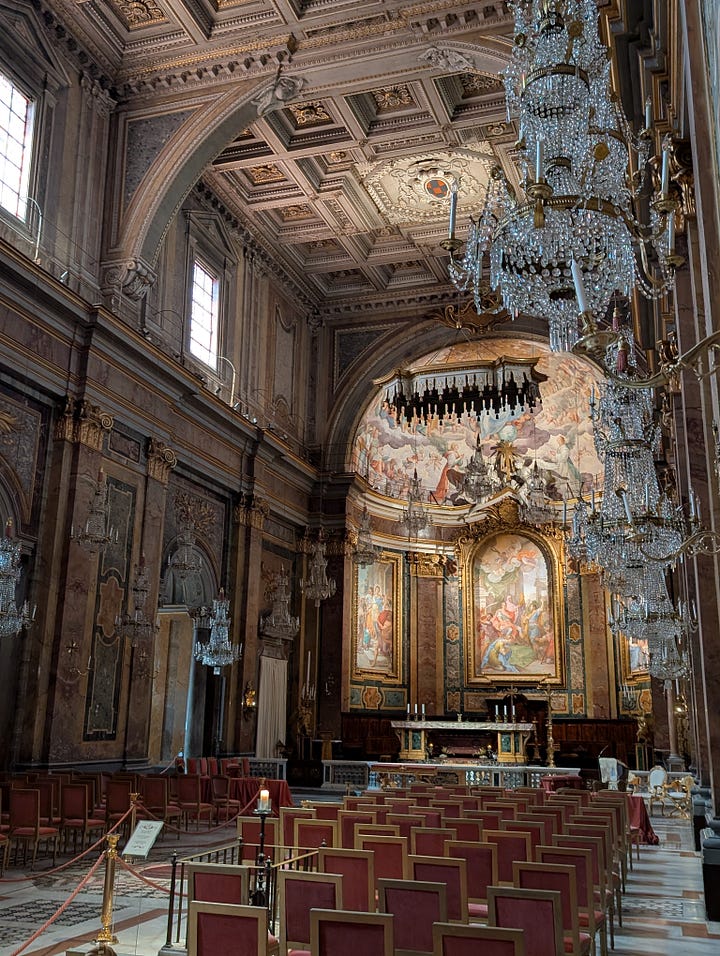
One of the most important works is the large fresco in the apse, depicting Christ in Glory with Saints John and Paul. The decoration celebrates the two martyrs and their role in the spiritual history of the church.
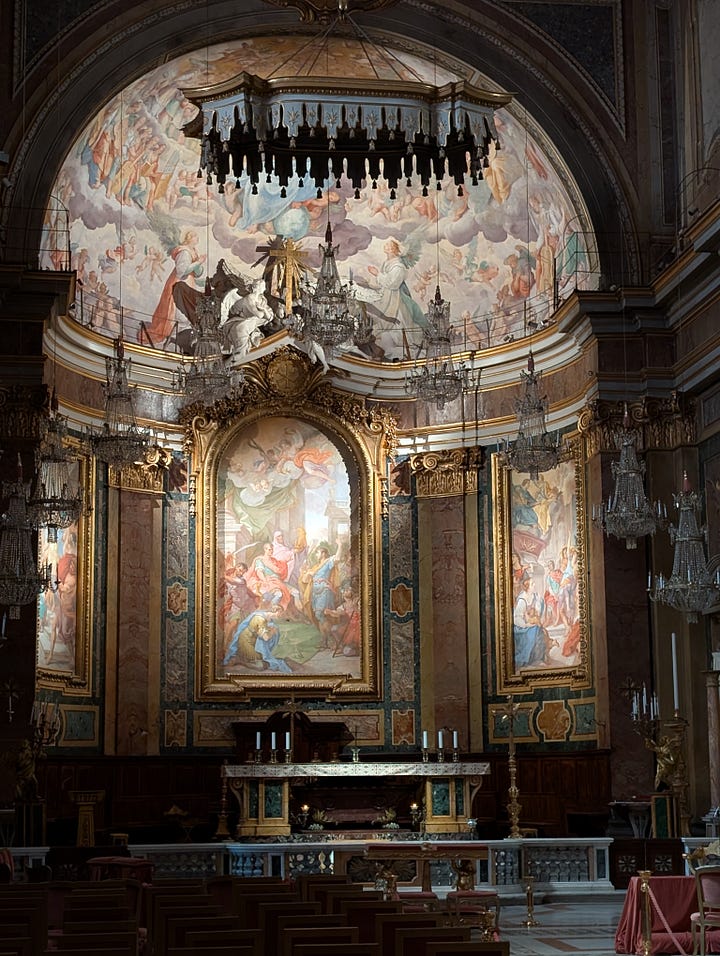
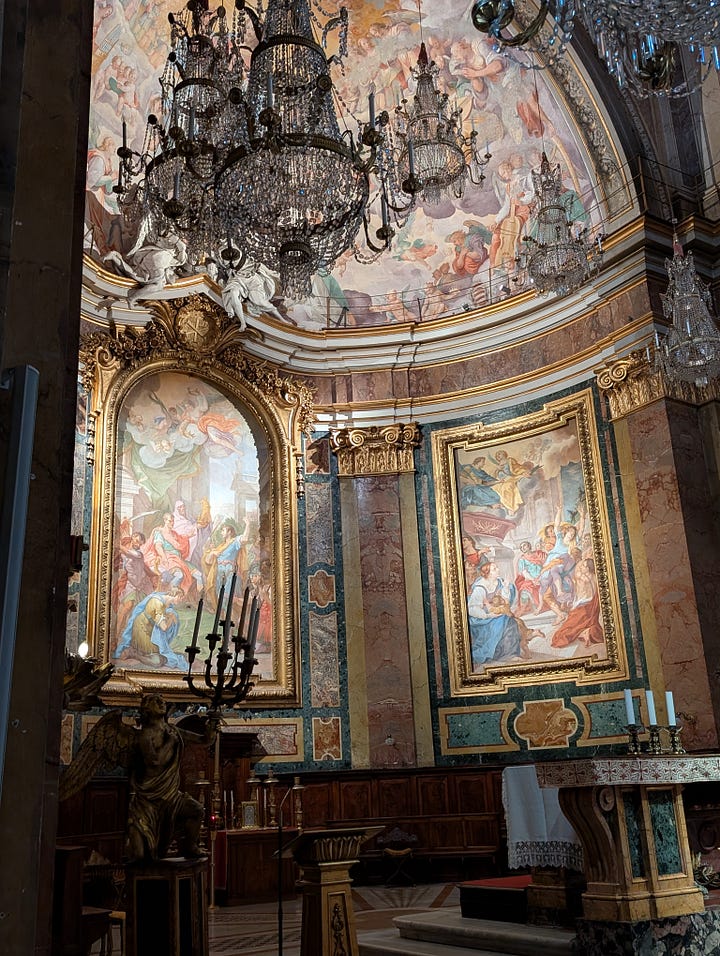
The ceiling of the central nave is also particularly impressive. Its gilded wooden decoration frames a central painting dedicated to the martyrdom of Saints John and Paul, reinforcing the dramatic and devotional character of the interior.
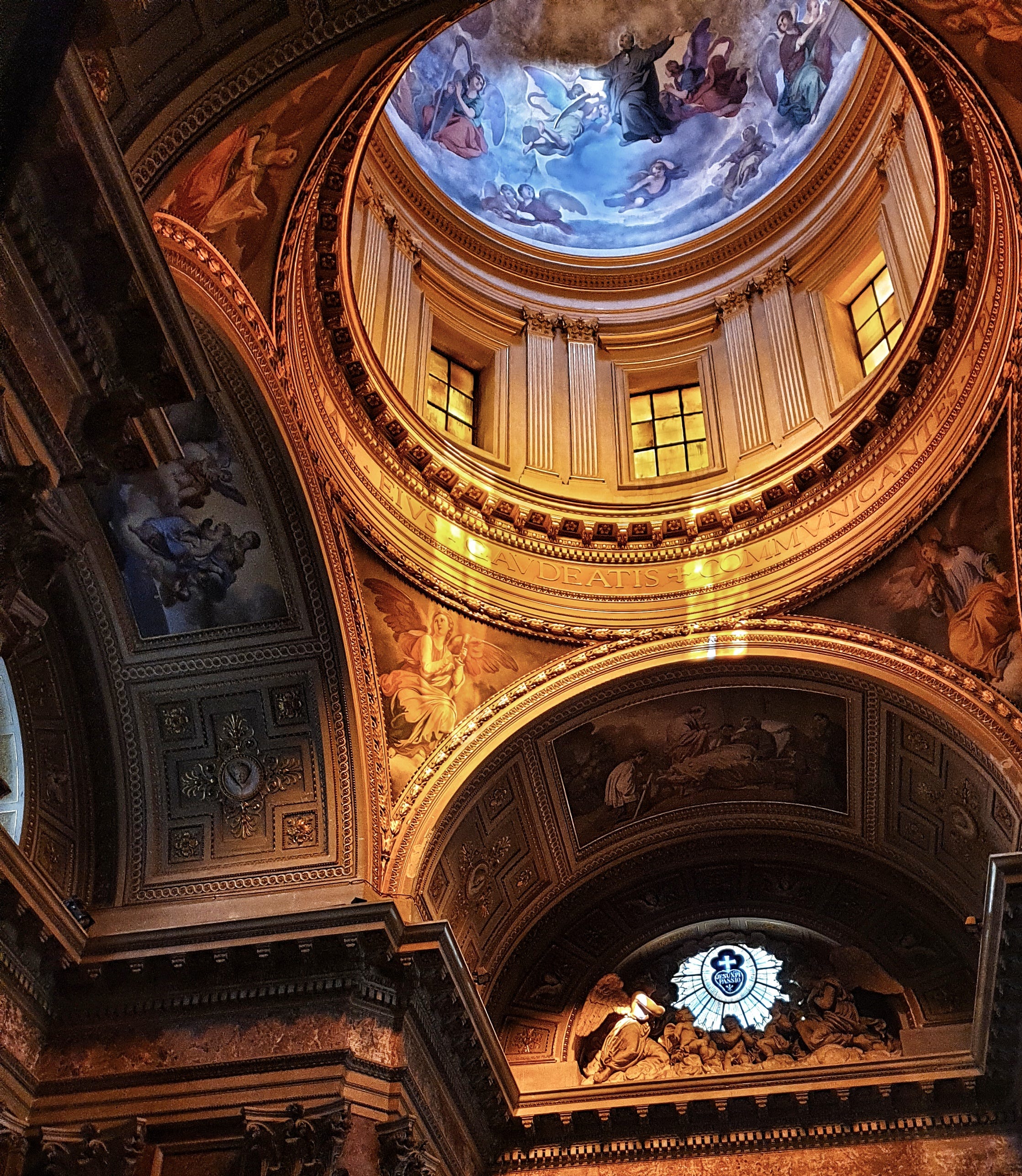
Among the chapels, the Chapel of Saint Paul of the Cross has special significance. The basilica has been entrusted to the Passionists since the eighteenth century, and Saint Paul of the Cross, founder of the congregation, is buried here. His presence has made the church an important place of pilgrimage and devotion.
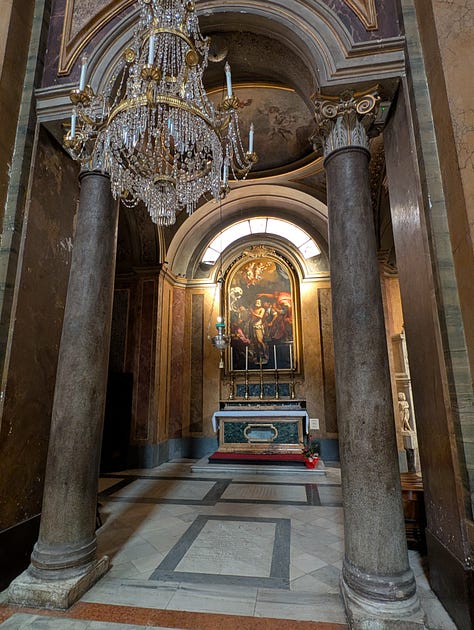
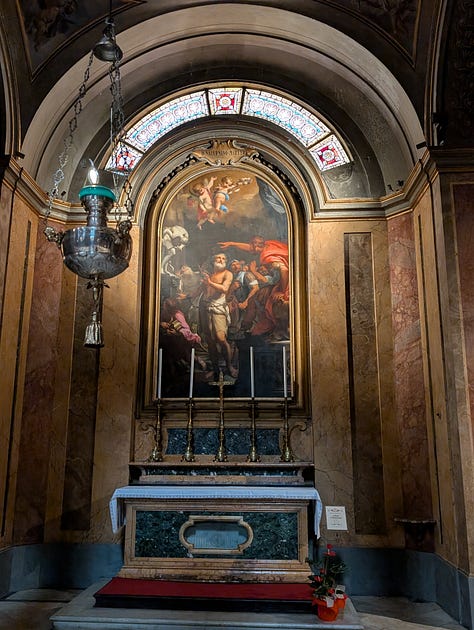
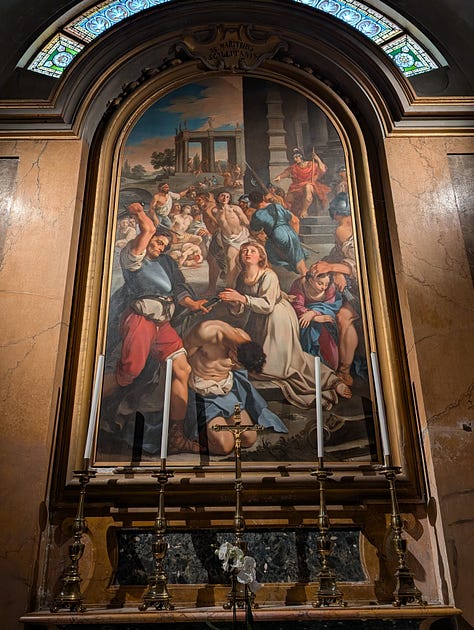
Another remarkable element is the Chapel of Saint Saturninus, which preserves important artistic decorations and contributes to the variety of styles found within the basilica.
Beneath the church lies one of the most extraordinary archaeological complexes in Rome. The Case Romane del Celio consist of several ancient Roman buildings, including residential spaces, shops and richly decorated rooms. Some of the frescoes show both pagan and early Christian subjects, offering valuable evidence of the gradual transformation of Roman society during Late Antiquity.
Although the archaeological site has a separate entrance, its history is closely connected with that of the basilica. Together, they form a unique place where ancient Roman domestic life, early Christianity, medieval architecture and later religious art coexist within the same area.
The Basilica of Santi Giovanni e Paolo is now another of the many reasons why I care so much about the Caelian Hill and why I have dedicated so many posts to this part of Rome.
Every return reveals a different corner, a new historical layer or another peaceful place in which to slow down and observe the city.
The basilica is located in Piazza dei Santi Giovanni e Paolo, on the Caelian Hill, a short walk from Villa Celimontana, the Colosseum and the Clivo di Scauro.
It can easily be included in a longer walk through one of Rome’s most beautiful and historically rich neighbourhoods.
As always, if you want to use any of the photos from my visit, please remember to give credit to the author. Happy exploring!
No posts
Comments
Nothing yet. Say the first thing.
Sign in to join the conversation.