
A few weeks ago, during one of my walks through Monti, i came across the Basilica of Santa Pudenziana almost by chance. It was closed at the time, so I could only look at it from the outside and promise myself that I would return.
This morning, early enough to enjoy that particular quietness Rome still offers before the city becomes too busy, i finally went back. And once again, Rome reminded me of something I should already know very well. Some of its most precious places are not necessarily the most spectacular from the street.
Santa Pudenziana is located on Via Urbana, slightly below the current street level, in the heart of the ancient Vicus Patricius, between the Viminal and Esquiline hills, not far from Santa Maria Maggiore.
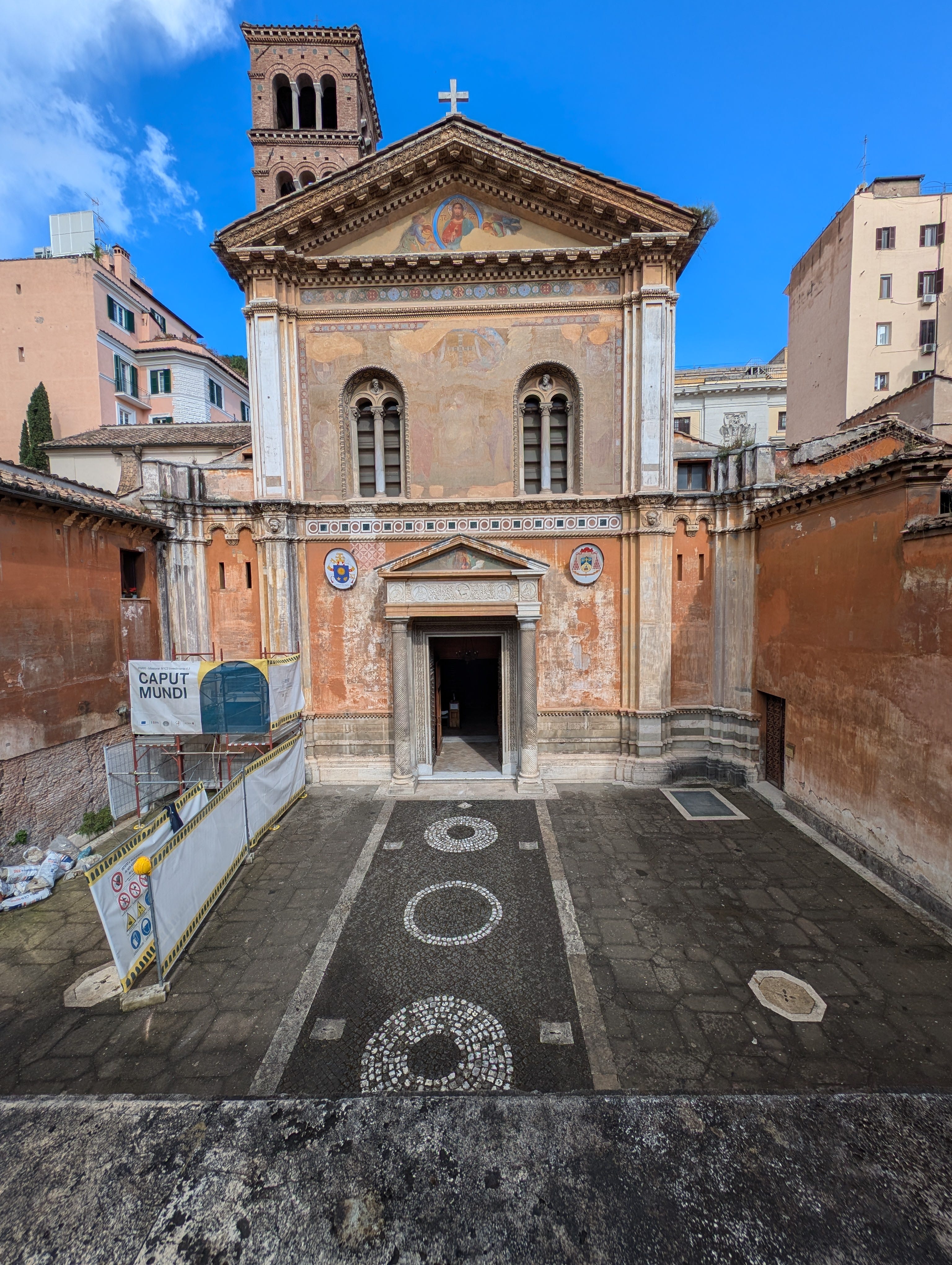
From outside, it does not immediately impose itself. The façade is sober, almost discreet, and the descent from the street already gives the impression of entering a place that belongs to an older layer of the city.
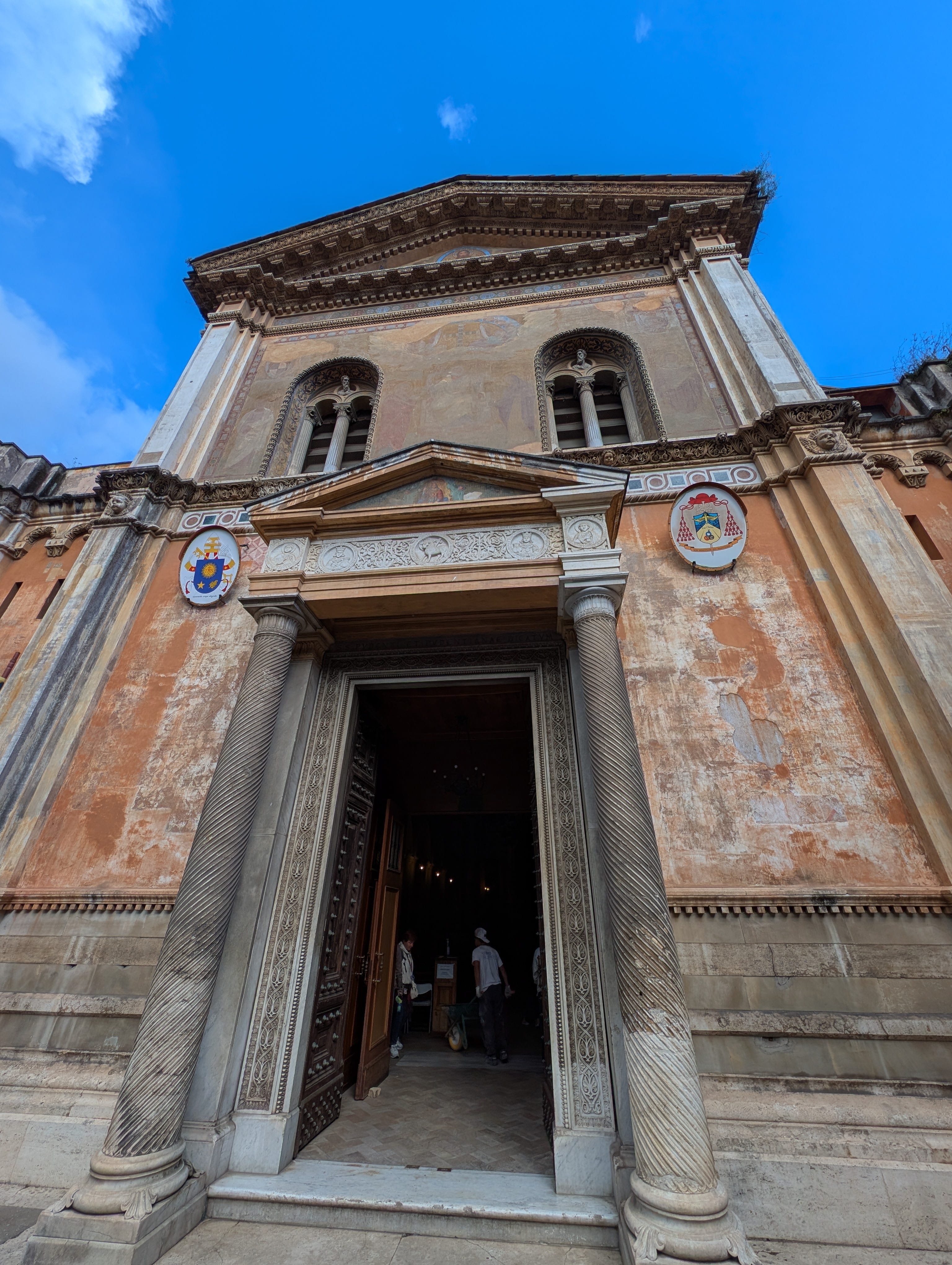
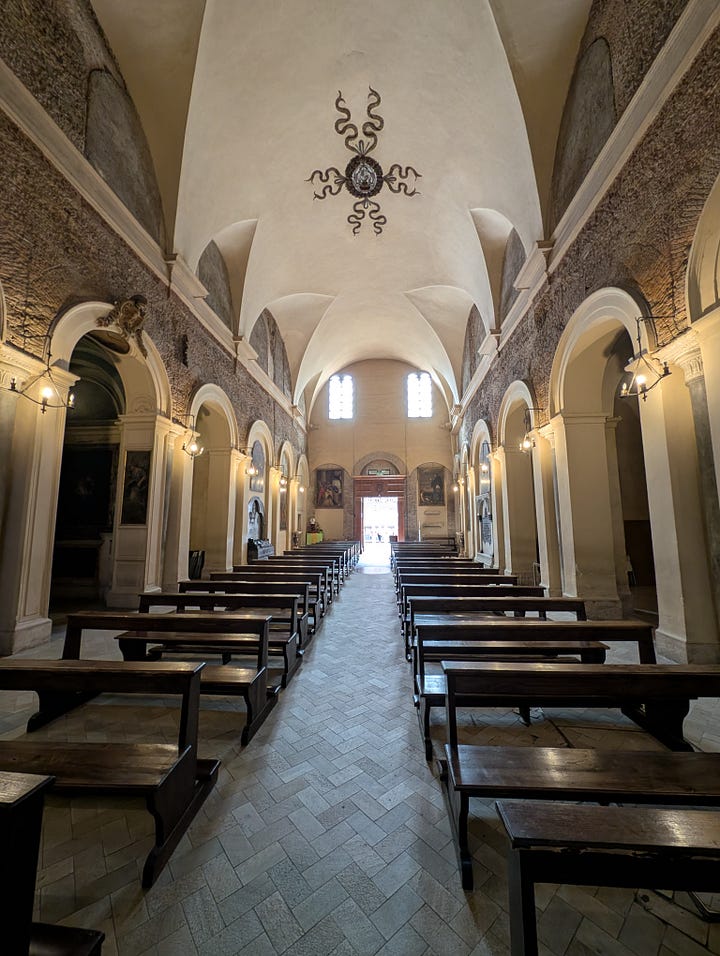
Inside, however, the basilica reveals its real character. It is intimate, ancient, and full of historical depth. According to tradition, it is connected with the house of Pudens, a Roman senator associated with the early Christian community. The church is considered one of the oldest Christian places of worship in Rome, and its origins are linked to a Roman house and bath complex from the 2nd century, later transformed into a Christian basilica.
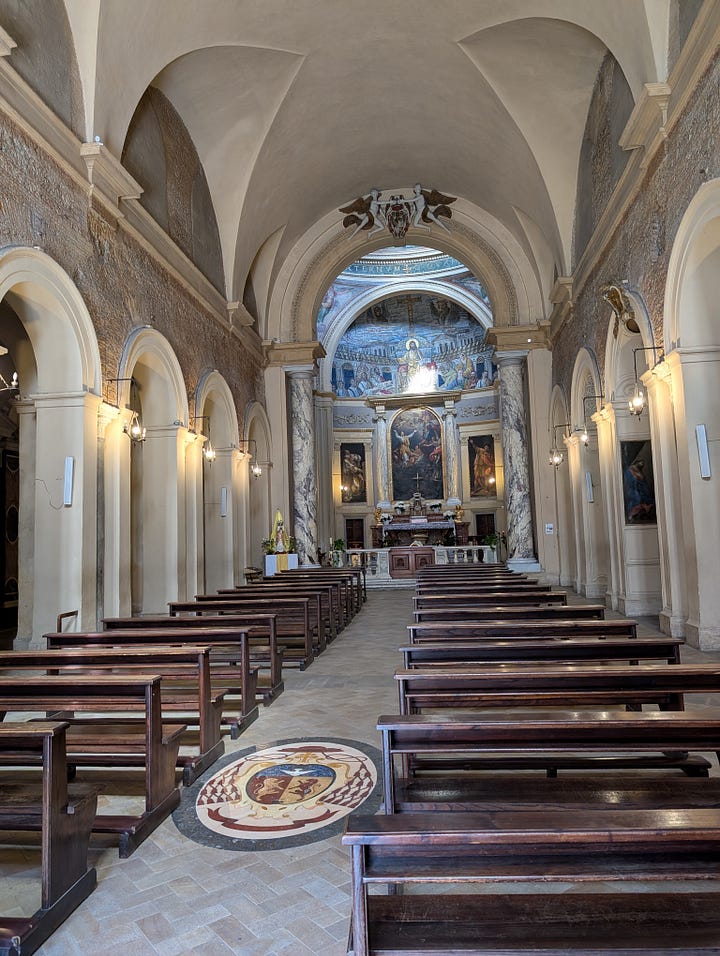
The true masterpiece is the apse mosaic. It is usually dated to the early 5th century, around 410 to 417, during the pontificate of Pope Innocent I, and is considered one of the earliest surviving apsidal mosaics in a Christian church.
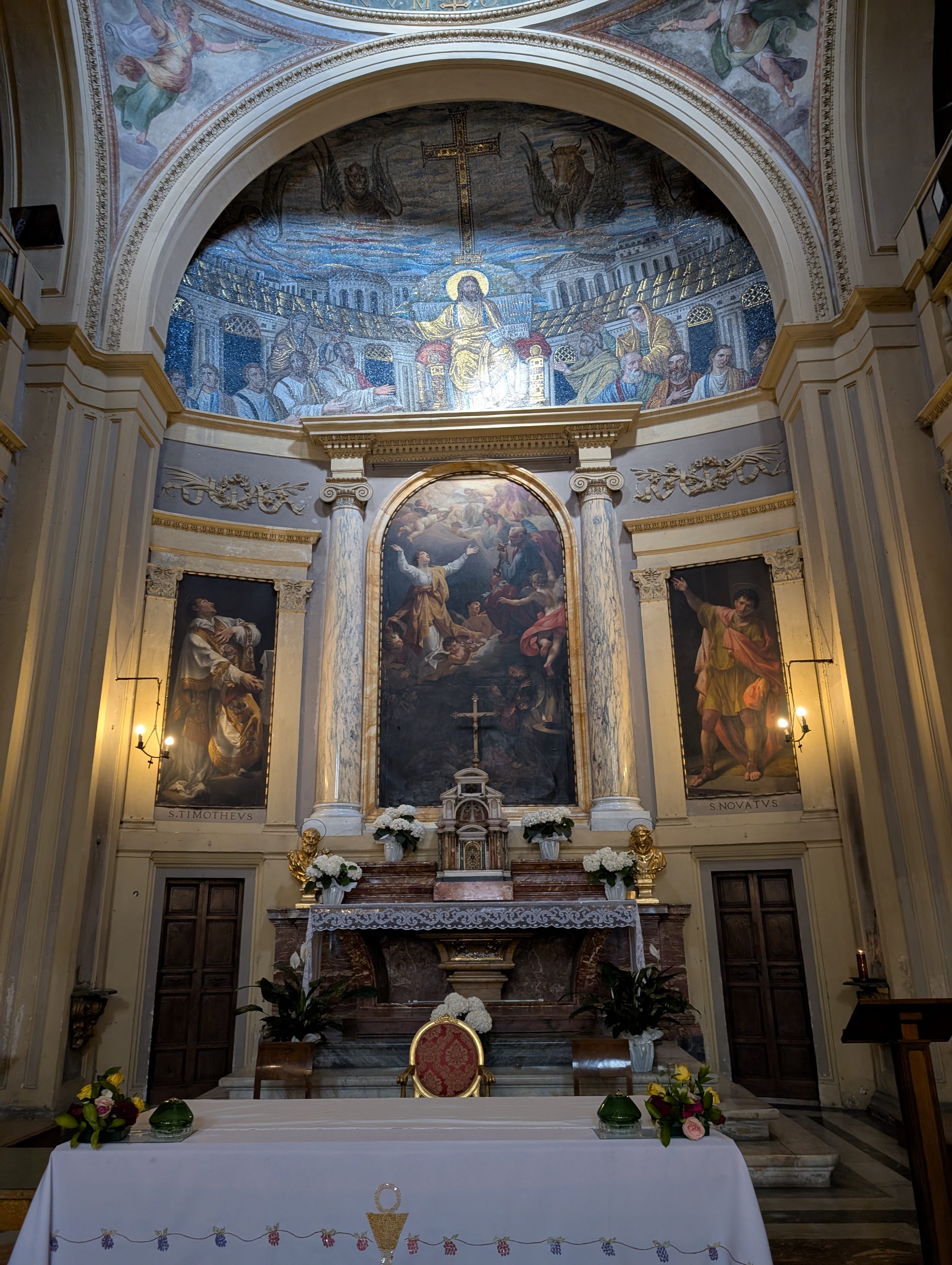
And it is extraordinary.
Christ is shown seated on a throne, solemn and majestic, surrounded by the apostles. He is not represented through a simple symbol, as in some earlier Christian imagery, but as a powerful human figure, almost like an imperial teacher or ruler. Around him, the architecture of a heavenly Jerusalem appears in the background, while two female figures crown Peter and Paul.
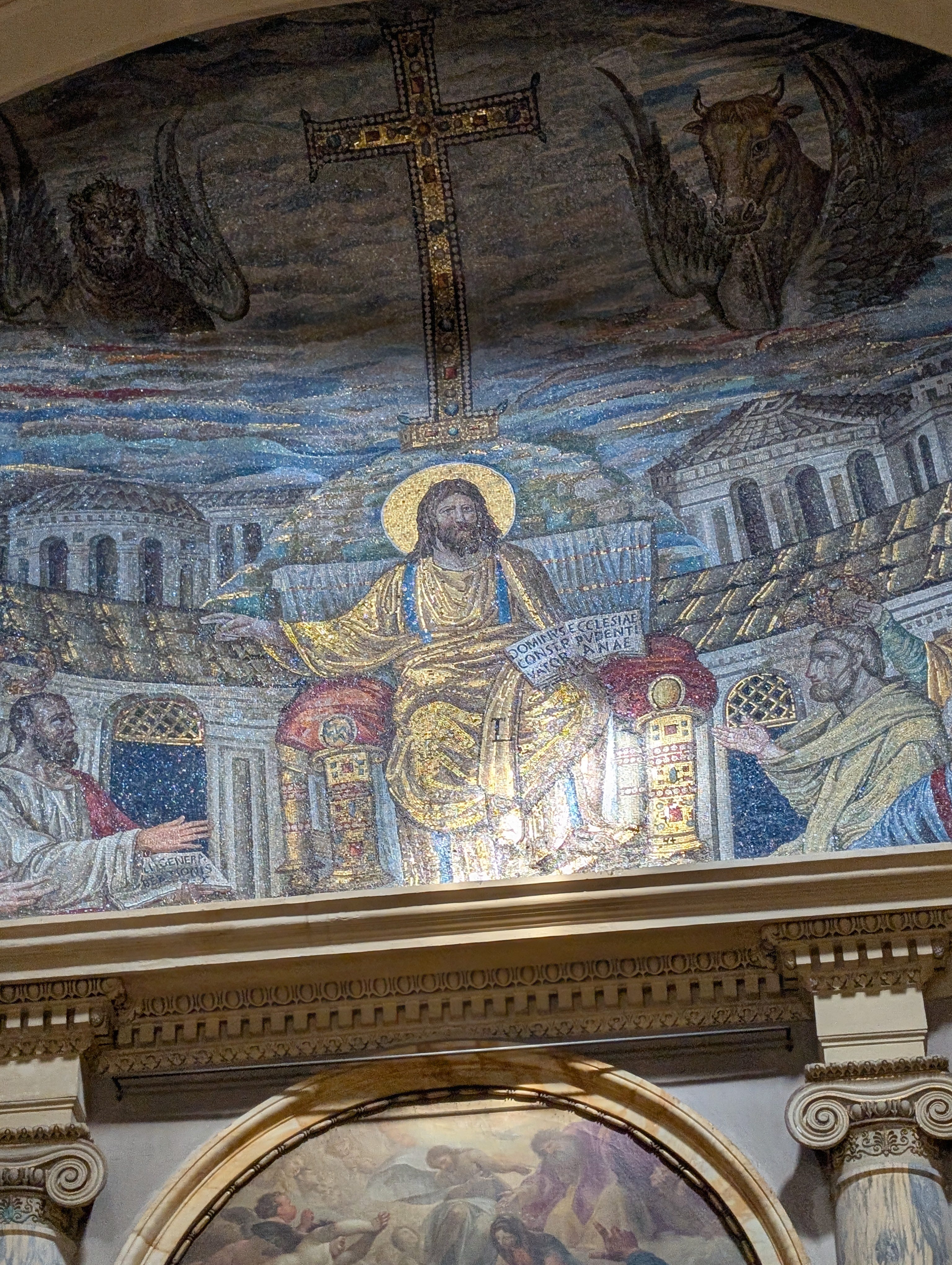
The whole scene has something deeply Roman and deeply Christian at the same time. It feels like a moment in which ancient Rome and Christian Rome are still speaking the same visual language.
The mosaic alone would be enough to justify the visit. But the basilica also contains other elements worth noticing: side chapels, paintings, marble decorations, traces of later restorations, and a general atmosphere that makes the place feel less like a monument and more like a silent witness to many centuries of Roman history.
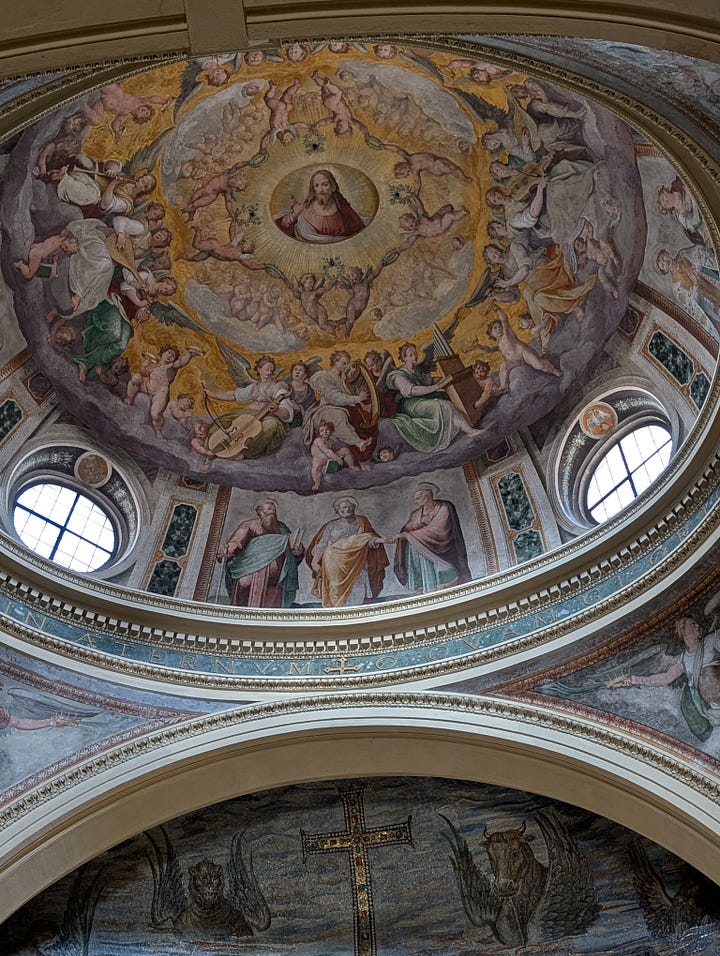
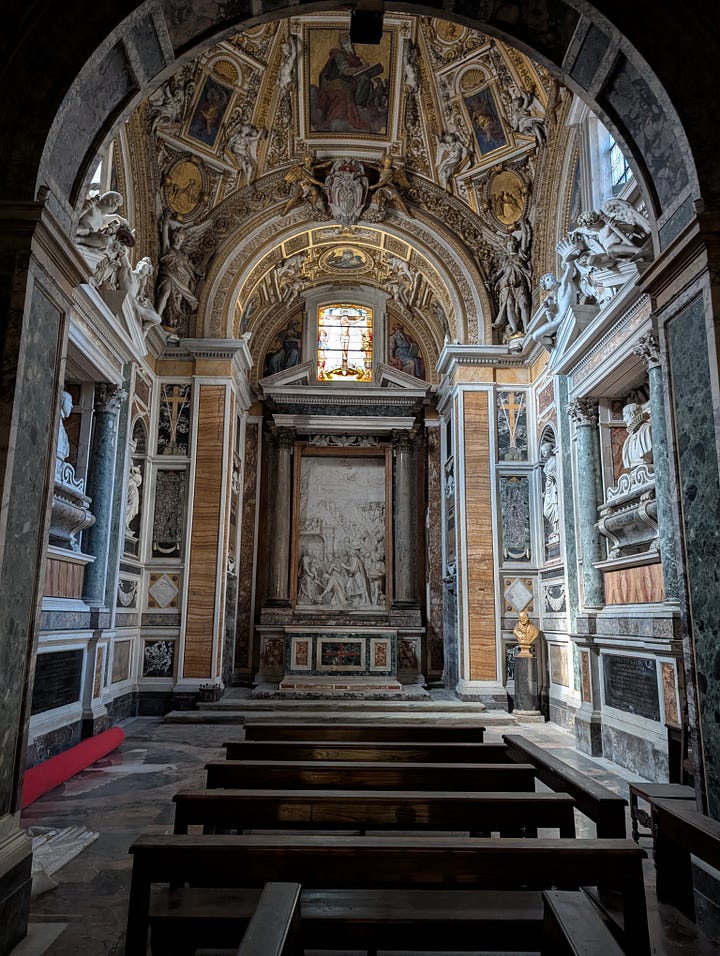
What I liked most was precisely this contrast: outside, a small and almost hidden entrance along a street in Monti; inside, one of the most important early Christian images in Rome. It is the kind of place that rewards curiosity, and Monti is perfect for this. You walk, you turn a corner, you look down a side street, and suddenly another fragment of the city appears.
Santa Pudenziana is in Via Urbana, 160, in the Monti district. It is very easy to reach on foot from Santa Maria Maggiore, from Cavour metro station, or during a wider walk through Monti, perhaps combining it with nearby churches, small streets, cafés, and views toward the Colosseum area.
It is definitely worth including in one of your walks through Monti, a neighbourhood i always recommend exploring slowly. Not only because it is beautiful and full of life, but because, as Santa Pudenziana proves, it still hides some of Rome’s most fascinating surprises in plain sight.
As always, if you want to use any of the photos from my visit, please remember to give credit to the author. Happy exploring!
No posts
Comments
Nothing yet. Say the first thing.
Sign in to join the conversation.