
Just a short walk from Rome’s main transport hub, near the imposing remains of the Baths of Diocletian, stands one of the most fascinating and unconventional churches in the city: Santa Maria degli Angeli e dei Martiri. Unlike most Roman churches, its origins are deeply intertwined with the ancient thermal complex that once dominated this area, making it a unique example of architectural continuity between Imperial Rome and the Renaissance.
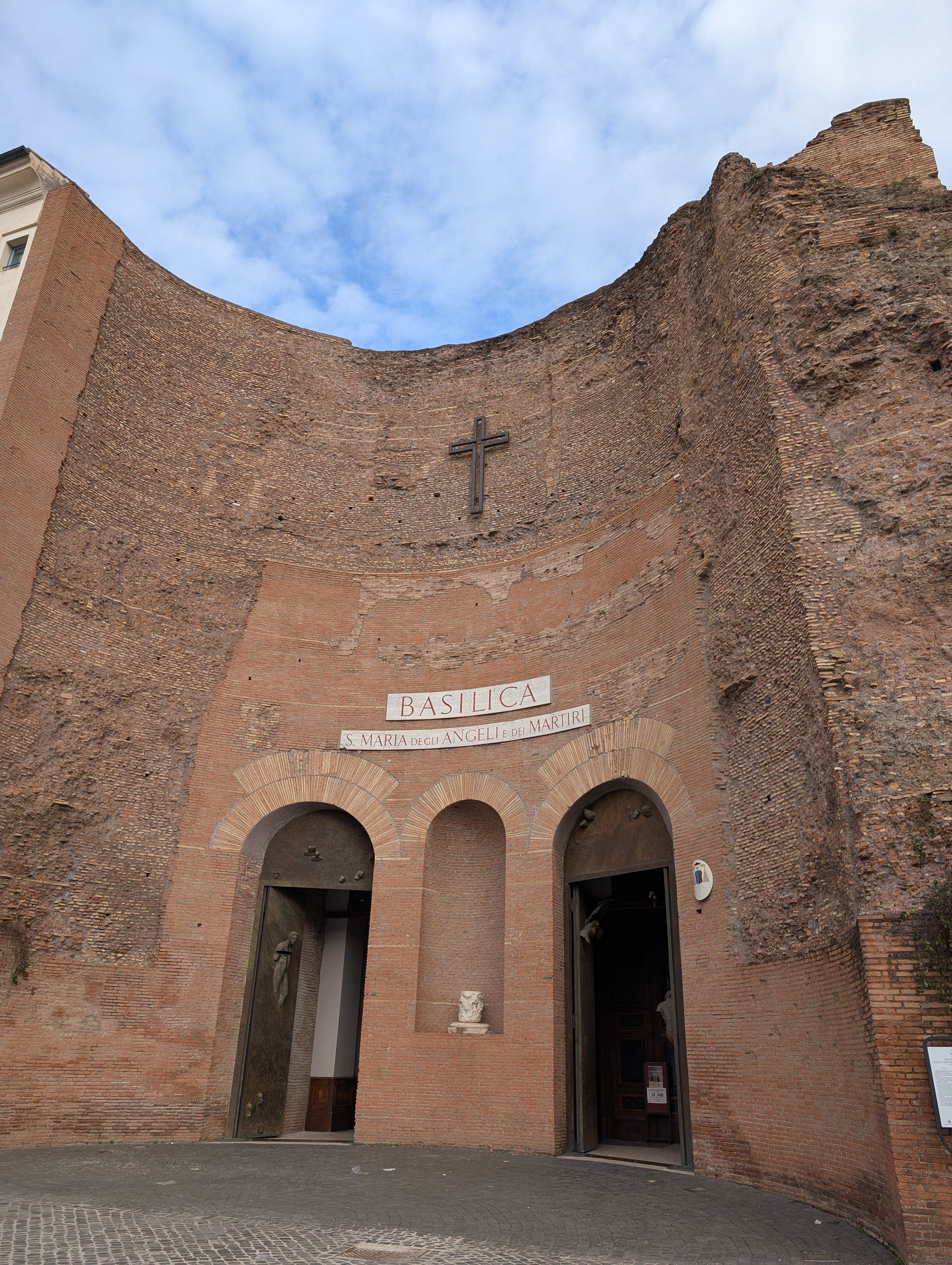
The church was commissioned in the 16th century by Pope Pius IV and designed by Michelangelo, who was already in his eighties at the time. Rather than demolishing the ruins of the baths, Michelangelo chose to preserve and reinterpret them, transforming part of the frigidarium into a sacred space.
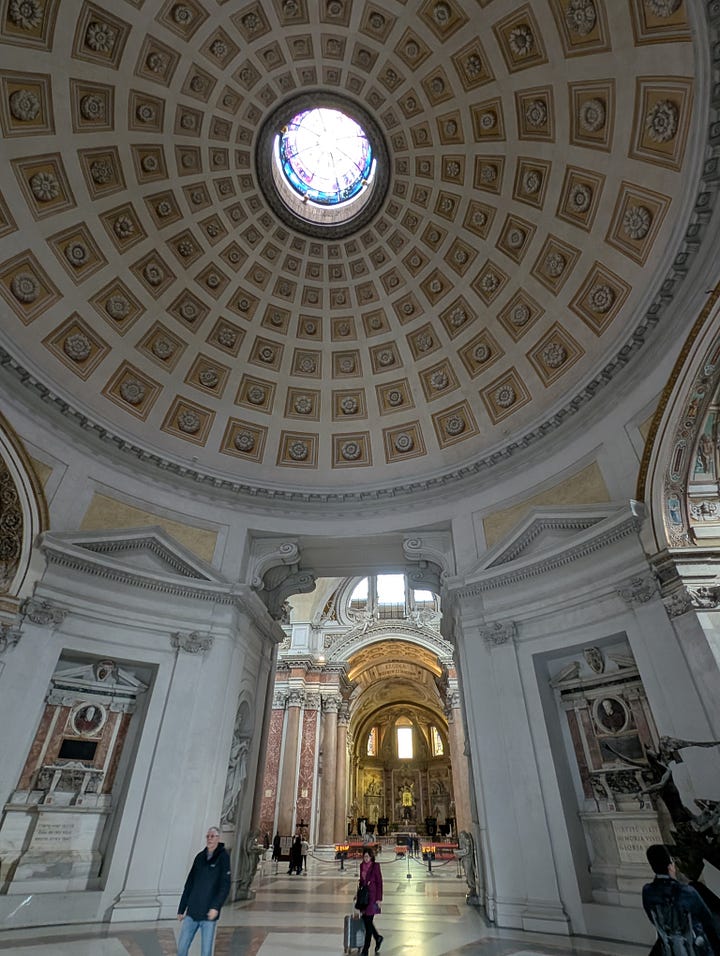
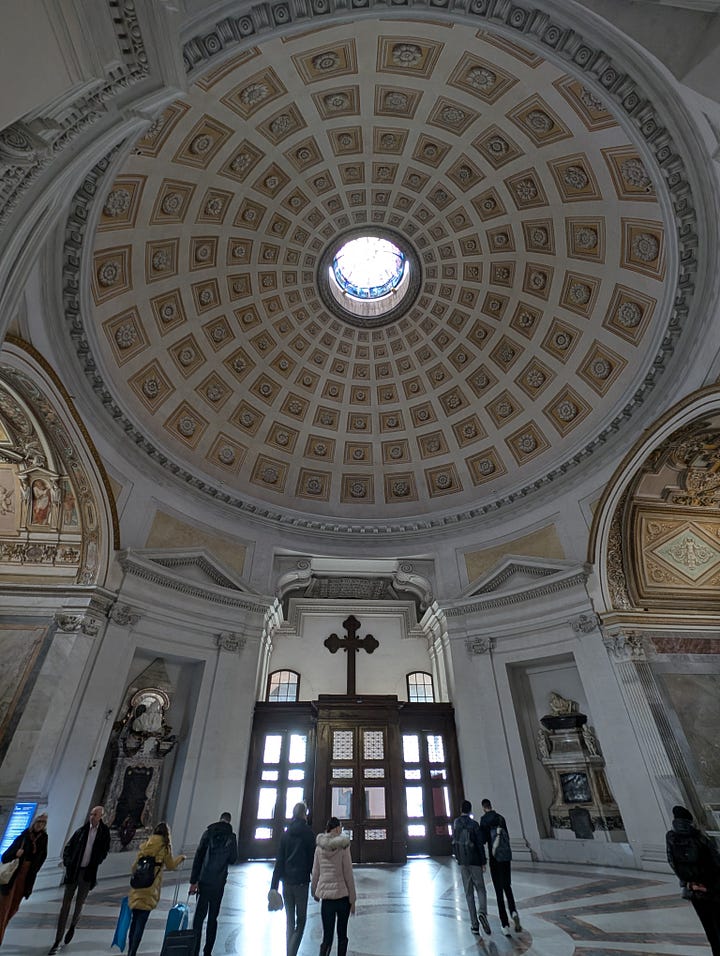
This decision resulted in a church of extraordinary scale, where the vastness of Roman engineering merges seamlessly with Renaissance spirituality.
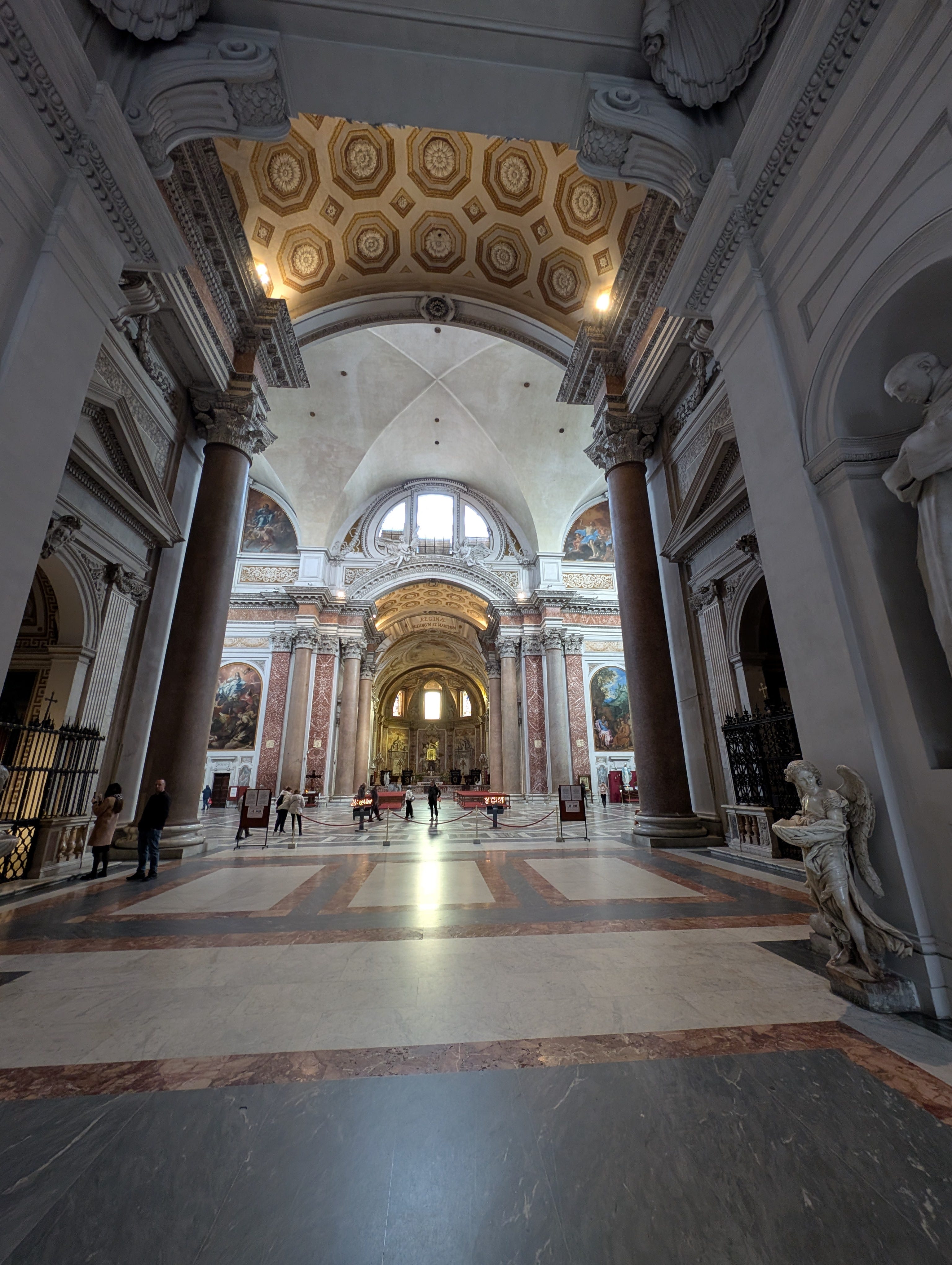
The structure you see today still retains much of the original Roman layout, giving visitors a powerful sense of the grandeur of ancient Rome.
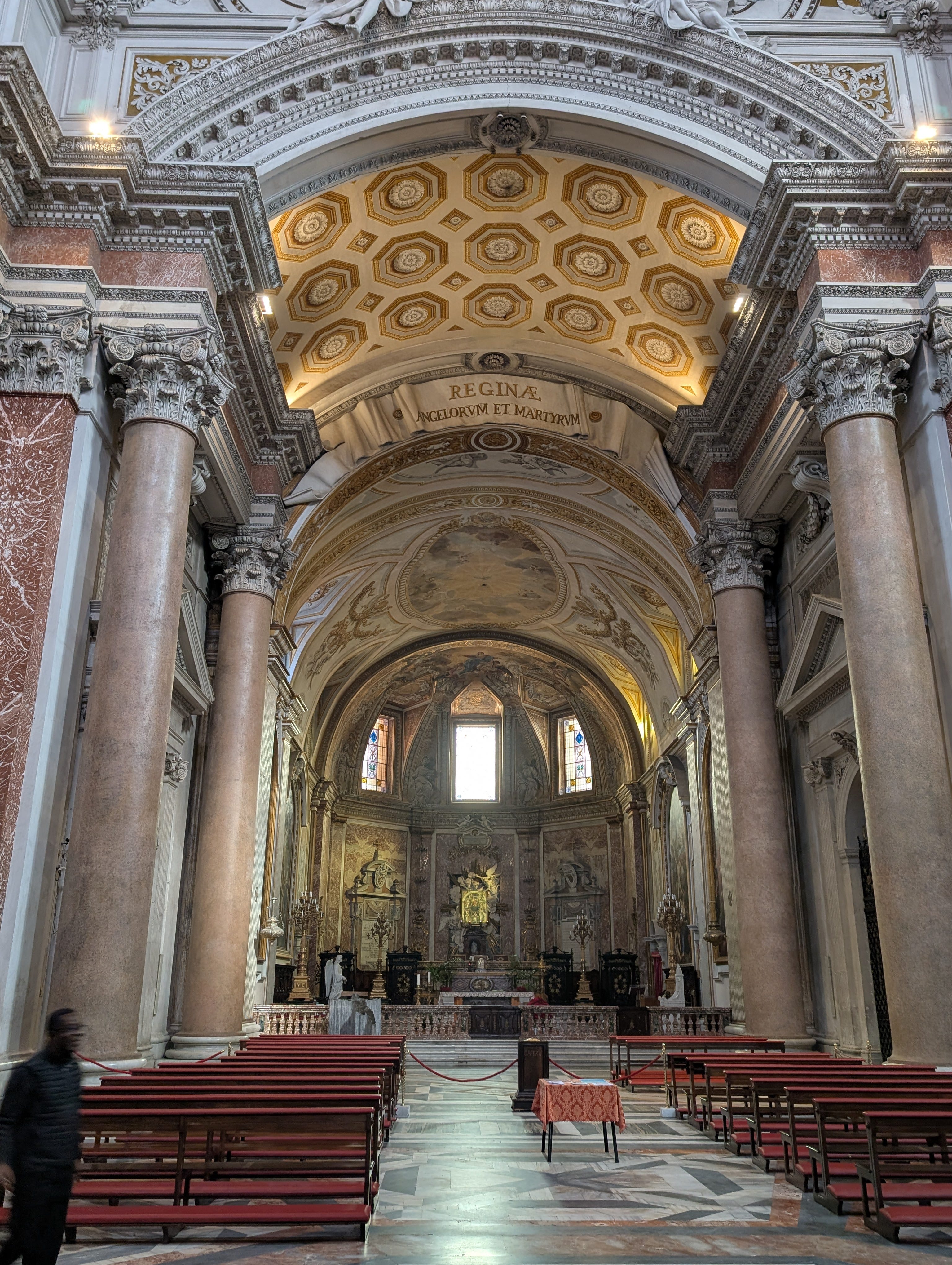
Santa Maria degli Angeli is famous for several reasons. First, for its architectural uniqueness, as it is one of the very few churches in Rome built within an ancient Roman structure.
Second, for its historical and scientific significance. Inside, you will find the remarkable meridian line, created in the early 18th century by astronomer Francesco Bianchini.
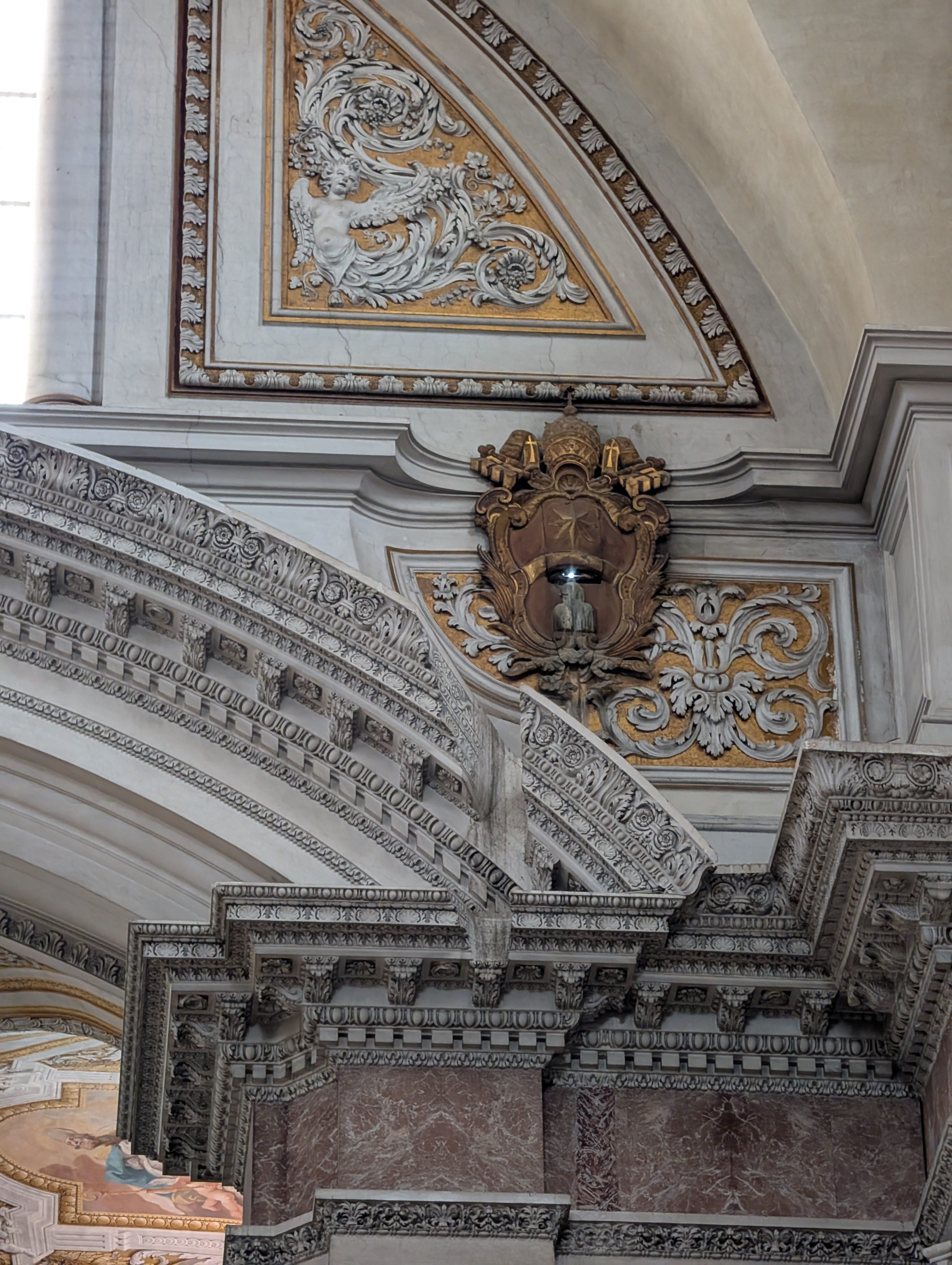
This instrument, embedded in the church floor, was used to measure the passage of the sun and to verify the accuracy of the Gregorian calendar. At noon, sunlight enters through a small aperture and precisely illuminates the line, marking the solar position with impressive accuracy.
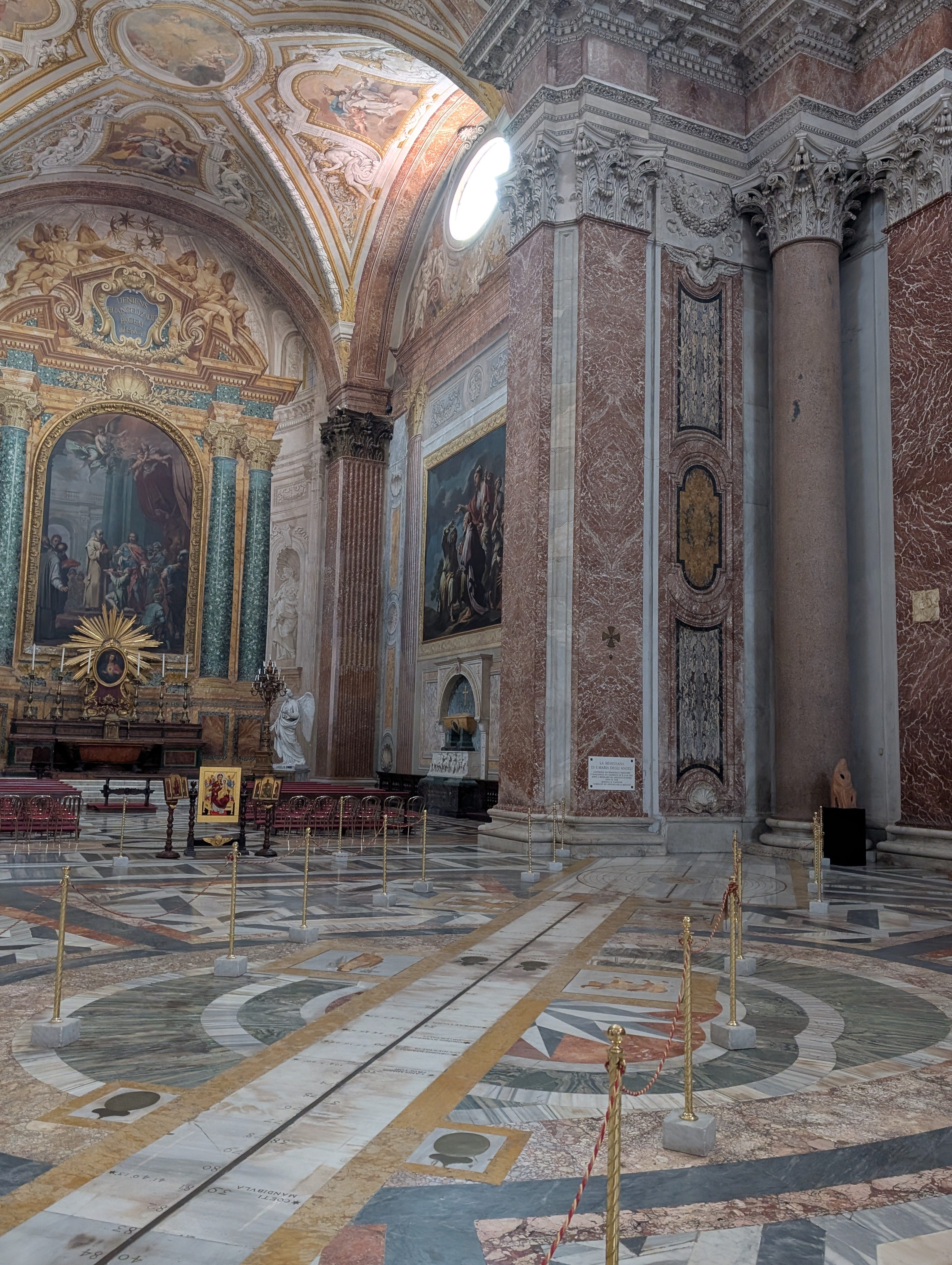
It is both a scientific device and a poetic reminder of the connection between faith, time, and the cosmos.
The interior of the church is vast and solemn, yet surprisingly austere compared to other Roman basilicas.
Monumental columns, high vaulted ceilings, and large open spaces dominate the scene. Along the sides, you will find important funerary monuments and artworks, including tombs of notable figures and chapels dedicated to various saints. The sense of scale is striking, more reminiscent of a Roman hall than a traditional church, which contributes to its distinctive atmosphere.
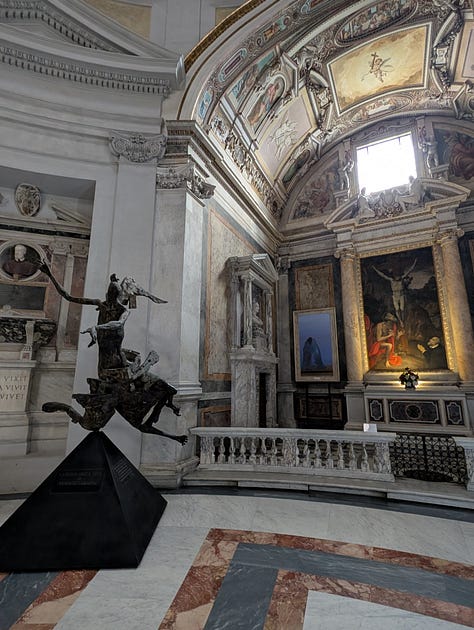
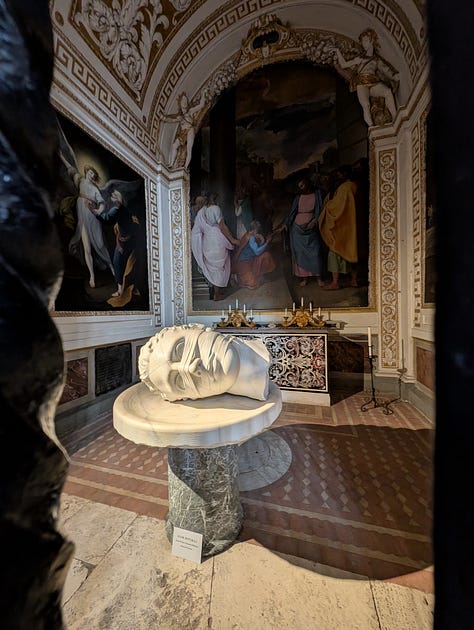
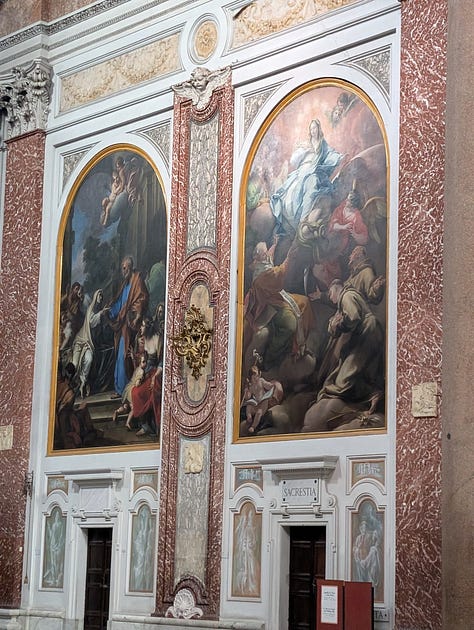
Beyond its artistic and historical value, Santa Maria degli Angeli also plays an important role in contemporary Rome. It is frequently chosen as the setting for official ceremonies, state funerals, and high-profile celebrations. Over the years, it has hosted events attended by public figures, celebrities, and personalities from the worlds of culture, business, and entertainment. This ongoing use reinforces its status not just as a historical monument, but as a living part of the city’s social and institutional life.
The church is located in Piazza della Repubblica, right next to the remains of the Baths of Diocletian and a short distance from Termini Station. It is easily accessible by metro, with the Repubblica stop (Line A) just a few steps away, as well as by numerous bus lines that serve the area. Its central location makes it an ideal stop, whether you are exploring ancient Rome, moving between different parts of the city, or simply looking for a place where history reveals itself in unexpected ways.
Santa Maria degli Angeli is not just a church. It is a place where centuries overlap, where science meets faith, and where the legacy of ancient Rome continues to shape the present.
As always, if you want to use any of the photos from my visit, please remember to give credit to the author. Happy exploring!
No posts
Comments
Nothing yet. Say the first thing.
Sign in to join the conversation.