
Today I went for a walk in what I consider one of the most beautiful areas to explore in Rome, a place rich in attractions, layers of history, and a peaceful atmosphere that feels almost suspended in time. I have already written about some of these spots in previous posts, such as the Clivo di Scauro, the fascinating Roman Houses of the Caelian (soon a post about this!), the Park of the Forma Urbis, Villa Celimontana, and several remarkable churches scattered throughout the neighborhood.
This time, however, I focused on something new for me: the Oratories of Saint Andrew, Saint Silvia, and Saint Barbara, part of the complex of the Church of San Gregorio al Celio.
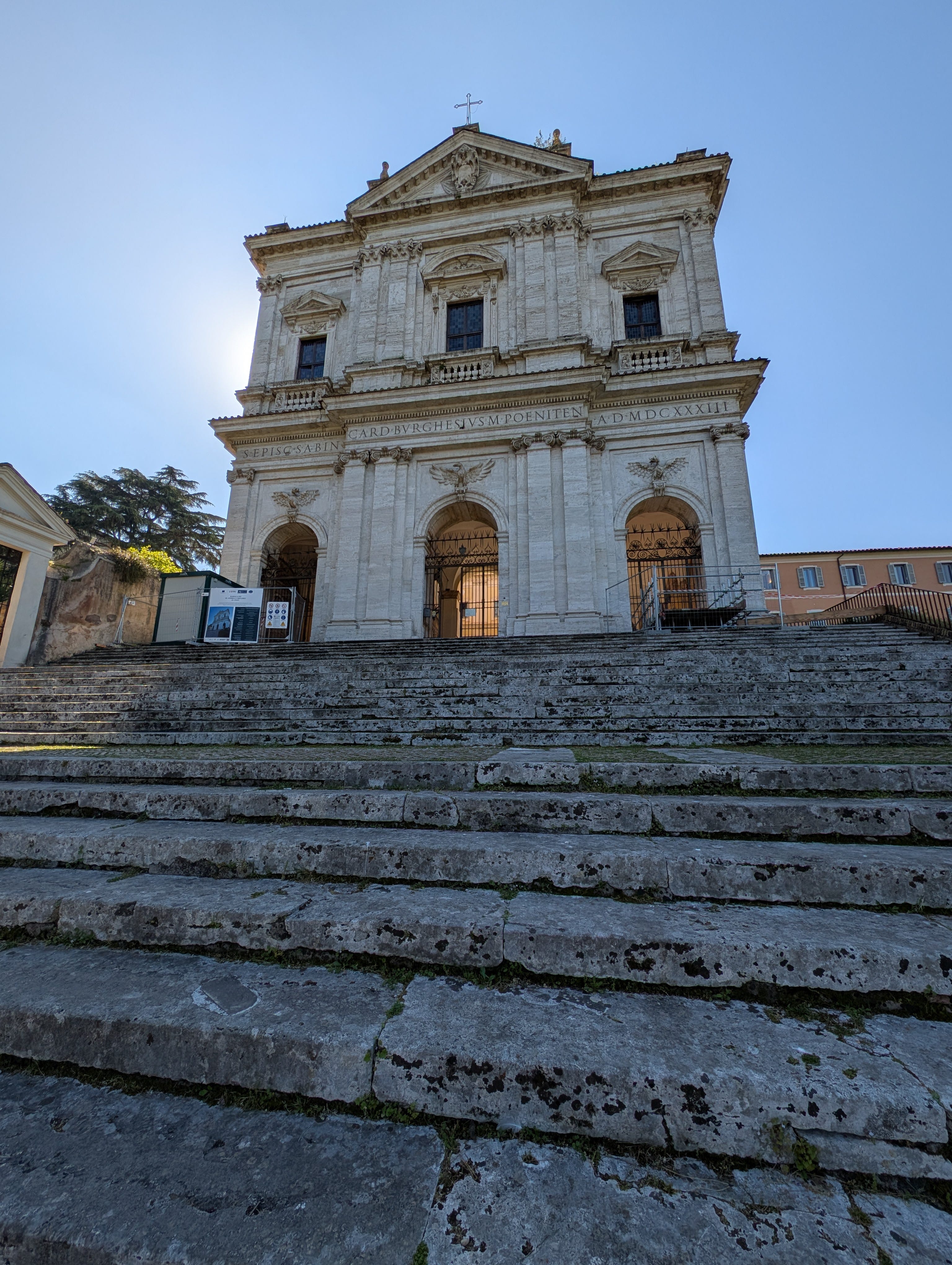
Incredibly, I had never visited them before. But then again, this is Rome. It always has something unexpected waiting, even in places you think you know well.
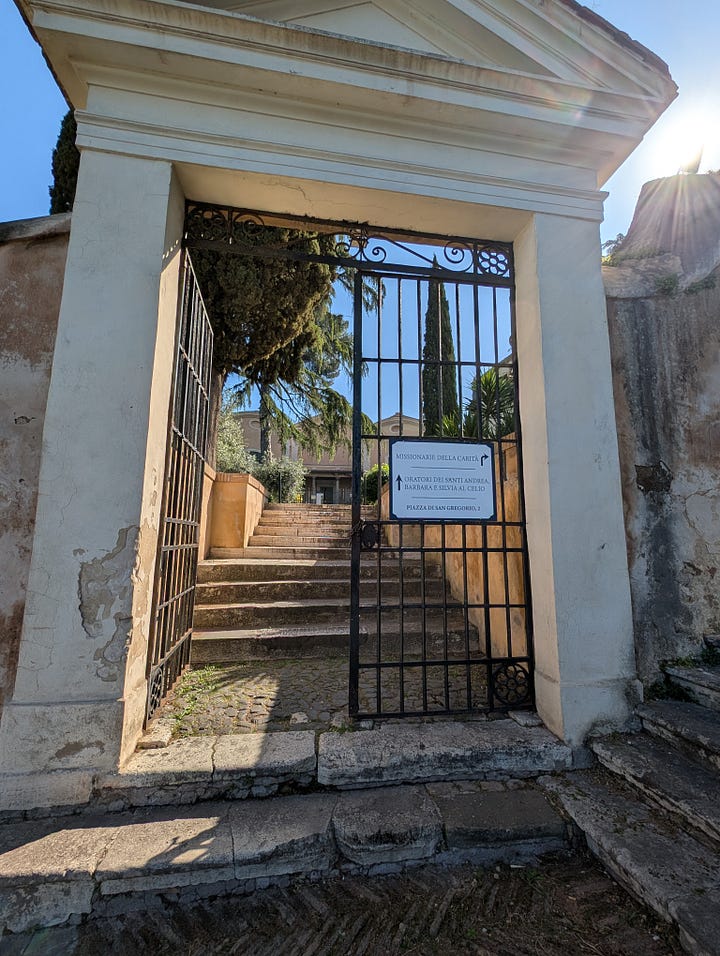
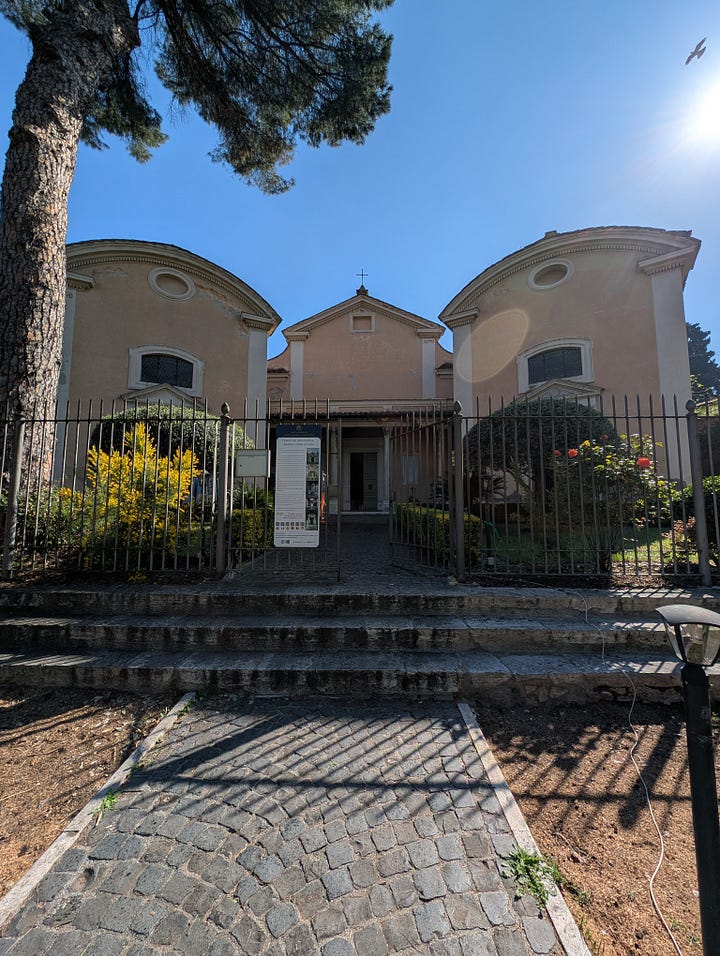
These three small oratories are located just outside the main church, arranged around a quiet courtyard that immediately creates a sense of intimacy and reflection. Their origin dates back to the late 16th and early 17th centuries, when they were commissioned by Cardinal Cesare Baronio, a key figure of the Counter-Reformation and a close collaborator of Saint Philip Neri. The intention was to celebrate the memory of Saint Gregory the Great and his family, who once lived in this area.
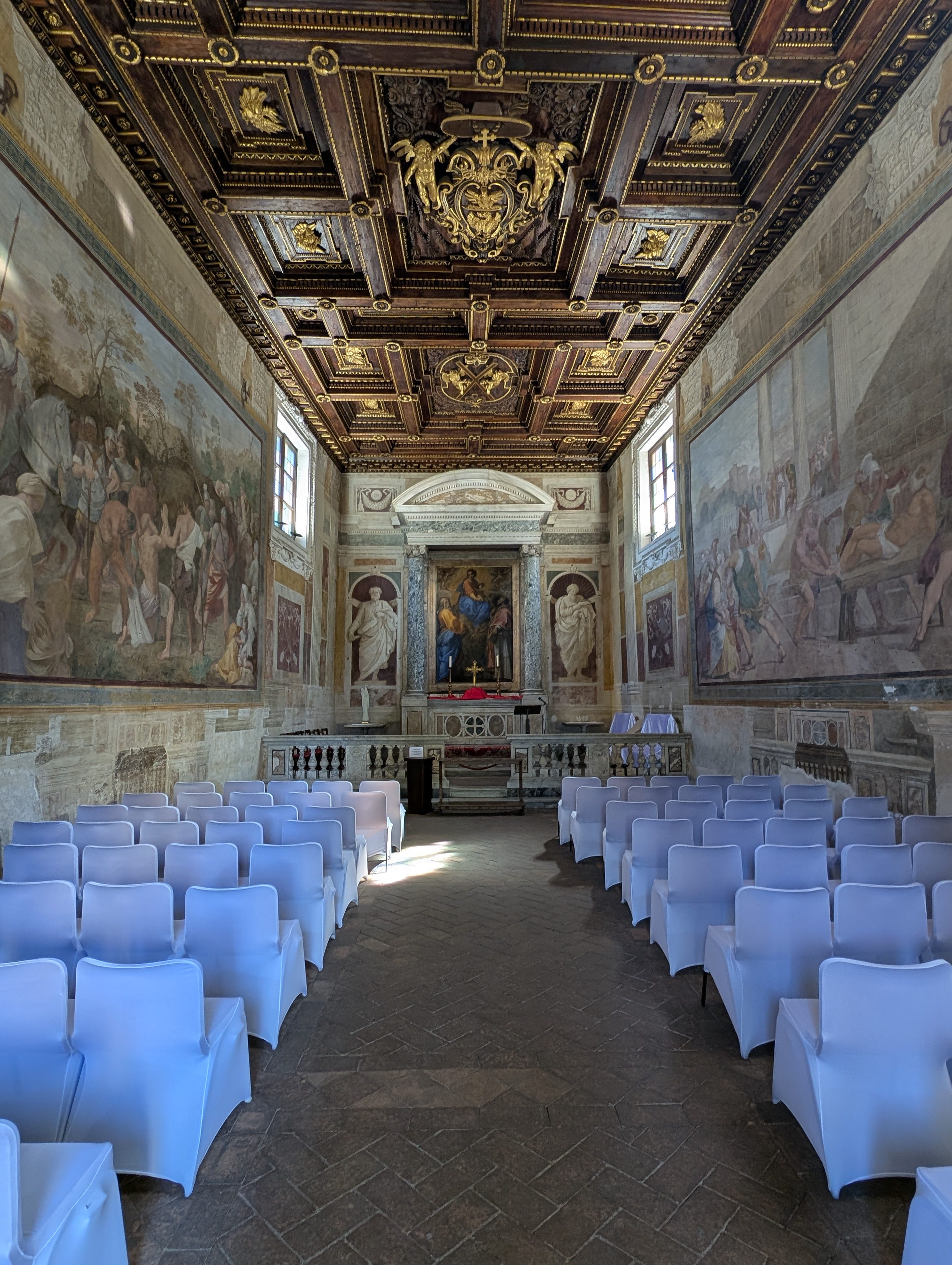
The Oratory of Saint Andrew is perhaps the most famous of the three. It is decorated with extraordinary frescoes by two of the greatest artists of the early Baroque period: Guido Reni and Domenichino.
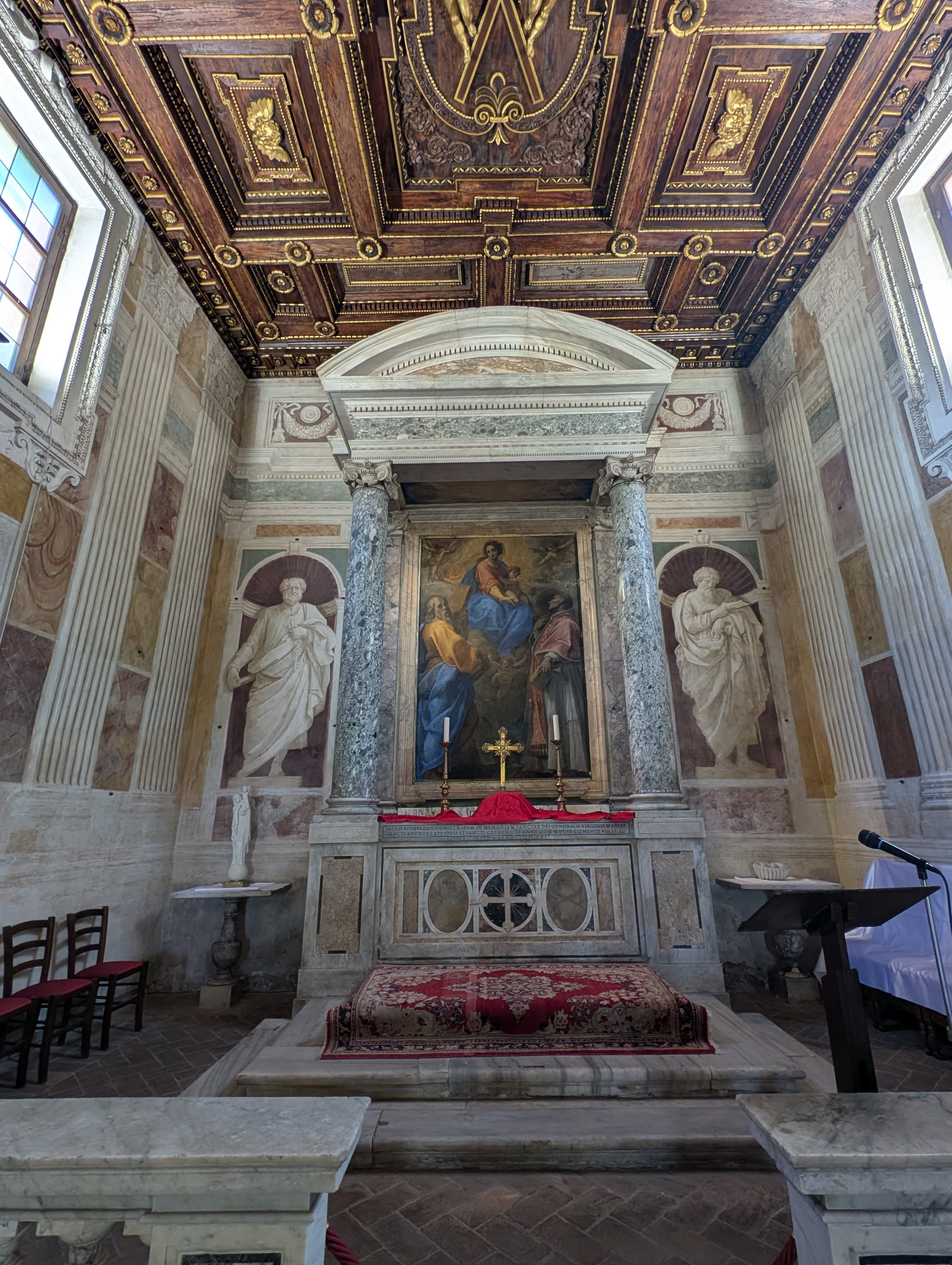
Reni painted the “Flagellation of Saint Andrew,” a work admired for its ideal beauty and classical harmony, while Domenichino created the “Scourging of Saint Andrew,” notable for its emotional intensity and narrative clarity.
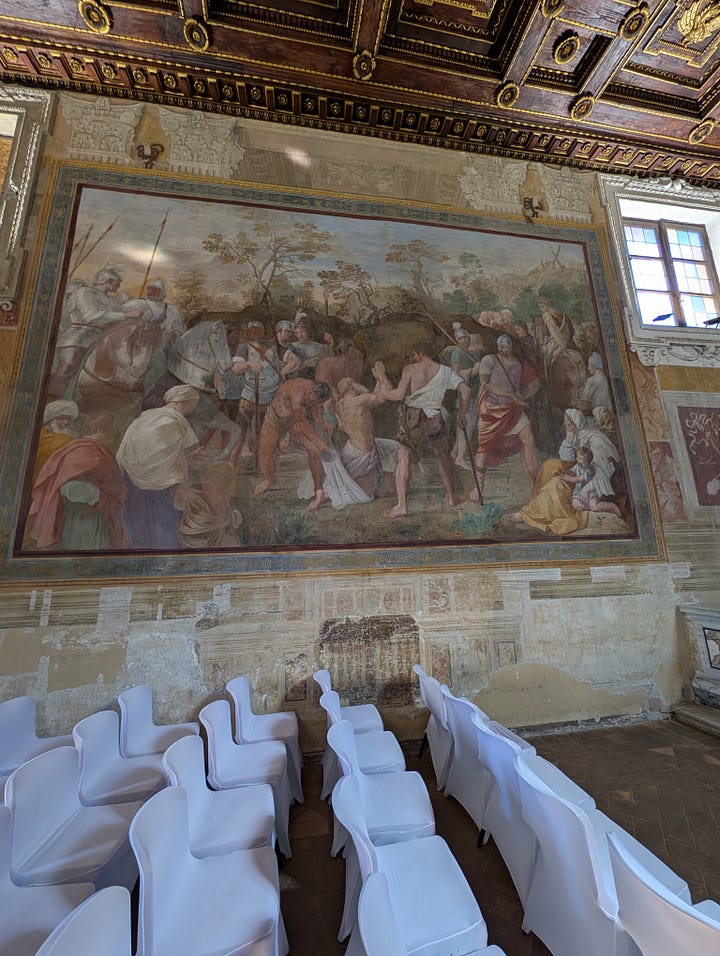
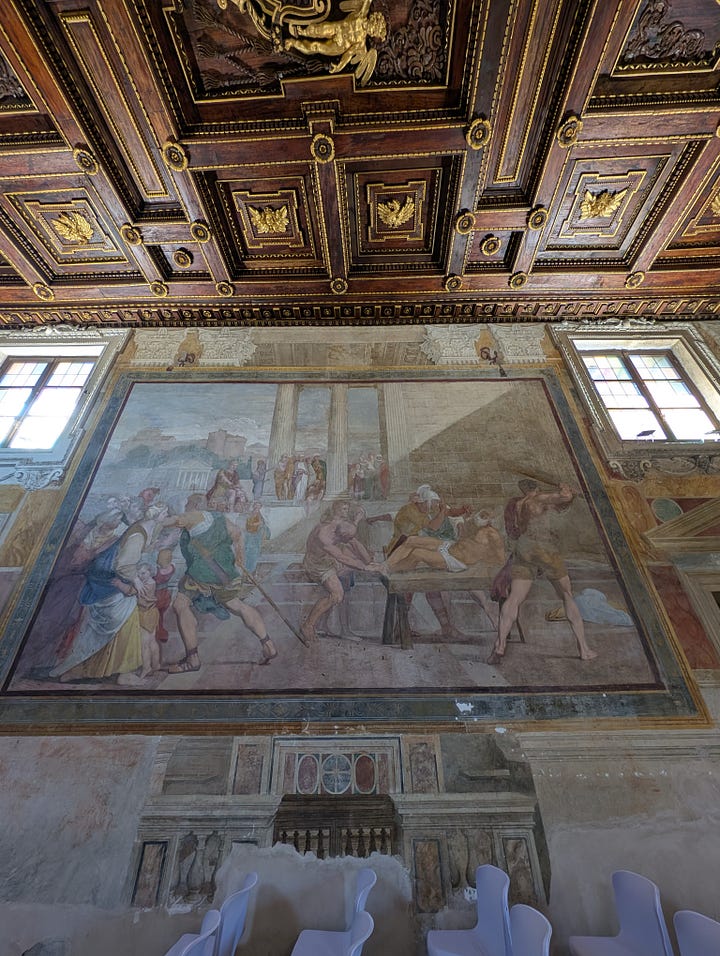
The comparison between the two artists became historically significant. Critics such as Giovanni Pietro Bellori later praised Domenichino’s work as a model of classical painting, highlighting the intellectual debate of the time between idealized beauty and expressive realism.
The Oratory of Saint Silvia is dedicated to the mother of Saint Gregory the Great. Inside, you will find a statue representing her, traditionally attributed to Nicolas Cordier, a sculptor known for combining classical inspiration with naturalistic detail.
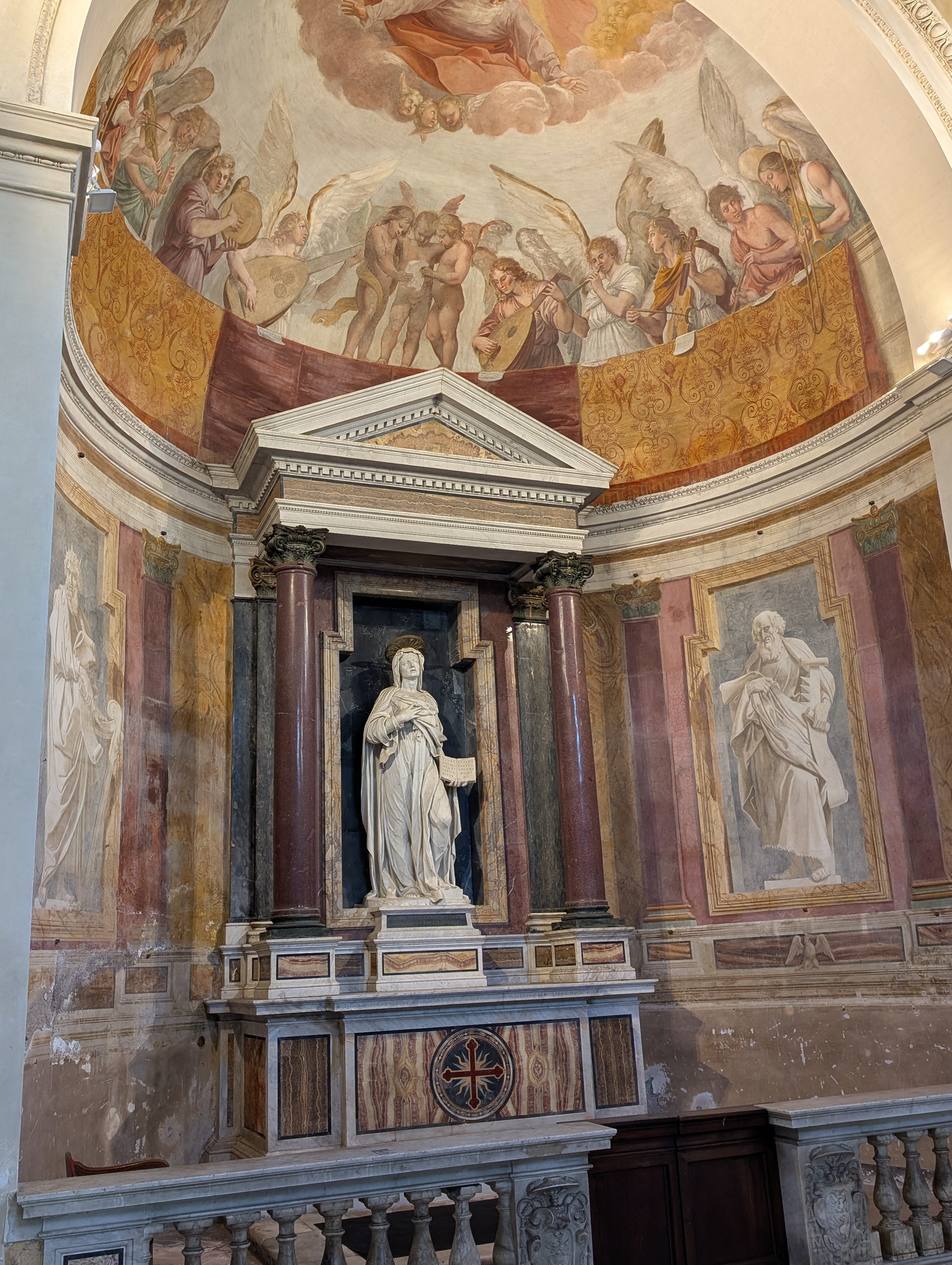
The atmosphere here is quieter, almost domestic, as if echoing the private devotion of a noble Roman family.
The Oratory of Saint Barbara is associated with the place where Saint Gregory is believed to have hosted a monastic community and organized charitable activities, including feeding the poor.
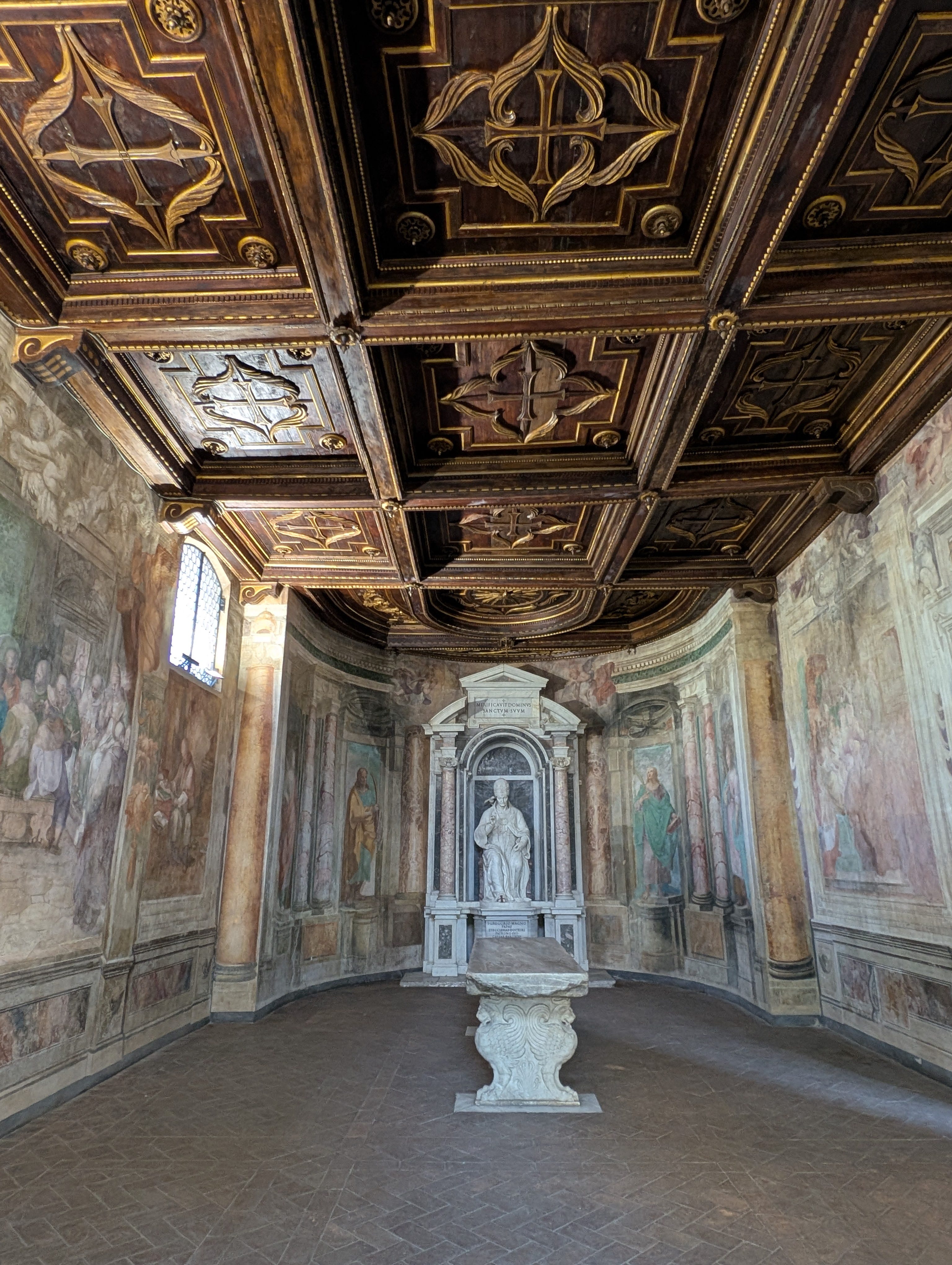
Although simpler in decoration, it carries a strong symbolic meaning connected to early Christian charity and community life.
Reaching this complex is very easy. The Church of San Gregorio al Celio is located just a short walk from the Colosseum, on the slopes of the Caelian Hill. From there, you can continue exploring the entire neighborhood on foot, moving through quiet streets, ancient remains, and green spaces that offer a different perspective on Rome compared to more crowded areas.
My suggestion is to plan at least half a day, if not a full day, to fully enjoy everything this area has to offer. It is one of those parts of Rome where history, art, and atmosphere come together in a way that rewards slow exploration. And, as always in this city, it reminds you that even after many visits, there is always something new to discover.
As always, if you want to use any of the photos from my visit, please remember to give credit to the author. Happy exploring!
No posts
Comments
Nothing yet. Say the first thing.
Sign in to join the conversation.