
Notes
ABSTRACT
psychostimulants, such as R-modafinil, enhance cognitive performance without inducing significant euphoria or addiction, making them promising lead candidates for clinical application ()
R-modafinil analogs with extended residence time at DAT (i.e., slow koff) would enhance cognitive function more effectively ()
evaluated a series of R-modafinil analogs using in vitro equilibrium and non-equilibrium measurements, in vivo fast-scan cyclic voltammetry, and highly translational cognitive assays in both healthy and scopolamine-treated rats modelling cognitive impairment ()
Scopolamine blocks acetylcholine from binding to muscarinic receptor.
It is a competitive antagonist.
This results in impaired memory and attention.
prolonging DAT occupancy improves dopamine signalling and leads to more robust enhancements in cognitive flexibility ()
S-MK-26 and (S,S)-CE158—produced the strongest cognitive effects ()
1. Introduction
(DAT) is a key protein in spatially and temporally shaping the dopaminergic signal ()
DAT reuptakes the dopamine (DA) released by exocytosis from the extracellular space and moves it back into the presynaptic terminals ()
Exocytosis: process of releasing molecules outside.
Dopamine molecules are stored inside tiny membrane-bound sacs called vesicles.
single-point mutations altering DAT function are associated with a variety of psychiatric disorders ()
inhibitors if they bind to the transporter and prevent neurotransmitter uptake (2)
Cocaine, Modafinil, Benztropine.
releasers if they act as substrates and reverse the normal direction of transporter flux (2)
Methamphetamine.
inhibitors or releasers, many compounds interacting with DAT stimulate different brain functions and are normally classified as psychostimulants (2)
Drugs that act more potently with DAT compared to the serotonin transporter (SERT) are typically associated with higher psychostimulant and abuse potential (2)
DAT inhibitors, such as cocaine, despite showing an unselective DAT/SERT profile, still show pronounced psychostimulant effects and high abuse liability (2)
benztropine possesses high DAT selectivity but lacks pronounced reinforcing properties (2)
benztropines stabilize the inward-facing conformation of DAT, which differs from the typical binding mode of classical DAT inhibitors such as cocaine (2)
Ti state.
modafinil or (S)-amphetamine, promote wakefulness without producing marked euphoria (2)
weak interaction with DAT and the existence of related analogs with even lower DAT affinity and more powerful eugeroics properties made questioning the importance of DAT in the cognitive enhancing properties elicited by eugeroics (2)
Eugeroics: Wakefulness promoting drugs.
new modafinil analog (S,S)-CE-158 was shown to lack off-target effects (2)
promnestic effects (2)
Memory enhancing.
DAT as the central and clinically relevant target responsible for the cognitive effects (2)
faster is the DA increase induced by a given psychostimulant, the stronger is the high perceived, and therefore the risk of misuse (2)
lower is the koff of psychostimulants at DAT (i.e. the longer the psychostimulant stay bound to DAT) the longer is the behavioral effect (2)
electrophysiological protocol (Niello et al., 2023) for quantifying the koff of different modafinil analogs designed for cognitive enhancement (2)
more effective cognitive enhancers display a higher affinity for DAT and that the increased affinity is associated with a slower koff (2)
fast scan cyclic voltammetry (FSCV) (2)
high affinity DAT inhibitors impact DA dynamics in anhestetized rats (2)
2. Experimental procedures
2.1. Animals
ASST (2)
Attentional Set-Shifting Task.
European Community Council Directive (2010/63/EU) (2)
1st Local Ethics Committee for Animal Experimentation in Warsaw (ethics permits no. 1085/2020, 1237/2021 and 1526/2023) (2)
2.2. Cell culture
human embryonic kidney 293 cells (HEK293 cells) (2)
Host cell.
Dulbecco's Modified Eagle Medium (DMEM) (2)
Cell food + environment.
fetal calf serum (FCS) (2)
To help cells grow.
DAT/SERT/NET plasmid (2)
DNA containing instructions for making the transporters.
polyethylenimine (2)
To get plasmid DNA inside cells (transfection).
Geneticin (2)
Antibiotic to kill cells that didn't successfully get transfected with plasmid DNA (selection).
uptake or uptake-inhibition experiments (2)
Exp 1: To measure how much neurotransmitter gets into the cell and how much the drug blocks the uptake.
poly-D-lysine (PDL) coated 96-well plates (2)
PDL helps cells stick to surface of the plate with 96 pockets.
transporter-electrophysiology (2)
Exp 2: To electrically measure what individual transporter cells are doing.
PDL-coated 3 cm dishes (2)
Low density dish for precise measurement of individual cells.
2.3. Drugs
in vitro experiments (2)
Experiment outside the living organism.
Like in a test tube.
DMSO (2)
Solvent - Dimethyl Sulfoxide.
Used as solvent, as drugs don't dissolve well in water sometimes.
in vivo experiments (2)
Experiments inside the living organism.
Like a living person / rat.
Kolliphor EL (2)
Surfactant.
To keep poorly water soluble drugs to stay dispersed in water.
2.4. Radiotracer assay
Krebs-HEPES buffer (3)
Solution. To keep the cells in a roughly physiological state while the experiment runs.
pre-incubated (3)
Inhibitor is added before the radioactive substrate.
tritiated substrates (3)
Radioactive substrate.
Normal biological molecules with H are replaces with tritium (3H).
KHB (3)
Krebs-HEPES buffer.
sodium dodecyl sulphate (SDS) (3)
Strong Surfactant.
To break open the cell.
beta-scintillation counter (3)
Tritium emits beta particles.
Emission is proportional to tritium transporter into the cell.
Non-specific uptake (3)
specific uptake = total uptake - nonspecific update.
Pharmacologically block the transporter to measure non-specific uptake.
methylphenidate (DAT-inhibitor) (3)
Ritalin.
paroxetine (SERT-inhibitor) (3)
Paxil.
substance of interest (3)
Transporter Inhibitor.
IC50s (3)
Concentration of drug required to inhibit transporter by 50%.
2.5. Electrophysiology
Current traces were filtered at 1 kHz and digitized at 10 kHz (3)
Recording.
1000 Hz is max frequency with sampling rate of 10,000 Hz.
traces were filtered using a 100-Hz digital Gaussian low-pass filter (3)
Analysis.
100 Hz is the max frequency.
2.6. Compound isolation form brain and blood and pharmacokinetic analysis
S-CE-123 and (S,S)-CE-158 was outsourced to Evotec France (3)
R-modafinil and S-MK-26 was performed in-house (3)
Sprague Dawley rats (Janvier, 314-364 g) (3)
isofluorane (3)
Inhaled general anesthetic.
gavage (3)
Tube to stomach for precise dosing.
liquid chromatography–tandem mass spectrometry (3)
Break molecule X into fragments A,B,C and measure mass to characterize X.
liquid chromatography-high-resolution mass spectrometry (3)
High precision mass measurement.
PK parameters (3)
Pharmacokinetics.
2.7. In vivo fast scan cyclic voltammetry (FSCV)
urethane (3)
Anesthetic.
carbon fiber working electrode (3)
dorsal striatum caudate/putamen (3)
Fast Cyclic Voltammetry Analysis (3)
Voltage sweeps ups and down to measure neurotransmitter concentration changes.
2.8. Attentional set-shifting task (ASST)
S-CE-123, S-MK-26 and R-Modafinil (1 mg/kg) were administered via oral gavage in four separate groups every day for one month and then 30min prior to testing in each of ASST stages. (3)
simple discrimination stage (SD) (4)
complex discrimination stage (CD) (4)
reversal stage (Rev) (4)
intra-dimensional shift phase (IDS) (4)
extra-dimensional shift phase (EDS) (4)
2.9. Statistics
Comparisons between two independent groups were performed using two-tailed unpaired t-tests (4)
t-test: (Mu_A - Mu_B) / (SE) gives the number of std errors away from null (0).
large t-value is a strong evidence against null hypothesis.
more than two groups, we used a one-way ANOVA followed by Tukey's post hoc multiple-comparison test (4)
ANOVA: Analysis of Variance.
F = MS_between / MS_within
Tukey: Check which specific pairs differ.
q = |X_i - X_j| / SE
across ASST stages, we applied a two-way mixed-effects ANOVA with Sˇíd ́ak's correction or Uncorrected Fisher's LSD for multiple comparisons (4)
two-way-ANOVA:
F_treatment F_stage F_interaction
Sidak's:
alpha_ind = 1 - (1-alpha)^(1/m)
Fisher's LSD:
t = (X_i - X_j)/sqrt(MS_error (1/ni + 1/nj))
Normality of data distributions was assessed using the Kolmogorov–Smirnov test (4)
Kolmogorov-Smirnov Test:
D = sup |Fn(x) - F(x)|
Large D implies that distributions differ substantially.
3. Results
3.1. Binding kinetics optimization of DAT inhibitors
inhibit the reuptake of [3H]-DA, [3H]-MPP+, and [3H]-5HT in HEK293 cells (4)
DAT, norepinephrine transporter (NET) or SERT (4)
Apart from cocaine, none of the compounds showed pharmacologically relevant activity at NET and SERT, indicating a strong selectivity for DAT (4)
activity at DAT, two major groups (4)
first group displayed DAT inhibitory potency comparable to that of R-modafinil (4)
R-modafinil (4)
S-CE-123 (4)
CE125 (4)
S-CE-146 (4)
R-CE-146 (4)
second group was characterized by markedly higher potency (4)
(S,S)-CE-158 (4)
SMK-26 (4)
latter group thus exhibited a cocaine-like affinity for DAT while remaining devoid of activity at NET and SERT (4)
elicited DAT-mediated currents by applying a saturating concentration of DA (30 μM) in hDAT-expressing HEK293 cells (4)
Once established a steady-state DAT-mediated current, we co-applied the compound of interest (4)
application of the inhibitor is stopped and the application of 30 μM DA continues alone (4)
rate of recovery of the current is a measure of the koff for the tested inhibitor (4)
dopamine-mediated current recovers in a concentration-independent manner since a compound's koff is solely time-dependent (s 1) (4)
(S,S)-CE-158 and S-MK-26 showing approximately 10 times slower koff compared to other drugs (4)
Therefore, longer residence time.
Contributes to the high potency.
differences in the koff linearly correlated with the IC50s obtained in uptake-inhibition (4)
in Experiment 1.
improvement in the IC50 of the drugs depends on the establishment of a more stable DAT-inhibitor complex (4)
Contrary to the recovery of the steady-state currents, the inhibition of DA steady state current is concentration dependent (4)
Inhibitor Present: inhibition is concentration dependent
Inhibitor Removed: inhibition is k_off dependent (concentration independent)
inhibition of the DA steady-state current saturates at the rate-limiting step (approximately 2 s 1 – dashed box Fig. 1h) (4)
Say DAT goes through steps while doing it's transport of DA,
S1 -> S2 -> S3 -> ... S10
Then if state S2 is the state with the slowest conversion speed to S3, then it is the rate limiting step.
Even if the inhibitor is designed to target any single step say S3 or S4, then inhibitor has to wait for the population to cycle to S3 or S4.
if it depends on more states it superseds this rate (4)
Say S2, S3, S4 all being targeted. Then more members of the states population can be bind.
ibogaine (4)
Can interact with multiple states of DAT at once.
Used to treat substance abuse patients.
fastest koff (4)
R-modafinil (4)
S-CE-123 (4)
slowest koff (4)
S-MK-26 (4)
(S,S)-CE-158 (4)
All compounds saturated at the rate-limiting step of DAT (4)
their molecular pharmacological properties depend on a single state of DAT transport cycle (4)
cannot exclude the possibility that the compounds stabilize a particular transporter conformation, leading to atypical mechanisms of action (4)
Like benztropine favoring inside-facing DAT.
3.2. In vivo pharmacological manipulation of DA dynamics
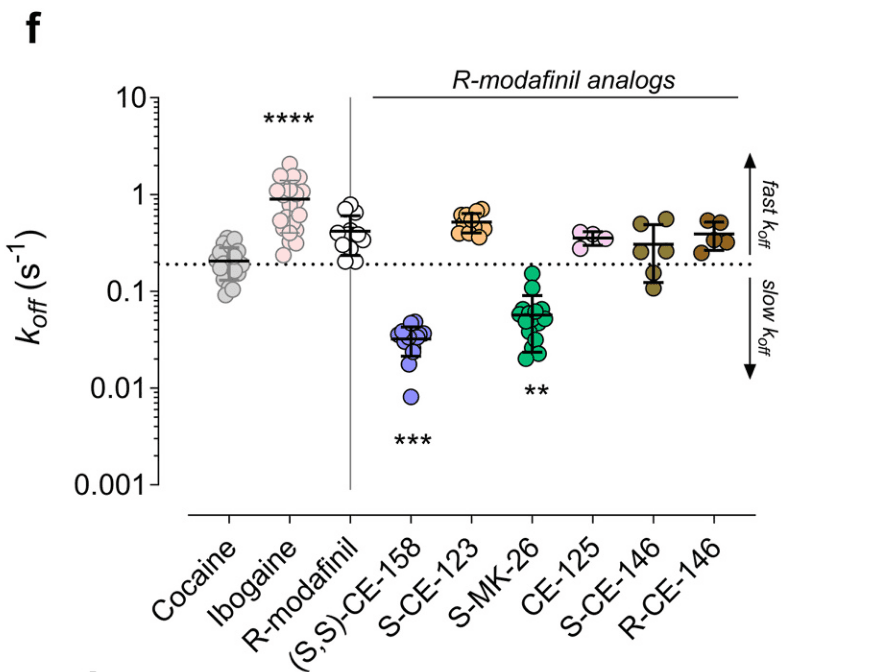
(S,S)-CE-158 and S-MK-26 show 10x slower k_off.
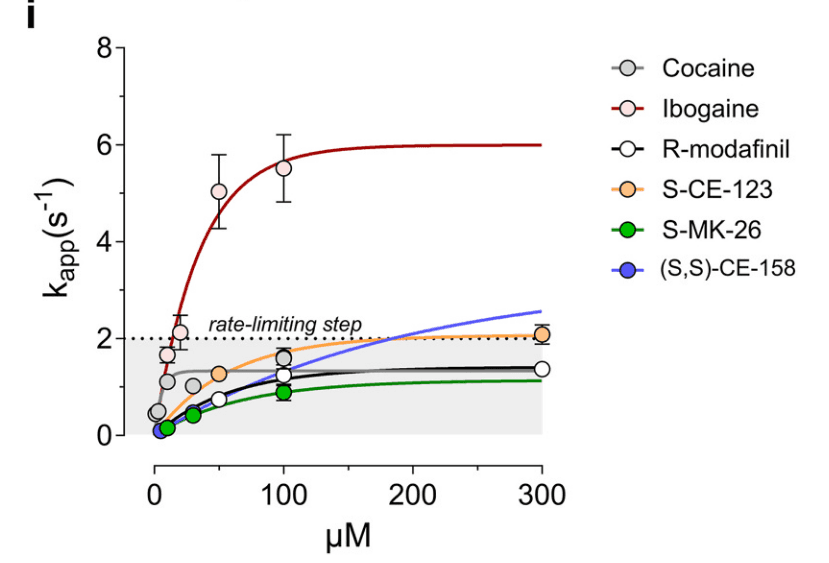
Only ibogaine supersedes the rate-limiting step because it is the only drug that can bind with multiple states of DAT.
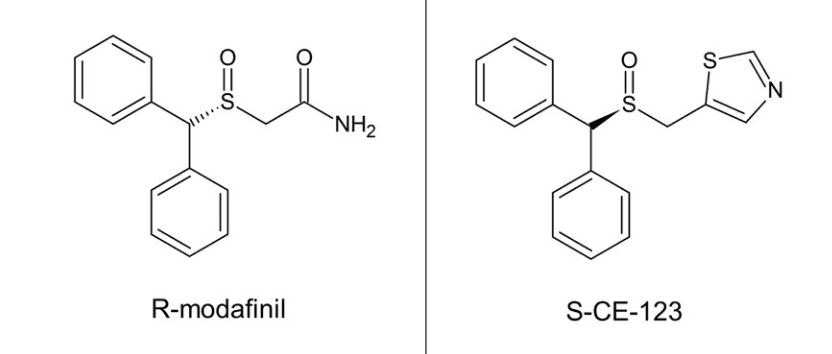
Closest to modafinil.
Low stable DAT-interaction.
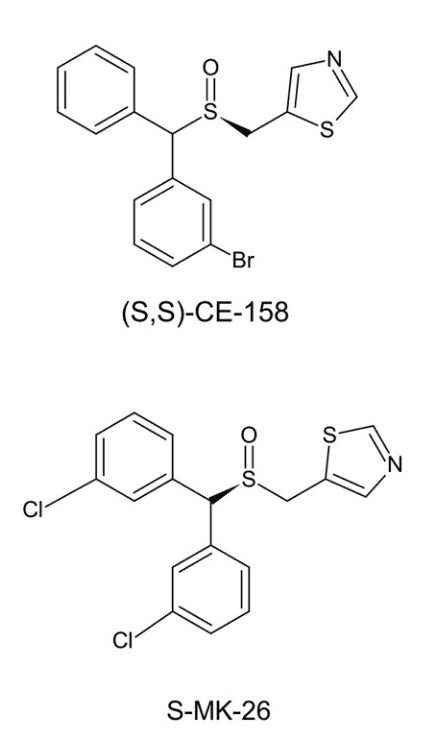
High stable DAT-interaction.
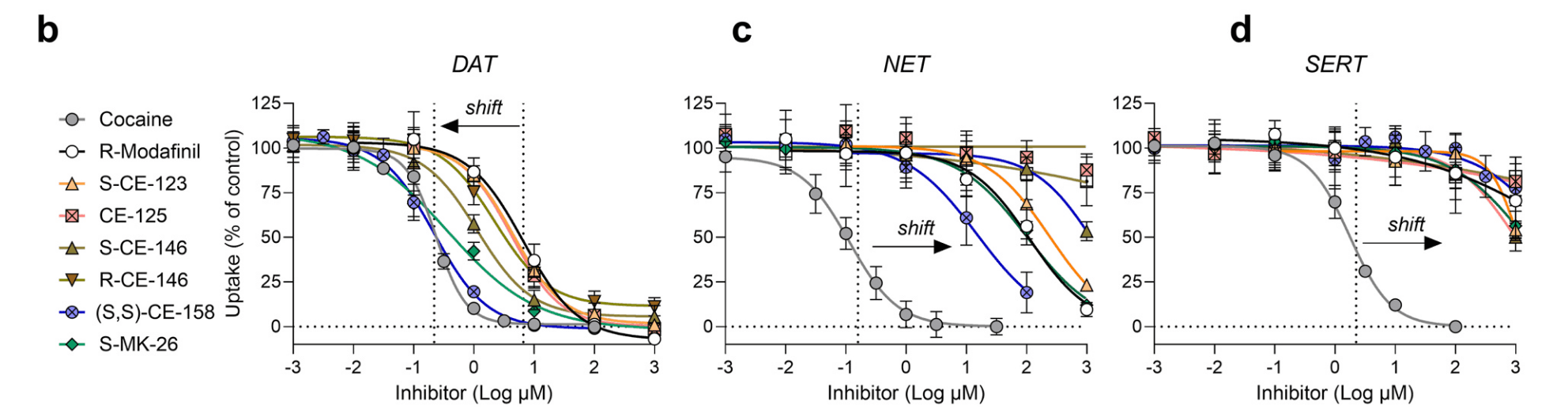
Only cocaine affects uptake of NET and SERT beyond just DAT.
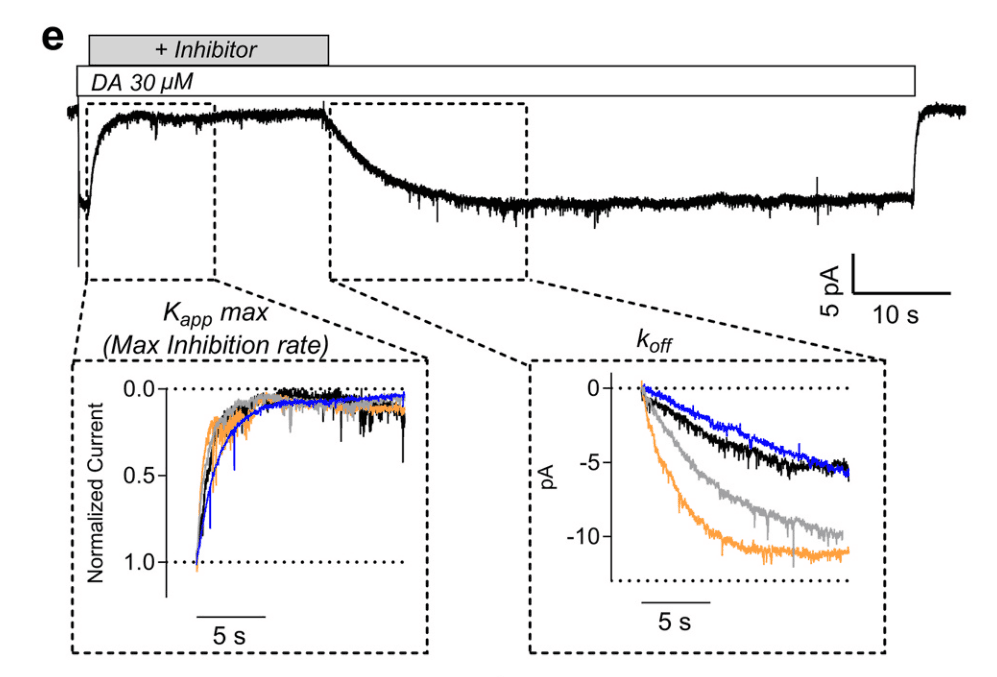
Electrical current generated by DAT when transporting DA.
So, when "+Inhibitor" the current becomes 0.
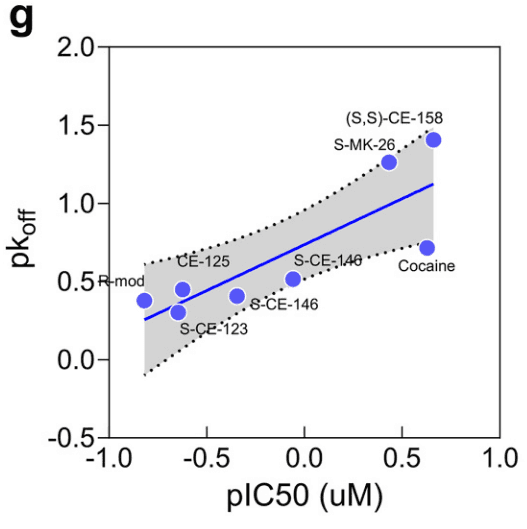
p stands for -log_10()
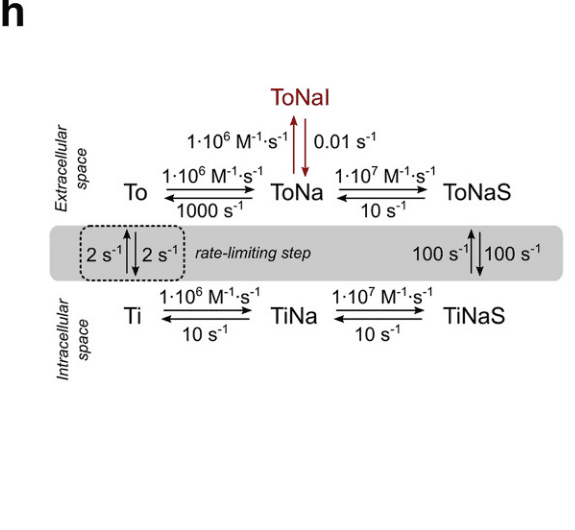
To: Transporter outward-facing
Ti: Transporter inward-facing
Na: Sodium
S: Substrate (Dopamine here)
Empty transporter Ti has to reset outward To. This is the rate limiting step.
All inhibitors bind at ToNa state.
more stable DAT-interaction (i.e. lower koff (S,S)-CE-158 and SMK-26) (6)
less stable DAT interaction (i.e. higher koff Rmodafinil and S-CE-123 (6)
dorsal striatum (6)
Receives dense dopaminergic input.
administered i. p. (6)
IP: Intra Peritoneal Injection
Abdomen cavity in rodents.
electrical stimulation evoked a characteristic DA peak, identified by an oxidation peak at ~0.65V and a reduction peak at 0.4V (6)
R-modafinil and S-CE-123 fade within 120 min of recording, S-MK-26, and (S,S)-CE-158 still show elevated DAmax at 120 min, indicating a prolonged effect (6)
S-MK-26 was markedly less effective than (S,S)-CE-158 in increasing striatal DA (6)
3.3. Oral pharmacokinetics of DAT inhibitors
psychostimulants show reduced toxicity when administered orally (6)
systemic parenteral administration (6)
Systemic: entering the circulation and distribute throughout the body
Parenteral: without entering gastrointestinal track
Examples:
IV: intravenous IM: intramuscular SC: subcutameous IP: intraperitoneal
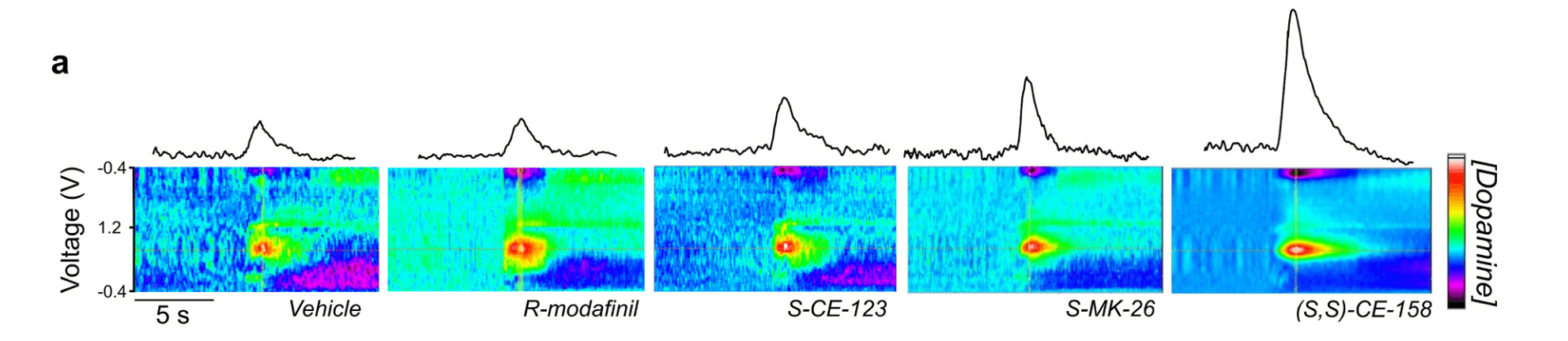
Up-sweep and down-sweep the voltage of the electrode stuck in brain.
-0.04 to 1.2 to -0.4
Measure how much electrons are being released.
Colors are the measured current due to oxidation of dopamine as a result of voltage sweeping.
Max oxidation at 0.65V Max reduction at -0.4V
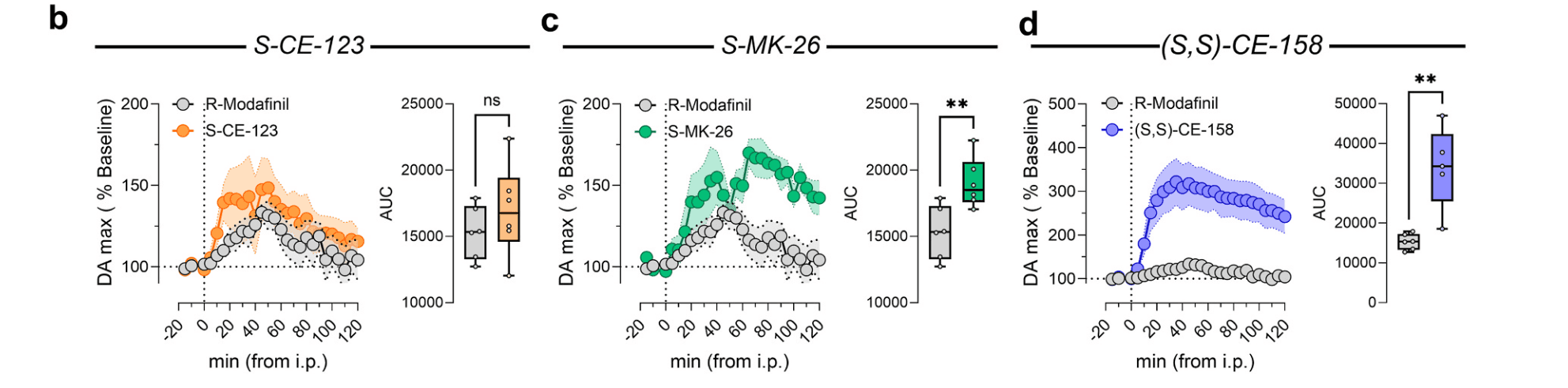
All compounds showed a slower pharmacokinetics compared to R-modafinil (6)
brain:plasma ratios ≥1 which indicates good brain penetrance (6)
both S-MK-26 and (S,S)-CE-158 showed a much slower excretion compared to S-CE-123 and R-modafinil (6)
3.4. Behavioral efficacy and suitability of slow binding kinetic DAT inhibitors
ASST in Wistar rats, a behavioral task modeled after the intradimensional/extradimensional component of the Cambridge Neuropsychological Test Automated Battery (CANTAB) (6)
f) koff from different inhibitors. Statistics is One-way ANOVA followed by Tukey multi-comparison test, α = 0.05. ANOVA: F (8, 104) = 21.31, P < 0.0001. Tukey multi-comparison test: * = p < 0.05, ** = p < 0.01, *** = p < 0.001, **** = p < 0.0001 (6)
h) Schematics of DAT transport cycle, with estimated transport rates (6)
In vivo reveals that (S,S)-CE-158 is much stronger than it's closer analog S-MK-26 during in vitro.
3R principles by re-using the existing dataset—including the (S,S)-CE-158 + scopolamine condition—and integrating it with the newly generated datasets for the three additional compounds (R-modafinil, S-CE-123, and S-MK-26 (7)
Replace: use non-animal alts Reduce: use fewest animals Refine: procedure to reduce distress
rats are challenged for the discrimination of different stimuli (7)
different odors (7)
different mediums (7)
number of trials to reach the criterion (7)
measure of cognitive performance.
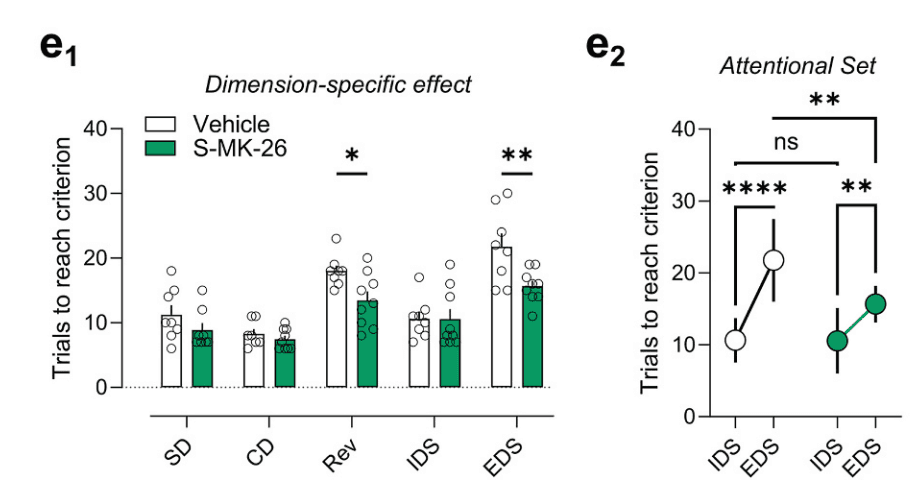
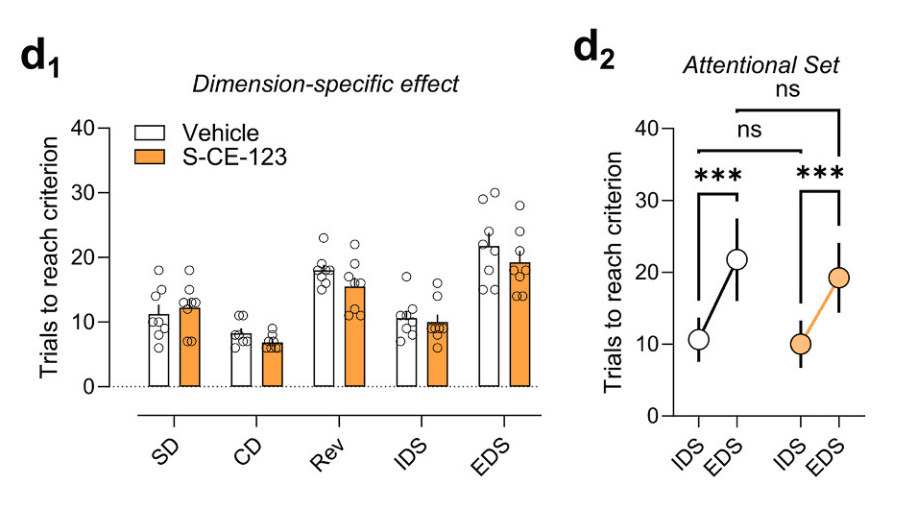
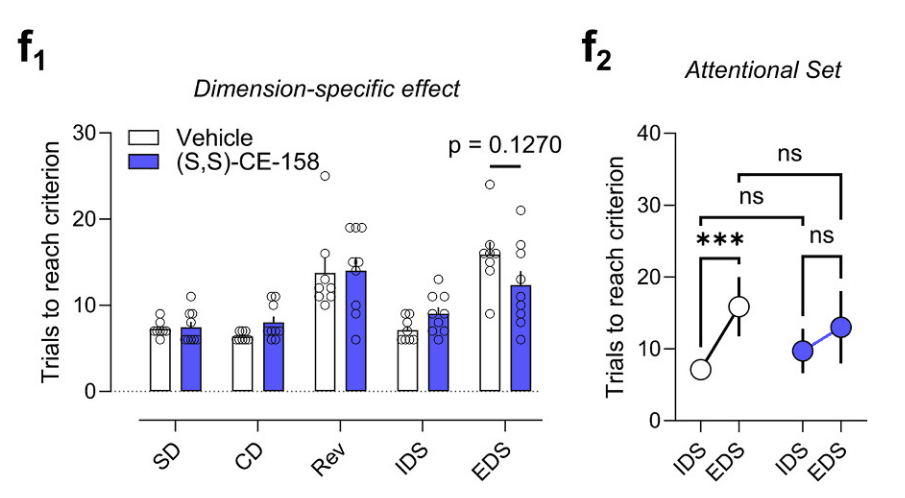
difference in the number of trials to reach the criterion between IDS and EDS is a measure of cognitive flexibility (7)
R-modafinil facilitated overcoming this cognitive bias showing a statistically significant reduction in the trials to reach criterion in the EDS (7)
S-CE123 did not show any relevant effect compared to Vehicle in any of the cognitive dimensions (7)
S-MK-26 showed statistically significant effects in the reversal (7)
(S,S)-CE-158 did not show statistically different effects in any of the ASST phases included the EDS (7)
(S,S)-CE-158 reduced the IDS→EDS shift cost (7)
Following two weeks of washout, we re-tested the animals after the pre-treatment with the amnestic antimuscarinic drug scopolamine (7)
R-modafinil showed a robust decrease in the required trials to reach criterion during the EDS (7)
S-CE-123 showed a similar result to R-modafinil with a reduction in the number of trials to reach criterion in the EDS vs Vehicle (7)
S-MK-26 produced a robust reduction in the number of trials required to reach criterion across multiple ASST stages (7)
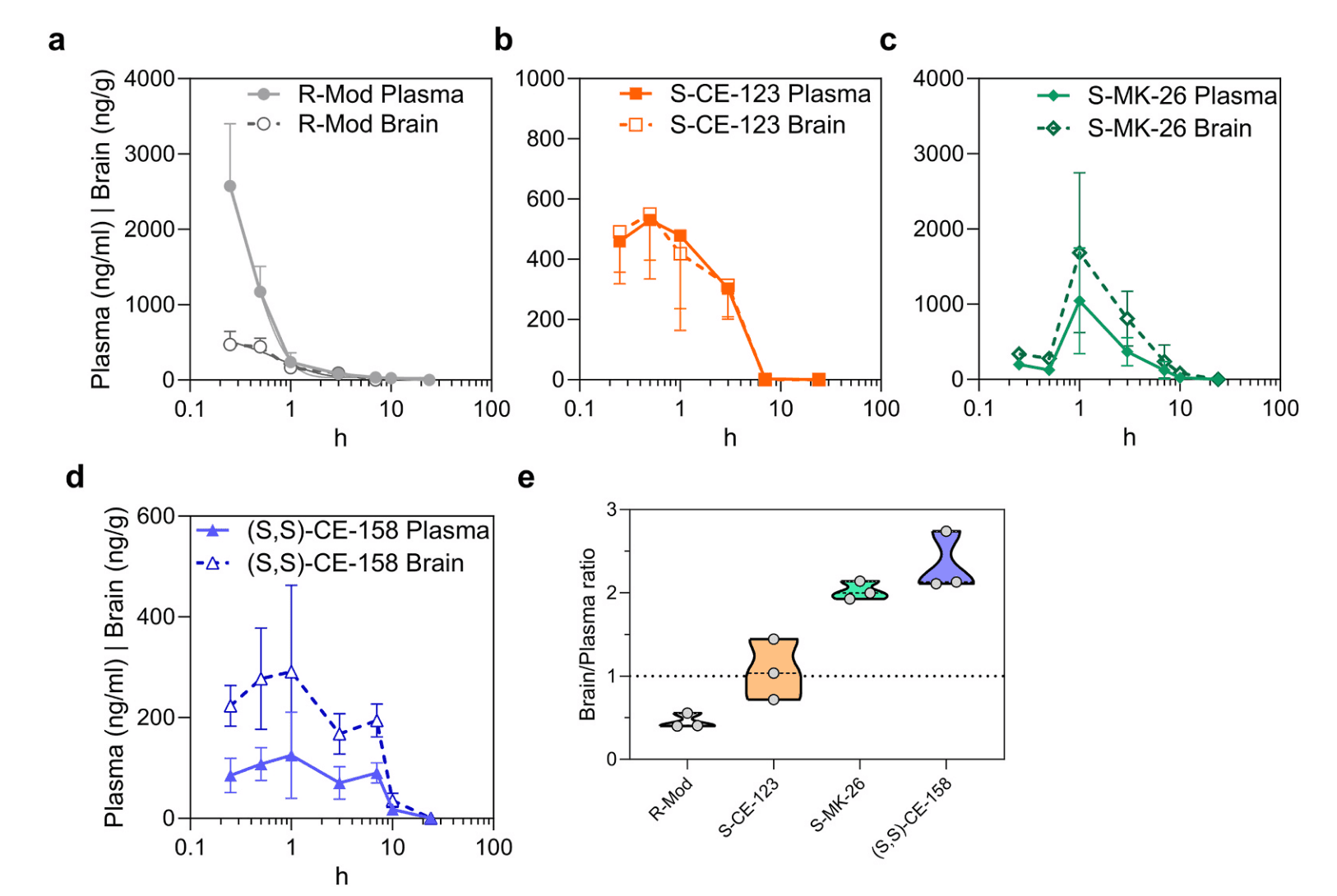
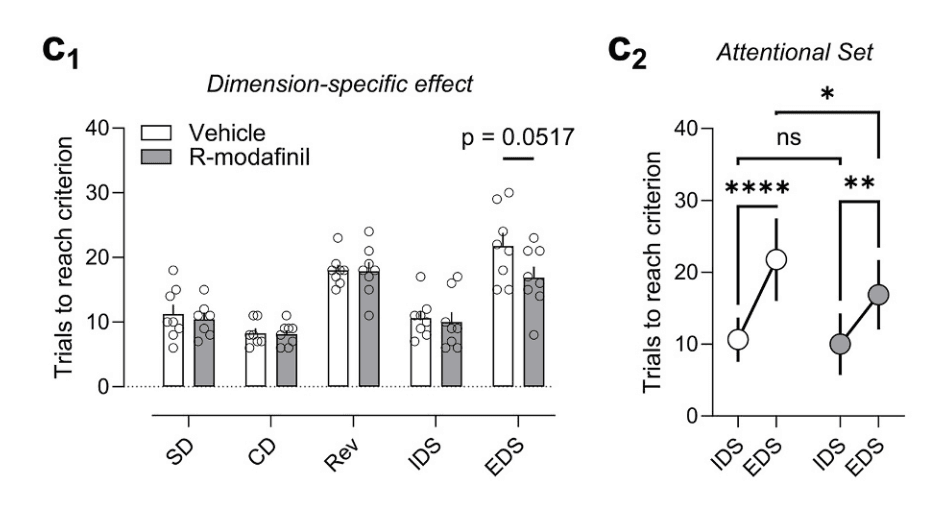
R-modafinil reduces the number of trials for reaching EDS criterion.
Significant reversal.
No effect.
c1) Dimension-specific effects of R-modafinil vs Vehicle: two-way mixed-effects ANOVA with main affect on test F (4, 54) = 33.19, p < 0.0001, Sˇíd ́ak's multiple comparisons test for EDS Vehicle vs R-modafinil p = 0.0517, for all the other tests p > 0.05 (8)
d1) Dimension-specific effects of S-CE-123 vs Vehicle: two-way mixed-effects ANOVA with main affect on test (IDS vs EDS) F (4, 55) = 39.35, p < 0.0001, for all test Sˇída ́k's multiple comparisons test Vehicle vs S-CE-123 p > 0.05 (8)
e1) Dimension-specific effects of SMK-26 vs Vehicle: two-way mixed-effects ANOVA with main affect on test F (4, 58) = 33.52, p < 0.0001, animals F (1, 15) = 6.914, p = 0.019, and test x animals F (4, 58) = 2.752, p = 0.0364. Sˇíd ́ak's multiple comparisons for ASST tests comparing Vehicle vs S-MK-26: Rev p = 0.0480, EDS p = 0.0035, for all the other tests p > 0.05 (8)
f1)Dimension-specific effects of (S,S)-CE-158 vs Vehicle: two-way mixed-effects ANOVA with main affect on test F (4, 75) = 20.54, p < 0.0001. ˇSída ́k's multiple comparisons for ASST tests comparing Vehicle vs (S,S)-CE-158: all the tests p > 0.05 (8)
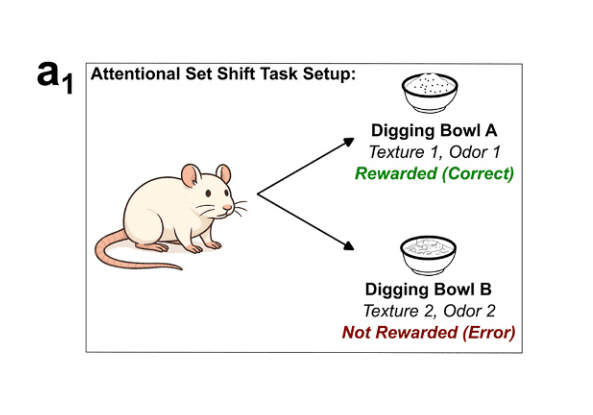
ASST Setup.
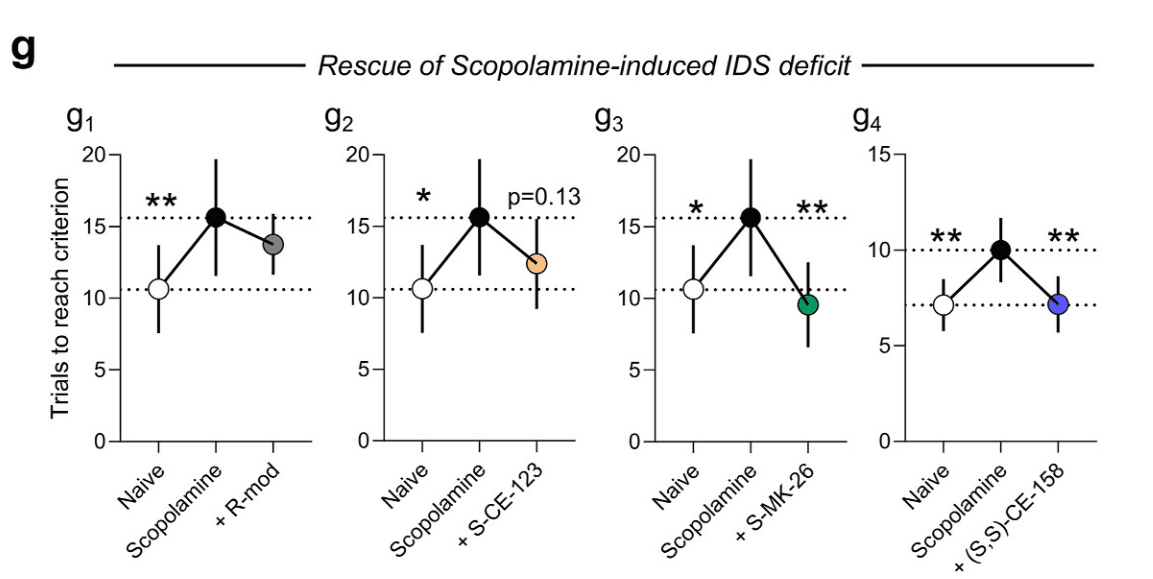
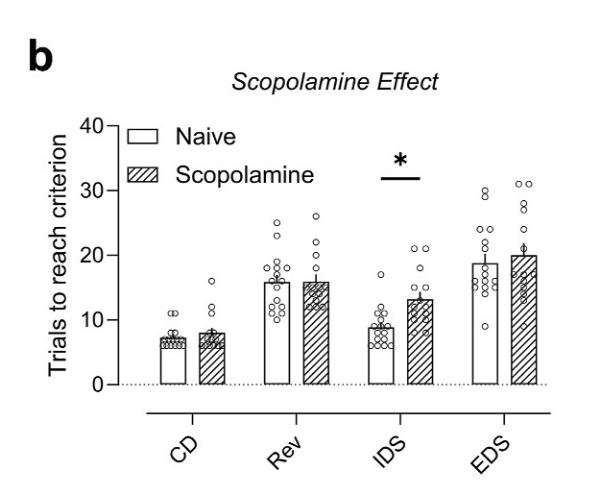
(S,S)-CE-158 produced only a modest reduction in trials to criterion across ASST stages (10)
R-modafinil did not show any effect on the rescue (10)
S-CE-123 show only a partial rescue (10)
full rescue of performances was present for both slow bindingkinetic inhibitors S-MK-26 (10)
and (S,S)-CE-158 (10)
4. Discussion
DAT/SERT selectivity ratio, is regularly used as a predictive indicator of the abuse liability of a given drug (10)
But there are exceptions, like cocaine.
benztropines, rimcazole, GBR12909, and related analogs do not induce robust reinforcing (10)
cocaine, which induces reinforcing and stimulatory effects, does not present with a high DAT/SERT selectivity ratio (10)
benztropine analog JHW007 could antagonize the reinforcing effects of cocaine by slowly occupying DAT in the CNS (10)
rate of unbinding of compounds at DAT predicts the length of stimulatory effects across different psychostimulants, indicating that binding kinetics can influence behavioral properties of DAT ligands (10)
improvement in the equilibrium affinity from μM to sub-μM of different modafinil analogs is associated with their slower koff at DAT (10)
replacing the terminal amide of R-modafinil with a thiazole, in combination with substitutions on the bis-phenyl ring system, plays a role in binding kinetics (10)
Amide: -CONH2 Thiazole: -C3H3NS Bisphenyl: 2 benzene rings
pyrovalerone-based stimulants (10)
Inhibit multiple states of DAT. Similar to ibogaine.
we cannot conclude if the tested inhibitors might be used for state-dependent modulation of DAT as reported for GBR12909 and benztropine (10)
benztropine stabilizes Ti state.
in contrast to R-modafinil, it is the opposite enantiomer that exhibits higher DAT affinity. Given the critical role of sulfoxide configuration in DAT binding for R-modafinil and related compounds, further atomistic studies will be necessary for elucidating the binding interactions of these analogs (10)
slow dissociation rate could be achieved via the establishment of occluded intermediates, as reported already for LSD in the case of 5HT2b and 5HT2a receptors (10)
by stabilizing the inward-open state as established in the case of GBR12909 and benztropines (10)
The molecular consequences of a long residence time at DAT are still enigmatic. Further studies will be needed to clarify this point (10)
our study did not assess the free-drug concentration for S-MK-26 and (S,S)-CE-158, as was done for R-modafinil and S-CE-123 (10)
total drug = free drug + tissue drug.
Only free drug is readily available to interact with DAT.
primarily impaired IDS performance, and rescue of IDS (i.e., attentional set formation) was most evident for the optimized DAT inhibitors S-MK-26 and (S,S)-CE-158, whereas R-modafinil and S-CE-123 showed weaker or no IDS rescue (10)
internally consistent with the stability–flexibility trade-off (11)
Set formation (IDS) demands strong and sustained dopaminergic engagement to stabilize task-relevant representations (11)
set shifting (EDS) can be facilitated by comparatively modest DA elevations that bias behavior away from perseveration and toward exploration (11)
under scopolamine, only compounds with robust cortical exposure and sufficient DAT residence time reliably restore attentional stability (IDS), while even weaker DAT inhibitors are sufficient to promote flexibility (EDS) (11)
DAT inhibition can promote set shifting even when cholinergic tone is low, but restoring attentional set formation under cholinergic disruption requires higher central dopaminergic load and sustained DAT engagement (11)
primarily mediated by dopamine rather than other monoaminergic systems (11)
Cognitive effects.
GPCRs (11)
G-protein coupled receptors.
kinases (11)
Enzyme that adds a phosphate group to another molecule, usually a protein.
optimizing DAT binding kinetics profoundly shapes the molecular, neurochemical, and behavioral properties of these inhibitors (11)
Comments
Nothing yet. Say the first thing.
Sign in to join the conversation.