
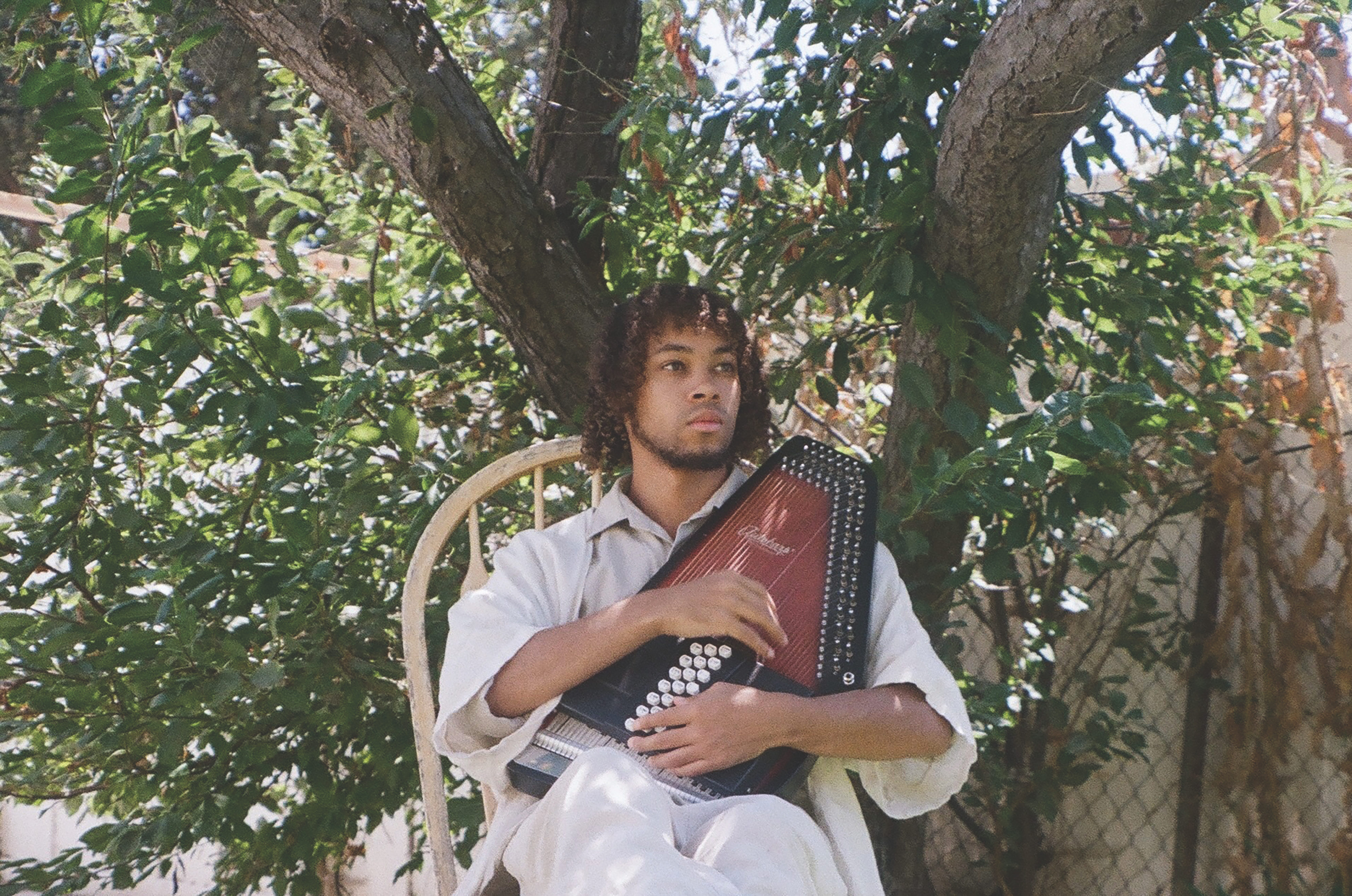
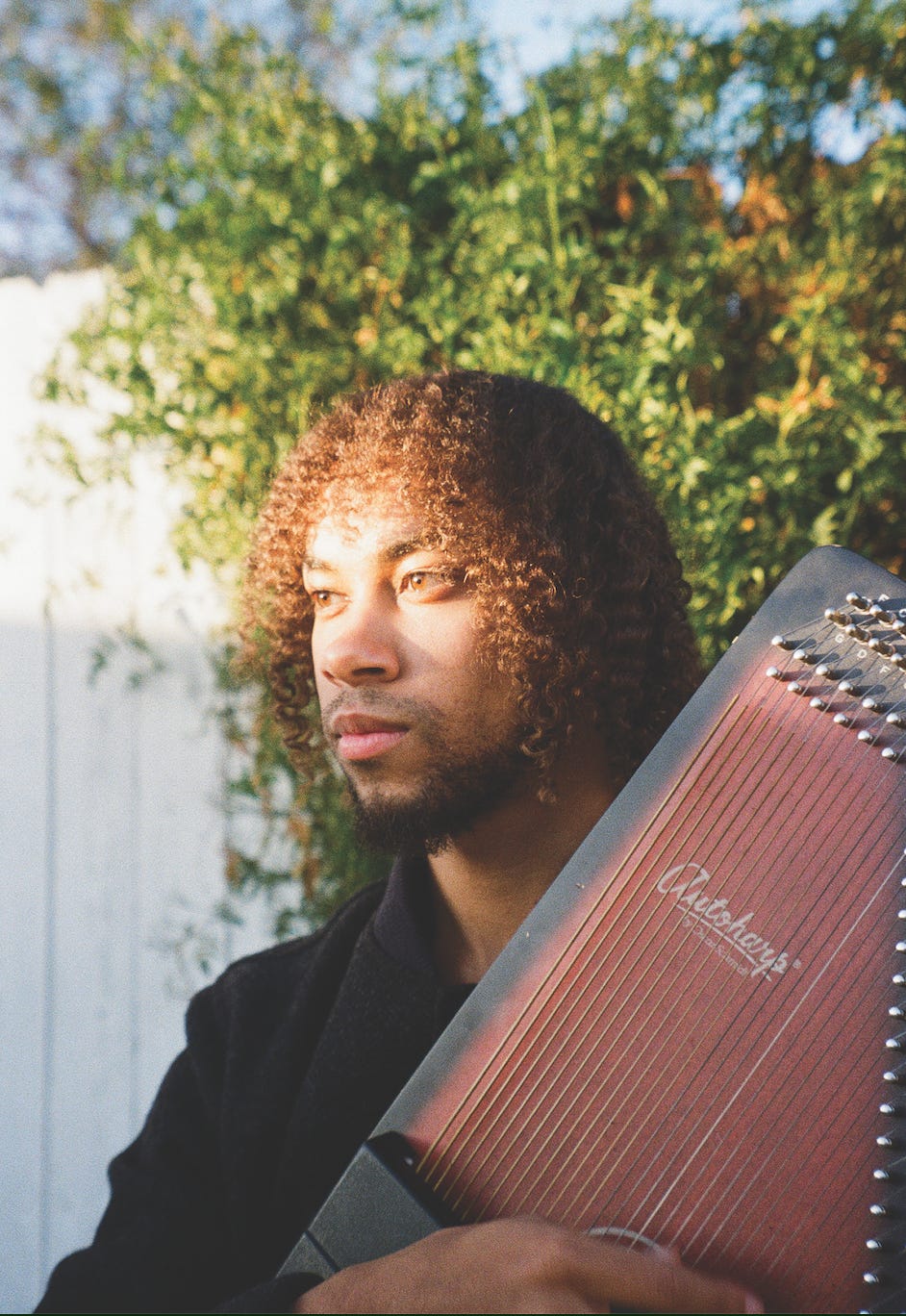
This year I was lucky to be part of an amazing team as Guest Editor of Meander Magazine. The theme was wildness and rewilding, and together with the founder we curated a magazine that explores wildness from all angles: we talked to divers, musicians, educators, we had incredible writers tell their stories and what came out is something I’m truly grateful for. One of my favourite things was speaking to Muco, a Burundian-British folk singer who uses his voice and the inanga (an East African zither) to reimagine medieval folk songs and poetry in Middle and Old English, drawing on the concept of "creative troubadourism" to create an evocative blend of past and present.
Here is my interview with him, exclusive for Antidotes readers. Thank you for being here and supporting this work!

Virginia: What’s your earliest memory of music?
Muco: It’s hard to say what the earliest one is, but I have very strong memories of the music my mum and dad played around the house: a lot of jazz, classical music. And it’s interesting you ask, because the other day my mum showed me these tapes they made when I was a baby, like a diary of those early years. And in them, there’s always music playing. I’m in the cradle and there’s always classical music on the radio or from my dad’s CD collection. So I can’t pinpoint those as active memories exactly, but it all feels very familiar, this sense of having been surrounded by music from the very beginning.
V: How did you first get into folk?
Muco: Folk music has always been around me in some form. My first introduction to playing music wasn’t actually through folk. My first instrument was the violin, in a fairly traditional, classically trained way. But at the same time, my parents were both avid music listeners. My dad was obsessed with the Bulgarian women’s choirs and would play them all the time. And my mum, who is Burundian, would play lullabies and Swahili folk songs she’d grown up with. So folk was always within touching distance.
V: Tell me more.
Muco: I think the real turning point came when I began prioritising singing. That opened up a whole new world; my ear was immediately drawn to folk songs in English, to learning them. That ran parallel with learning to compose and produce, exploring other genres. They converged at a certain point, particularly around my fascination with language. I started learning folk instruments: the koto, the Japanese harp, and then the inanga, which is the instrument I play most now. It’s a zither from Burundi and Rwanda, common throughout the Great Lakes region of East Africa. I also fell in love with the autoharp, which you find across many folk traditions. At a certain point it all came together, and it became something of an obsession.
I think there’s a political power to unearthing old histories, especially in a country that has colonized so much and in doing so erased other histories, but also – perhaps unintentionally – its own.
Virginia Vigliar
V: What I find so beautiful in the way you tell it is this – you allow your curiosity to fly freely. You pick up a traditional Japanese instrument, you move between languages, and I see a clear thread from the child who played in the garden and wrote in his notebook to the artist you are now. You say language is a huge part of your music. How does that work? Because you also sing in Old and Middle English.
Muco: Language is probably my first love. Before I knew I wanted to be a musician, I was obsessed with words. The imagination of my childhood was fuelled by language. Even when I was playing in the garden, waving a stick around, there was this narrative I was stringing together in my head. That was where I first discovered the beauty and power of words.
That ran parallel with an interest in history, as something that shows us how the world came to be what it is, but also as a place to escape into, to get lost in the variation of human lives and the other worlds that learning about it makes real. And of course, interest in other cultures’ music always comes alongside an interest in their languages. I started wanting to understand a little Bulgarian when I was learning Bulgarian folk songs – I don’t speak it, but the curiosity was there.
The historical period that always drew me most was the medieval, pre-modern world. The storytelling, the myths, the folklore. Middle English came first – poems like Sir Gawain and the Green Knight, early folk songs I learned to sing. And then Old English followed, as the ancestor to that. I wanted to see where it all came from. Now a lot of my work is about interrogating stories from those periods, in these no-longer spoken forms of English that still hold a kind of special psychic memory, I think, for English speakers and anyone interested in folklore.
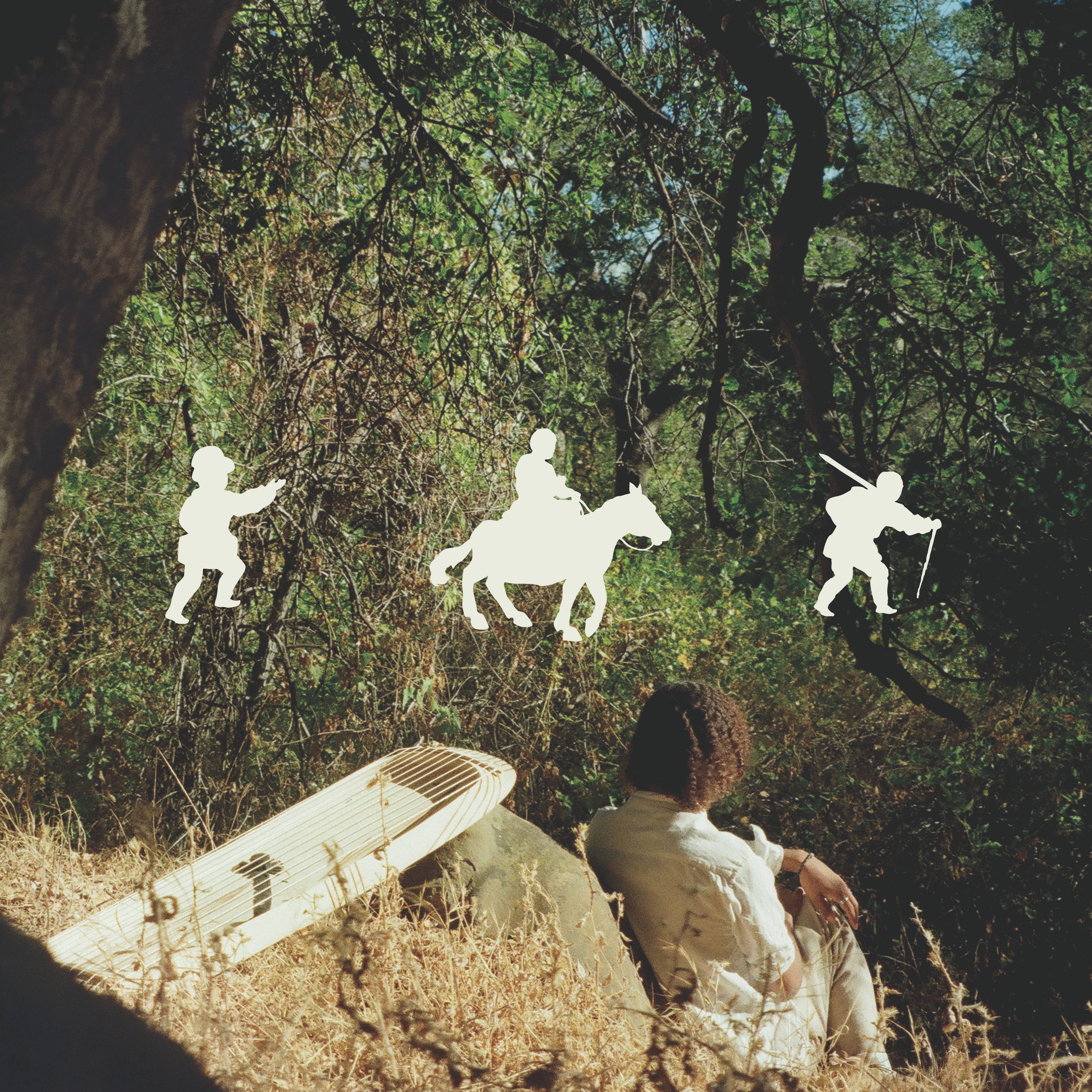
V: I think there’s a political power to unearthing old histories, especially in a country that has colonized so much and in doing so erased other histories, but also – perhaps unintentionally – its own. What I love about what you do is that you’re not just resurfacing those myths – you’re rewilding them. A huge part of folk is that it was transmitted orally, like early writing itself. And through oral reinterpretation, the story is allowed to change through the vessel it passes through. How do you allow yourself to rewild those stories? How do you detangle them from their calcified forms?
Muco: You’ve hit on something exactly right. The oral tradition is inherently open to retransformation. One of the core things about folk music is that it isn’t a static form. We’ve been taught to view art through the lens of Western classical music history, these movements that begin and end at specific points with defining individual figures. But there’s another parallel story of human creativity – one about collective reinterpretation of shared myths that transform through time.
It wouldn’t feel authentic to me to try to recreate a myth exactly as it would have been a thousand years ago. I want it to be vivid and new, to inhabit the same space as people today, to have new life. And for me the only authentic way to do that is to allow it to interact with my own personal identity. That’s why I’m so committed to the influences from my dual heritage. If I’m going to reinhabit these stories, this poetry from the past, I want to do so in a way that’s authentic to my influences. I want to be the vessel through which it passes. I don’t want to block off parts of myself when that communication is made.
The oral tradition is inherently open to retransformation. One of the core things about folk music is that it isn’t a static form.
Muco
I often use the word reimagining, which comes from the storytelling side of things. But I love rewilding – it carries all this folkloric resonance, herbalism, the medicinal, the ecological. And music in the oral tradition is so connected to all of those worlds. A lot of Anglo-Saxon poetry had function as well as beauty fables, ways to remember a potion, how long to stir it. There’s a social, communal function. It’s not just art for art’s sake.
V: I love that. And I was wondering – for you does it start with the myth, or with the music? Walk me through your process.
Muco: There are a few ways it can happen. I read a lot. I love discovering new myths, new folklore. The process usually involves finding something I’m really drawn to, living with it for a while, and then seeing whether something is wanting to be added, whether it’s igniting me to make my own interpretation. That will often emerge through musical exploration on the inanga or another instrument – improvisation, writing my own lyrics, journaling, learning the poem by heart, playing with it over time, until I find something that feels authentic and interesting and alive.
V: Beautiful. And what’s the role of nature in all of this? What does nature do for your creativity, for your sense of place?
Muco: It’s enormous. A lot of my videos come about because I take the inanga on a walk, find somewhere beautiful, sit and play for a while, record one of the songs, then walk home. Playing music outside makes me feel good in a way that’s hard to articulate. I love being alone in a natural environment, hearing the birds or the crickets, nothing else. Some of my fondest musical memories are so completely bound up with being in a specific place outdoors.
There are places I return to: the woods near my parents’ house, always. And when I was in Los Angeles, there was this enormous open space where I would go and just roam. You’d drive in and think, I’m in an urban environment, the freeway is right there. And then you’d walk and walk, and at a certain point it would feel like it could be the year 2 AD. No sense of time or place. That timelessness – that’s what I’m looking for. The chance to detach from the modern world, to get lost in that sense of... being outside of it.
V: I love that you say timelessness. I never quite articulated to myself why nature heals me – and maybe that’s it. You can sit next to an olive tree that’s a thousand years old and simply not know where time is. And I think especially now, living through such divisive and painful times, knowing what’s happening to the natural world. When I say wildness, what comes to your mind, or your heart, or your body?
Muco: I think of something like... Mesopotamia. I love this image of the garden in human psychology – the idea of the garden as Versailles, manicured, ordered, perfect hedgerows, clean lines. And then there’s the other kind of garden. The Garden of Eden, without using it religiously, just this other kind of space that speaks to every human being. An environment that provides for us, that isn’t contained or drained. It might be dangerous at times, but it’s a wildness we’re quite at home in. Not threatening wildness. Just... ours.
V: Maybe it’s also a mirror. We’re wild too. We’re constantly changing. We can be dangerous too. How do you feel wildness within and without?
Muco: Being a musician and being a person is a lot like being a steward of an internal garden, which is often wild and unpredictable. We are all jungles of influences, ideas and memories. With that in mind, wildness is a childlike freedom to wander and roam and use my imagination. In my work, that often means merging influences which seem to come from disparate worlds, and the joy of discovering how they can work together.
V: The myths you sing, the songs you sing, they are a form of reverence towards nature. Whether you’re singing a charm while turning a cauldron or planting a seed, these are ritual acts. And what so many of us have lost is a respect for time. For the pace of things.
Muco: And music is sacred time. That’s what it is, at its heart. It’s like decorating a room with a painting. But music decorates time. It makes time special – meaningful. My favourite feeling as a musician is when it genuinely feels like I’m sharing something almost sacred with someone, through this shared time. The word sacred carries a lot of religious weight, but I think the idea of the sacred is deeply human, it crosses peoples and cultures and centuries. In Middle English and in Kirundi, there are lullabies I often sing together, and both of them use the beauty of nature to express the beauty of a beloved.
In Middle English, a beautiful bird. In Kirundi, a beautiful cow with long, magnificent horns. Different languages for the same feeling and always rooted in the living world. That’s where we find our ideals of beauty. That’s where we find our language for what is sacred.
And I think that’s what you can feel in so many of these old songs; they’re not yet caught in the illusion of human separation from nature.
V: And how place-based it is. In England, birds. In Burundi, those extraordinary cows. The landscape shapes the metaphor.
Muco: Completely. Entirely place-based.
V: I love how you’re creating music that is also place-based in that sense, where you are the place.
Muco: Yes. It’s a personal vision, but I think only through being deeply personal can it speak to something more universal. That’s the theory I’m working with, at least.

If you want to buy the magazine, you get 20% off with the code ANTIDOTES, making the magazine only 20 euros. There are some incredible stories in there, let me know if you get to read them!
Buy it here.

Read my Roots of Sisterhood essay for Atmos
Narrative Antidotes on We Walk the Earth Podcast
My conversation with Bayo Akomolafe on How to meet the times here
Comments
Nothing yet. Say the first thing.
Sign in to join the conversation.