
Welcome to The Content Report, a newsletter by Vince Mancini. I’ve been writing about movies, culture, and food since the late aughts. Now I’m delivering it straight to you, with none of the autoplay videos, takeover ads, or chumboxes of the ad-ruined internet. Support my work and help me bring back the cool internet by subscribing, sharing, commenting, and keeping it real.
—
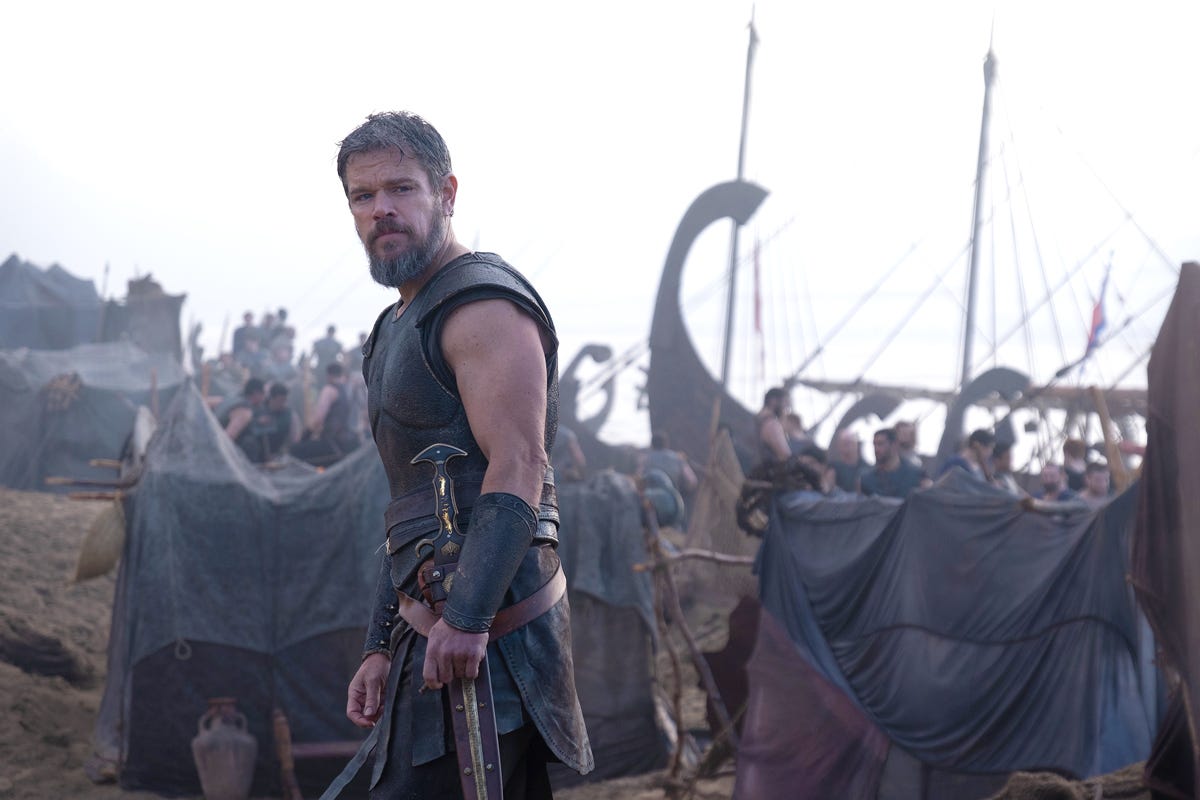
Boy, that Homer sure could write his ass off, couldn’t he? Or perhaps bard his ass off, as it were. Helluva storyteller, anyway.
Whatever the case, it’s hard to think of a director better suited than Christopher Nolan to deliver an ancient Greek epic of love and vengeance in its grandest, most immediately-parseible-to-modern-sensibilities form. Denis Villeneuve could probably capture the scale, James Cameron could shoot better action, and Spielberg could compose equally pretty camera moves, but Nolan’s extra dash of logic-based groping towards full metaphysical enlightenment nudges The Odyssey towards the truly transcendent. Will Nolan, 300-pound IMAX cameras in hand, single-handedly bring back the sword-and-sandals epic? I don’t know, but it’s fun to dream. Classical myth making is Nolan’s religion and The Odyssey is one of his greatest sermons.
Nolan manages to make The Odyssey feel both relevant without overdoing its metaphorical value, and classical in a way that feels like little was lost in translation. It’s quite possible that I’m just a movies moron at heart, but in the same way that I didn’t feel like I truly appreciated Hamlet before The Northman, I came out of The Odyssey feeling like I hadn’t truly appreciated Homer before Nolan rendered it all mega-format trailer-line glory.
So, what is The Odyssey? On its most surface level, it’s possibly human history’s beau ideal of “a good story, well told.” It’s a crowd-pleaser, a cracking good yarn, a tale that truly lends itself to being barded.
I’ve often understood “Chekhov’s Gun” as an age-old storytelling mandate to deliver on the things one foreshadows. Coming out of The Odyssey, I felt like maybe I had misunderstood it slightly; that maybe what it’s actually about is how much more satisfying is the promise of violence than the delivery of it. Chekhov’s gun eventually has to fire, sure, but that gun sitting there on the wall is infinitely more powerful than the one belching flames. If you make a big enough promise, early enough, an audience will follow you virtually anywhere.
The big promise? Well, Odysseus (Matt Damon) went off and won the Trojan War, basically single-handedly (he was the one who came up with the whole hide-some-dudes-inside-a-giant-horse trick that no one will ever fall for again), but he got sidetracked on the way home, and now his beautiful villa is filled with a bunch of assholes trying to fuck his wife and kill his son. Not only that, they insult his free wine and disparage the unearned hospitality. They’re cruel to his undyingly loyal blind servant, Eumaeus (played by the always brilliant John Leguizamo), and even kick his dog, the 20-year-old retired hunting pooch, Argos, who has reached such a ripe old age only out of a desire to see his master one last time before ascends to doggie heaven. Even thinking about a fictional boy this impossibly good for the purposes of trying to type this requires me to hold back tears. Can you imagine a boy this good? And then someone having the sheer audacity to mistreat him?? They kick his dog?? FUCK ‘EM UP, ODYSSEUS! KILL ‘EM ALL TWICE!
This storytelling conceit creates such a visceral desire for explicit bloody revenge that the listener will weather all manner of preachy digressions and spooky asides so long as it maintains this tacit promise of a gory denoument. Beyond that, the story is also all about the limits of revenge; which we the audience will come to know right alongside the protagonist. How badly do you want that revenge? What are you willing to lose in order to achieve it?
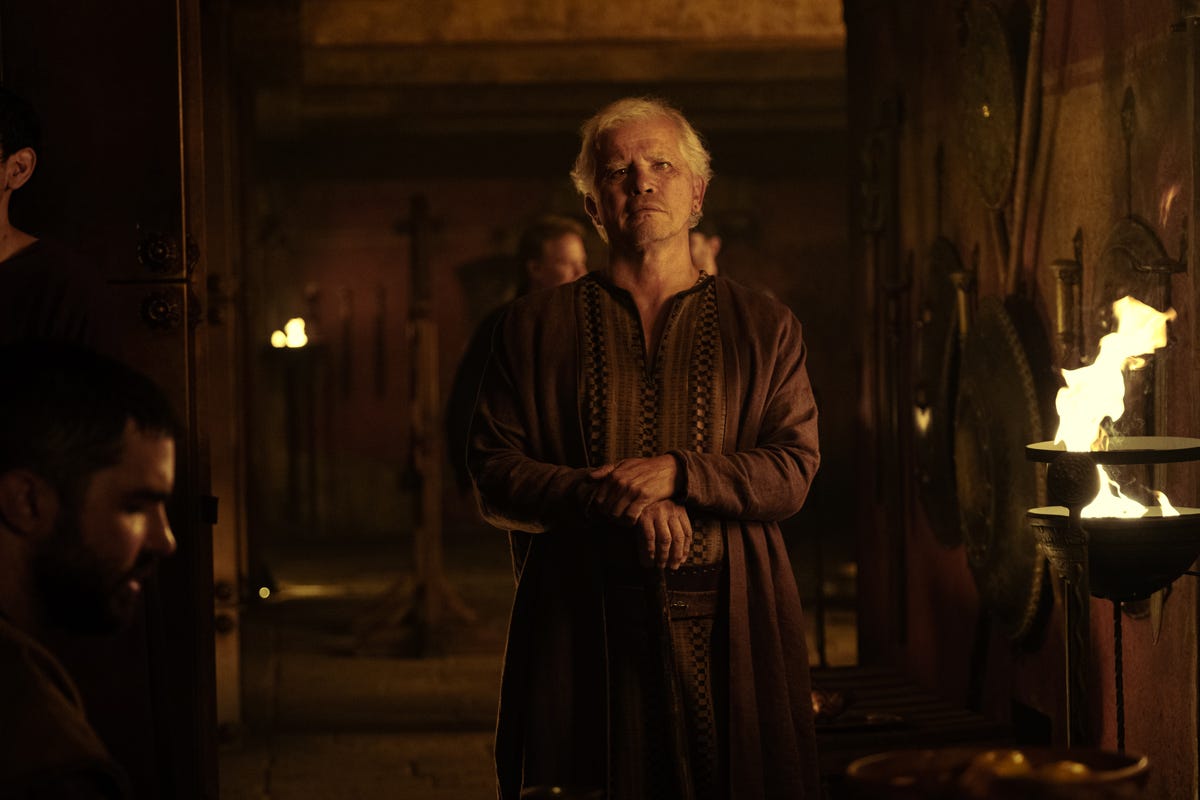
Those are the basic bones of The Odyssey, and why it works. Though it’s also so much more. Part of the reason that the story has endured, I imagine, is that it’s such an effective framework for improvisation. Proof that if you start with a great wrong, and end with a great revenge, you can squeeze almost anything into the middle section, like a Bronze Age The Aristocrats. It even feels like a story that all the best bards added their own embellishments to over successive tellings. And so in the end, it becomes a revenge story, a shaggy dog tale, a meditation on difficult choices and the difficulty of hearing your better angels, a parable about norms (especially in Nolan’s hands), and the ultimate overwrought excuse dreamed up by every man who ever stayed out a little too late and now has to try to explain it all to his wife. Hey, yeah, sorry babe, this witch turned all my men into pigs, I had to murder a Cyclops, and some clever nymph fed me narcotic flowers that made me forget I had a family. I was thinking about you the entire time, I swear! The nymph wasn’t even that hot!
Admittedly my memory of reading The Odyssey in high school is a little hazy, but my sense is that one of Nolan’s biggest bits of dramatic license is to turn the story into one about social bonds and societal norms, and what happens when you shatter those for personal gain. The overarching theme is of pandora’s boxes, of cans of worms you can’t close, decisions you can’t take back — things of this nature. Triremes against the current, borne back ceaselessly into the past. Can you ever, really, go home again?
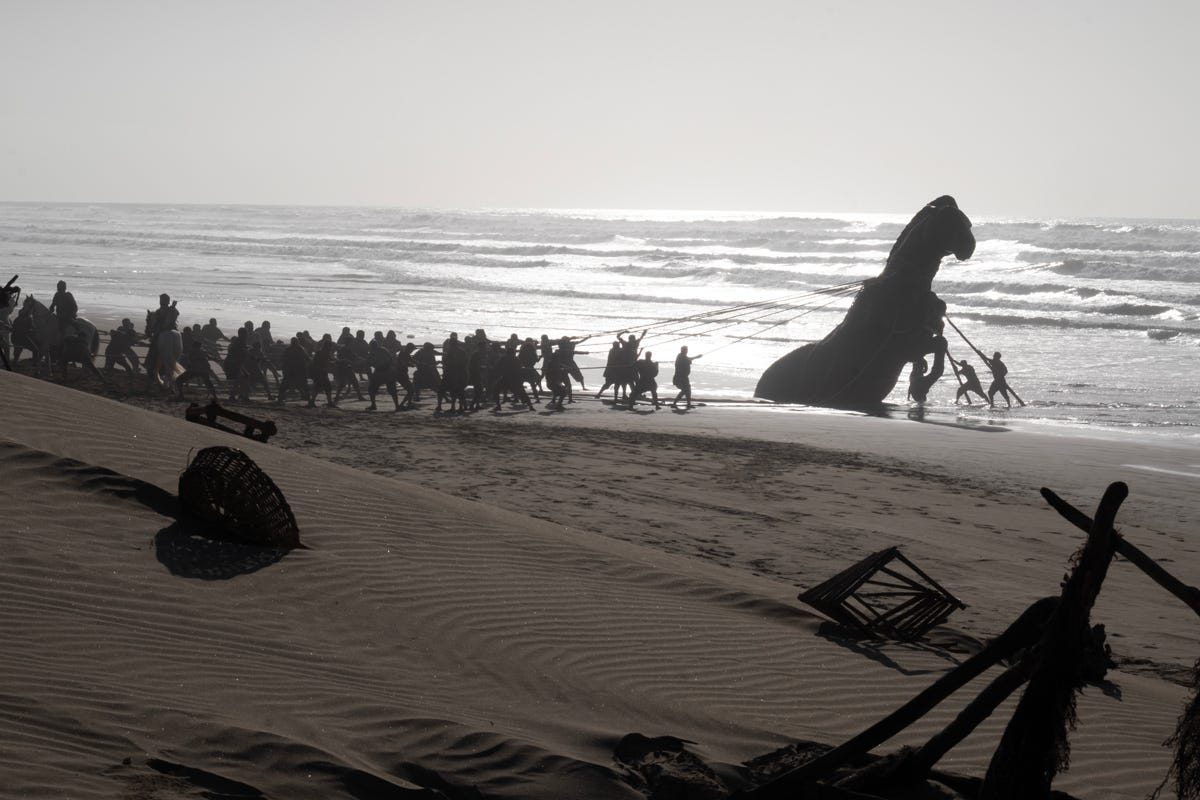
The decisions Odysseus can’t take back are many. He blinds the Cyclops, unnecessarily, angering Poseidon, dooming his men and cursing himself to endlessly wander. Philistine that I am, I was a little disappointed that the Cyclops didn’t have a big ol’ floppy Cyclops cock flapping around while he tried to find the Greeks disguised as his sheep. Once that die has been cast, Odysseus is left with a series of lose-lose choices: let everyone die in the whirlpool of Charybdis or allow the many-headed serpent Scylla to eat only some of his men? It’s all well and good to listen to the gods, but what happens when they want you dead? (That the goddess Athena appears to Odysseus in human form, played by Zendaya, has a big, clever payoff in the end).
Odysseus is on a long, spooky sojourn, and meanwhile, his wife, Penelope (played beautifully by all-time movie crush hall of famer Anne Hathaway) and son, Telemachus (30-year-old Tom Holland, only 13 years younger than his movie mom, stretching the bounds of the timeline) face some impossible choices of their own. Do they kill the ravenous suitors (led by the craven Antinous, played by Robert Pattinson in full English slime) but in the process risk exile, by breaking “Zeus’s Law” of hospitality? Or simply continue letting them bleed their Ithaca estate dry until there’s nothing left to rule? Can Telemachus rule in his father’s place, or will the suitors just murder him? There’s a beautiful exploration into the nature of grief baked into the way Odysseus’s absence is felt, not just as a lack, but as an ever-present burden — a flood of still more impossible choices. How do you, ultimately, honor the departed?
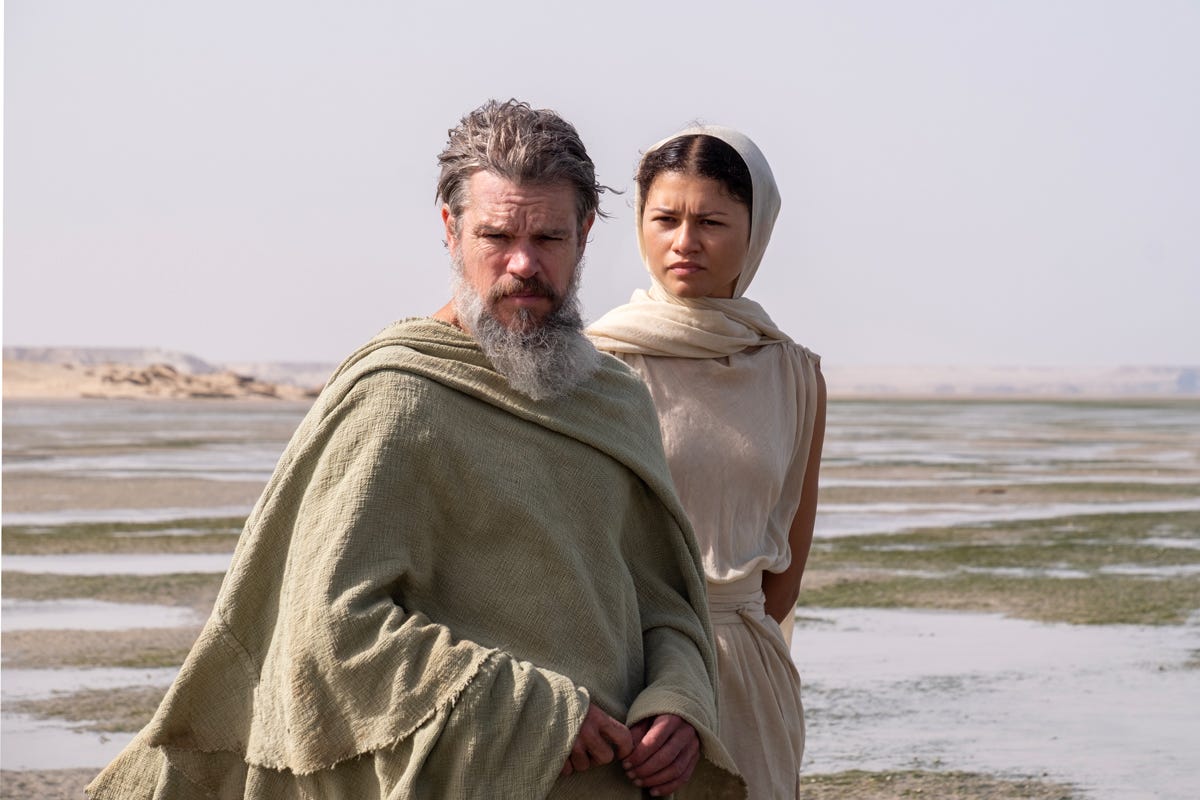
I was certainly bringing my own baggage to the proceedings, watching The Odyssey just weeks removed from the death of my own father, but watching Telemachus finally come face to face with his pops, seeing the mix of pride and regret in the old man’s eyes after 20 years away, was more than enough to leave me ugly crying in the theater. Fuckin’ A, what a story.
Comments
Nothing yet. Say the first thing.
Sign in to join the conversation.