
Peter Carruthers
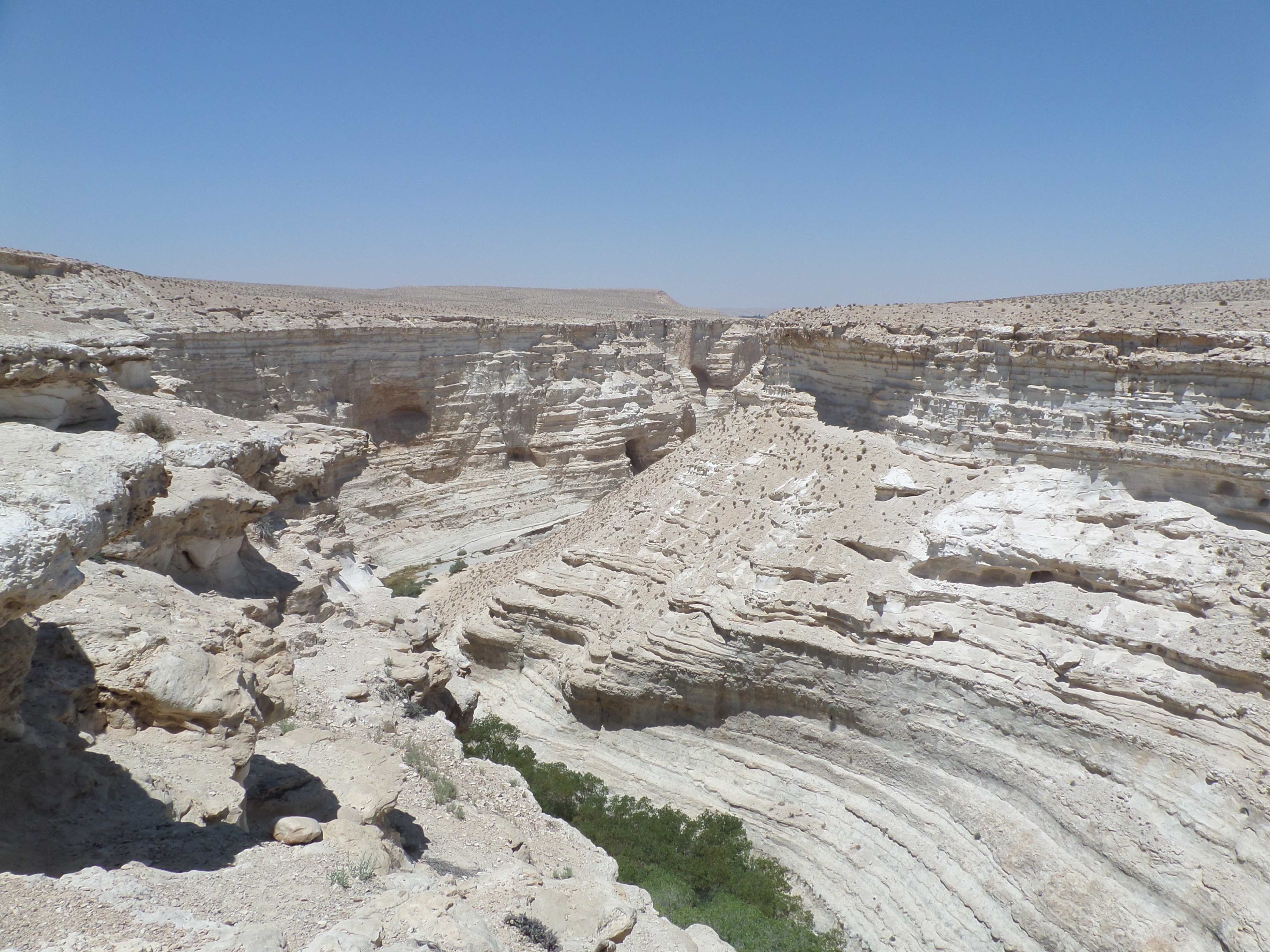
Fear and trembling come upon me, and horror overwhelms me. And I say, “Oh, that I had wings like a dove! I would fly away and be at rest; yes, I would wander far away; I would lodge in the wilderness”. (Psalm 55:5-7)
In the Lord I take refuge; how can you say to my soul, “Flee like a bird to your mountain, for behold, the wicked bend the bow; they have fitted their arrow to the string to shoot in the dark at the upright in heart; if the foundations are destroyed, what can the righteous do?”. (Psalm 11:1-3)
Therefore, behold, I will allure her, will bring her into the wilderness, and speak comfort to her. I will give her her vineyards from there, and the Valley of Achor as a door of hope. (Hosea 2:14-15)
And I will bring you into the wilderness of the peoples, and there I will plead My case with you face to face. (Ezekiel 20:35)
One of the greatest challenges of the last half century or so has been presented by the long, slow death of ‘Christian Britain’. State, society and culture, formerly founded on a ‘biblical consensus’1 or ‘Christian plausibility structure’,2 have all but destroyed those foundations.
This is reflected in changing patterns of belief. The 2021 Census and more recent random-sample surveys suggest a continuing overall decline in church-going in the UK and a continuing decline or at best a levelling out of Christian identity. As an article in Christian Today published in 2024 announced, “the UK is entering its first atheist age. Whilst atheism has been prominent in our culture for some time…it is only now that atheists have begun to outnumber theists for the first time in our history.”
It is also evident in the way public policy has become almost totally severed from its ‘Judaeo-Christian’ moorings. This has been going for many decades, but in recent times has been taken up to a whole new level.
Many churches, denominations and Christian leaders, perhaps anxious to avoid marginalisation and remain ‘relevant’, or simply allowing the “world to squeeze them into its mould” (Romans 12:2, Phi), have sought to go with the flow. Theology has been 're-framed’ and church ‘re-imagined’ to accommodate the culture. Scripture and tradition have given way to the ‘spirit of the age' (Ephesians 2:2). This also has been going on for a long time, but has plumbed new depths in recent years.
There are, however, some apparent counter-currents.
In an article in the Spectator published in March 2024 (read it in full here), Christian broadcaster and writer, Justin Brierley announced that “a Christian revival is underway in Britain”. Reflecting the theme of his 2023 book, ‘The Surprising Rebirth of Belief in God’, Brierley predicates this statement particularly on the surge of formerly secular public intellectuals (some even atheists) who are applauding and embracing Christian culture (and, in some cases, professing Christian faith) and urging a return to Christian morality, as the only way to ‘save the West’.3
The Bible Society’s April 2025 report, ‘The Quiet Revival’, based on opt-in panel surveys by YouGov, claimed a remarkable 50% rise in (monthly or more) church going between 2018 and 2024 (from 8% to 12% of the population), with church attendance among 18-24 year olds quadrupling (from 4% to 16%).
The Bible Society’s report was hailed and celebrated by many Christian commentators. Others urged caution. The statistics were questionable and the conclusions were not corroborated by other (more robust) surveys. Nevertheless, despite much questioning and criticism over the year since its publication, the Bible Society insisted the statistics were robust and its findings correct. In March this year (nearly a year after publication), however, YouGov announced the data was in fact flawed as it included ‘fraudulent responses’ and the Bible Society ‘removed’ the report (placing the blame entirely on YouGov).
Yet, despite all that, many church leaders from across the denominations bear witness to the phenomenon of unchurched young people simply turning up at church services. As BBC religious affairs correspondent, Catherine Wyatt, wrote , “while the data behind the Quiet Revival report is contested, there do appear to be some pockets of revival in Christianity in Britain… even if the numbers of Christians in Britain are declining, members of clergy report anecdotally that those who remain are expressing their faith with more zeal and vigour than previously seen”.4
These developments may yet prove to be signs of hope for the future. But, at present, the pervasive trends mean that believing Christians who seek to remain faithful to God, to the Bible, and to the Christian values and traditions that have undergirded our culture and religious life for so many centuries, find themselves increasingly alienated and marginalised, not only within wider society, but also in many churches and denominations.
As I (and many others) have written, this is a form of ‘exile’, comparable to Israel’s exile in the ‘wilderness of the nations’ (Ezekiel 20:35).
But maybe the wilderness is not such a bad place?
‘Wilderness’ is a highly significant, recurrent motif throughout the Bible. It provides a major part of the geographical setting of the biblical story and the physical context of the enacting of pivotal moments of the Lord’s relationship with His people. But it is heavily freighted with deeper meanings and intimations. There is a sense in which the whole biblical narrative can be understood as a cycle of journeys out to, through, and back from the wilderness.
My starting point is Jesus’ forty days fasting in the wilderness (which we remember especially during Lent). But, ‘wilderness’ also references several other biblical forty-day and forty-year sojourns (most notably Israel’s forty years in the desert of Sinai), Israel’s exile in the wilderness of the nations as already referred to above, and the story of Hosea’s wayward wife’s being “allured into the wilderness” (Hosea 2:14). I explore these further below.
Wilderness is a place of escape from the commerce of human society, the “violence and strife in the city”, to encounter wild nature as a place of safety and renewal (Psalm 55:1-11).
In our contemporary culture also, ‘wilderness’ connotes wild places and closeness to nature, “places where the original ecology is intact and unchanged by human intervention (though such places are largely and idea rather than a reality)… a symbol of earthly paradise”.5
And, as Mark (1:13) reports, during His forty days in the wilderness, Jesus was close to nature, “with the wild animals”. The sense here is of close association and friendship, solidarity and fellowship. The last Adam, the one who brings peace, is enjoying the companionship with the animals as at the beginning in Eden. By doing so, He declares the coming of the Kingdom of God ‘on earth as it is in heaven’ and Himself as Messiah and King.
Arguably, our most recent shared experience of ‘wilderness’ was ‘lockdown’ during the covid era. And, as I noted at the time, many found comfort in, and a new appreciation of, God’s creation.
Nature did not go into lockdown on 24 March [2020] and, with the coming of spring, a stilling of traffic noise and a diminishing of pollution, many people woke up both to its joy and beauty and to the way humanity has wasted it. For those able to get out, lockdown was … an opportunity to get closer to creation and to the one who made it.
Wilderness is also place of testing and trial, of spiritual warfare and confrontation with the powers of darkness (Mark 1:13), where the Lord uses adversity to discipline and purify us (Job 23:10; 1 Peter 1:6-7) so that we bear fruit (John 15:1-2; Hebrews 12:3-11).
Mark simply tells us that Jesus was ‘“tempted by Satan” (Mark 1:13). The other synoptists provide the well-known detail of the three temptations (Matthew 4:1-11; Luke 4:1-13). For us, they represent, among much else, our struggle with the flesh, the world and the devil, the call to “love not the world nor the things in the world… the lust of the flesh, the lust of the eyes, and the pride of life” but rather to seek to do the will of God (1 John 2:15-17).
These are perennial challenges. The NT writers and Christian divines across the centuries bear witness to the reality of the spiritual battle and urge us to be vigilant and equipped for it.
But the reality of the unseen powers and the call to engage them may be particularly significant in our present times, when, with the retreat of ‘Christendom’ (in the sense of the ‘Christian consensus’ or the ‘Christian plausibility structure’ referred to above), the ‘old gods’ are making a comeback (see also this article and 2 Thessalonians 2:1-12, especially vs 6-9).
Jesus was “led by the Spirit” into the wilderness and emerged in the “power of the Spirit” (Luke 4:1, 14). The wilderness prepared Him for three years of ministry, culminating in His death, resurrection and ascension. Other biblical wilderness experiences had this preparatory significance, as we shall see below.
Our own wildernesses, whether particular times in our personal lives or corporate life as God’s people or the observation of Lent or some other season, are also to prepare us for the challenging times ahead ahead, to equip us for ministry and service.
Jesus’ forty days fasting in the wilderness recapitulated earlier significant 40-day or 40-year sojourns in the wilderness, including the following.
Moses’ forty years in the land of Midian, culminating in his encounter with the Lord in the burning bush at Horeb (Acts 7:29-35; Exodus 3).
Israel’s 40 years in the wilderness of Sinai, with its climactic encounter at Mount Sinai/Horeb (Exodus 19-40; Deuteronomy 5).
Moses’ three (seemingly consecutive) ‘forty days and forty nights’ of fasting at Mount Sinai/Horeb, receiving the law and commandments (Exodus 24:12-31:18; Deuteronomy 9:9-11), “prostrate before the Lord” interceding for the people after the Golden Calf incident (Deuteronomy 9:18), and receiving the tablets of stone for the second time (Exodus 34:1-28; Deuteronomy 10:1-5).
Elijah’s forty days and forty nights fasting in the wilderness culminating in his encounter with the Lord at Horeb (1 Kings 19:4-18).
The climactic significance of Horeb in these stories prompts one to wonder if Jesus Himself went as far as Horeb during His forty days?
The story of Hosea and his wayward wife, refers back to Israel in the wilderness of Sinai, “in the days of her youth” when “she came up from the land of Egypt” (Hosea 2:15), and prefigures and anticipates the future exile in Babylon, “the wilderness of the peoples” (Ezekiel 20:35). In all three stories, there is a “bringing into the wilderness” in order to purge and cleanse (eg Numbers 14, 16; Hosea 2; Ezekiel 20:37-38), to speak “face to face” and “enter into judgement” (Ezekiel 20:35), and to make or renew a covenant (Exodus to Deuteronomy, Hosea 2:16-21; Ezekiel 20:37).
Hosea even spells out the detail of the future exile, in terms of the loss of both civil and religious institutions, rites and service, when “the children of Israel shall abide many days without king or prince, without sacrifice or sacred pillar, without ephod or teraphim” (Hosea 3:4) – perhaps both echoing and anticipating our own exile experience(s).
Wilderness, then, is both purgative and restorative, involving the severing of old relationships and attachments and the kindling or rekindling of intimacy with the Lord.
In the wilderness of Sinai, Israel is purged of attachment to Egypt and all it represented, and formed into a new people, in covenant with the Lord and configured around His Law.
In her wilderness, Gomer, as a figure of Israel, is cleansed from adultery and prostitution, comforted and betrothed again to her husband, the Lord.
In Babylon, the exiles are detached from temple and kingdom and all they had come to represent, and formed into a new people around synagogue and Torah. And they are purged of idolatry – “one permanent result [of the exile] is very clear: Judah never again played with idolatry nor turned to her gentile neighbours for models of worship and religious conduct”.6
The wilderness also speaks of rest and refuge. As Jeremiah writes, “the people who survived the sword found grace in the wilderness—Israel, when I went to give him rest” (Jeremiah 31:2). The Psalmist longs to escape the “violence and strife, iniquity and trouble, oppression and deceit” in the city and find a “refuge in the wilderness” (Psalm 55:1-11). In Revelation 12, the woman (symbolising Israel) flees “into the wilderness, where she has a place prepared by God” (Revelation 12:1-6).
Central to the wilderness encounter is hearing the voice of God, speaking comfort, rebuke and direction for the future.
At the Burning Bush, Moses hears God speak directly to him for the first time, commissioning, equipping and empowering him for his calling to lead the people out of slavery (Exodus 3:1- 4:17).
The pivotal moment of Israel’s wilderness experience was the giving of the Law at Sinai, which set our how they were to live in the Land.
In his ‘post-traumatic’ condition after his showdown with the prophets of Baal and Jezebel’s subsequent threats, Elijah seeks refuge in the wilderness; at Horeb God speaks, comforting him and redirecting him back to the remaining tasks of his ministry (1 Kings 19:1-18).
In the wilderness, the Lord “speaks comfort” to Gomer/Israel (Hosea 2:14).
In the “wilderness of the peoples”, the Lord pleads His case with His people “face to face” (Ezekiel 20:35).
John the Baptist came “preaching in the wilderness of Judea” and was “the voice of one crying in the wilderness: ‘prepare the way of the Lord; make His paths straight'” (Matthew 3:1-3; Mark 1:3; Luke 3:4).
Our sojourn in the wilderness, therefore, is both escape and encounter, both retreat, rest and refuge, and purgation from sin, intimacy with God and ‘engaging the powers’. Through such wilderness experiences we are prepared for service and ministry.
But, what are we to do when we are in the wilderness, whether a self-imposed season such as Lent, unlooked-for personal or corporate times of desolation and testing, or indeed the ’wilderness of the nation’ with which I commenced this article? Our first resort, is, as always, to pray. During the ‘wilderness of covid’, I proposed a series of points and scriptures to guide our prayers; aside from the specific challenges of covid, these apply at any time (revisit this prayer guide here).
The Psalms are our essential biblical treasury for praying in any and all circumstances. Many were written in the midst of wilderness experiences and provide much food for our own thoughts and prayers in similar times. David wrote several of his psalms out of experiences of desolation, danger, and exile.
But the essential ‘wilderness collection’ is Book IV (Psalms 90 - 106). Leaving aside the provenance of the individual psalms, the collection reflects Israel’s exile in Babylon (and after), in the ‘wilderness of the nations’, by recalling its wanderings in the wilderness of Sinai.7 For example, Moses is mentioned only once in the other psalms (Psalm 77:21), but is referred to seven times in Book IV. As N L de Claissé-Walford writes:
The community of Israelites in exile in Babylon cannot effect a return to the days of King David. They can only move forward. In Book IV, Moses, who long predated the time of Davidic kingship, leads the people in exile in Babylon and points the way forward, just as he did during the time of the Wilderness Wanderings. At the center of Book IV lies an extended collection of Enthronement psalms, celebrating God as sovereign, as king, over the people rather than a king of the Davidic line. Just as the people during the Wilderness Wanderings had no human king to rule over and protect them and had to rely on God’s rule and protection, so now in exile in Babylon, as subject peoples to a foreign rule, the people are called on to acknowledge God as sovereign - as ruler and protector - once again.
Psalms 90-106 are, therefore, a first resort for us also, in our personal wildernesses and in the wilderness of our nation and our times. In a subsequent article, I shall explore how one of these (Psalm 95) has been a mainstay of Christian worship for many centuries and offers us a daily wakeup prayer (and a warning) - in the wilderness and at all times.
Schaeffer, F A. 1984. The great evangelical disaster. Illinois: Crossway Books.
Newbigin, L. 1989. The Gospel in a pluralist society. London: SPCK
There is no doubt that these trends are indicative of a (welcome) kickback against the seemingly unstoppable march of secularisation in western society. But, as Beatrice Scudeler writes, Christians “must make it clear that the Christian faith is not merely useful, but also true… We don’t just need Christian morality to rebuild. We need Christ himself: ‘Unless the Lord builds the house, those who build it labour in vain’ (Psalm 127:1)”.
A BBC article earlier this year raised questions prompted by statistical critiques of the ‘Quiet Revival’ published by the National Centre for Social Research and the Pew Research Center. ‘The Church Mouse’ expresses incredulity at the Bible Society’s finding that regular church attendance in England and Wales has risen from 3.7 million to 5.8 million in the last six years yet “none of us noticed”. Former Bishop of Kensington, Graham Tomlin, suggests “news of the quiet revival needs to be taken with a pinch of salt.” “I've never taken the predictions of the church's demise too seriously”, he writes. “Which is why I'm not one for putting out the bunting when the predictions go the other way.” Free Church of Scotland minister, David Robertson notes: “What people are calling ‘revival’ is to me just normal church life. Or at least it should be! You don’t measure revival by data.” And, referring to the apparent cultural shift, “you don’t have spiritual rebirth through a general belief in God.”
Carruthers, S P (2009). The land debate – ‘doing the right thing’: ethical approaches to land-use decision making. In: Winter, M & Lobley, M (Eds). What is land for? The food, fuel and climate change debate. London, Earthscan. Page 305.
R E O White. 1992. The indomitable prophet. William B Eerdmans, Michigan.
David Mitchell, argues that the Psalter as a whole was redacted to reflect an eschatological programme. He proposes “that the editor of the Book of Psalms arranged its 150 songs so as to reflect a programme of anticipated events like that of Zechariah 9-14. These events include the ingathering of exiled Israel by a bridegroom-king; his establishment of a kingdom, followed by his violent death; the scattering of Israel in the wilderness, and Israel’s subsequent regathering and further imperilment; their rescue by a king from the heavens, who establishes his kingdom from Zion; the king brings peace and prosperity to the earth and receives the homage of the nations; then the whole collection concludes with songs of praise.” Book IV (ie the wilderness psalms), therefore, represents not primarily Israel’s exile in Babylonia or its immediate post-exilic ‘wilderness’, but a latter-day exile in the ‘wilderness of the nations’ that was yet to come.
Comments
Nothing yet. Say the first thing.
Sign in to join the conversation.