
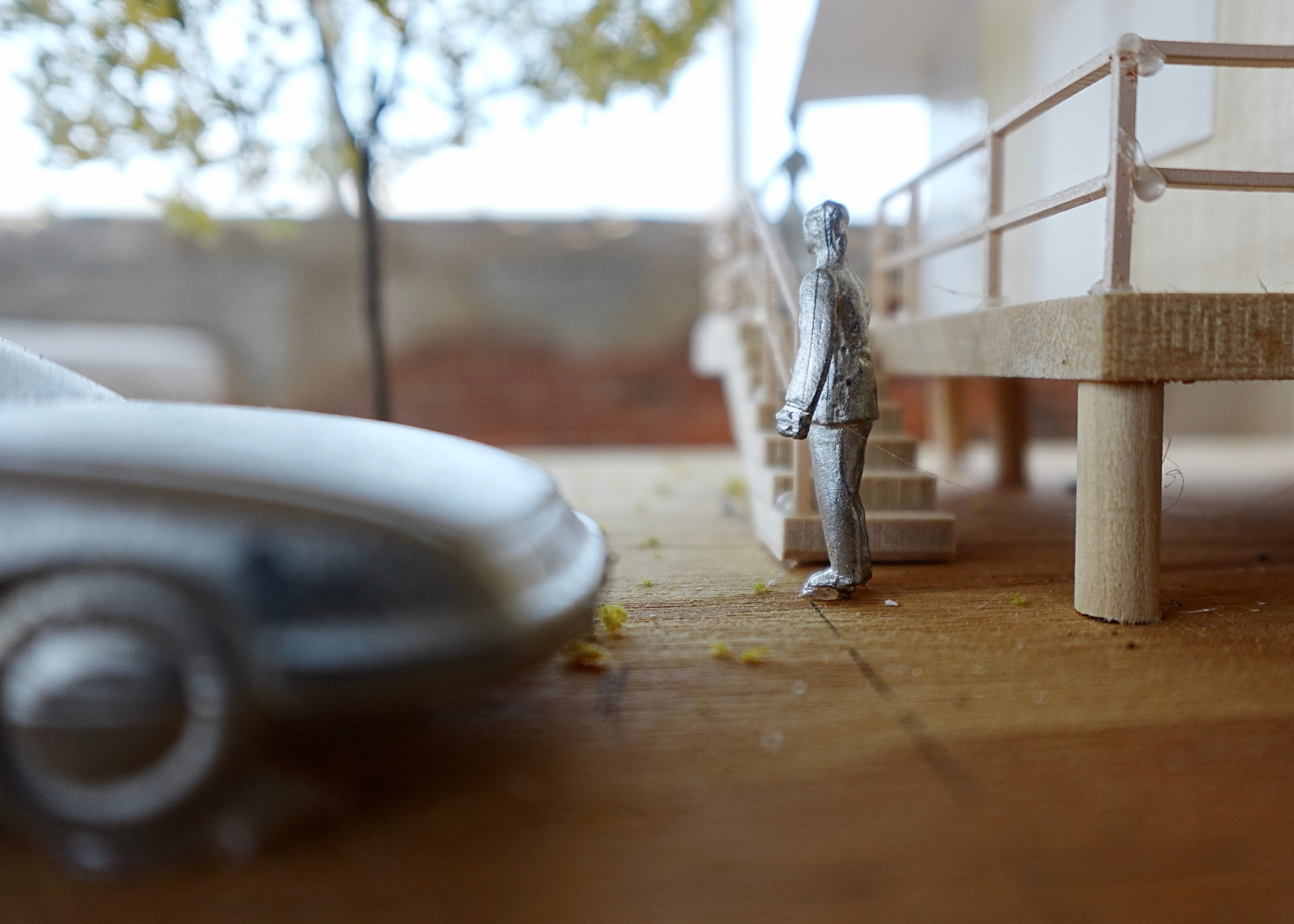
Writing is time consuming, I thought, then repeated the phrase “time-consuming” a few times in my mind. So is breathing, I thought, consuming air and time, breath by breath. But writing is not really like breathing. Writing is more like following a butterfly into a forest, getting lost, then finding a way back out again. Then I found myself thinking: people say, “lost while hiking.” After a person is lost, we don’t say, “hiking.” We use other verbs like search, wait, survive…
She made her way to safety.
He walked in circles for hours.
The general advice to lost hikers is to S.T.O.P. (Stop, Think, Observe, Plan).
Anyway, Writing this month’s ANTIGRAVITY column Don’t Say “Creative,” (p 17) I was lost in the forest for a long time. (The butterfly I followed was a question: What even is going on at the Ford Plant in Arabi?) The whole piece consumed about 25 or 30 hours.
After, I decided to consult a time accountant. As far as I know time accountants don’t exist, but I made an “appointment” with a guy—the husband of a friend—who is logical and good with numbers. I brought him my receipts, estimated expenditures of time, screen-time reports (mortifying) and payment in the form of cupcakes. The goal was to create a balanced time budget because lately, I’m always in the red. In a way, we are all always in the red. It was illuminating to see my spent hours there on a spreadsheet. The math showed that I needed to make some adjustments to stay within a budget that supports my values and goals. The biggest problem is writing is time-consuming and it requires getting lost. This makes it hard to budget the hours.
Speaking of time, I have written and scrapped this post several times. The last one was a tangent about muscle cars and torque and the discomfort of idling in traffic. Metaphorically. The 25-30 hours it took to produce a single 1000-word column left me depleted (in time and torque).
(Torque is the muscle and push from a standstill. Factors that reduce torque include restricted air and loss of spark.)
For breath and spark, before I move on from Arabi, I’d like to hear how readers and viewers feel about the exhibition. I’d like to know your thoughts on the blurry territory between opportunity and the exploitation. Please share your thoughts in the comments below and thank you so much for reading.
Onward in art and screeching tires.
xx,
PS1
A week from FRIDAY, June 12 at Sibyl Gallery, 6 PM, I’ll be participating in a conversation with artists Neil Hancock, Kyle McLean, and gallerist Katherine Lauricella Ainsley. We’ll talk about drawing, electricity, urgency, and how to make a good art show.
PS2
My two Substack publications are now merged. Everything is here at the Village Disco. You will be able to find old posts (once I finish importing them) under Disco NOLA in the navigation bar on the desktop version. Your subscription to Disco Nola should have transferred seamlessly to Village Disco, but please message me if there are any problems.
For those who have asked recently, here is the origin of Village Disco.
In a disused factory, it’s hard not to think about workers and bosses, the many laboring below the few.
Anyway, this “Major Exhibition” was treated as a backdrop for the “Development Plan” of Creative Industry Assembly. This doesn’t sit well with me. Even so, the exhibition could have been amazing (the space is amazing) had organizers contracted a bonafide curator to oversee the exhibition.
(Block quotes are from the article in ANTIGRAVITY.)
I think a “Major Exhibition” should have a major curator. Or even a minor curator to choose a theme, select artists and works, and organize the space for a meaningful viewing experience.
In a city of collectives and commercial galleries, few artists get to work with curators. This seems like a missed opportunity. Thoughts?
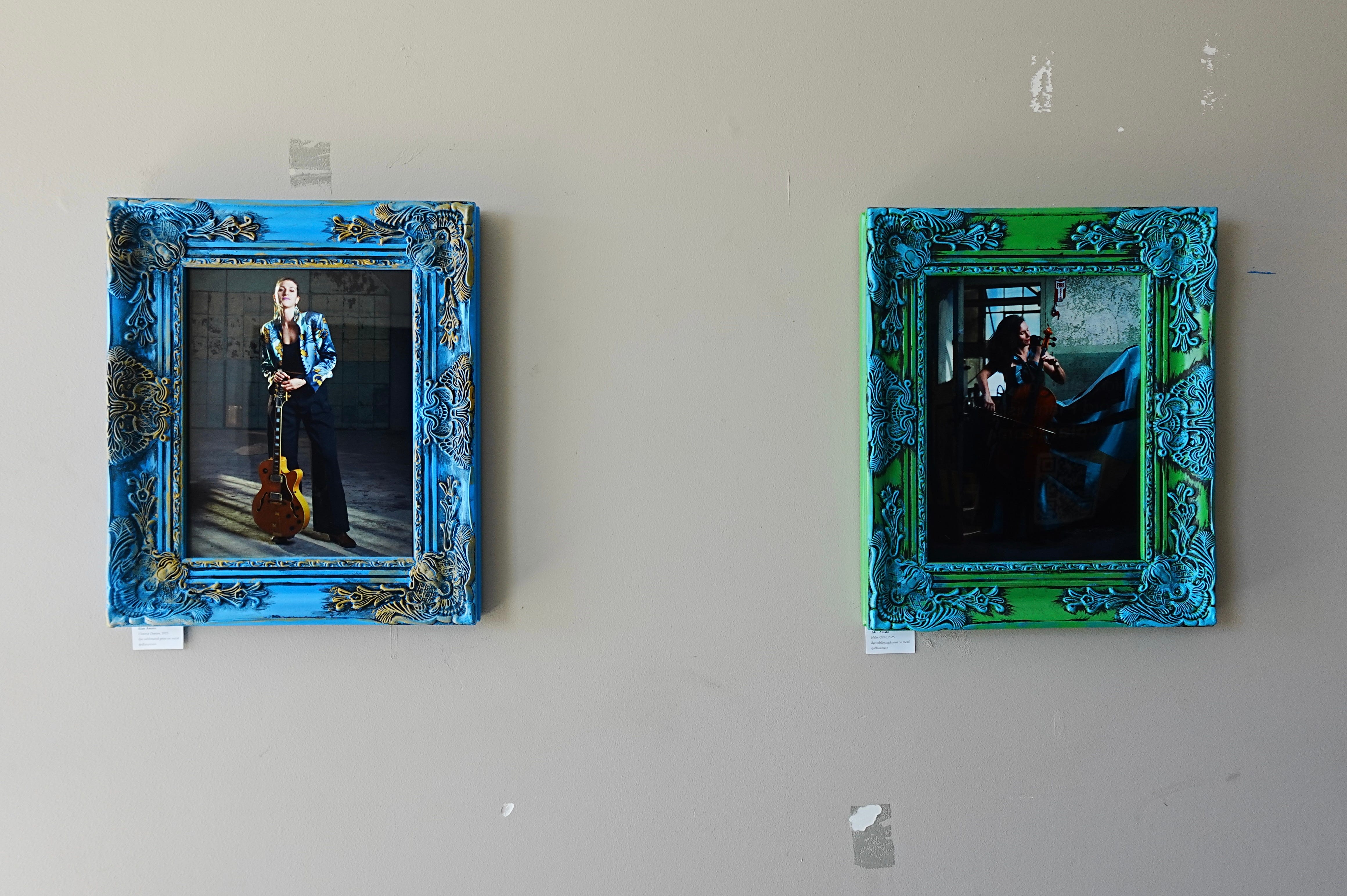
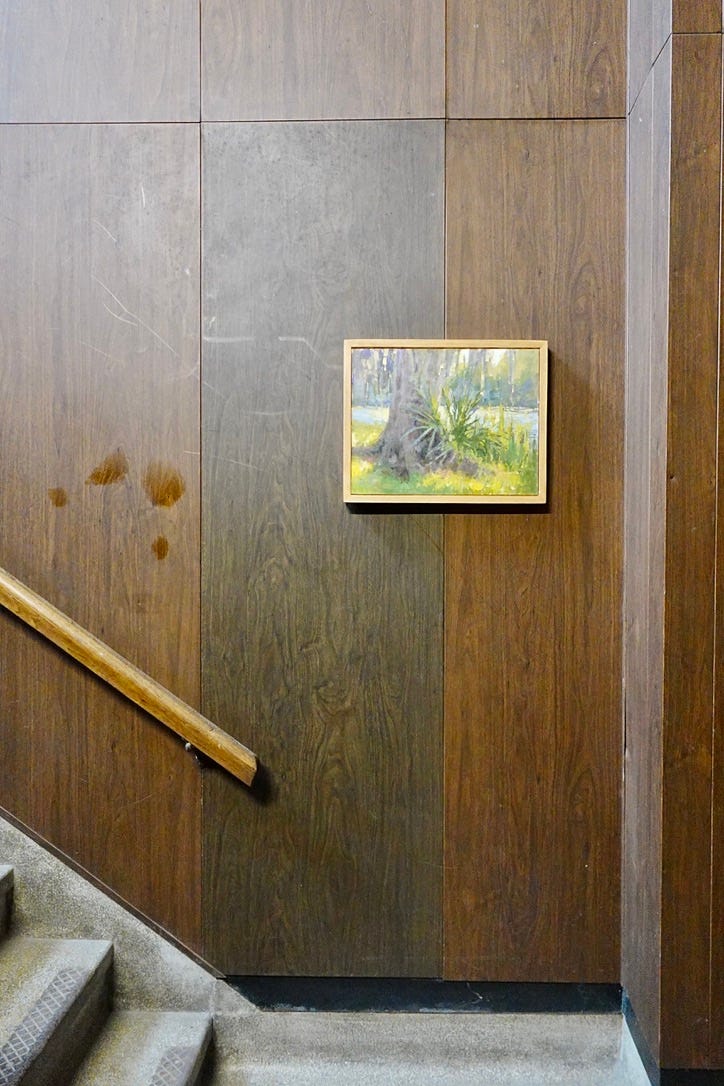
I saw no information about the exhibition and wasn’t sure if two framed photographs on the wall were part of it or just decor. In the stairwell, I liked a small landscape painting, but there was no label or attribution. Details like this communicate the seriousness—or lack of seriousness—of an exhibition.
It’s almost as if no one stood in front of each work in the show and asked, “How does this piece look?” “Does it have what it needs to meet the viewer in the best possible light?” “How is it working in the space and in the context of the show?”
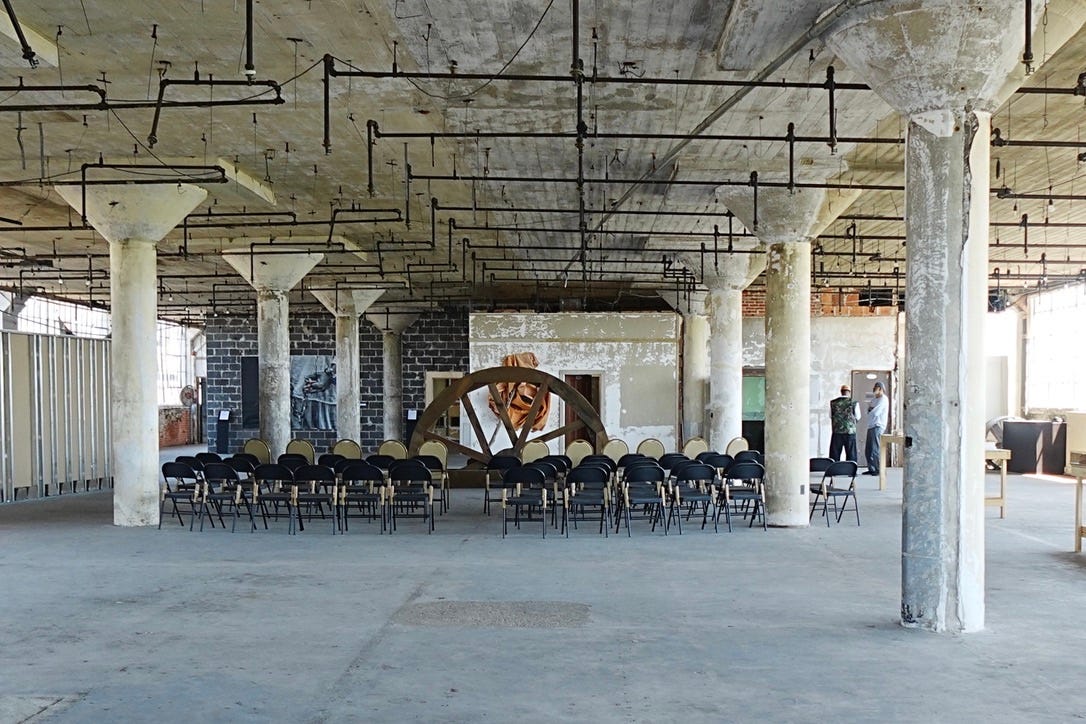
I recognized the large wheel positioned behind the presentation area as a component of Jeannette Ehlers’ Prospect.6 installation Hoist and the Unseen: Journeys Through Tempests in Times of Hunger. I was a little uncomfortable seeing the sculpture repurposed as a space divider.
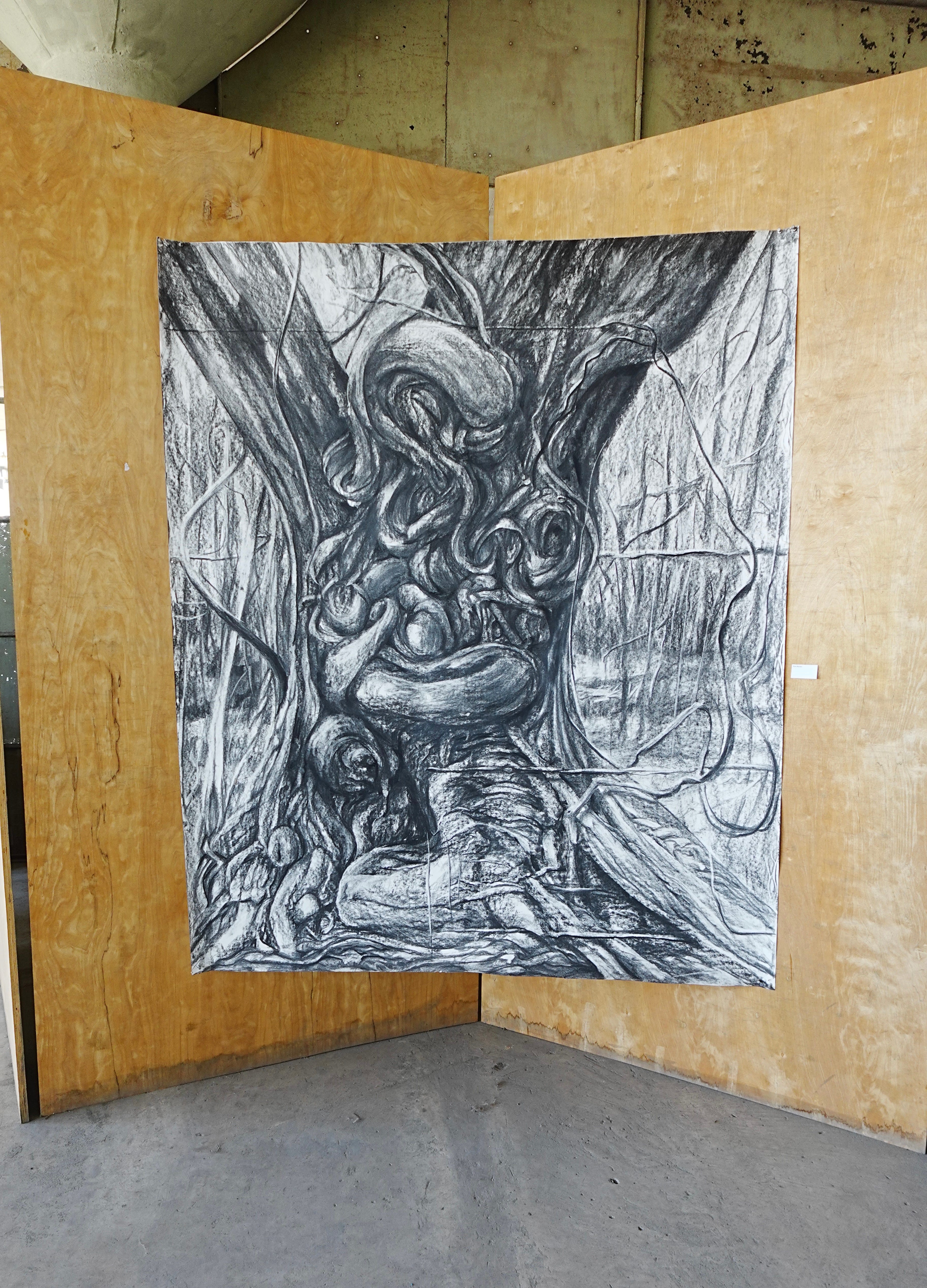
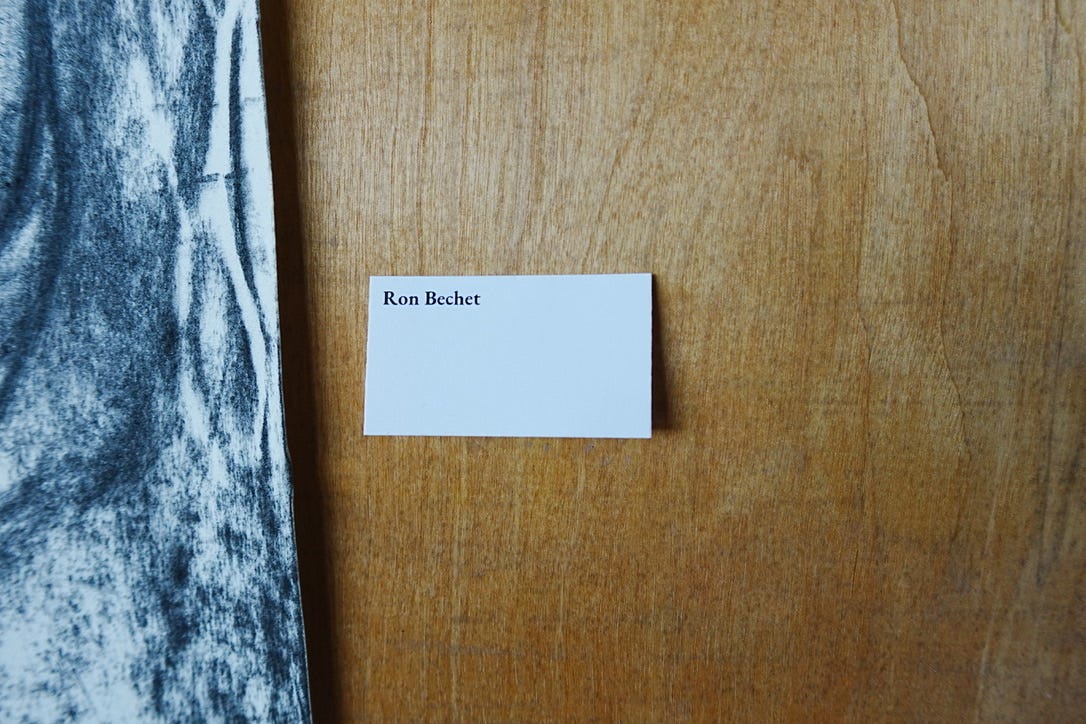
I loved Ron Bechet’s show at the CAC. Seeing this drawing installed in the corner of a two pieces of plywood in a cluttered room was a bummer. Maybe I’m hypersensitive to context.
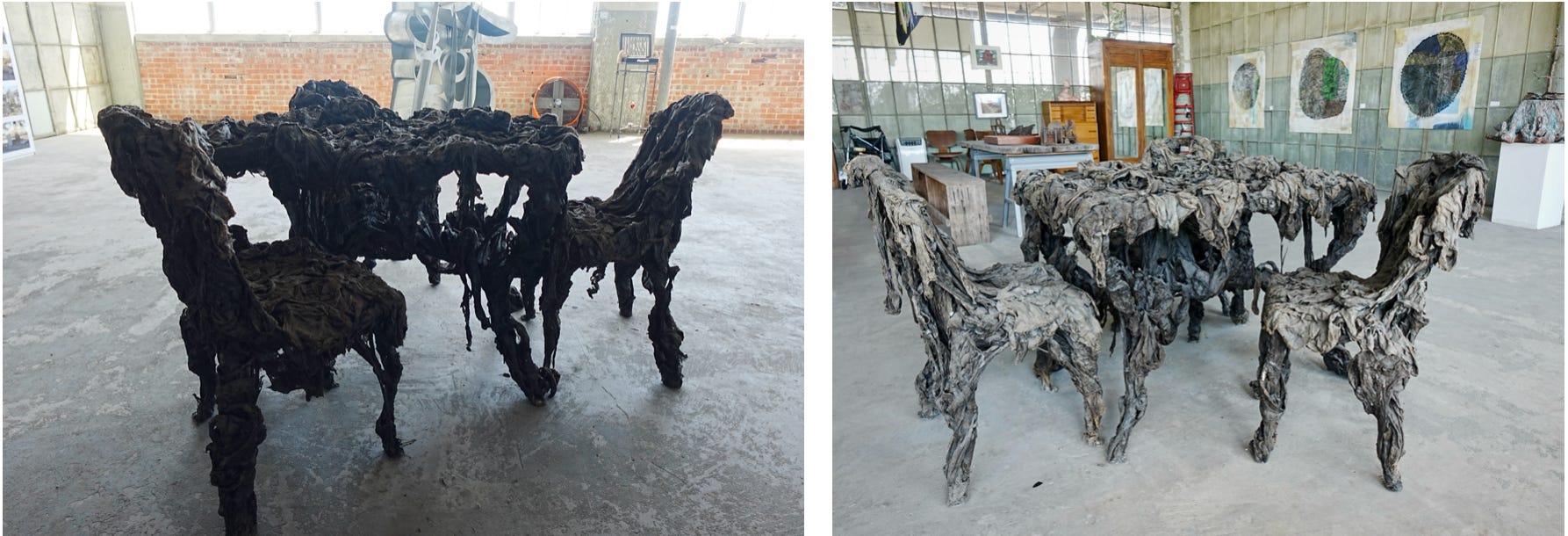
I’m trying to identify the artist who made this sculpture. I found it compelling. But in this space it seemed reduced to a prop. I tried to appreciate that it was shown in a room with functional tables, but in these multi-purpose rooms it was hard to connect with the work. Curators think about how a viewer’s body moves through a space.
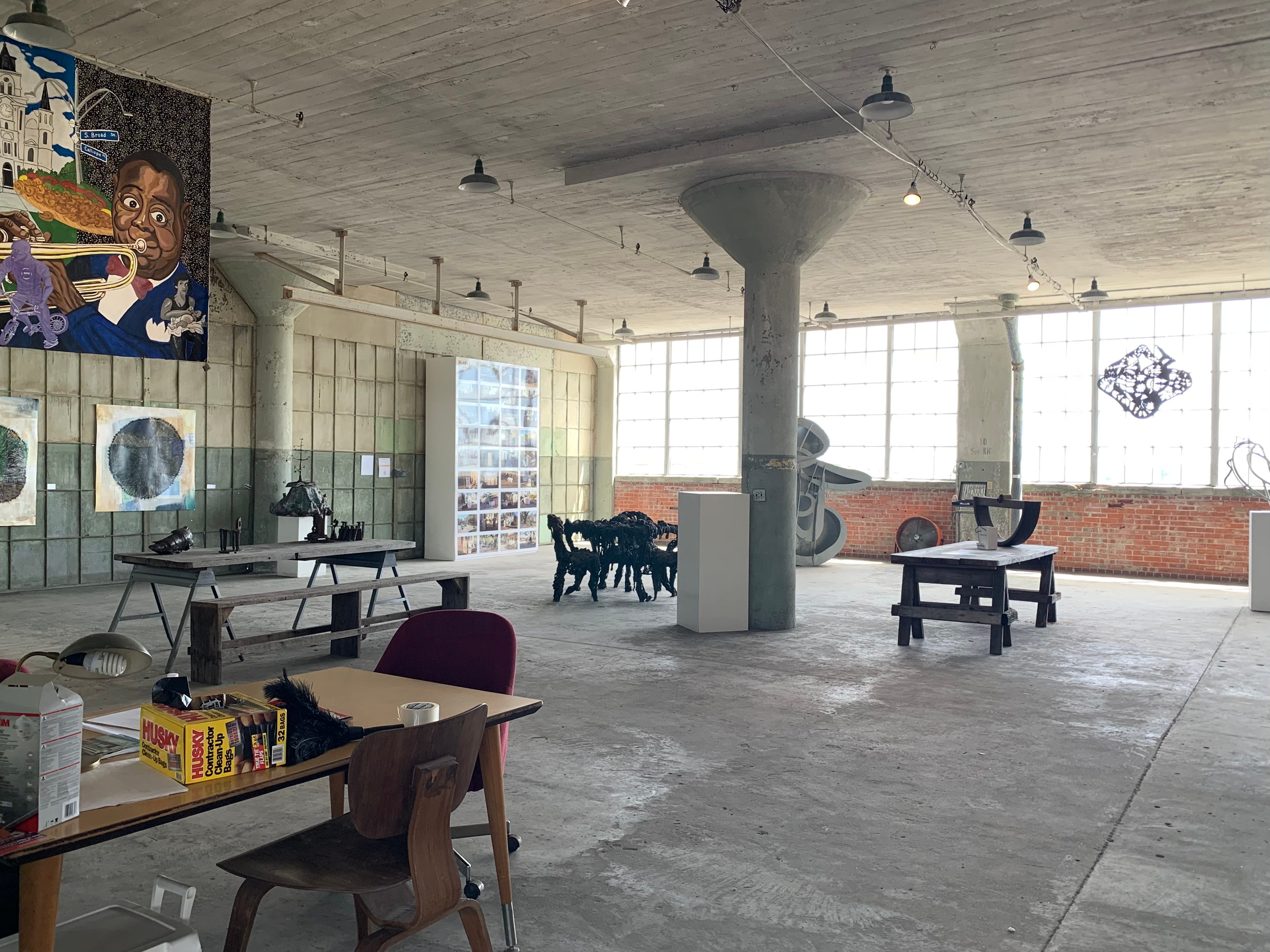
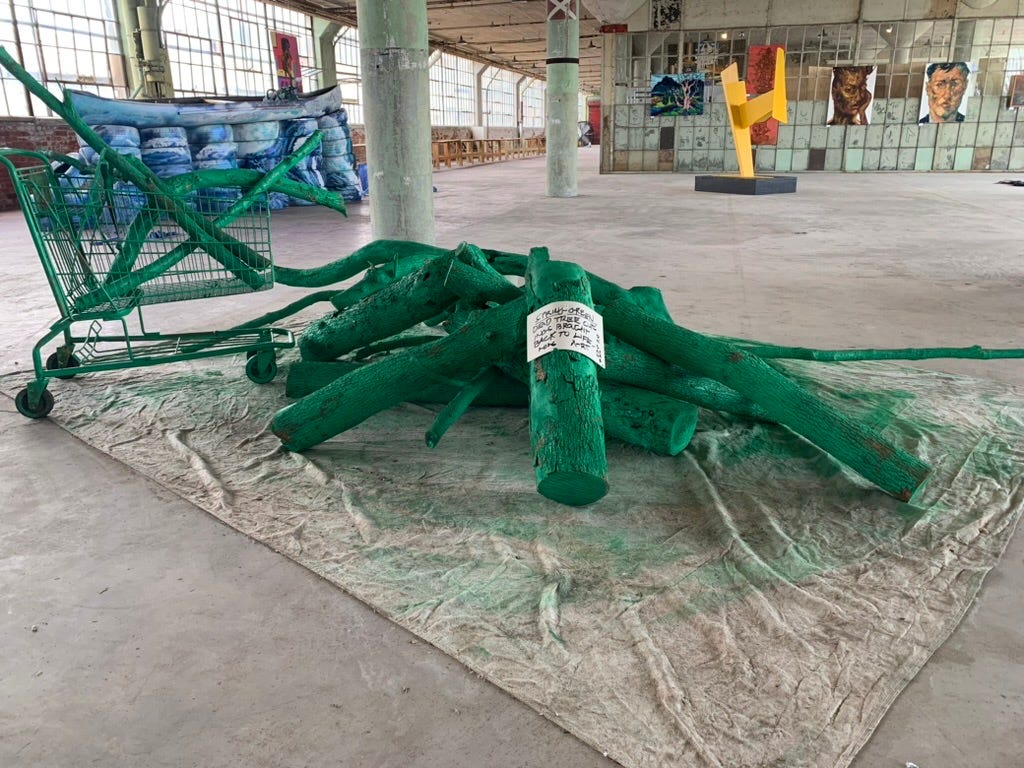
There was just too much work in the exhibition. And why? Why not have a series of smaller exhibitions? Why cram all this stuff in here at once?
I could not find, anywhere in the space, a comprehensive list of participating artists—there are reportedly more than 80 of them. For comparison, 12 artists exhibited on both floors during Prospect.6. The volume and selection of work resulted in visual (and conceptual) chaos that devalued much of the art.
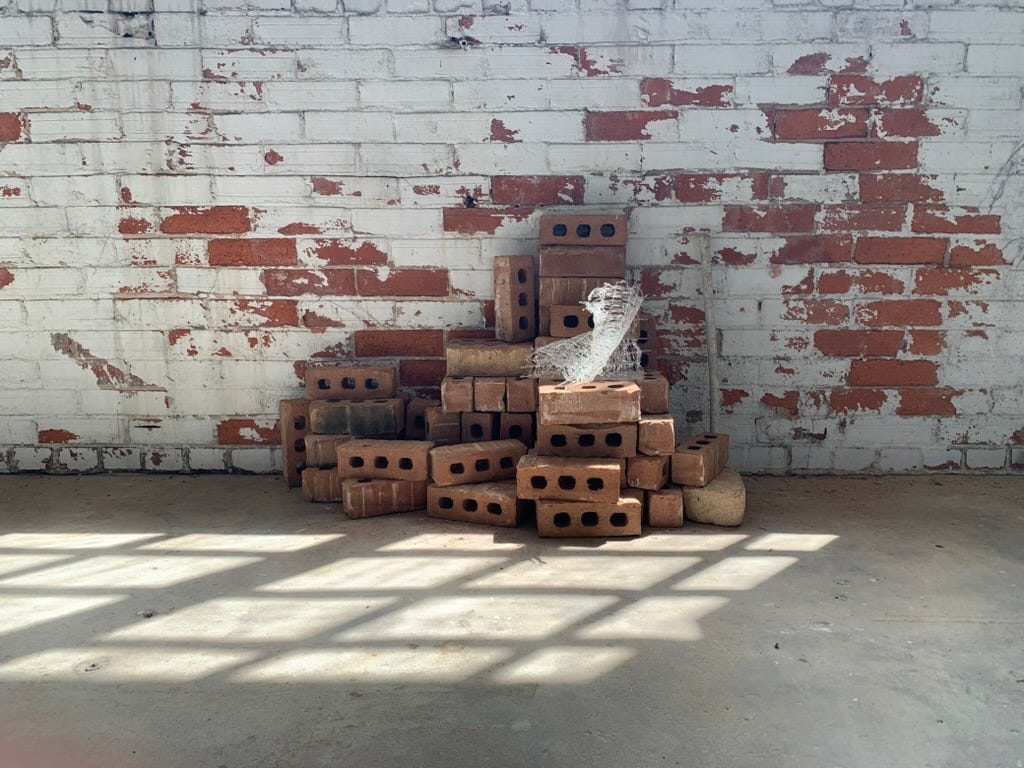
Still, there are outstanding works on view. Caitlin Ezell Waugh’s sculptures of glass interacting with metal, brick, and wood resonate with the very materials of the building’s construction…
Soil, an installation by Shana M. griffin, occupies a small, rustic, walk-in space of its own. Floor to-ceiling wooden shelves hold large glass jars filled with soil and are labeled with the names of plantations. I was floored by the sheer number of them…A pale root and green sprout breaking the surface of the dirt in one of the jars took my breath away.
H. Cole Wiley, Yesterday’s Shadows, disassembled LCD screen, pine, a laptop, camera
The photographed light glides over the present light like a haunting. I thought about the people who once moved through that space—upstairs with its administrative offices and below on the factory floor, where hundreds of workers assembled cars..
Here, it’s winding down:
The Ford Auto Plant holds astonishing potential to show artists’ work in the most elevating light—literally and figuratively. This could be a dream scenario for visual artists. But the New Orleans artscape is littered with broken dream scenarios and organizations that fail to meet the needs of artists in any enduring way.
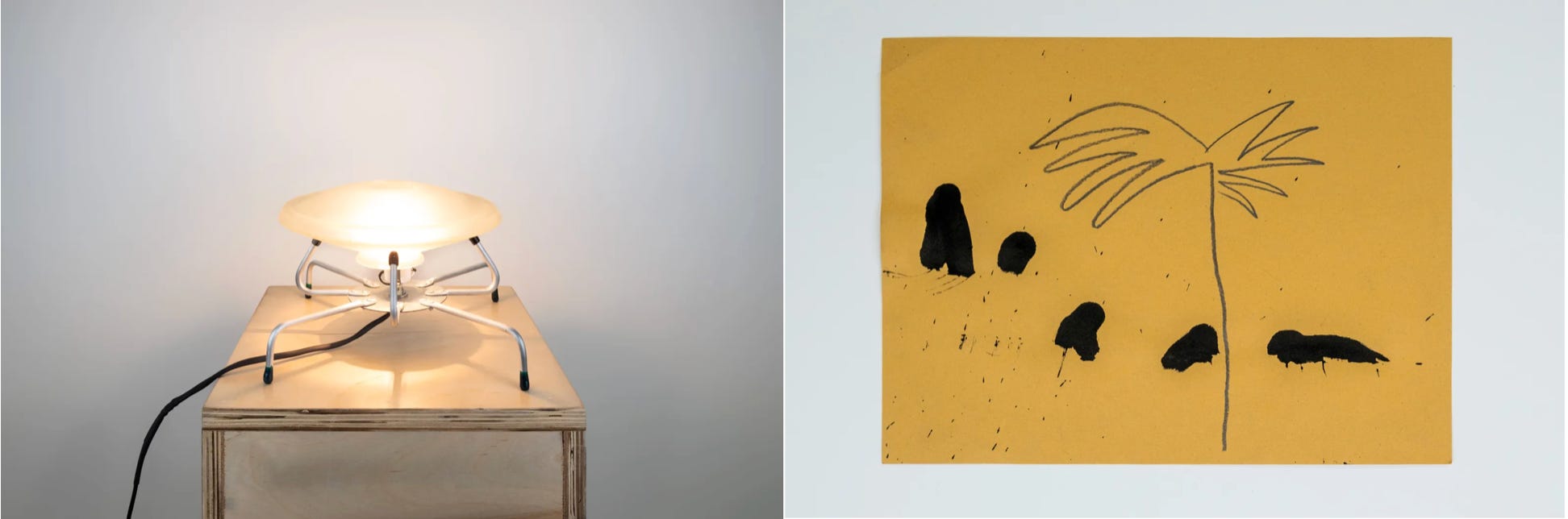
I’m thinking these questions:
Are lamps art? and Are Neil’s drawings easy?
Thoughts? Questions for the artists? See you Friday, June 12 at Sibyl?
According to the internet, this song wasn’t written in New Orleans, but it could have been.
Text within this block will maintain its original spacing when published
Well the smart money's on Harlow, and the moon is in the street
The shadow boys are breaking all the laws
And you're east of East St. Louis, and the wind is making speeches
And the rain sounds like a round of applause
And Napoleon is weeping in the Carnival saloon
His invisible fiancée is in the mirror
And the band is going home, it's raining hammers, it's raining nails
Yes, it's true, there's nothin' left for him down here
Comments
Nothing yet. Say the first thing.
Sign in to join the conversation.