
Last year, I published 50 Things I Know—lessons I’ve picked up over time. More notes to myself than advice for others. Since then, I’ve kept collecting. Here’s what I’ve learned since:
Taking full responsibility for your actions is one of the best things you can do for yourself. It kills the victim mindset and unlocks agency. Blaming your past won’t change your future. Acting with ownership will.
The people I admire think abundantly. Historically, life was zero-sum, your win was my loss. But abundant thinkers see success as generative. They root for others, knowing that good things compound. I try to be more like them.
Nothing is worth betraying your integrity. Not money, not status, not power. Cut corners and you’ll erode your own self-respect. Operate in a way you're proud of.
Building on my previous points about abundance and integrity, I know that negotiations should never be one-sided. You have to know where to hold the line, what truly matters to you, and be flexible on the rest.
Sam Altman has a great quote about believing in yourself almost to the point of delusion. Over time, as you get external validation that your intuition is good, you start seeing the importance of developing confidence in your judgment. Confidence allows you to take on bigger problems, earn trust from those around you, and get closer to your ultimate goals.
Changing your environment is easier than most people think. Delete the apps that waste your time. Follow better people online. Move to a new city. Get a new job. You’re not as stuck as you think.
Be strict with yourself and forgiving with others. Hold yourself to a high bar, but don’t expect everyone else to meet it. Otherwise you would get disappointed.
In my 20s, I was judgmental, probably still am at times. In my 30s, I’ve learned that the best way to fight judgment is to lean into curiosity. Developing a sense of empathy and wonder completely changes your worldview.
What makes you great at work e.g., being demanding, seeking truth, running lean etc., is often terrible in relationships. In work, you optimize. In life, you accept.
The same quirks I was bullied for as a kid are what now make me unique. The curiosity that once got me in trouble now funds my life.
You need to develop a relationship with ambition that allows you to be wildly ambitious while still being happy with where you are. The sweet spot is feeling deeply grateful for what you have while knowing you could 10x it if you had the agency to go after it.
When making big decisions, always assess two things: asymmetric upside and risk of ruin. Maximize the former, avoid the latter:
Asymmetric upside: Moves that could dramatically improve your life (e.g., starting a company, getting married).
Risk of ruin: Moves where the downside is catastrophic (e.g., gambling, cheating, doing anything that could destroy your reputation).
If a friend trusts you enough to be vulnerable, hold that trust sacred. That kind of safety is rare, cherish it.
You can’t change people. You can only change how you respond. People learn hard lessons at their own pace, usually when some kind of trauma or insight takes place, so I have stopped trying to change those around me. One thing that does help though is to praise people when they exhibit the right behavior, that does help albeit it takes long time.
Thiel has a line on how extreme pessimism and extreme optimism have one critical similarity: both can paralyze action. The ideal mindset is rational optimism: believing that your effort makes a difference.
Betting on people early, before they’re obvious, creates lifelong bonds. It’s one of the most rewarding things you can do. People remember who believed in them first.
In a world where intelligence becomes increasingly abundant, you don't win by being the smartest person. Instead, cultivate skills that are difficult to teach. In startups, this means becoming exceptional at two things: communication and building products.
Communication: crucial for sales, recruitment, fundraising—almost everything.
Product: the skill to spot worthwhile problems and create value from 0 to 1.
On the surface, many achievements appear effortless. In reality, the opposite is true. Creating valuable things is extremely difficult. The sooner you build something yourself, the quicker you'll develop a sense of awe for the world and for those who have built great things before you. What looks easy from the outside never is.
You don't win by defeating everyone around you. You win by helping as many people as you can. Most won’t reciprocate, but those who do will profoundly impact your trajectory. Helping others is the best competitive strategy there is.
In markets where trust compounds slowly, like much of Asia, the best way to build it is to help people make money without asking for anything in return. Introduce them to a client or investor. Deliver value first. If they reciprocate, great. If not, you’ve still signaled who you are.
After a certain age, you learn two things:
No one is coming to save you.
You have to stop asking “Why does this keep happening to me?”
Because you are ultimately responsible for what happens to you. You have agency and take ownership of your life.
Musk has a great quote that resonates with me a fair bit on how the most important thing you can do is to be useful. To be creator rather than consumer. To create value for your fellow humans and (in the process) make the world a better place in any small way you can.
The earlier you start giving back by sharing your excess capacity and knowledge to those who need it, the more fullfilled you will feel.
Stay humble about your success and wins, find people you can learn from and absorbe what you dont know yet in fields that align with your long-term vision of yourself.
Many people enter the workforce aiming for low-effort jobs with decent pay, but that comfort is deceptive. When the economy shifts, those roles are often the first to disappear and worse, they set unrealistic expectations that work should always be easy. A better approach is to spend your early career working hard with smart people on something meaningful. It builds resilience, sharpens your skills, and gives you more freedom and fulfillment over time.
Every problem that’s worth solving has either surplus of information or it does not have enough and you have to go find some. That’s what makes playing the game of building products from 0 to 1 so exciting.
Most people default to pointing out why your idea won’t work, often raising the most obvious issues as if you haven’t already thought them through. While framed as helpful, this kind of criticism rarely moves the conversation forward unless it's paired with solutions. True support means either helping to build, offering constructive guidance, or stepping aside. The best environments raise your ambition rather than dampen it, and that’s what sets great startup ecosystems apart: they respond to your ambition with momentum, not resistance.
When I started traveling extensively in my 20s, I realized something strange: time is subjective, and you can manipulate it. Visit a less developed country, and it’s like stepping back in time. Walk through a hyper-modern city, and you glimpse the future. Hold a plank for a minute, and it feels endless. Stack back-to-back meetings, and the day disappears. Reality isn’t fixed. It’s a construct. And once you see that, you can start to design it, bend it, in your favor.
One of my contrarian thoughts is that, for all its flaws, social media is net positive for you. Saying it’s designed to addict you is admitting you have no agency. You can delete the app. You can shape the feed. All it takes is to be intentional.
A company is a vehicle for solving problems. Profits matter, but mostly because they are the fuel that let you go faster and further.
“Being right is the enemy of staying right—because it leads you to forget how the world works.” (Jason Zweig)
That quote explains the behavior not just of successful people, but of entire societies that stay rich for too long. Past success creates blind spots. You stop questioning. You stop adapting. And that’s when decline begins.Your ability to solve uncertainty per dollar spent is proportional to your odds of success when building something ambitious.
The world rewards those who make themselves easy to learn and improve.
In markets where trust takes time, like much of Asia, the fastest way to build it is by creating real value upfront, without asking for anything in return. Introduce people to clients, partners, or investors simply because it helps them; if they give back, great. If not, you’ve still shown who you are. The goal isn’t short-term payoff it’s building long-term trust through action.
When interviewing, your job is to give people every chance to show you how great they can be. But if they don’t rise to the moment, move on quickly. Time is too valuable, for you and for them.
People adapt to progress so quickly. What feels mind-blowing today becomes ordinary tomorrow. We rarely pause to appreciate just how far we’ve come.
Despite what the headlines say, we’re living in the best time in human history.Double down on your strengths, even if they’re messy. Founders win by leveraging what they’re best at. Trying to round yourself out usually dulls the edge that made you dangerous in the first place.
Bet on hunger, not polish. The best people are a little obsessed. They move fast and want more. Give them hard problems, they’ll grow into them.
Acheiving a great outcome only gets you 50% credit. If you can't explain the why, we can't repeat the win, which turns it into a (potential) future loss.
You rise to the level of talent you surround yourself with.
One thing that wasn’t obvious to me early on but has become clearer over time is how much the field you choose shapes your thinking. If you pick a narrow field, the upside is that you can get objectively good at solving problems in that domain. But downside is that your confidence can become unreasonably high. Since most problems in a specialized field follow some pattern, you start believing you’re always right. But if you work in something with fast feedback loops—like starting a company or investing—you stay more grounded. No matter how good you are, the market will humble you. Every once in a while, you’ll be completely, undeniably wrong. Both paths have their merits. Just be aware of how they shape the way you think over time.
Some people start businesses because they want to create a job for themselves.
They’re essentially testing how the market will price them. It’s a simple equation: you + the opportunity you’re chasing = your perceived value. A seed round often cements that heuristic. Others start companies because they can’t imagine the world without solving a burning problem.In every company, the top 20% drive 80% of the outcomes. Find them. Be one of them.
I have the most respect for people who have done well in life but stayed humble and grounded. The same way, a true expert is never the one calling themselves an expert. The deeper you go into any field, the more you realize how much you don’t know — so declaring yourself an expert is almost always premature. I think of success in a similar way. The better you do, the kinder you should be. Otherwise, you start distorting your view of the world, thinking you are further ahead than you actually are.
My favorite people to work with have a few key traits:
• Low ego, high ownership
• Stubborn in solving problems, but open-minded when learning
• High agency, yet they don’t make the same mistake twice despite their velocity
These things are coachable in fresh grads but get harder to instill as people develop the wrong habits. That’s why your first boss matters so much—your early environment sets the foundation. And the easiest way to build good habits is to work for someone whose judgment you’d want to mirror.Tolstoy said: “All happy families are alike; each unhappy family is unhappy in its own way,” but with startups, it’s the opposite. Each successful company is unique because it solves a problem no one else can. The failures, on the other hand, tend to look alike, they never escaped competition. There’s no single playbook for success, only a clear pattern for failure.
Discomfort signals that the brain is on the brink of change. Without struggle, the brain will never rewire for the better. That’s the price of progress.
One of the hardest lessons when you come from nothing is realizing that success doesn’t always mean you’re on the right path. After fighting so hard to get from 0 to 1, it can feel impossible to walk away, even when you know deep down it’s time. Comfort feels too hard-earned to give up. But often, the right move is the one that hurts now and pays off later. Growth usually asks you to let go before you feel ready.
You grind hard to solve a tough problem. When you finally crack it, the solution is simple and easy to use. That’s when everyone thinks, “I could have done that”. They don’t see how hard you’ve worked or appreciate the effort. But you show up again and repeat the cycle.
Never ignore red flags. People are creatures of habit. If someone treats people around them poorly, especially people with lower status in society, sooner or later, they will treat you the same way. Always do business with people who have unreasonably high integrity.
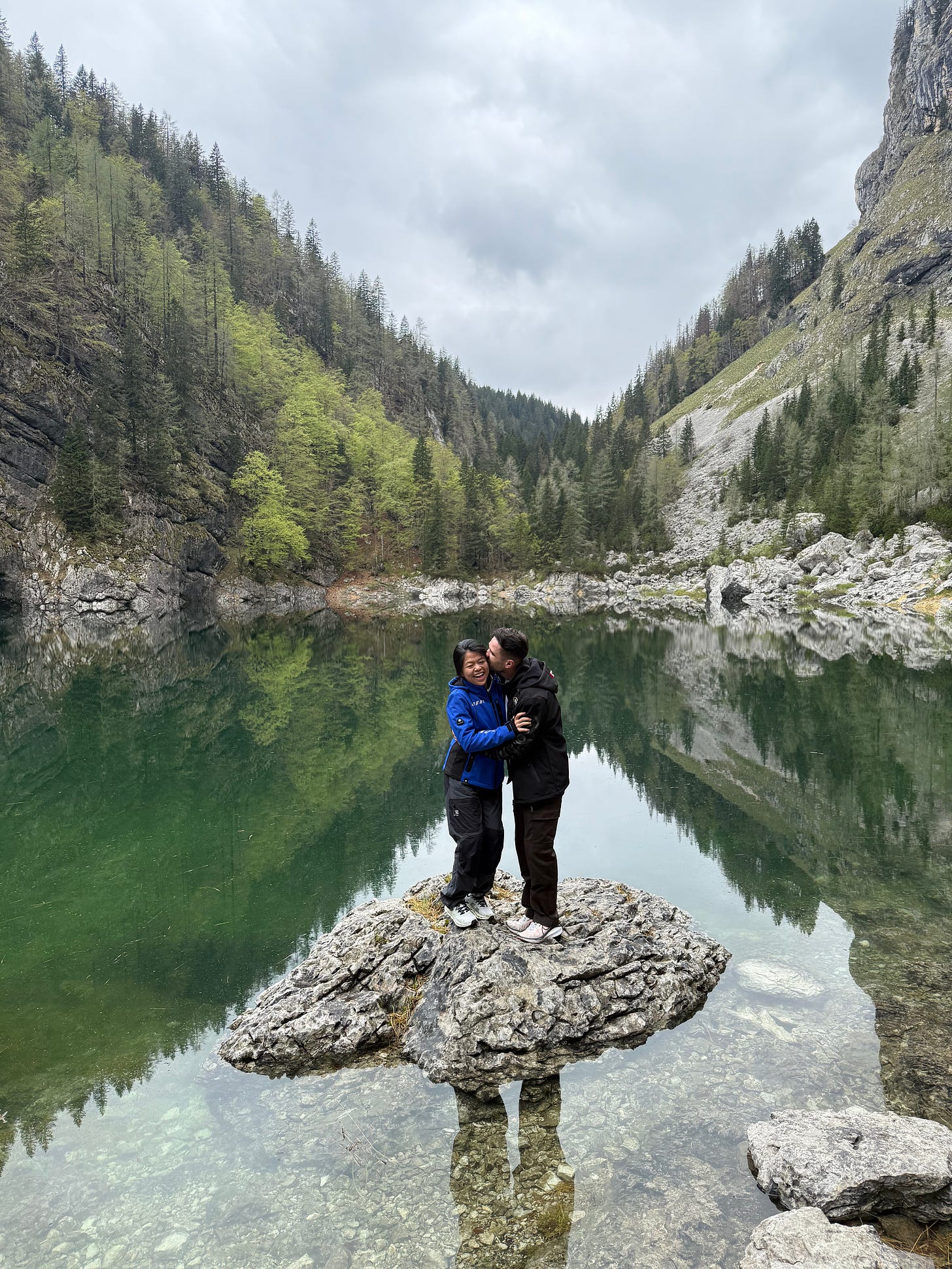
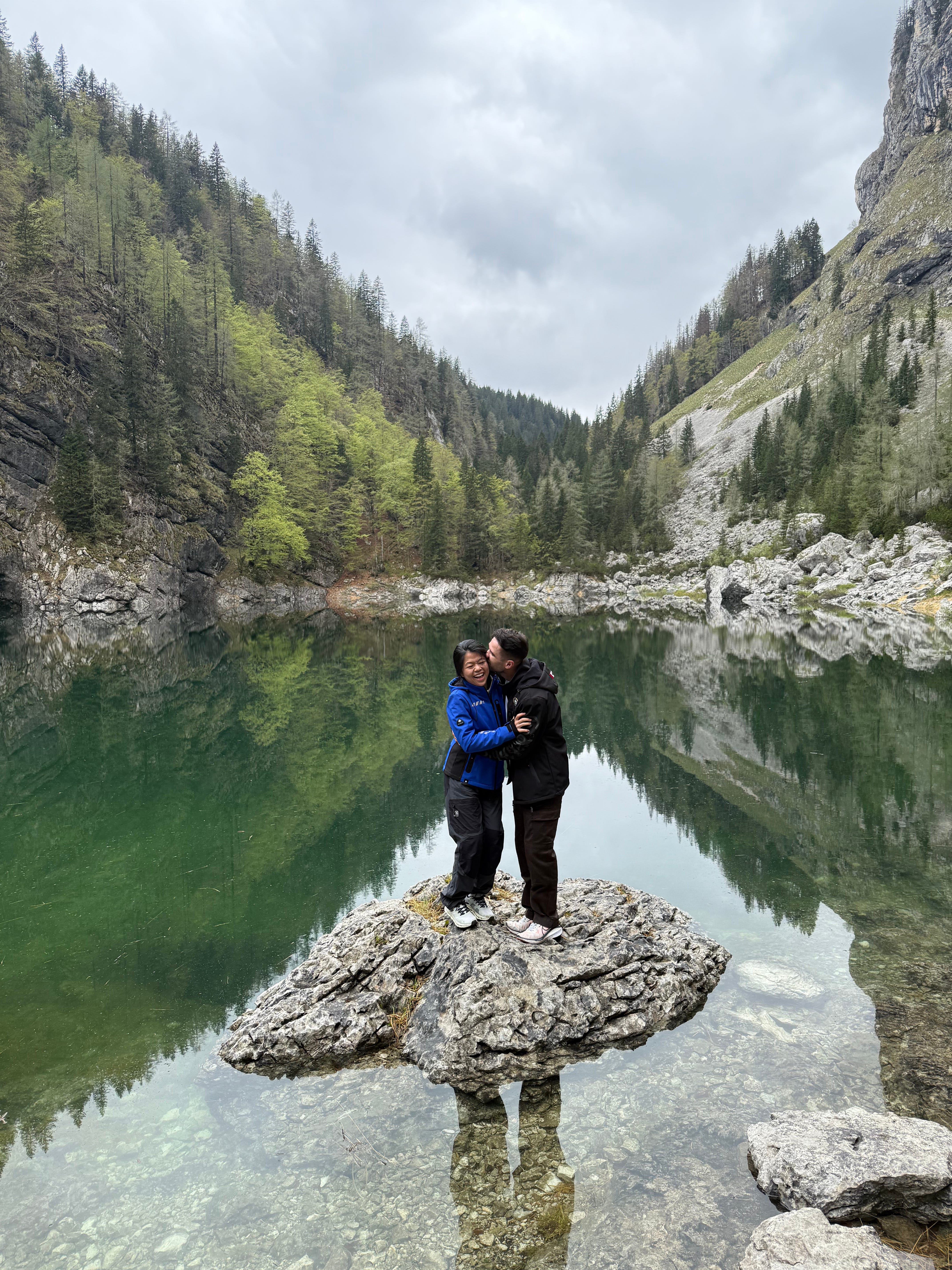
A favorite moment from our recent trip to Slovenia—two days of hiking, deep conversations, and laughter with some of my closest friends. Many of the reflections in this list were shaped on those trails.
Comments
Nothing yet. Say the first thing.
Sign in to join the conversation.